Educational games for kids

Game-Ace develops educational games for children covering STEM subjects and skill-building for iOS, Android, and web. Production combines interactive gameplay with structured learning objectives, covering educational content design, 2D art, AR experiences, and COPPA-compliant data handling for products that meet curriculum alignment requirements. All source code transfers to the client under NDA.

Discuss your edtech project
Forbes Technology Council badge
Game-Ace TopDevelopers top mobile game developers badge
Game-Ace Epic MegaGrants recipient badge
Game-Ace Unity Certified Developer badge
Game-Ace IAOP Global Outsourcing 100 recognition badge
Game-Ace top AR VR development company gaming 2026 Clutch

Educational game development services

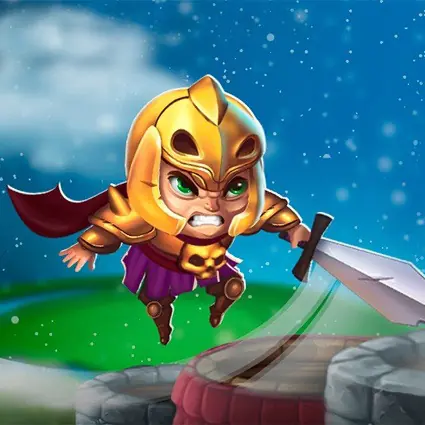
Educational game curriculum design with learning objective mapping

Educational content and curriculum design

Learning objective mapping, gamified curriculum structures, and pedagogical review aligned with target age group and subject requirements.

AR educational game for kids with physical material overlay

AR and VR learning experiences

Augmented reality overlays on printed materials and immersive VR environments for STEM, spatial, and hands-on learning subjects.

Cross-platform educational game on tablet phone and web browser

Cross-platform development

Simultaneous iOS, Android, and web builds with shared codebase and platform-specific UI adaptations for classroom and home use.

Educational game level design with scaffolded progression for kids

Level and progression design

Scaffolded difficulty progression, achievement systems, and feedback loops designed to maintain engagement without overwhelming young learners.

Educational game post-launch content update with new learning levels

Post-launch content updates

New level packs, seasonal learning content, curriculum update integration, and COPPA/GDPR compliance updates for the live product.

Game-Ace at a glance

2005 Founded

More than two decades in game development.

120+ Specialists

In-house production team across key disciplines.

200+ Games

Delivered across selected game genres.

Learning objectives as game design constraints

Educational game design begins with learning objectives, not just gameplay mechanics. Each level, interaction, and reward must reinforce specific outcomes without reducing engagement. Game-Ace works with educational consultants during GDD production to ensure mechanics and curriculum content are aligned before art and engineering begin. This prevents rework that occurs when educational content is retrofitted onto a gameplay system not designed to carry it.

Child safety and platform compliance

Educational games for children require COPPA compliance in the US and GDPR-K in Europe. Both restrict data collection from users under 13, require parental consent for account creation, and affect advertising eligibility. App Store and Google Play apply stricter review criteria for apps in the children's category. Compliance requirements are reviewed at project start and built into the architecture, not added post-development.

Building an educational game? Tell us about your subject area and target age group.
Get a Project Estimate

Why publishers choose Game-Ace for educational games

Curriculum-led design, child safety compliance, and full EdTech production capability in one in-house team.

  1. Learning-led game design. Educational content is integrated into gameplay mechanics from the GDD stage, not retrofitted onto finished game systems after production.
  2. Child safety by design. COPPA and GDPR-K compliance requirements are built into the data architecture, analytics configuration, and platform submission process from the start of production.
  3. Curriculum alignment support. Game-Ace works with educational consultants to validate learning objective coverage and age-appropriate difficulty before full production begins.
  4. AR and VR capability. Augmented reality overlays and immersive VR environments are available for STEM, spatial, and interactive subjects that benefit from hands-on engagement formats.
  5. Full IP transfer and NDA. All source code, educational content, art assets, and curriculum documentation transfer to the client at project close. NDA is standard.
Educational games for kids benefits image block

Educational game development cost

Educational game development at Game-Ace starts from €45,000 for a focused single-subject app with core learning mechanics. Cross-platform titles with AR experiences and curriculum documentation typically range from €90,000–€220,000+. COPPA compliance features and classroom management tools are scoped based on your distribution model.

Get a Quote

Educational game development process

1.
Learning objective definition

Subject area, target age group, curriculum alignment requirements, and platform delivery are defined before GDD work begins.

2.
GDD and curriculum design

Game mechanics and learning objectives are mapped together in the GDD with educational consultant input before engineering begins.

3.
Prototype and engagement testing

A prototype validates learning mechanic effectiveness and engagement metrics with target age group testers before full production.

4.
Full production

Engineering, art, animation, and educational content are built across parallel sprints with compliance review checkpoints throughout.

5.
QA and compliance verification

Functional QA, COPPA/GDPR-K compliance audit, device matrix testing, and app store children's category review before submission.

6.
Deployment and post-launch

Platform submission support, parental consent flow verification, and post-launch content update pipeline for curriculum and compliance updates.

COPPA and GDPR-K compliance is reviewed before the first build is submitted, not treated as a post-development adjustment.

Educational game deliverables

Educational game deliverables including build and curriculum documentation

Game-Ace provides a complete educational game with curriculum-aligned content, compliance documentation, accessibility records, and full source transfer at project close, ready for classroom or platform distribution.

  1. Game build. Fully functional educational game for agreed platforms with store submission and compliance documentation.
  2. Educational content documentation. Curriculum mapping, learning objective coverage, and pedagogical design rationale.
  3. Compliance documentation. COPPA/GDPR-K compliance review, data handling documentation, and age rating materials.
  4. Art and design assets. All game art, animations, and UI in editable source format with naming documentation.
  5. Parent and teacher materials. User guides, parental control documentation, and classroom use guides where applicable.
  6. Source code archive. Full project source with build scripts, analytics documentation, and IP transfer at project close.
Get started

Case Study:
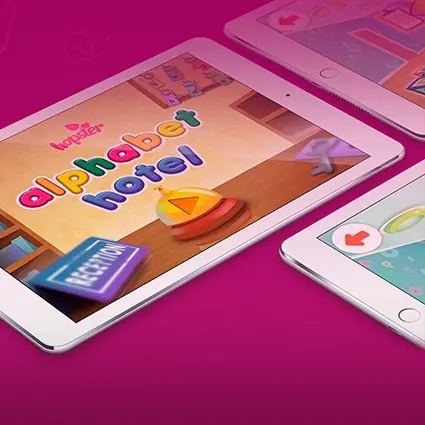
Hopster's Alphabet Hotel

  • Discover the joy of learning with Hopster's Alphabet Hotel, a game crafted by Game-Ace that revolutionizes alphabet learning for toddlers. Immerse in a world of vibrant animations and friendly interfaces, making education delightful and efficient. Ready to see learning transformed into an adventure? Click below and explore the magical corridors of our Alphabet Hotel. It's time to open the door to fun-filled education.
Learn More

Our clients trust us 

Testimonials 

Stuart lewis smith avatar
Stuart Lewis-Smith Senior Vice President at GSN Games

GSN Games is one of the global leaders in mobile social casino games.

Program-Ace and GSN Games have been working closely together on the development of several online games.

Alexandre martel avatar
Alexandre Martel 3Mind Games, CEO

Game-Ace’s support was integral to the success of this project. Without them, the client wouldn’t have been able to complete the work on time.

They were responsive and their work was high quality – the client rarely had to share constructive criticism.

Ralf baumann avatar
Ralf Baumann WHOW Games GmbH, COOv

Game-Ace has successfully integrated with the in-house development team and has earned more responsibility as the engagement has prospered.

By quickly adapting to a sophisticated technology stack, they have helped to increase product quality and reduce an extensive task backlog.


Frequently asked questions

Single-subject educational apps usually take 4–8 months from brief sign-off. Cross-platform titles with AR, custom characters, and curriculum documentation typically run 10–16 months depending on subject scope and content volume.

Game-Ace has worked across language learning (reading, vocabulary, phonics), mathematics, STEM subjects, and social skills for ages 2–12. Age group determines interaction model, feedback mechanic complexity, reward system design, and art style. Curriculum alignment requirements are reviewed at brief stage so content structure is defined before GDD production begins.

Children's games require COPPA compliance in the US and GDPR-K in Europe. Both restrict data collection from users under 13, require verifiable parental consent for any account creation, and prohibit targeted advertising. App Store and Google Play apply additional review criteria for apps in the children's category. These requirements are reviewed at project start and built into the architecture before development begins.

Learning objectives are defined before the GDD is written and directly inform the mechanic design. Integration follows a structured approach:
  • Objective mapping: Each mechanic is mapped to a specific learning outcome so every player action reinforces a defined concept.
  • Scaffold design: Difficulty progression mirrors the learning curve, introducing new concepts only after prior ones are reinforced through repeated correct interaction.
  • Feedback loops: Immediate, specific feedback on correct and incorrect responses reinforces learning without discouraging continued play.
Curriculum coverage is validated with an educational consultant during pre-production, before art and engineering resources are committed to implementation.

AR overlays on printed materials work well for early literacy, number recognition, and science subjects. VR environments suit spatial concepts, historical simulations, and science experiences that benefit from immersive 3D. Both formats require additional platform testing and hardware support documentation. Device access and classroom infrastructure requirements are reviewed at brief stage before production begins.

Parental controls can include session time limits, progress reporting dashboards, content level locks, and account management that keeps account credentials away from child users. Teacher dashboards for classroom use can include class-level progress tracking and report exports. These features are scoped based on your distribution model: consumer app, school platform, or hybrid.
Futuristic game robot running through a purple portal
Get in touch
menu
Get in touch
Game-Ace logo loader