Each stage produces documented deliverables approved by the client before the next begins.



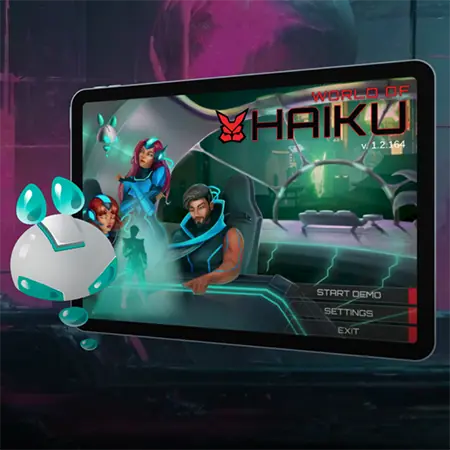
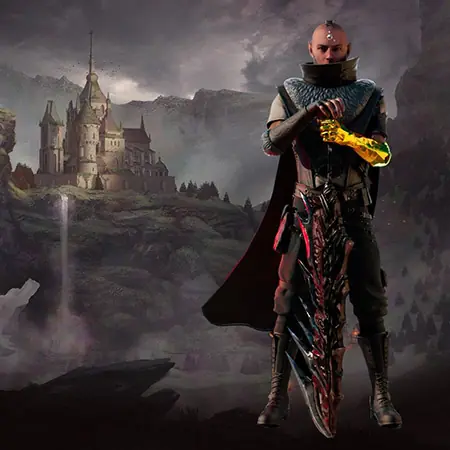
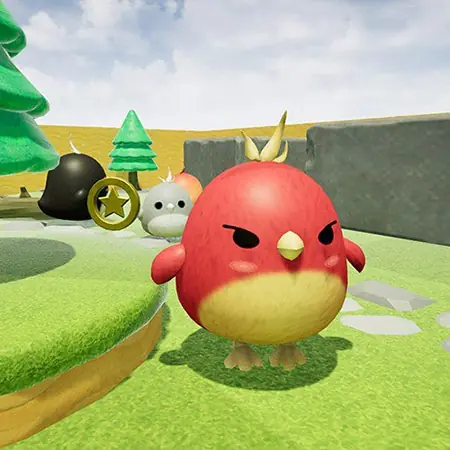
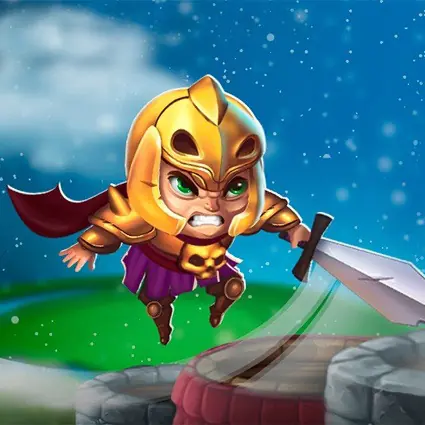




Game-Ace develops blockchain games where the technology serves gameplay: NFT item systems with in-game utility, smart contract economies, and play-to-earn models tied to real mechanics rather than speculative value. We build on Ethereum and other chains, with full-cycle, co-development, and focused-integration delivery models. NDA and full IP transfer apply across every engagement type.
Request a blockchain game quote




We manage the complete production cycle for blockchain games: GDD, economy design, smart contract architecture, game development, art production, QA, smart contract audit, and release.

We build games with NFT item ownership, ERC-721 and ERC-1155 contracts, on-chain asset metadata, and in-game wallet integration. NFT mechanics are designed for gameplay utility, not cosmetic use only.

We design and build P2E games with sustainable token economies, earn mechanics tied to real gameplay, controlled supply models, and sink mechanisms that prevent hyperinflation over the game lifecycle.

We write and deploy smart contracts for item ownership, token minting, marketplace logic, and in-game economies. Contracts are security-audited before mainnet deployment.

We build custom NFT marketplaces for in-game asset trading: listing, buying, auctioning, and royalty distribution. Marketplace logic runs on-chain with gas-optimised contract architecture.

We design fungible in-game token systems with defined supply, emission schedules, and spend sinks. Token contracts (ERC-20, BEP-20, SPL) are deployed with governance logic where required.

We produce 2D and 3D art for blockchain games: character and environment assets, NFT artwork sets, UI for wallet and inventory screens, and animation for on-chain game titles.

We add NFT item ownership, wallet authentication, smart contract layers, or marketplace functionality to existing games without rebuilding the core client.
More than two decades in game development.
In-house production team across key disciplines.
Delivered across selected game genres.
Blockchain adds measurable value in specific game contexts: NFT-based item ownership in games with active secondary markets, provably fair mechanics for casino-adjacent titles, and token-based reward systems in play-to-earn games with controlled supply. Game-Ace focuses on these use cases. We do not recommend blockchain integration where it does not serve the gameplay. Economy design and smart contract architecture are treated as production disciplines and are scoped alongside the GDD from day one.
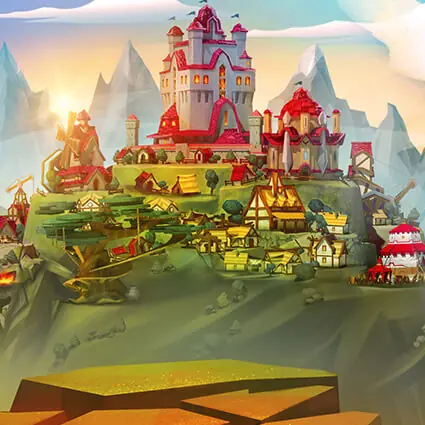
Game-Ace builds play-to-earn RPGs, NFT card games, and crypto casino titles with provably fair RNG. We have shipped Nomadland, an NFT strategy on Unreal Engine 4 with integrated capture, crafting, and asset trading. Smart contract standards covered: ERC-721, ERC-1155, ERC-20, and SPL.
Here's what makes Game-Ace the right partner for blockchain game production:
Blockchain game development at Game-Ace starts from €70,000 for a focused NFT integration project or a single-chain casual title. Full play-to-earn games with token economies and custom marketplace functionality typically range from €180,000–€400,000. Smart contract development and audit are scoped separately depending on chain and contract complexity.

Action games

Adventure games

Casino and slot games

Sports games

RPG games

MMORTS games
We review your game concept, target audience, and economy model. This stage defines the blockchain platform, token standards, and smart contract architecture.
GDD and economy model are produced in parallel. Token supply, distribution model, earn rates, and sink mechanisms are defined before any development begins.
Smart contracts for item ownership, marketplace logic, and token mechanics are developed and unit-tested. Contract code is reviewed before game client integration.
Game client development, art production, and blockchain integration run in coordinated sprints. Wallet SDK, NFT display, and on-chain transaction flows are integrated mid-production.
Functional QA covers gameplay, wallet flows, and platform compatibility. Smart contracts undergo a security audit before mainnet deployment.
Game and smart contracts deploy to mainnet simultaneously. Post-launch support covers content updates, economy balancing, and smart contract upgrades.
Each stage produces documented deliverables approved by the client before the next begins.
Game-Ace prepares blockchain game handover with smart contract source, integration documentation, audit records, and full IP transfer at project close, ready for chain deployment.












GSN Games is one of the global leaders in mobile social casino games.
Program-Ace and GSN Games have been working closely together on the development of several online games.

Game-Ace’s support was integral to the success of this project. Without them, the client wouldn’t have been able to complete the work on time.
They were responsive and their work was high quality – the client rarely had to share constructive criticism.

Game-Ace has successfully integrated with the in-house development team and has earned more responsibility as the engagement has prospered.
By quickly adapting to a sophisticated technology stack, they have helped to increase product quality and reduce an extensive task backlog.

Game-Ace is a custom game development studio, operating as a division of Program-Ace, a globally recognized software development company. Since 2005, our team has successfully delivered numerous 2D and 3D game projects. Our commitment to innovation, exceptional quality, and utmost customer satisfaction has firmly established Game-Ace as a trusted and reliable partner in the industry.