Game porting services

Game porting requires source-code audits, platform-specific optimisation, and console certification handling. Game-Ace delivers porting services covering platform migrations, engine conversions, and mobile cross-porting for games at any production scale, through full-cycle or co-development models. Ported builds and source materials transfer to the client at project close under NDA.

Discuss your porting project
Forbes Technology Council badge
Game-Ace TopDevelopers top mobile game developers badge
Game-Ace Epic MegaGrants recipient badge
Game-Ace Unity Certified Developer badge
Game-Ace IAOP Global Outsourcing 100 recognition badge
Game-Ace top AR VR development company gaming 2026 Clutch

Game porting services

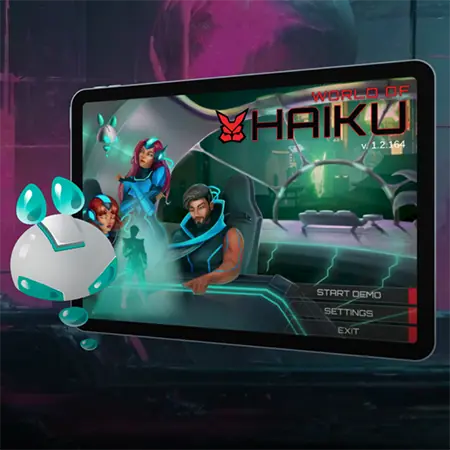
Game porting from PC to mobile platform

Platform porting

Full-cycle porting from PC to mobile, mobile to console, or web to native, with source code optimisation and platform-specific QA.

Game engine migration from legacy engine to Unity or Unreal

Engine migration

Porting games from legacy or custom engines to Unity or Unreal Engine, with asset pipeline conversion and feature parity validation.

Console game porting and certification for PlayStation and Xbox

Console porting and certification

Porting to PlayStation, Xbox, and Nintendo Switch with console-specific input remapping, performance profiling, and certification submission support.

Mobile game cross-porting between iOS and Android

Mobile cross-porting

iOS-to-Android and Android-to-iOS porting with device matrix QA, performance optimisation for each platform's hardware constraints.

Game porting to VR headset platform Meta Quest

VR and AR porting

Porting flatscreen games to VR platforms including Meta Quest, HTC Vive, and PlayStation VR2, with interaction system redesign and performance budgeting.

Game porting QA and regression testing process

Porting QA and regression testing

Full regression QA for ported builds covering functional parity, performance benchmarks, input validation, and platform certification checklist compliance.

Game-Ace at a glance

2005 Founded

More than two decades in game development.

120+ Specialists

In-house production team across key disciplines.

200+ Games

Delivered across selected game genres.

Source code audit before any porting work begins

Every porting engagement starts with a source code and asset audit. We assess the build's architecture, third-party dependencies, and art pipeline before committing to a timeline. This prevents mid-project scope surprises and produces a realistic porting plan with defined milestones. Games built on cross-platform engines port faster; custom or legacy engine builds are scoped with a realistic view of refactoring cost.

Console certification and platform compliance

Console porting requires meeting platform holder technical requirements for Sony and Microsoft, beyond just making the game run. Our certification support covers TRC/TCR compliance checks, input and HUD requirements, and performance thresholds. Certification QA runs before submission to reduce rejection risk and submission cycle count.

Have a game ready for porting? Tell us about your source platform and current build state.
Get a Project Estimate

Why studios work with Game-Ace for porting

Source code audit and certification support from a single team.

  1. Full porting scope in-house. Source code analysis, platform optimisation, engine adaptation, QA, and certification support are handled by one team without subcontractor handoffs.
  2. Gameplay preservation. Core mechanics, progression logic, and balancing are validated against the source build at every porting milestone to ensure feature parity.
  3. Certification expertise. Our team understands TRC, TCR, and LotCheck requirements for Sony, Microsoft, and Nintendo, reducing certification rejection risk and submission cycles.
  4. Performance-first porting. Platform-specific performance profiling runs throughout the porting process, not just before submission. Frame rate targets are set and tracked per platform.
  5. Full IP transfer and NDA. All ported source code, adapted assets, and build documentation transfer to the client at project close. NDA is standard from day one.
Hexagonium asset

Game porting cost

Platform porting at Game-Ace for a 2D game typically starts from €25,000. Complex 3D titles targeting a new platform range from €50,000–€120,000+ depending on source build quality and certification requirements. Engine migration and console porting projects are scoped after a source code audit, with cost driven by source complexity and platform compliance.

We Expertly Porting Games
of Any Genre

Arcade games icon

Arcade games

Action rpg games icon

Action & RPG games

Racing games icon

Racing games

Casino card games icon

Casino & Card games

Sport games icon

Sport games

Adventure games icon

Adventure games

Our clients trust us

Unity logo Wargaming logo Bigpoint logo Namco logo Hopster logo Kalypso media logo

Game porting process

1.
Source code and asset audit

We review the source build, third-party dependencies, and asset pipeline to produce a realistic porting plan with defined milestones.

2.
Platform architecture setup

Target platform SDK setup, build configuration, and platform-specific API substitution begin before content porting.

3.
Feature and content porting

Gameplay systems, UI, audio, and assets are adapted for the target platform's hardware constraints and input model.

4.
Performance optimisation

Frame rate, memory, draw calls, and load times are profiled against target platform benchmarks and optimised to meet requirements.

5.
QA and certification preparation

Full regression and certification QA covers feature parity, platform compliance, and performance standards before submission.

6.
Submission and handoff

Platform submission support is provided along with full source code, documentation, and IP transfer at project close.

The source audit at project start sets realistic expectations for timeline and cost before any development begins.

Game porting project deliverables

Game porting deliverables including ported build and certification docs

Our team delivers a fully ported, platform-compliant build with source code, certification documentation, and QA records transferred at project close, ready for store submission or platform holder review.

  1. Ported game build. Platform-ready build with all original mechanics preserved and platform-specific optimisations applied.
  2. Source code archive. Adapted source code with platform-specific modules, build scripts, and dependency documentation.
  3. Performance report. Frame rate, memory, and draw call benchmarks across the target device matrix.
  4. QA and regression report. Feature parity checklist, bug log, and regression test results against the source build.
  5. Certification compliance documentation. Platform requirement checklist, TRC/TCR/LotCheck pass documentation for console targets.
  6. Asset and pipeline documentation. Adapted asset library with import configuration, naming conventions, and platform-specific export settings.

They Trust Us 

Testimonials 

Stuart lewis smith avatar
Stuart Lewis-Smith Senior Vice President at GSN Games

GSN Games is one of the global leaders in mobile social casino games.

Program-Ace and GSN Games have been working closely together on the development of several online games.

Alexandre martel avatar
Alexandre Martel 3Mind Games, CEO

Game-Ace’s support was integral to the success of this project. Without them, the client wouldn’t have been able to complete the work on time.

They were responsive and their work was high quality – the client rarely had to share constructive criticism.

Ralf baumann avatar
Ralf Baumann WHOW Games GmbH, COOv

Game-Ace has successfully integrated with the in-house development team and has earned more responsibility as the engagement has prospered.

By quickly adapting to a sophisticated technology stack, they have helped to increase product quality and reduce an extensive task backlog.

Frequently asked questions

A 2D game porting to a new mobile platform takes 4–8 weeks. A complex 3D title moving to a new platform typically runs 3–6 months. Engine migration and console porting with certification add time and are scoped per project.

Minimum requirements include access to the full source code, original asset files, existing build documentation, and target platform SDK credentials. A source code audit at project start identifies missing dependencies, platform-specific API conflicts, and asset format issues before the porting timeline is finalised. NDA is signed before any code is reviewed, and the audit output becomes the baseline reference for scope and certification planning.

The most common porting targets are iOS and Android for mobile releases, Windows and macOS for PC, PlayStation 4/5 and Xbox Series for console, and Meta Quest for standalone VR. Web and HTML5 porting is also handled for browser-based distribution. Platform combinations are scoped based on your release strategy and audience data.

Console certification covers a structured checklist of platform holder requirements before submission. Each platform has its own certification programme with distinct technical and content requirements:
  • PlayStation (TRC): Trophy system, save data handling, party and voice chat standards, and UI/UX requirements.
  • Xbox (TCR): Achievement system, suspend/resume behaviour, performance standards, and content rating compliance.
  • Nintendo (LotCheck): Input and HUD requirements, screen layout rules, and eShop submission asset specifications.
Certification QA runs before submission to identify failures before the platform holder review, reducing rejection risk and the number of resubmission cycles needed before final approval.

Feature parity is validated against a checklist built from the source build. Every mechanic, progression state, audio event, and UI interaction is tested on the target platform. Regression testing runs after every significant change to catch regressions before they accumulate. Platform-specific optimisations are applied without altering gameplay balance or mechanics.

NDA is signed before any source code access is granted. Code is handled within agreed version control access boundaries, with no external distribution. All adapted source materials transfer to the client at project close.
Futuristic game robot running through a purple portal
Get in touch
menu
Get in touch
Game-Ace logo loader