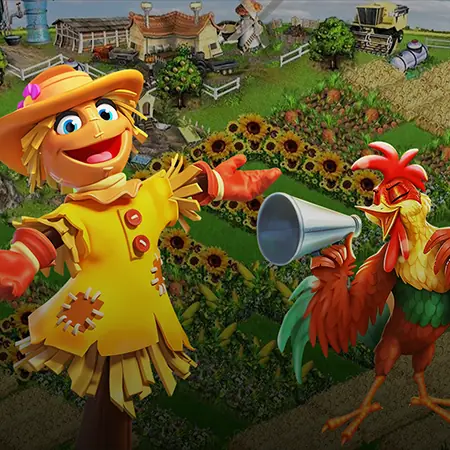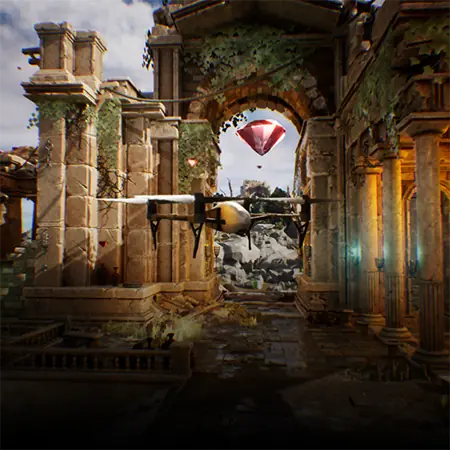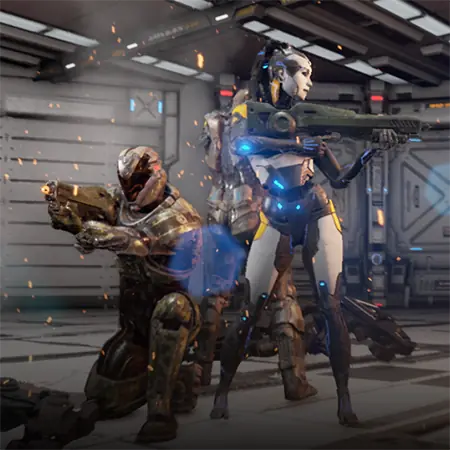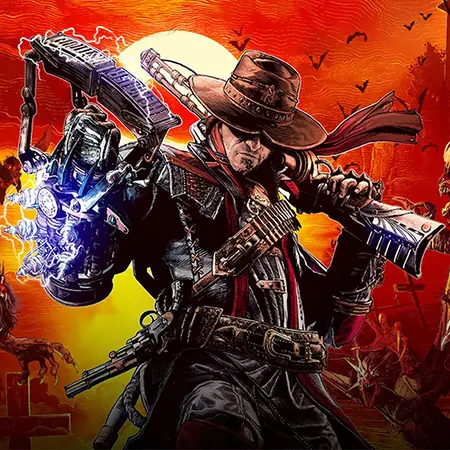

A game demo is a short, polished slice of your game built to convert wishlists, win publisher meetings, or attract press coverage. Most studios ship one of four demo types: a vertical slice (one polished segment), a prologue (a standalone "Chapter 0"), an MVP demo (a complete loop at minimum-viable polish), or a tech demo (a focused technical proof). The right type depends on the demo's purpose and the timeline before launch.
This guide walks through the seven steps studios go through when scoping, building, and shipping a demo, with the platforms and timelines that show up at each stage.
Step 1. define the demo's purpose
A game demo is a marketing and sales asset, not a small version of the full game. The purpose drives every later decision: scope, length, polish target, distribution channel, and metrics.
The most common purposes:
- Steam Next Fest wishlist build. The demo runs during a Valve event window; the goal is wishlist conversion plus visibility on Steam's curated lists.
- Publisher pitch. A small, focused demo shown to publishers and platform holders to secure funding or platform features.
- Crowdfunding. A demo shown alongside a Kickstarter or Indiegogo campaign to convert visitors into backers.
- Press preview. A demo distributed to media and content creators before launch to drive coverage and influencer playthroughs.
- Open beta or community demo. A larger demo opened to the community for stress testing and word-of-mouth, often tied to a wishlist or pre-order push.
Pick one primary purpose. Demos that try to serve every audience end up serving none well.
Step 2. pick the demo type
Four types cover almost every game demo on the market:
- Vertical slice. One self-contained segment of the game at final-quality polish. Strongest for publisher pitches and Steam Next Fest. Hades shipped a vertical-slice demo during early access.
- Prologue. A standalone "Chapter 0" that ships as a separate free game on Steam, often with its own store page. Strong wishlist driver for the main game; ships as a free Steam game in its own right.
- MVP demo. A complete loop at minimum-viable polish - all systems present, all art at first-pass. Suited for crowdfunding and early publisher meetings where reviewers need to feel the loop end-to-end.
- Tech demo. A focused proof of a single technical capability (rendering, AI, multiplayer, simulation). Common for funding pitches and platform partner conversations. Not designed for the public.
The type drives scope. A vertical slice is short and deep; an MVP demo is broad and shallow; a prologue is its own self-contained product; a tech demo is a one-shot capability proof.
Step 3. scope the playable section and freeze it
A demo that ships is a demo that has a frozen scope. The most common reason demos slip is that scope keeps growing.
Standard guardrails:
- Playtime target: 10 to 30 minutes for a vertical slice or MVP demo; 1 to 3 hours for a prologue.
- Mechanic count: 3 to 5 core mechanics maximum in a vertical slice. Every mechanic beyond that adds production weeks.
- Asset count: enough environments, characters, and audio to feel complete in the demo segment. No reused-from-full-game assets that the player can recognise.
- Build target: a stable build that runs from start to finish without crashes on the target hardware tier.
Freeze the scope at the end of pre-production. Any change after that point gets logged as a "post-launch" change instead of a demo change.
Step 4. build for the first 10 to 30 minutes
The demo lives or dies in the first session. Players who do not feel the game in the first 5 to 10 minutes do not finish the demo, do not wishlist, and do not buy.
Practical priorities at this stage:
- A strong opening moment. The first meaningful action the player takes should communicate the game's identity.
- A tutorial that is short and embedded in gameplay. Players bouncing off a tutorial is the most common demo loss.
- One showcase moment that gives the player a screenshot they want to share. Boss reveal, environmental setpiece, signature animation.
- Save state. Many players quit halfway through a demo; a save state lets them return.
- A clear ending that points to the full game (next chapter teaser, "wishlist to play more" prompt, store link).
Step 5. polish the opening, the onboarding, and the save flow
Polish in a demo is concentrated on three places: the first 60 seconds, the onboarding flow, and the save and resume system. The middle of the demo can run at slightly lower polish without losing the player.
- First 60 seconds: title screen, splash, first interaction. This is the part recorded in 30-second social clips. Make it look final.
- Onboarding: control prompts, first objective, first reward. Players who exit during onboarding are unrecoverable.
- Save and resume: a player who quits the demo for an hour and comes back must land exactly where they left off, with their settings preserved.
Step 6. playtest with real players and iterate
Internal playtests are not enough. A demo needs at least two rounds of external playtesting with players who match the target audience.
Useful playtest sources:
- PlaytestCloud or similar paid playtest services. Recorded sessions with target-demographic players.
- Discord community early access. Useful if the studio has a community already.
- Convention demo stations. PAX, GDC Play, indie meetups. Watch over the player's shoulder; do not talk.
- Friend-of-friend playtesting. Free, but biased.
The metrics that matter from playtests: time-to-first-action, completion percentage, exit point, and the one verbatim quote that explains why a player did or did not enjoy the demo.
Step 7. distribute and market
Three distribution channels cover almost every demo:
- Steam. The standard channel for PC demos. Steam Next Fest runs three times a year (February, June, October) and is the single largest demo visibility window. A demo can also live permanently on a game's Steam page outside of Next Fest, but the discoverability spike comes during the event.
- itch.io. Standard channel for non-Steam-first studios, jam games, and prototypes. Supports separate demo and full-game versions on the same project page.
- Direct distribution. Press keys for journalists and content creators, Discord builds for the community, signed builds for publisher meetings.
Marketing prep before the demo drops:
- A press kit with a one-paragraph game pitch, 3 to 5 high-resolution screenshots, a 30 to 60 second trailer, and a press contact.
- A trailer cut from demo footage; ideally the same trailer Valve allows on the Steam Next Fest page.
- A wishlist-conversion push: store page polish, capsule art, "About this game" copy, and a clear "wishlist" call to action at the end of the demo.
Demo-to-wishlist conversion is the most-tracked metric. Industry-cited benchmarks from publisher panels put the range at 5 to 10 percent for a polished demo during a Steam Next Fest window. Genre, launch quality, and marketing prep all move that number.
Timeline and budget ranges for a game demo
Approximate ranges for a demo project at a small or mid-size studio:
| Demo type | Timeline and budget range |
| Tech demo for a publisher pitch: | 4 to 8 weeks with a small team. Cost lands in the low five-figure USD range. |
| MVP demo for crowdfunding or early publisher meetings: | 8 to 16 weeks. Mid five-figure range. |
| Vertical slice for Steam Next Fest with a polished opening segment: | 12 to 24 weeks. Mid to high five-figure range; longer and higher when the studio is building the production pipeline alongside the demo. |
| Prologue (standalone "Chapter 0" shipped as a free Steam game): | 4 to 9 months. Crosses into low six-figure range for art, voice, and QA. |
These numbers assume a dedicated demo team. When the demo work overlaps with full-game production, timelines and costs both grow. The most common scoping mistake is treating the demo as a side project of the main team.
About Game-Ace
Game-Ace is a B2B game development studio based in Cyprus, founded in 2005. The team includes 120+ in-house specialists across engineering, art, animation, and QA, and has delivered 200+ projects since opening. The studio handles full-cycle game development including demo, vertical slice, and proof-of-concept scope, and contributes to game art and design for studios that need additional production support around the demo. Selected references live on the Game-Ace portfolio page; specific demo credits are shared under NDA. If a studio is scoping a demo for Steam Next Fest, a publisher pitch, or a crowdfunding campaign and wants a production partner, you can contact our team to discuss the project.
A note on the term in other markets
The same question comes up in many languages: apa itu game demo (Indonesian), demo game adalah (Indonesian), que significa que un juego sea demo (Spanish), demo game artinya (Indonesian). The short answer is the same in each language: a game demo is a short, polished sample of a game shipped to drive wishlists, attract publishers, or generate press coverage. The seven-step process above applies regardless of market.
 How MetaHuman changes game character development
  Game development for startups: budget and MVP guide
  Engineering tower defense games from prototype to live service
  Idle game development: a full production guide
  Gamification in recruitment: what actually works