
A profitable mobile game earns more revenue per install than it costs to acquire that install, over a realistic payback window. To make a profitable mobile game, teams need three things aligned: a genre with proven unit economics, a monetization mix that fits player behaviour in that genre, and a user acquisition plan that respects Apple ATT and SKAdNetwork 4 attribution limits. Everything else, from art style to LiveOps cadence, sits on top of that base.
The unit economics that decide whether a mobile game is profitable
Every discussion about how to make a profitable mobile game comes back to the same five numbers: cost per install (CPI), lifetime value (LTV), average revenue per daily active user (ARPDAU), average revenue per paying user (ARPPU), and payback period. Publishers greenlight or kill projects based on the relationship between them. If LTV at day 180 is lower than blended CPI plus a margin buffer, the game will lose money at scale, no matter how good the reviews are.
ARPDAU is the most honest daily signal. Hyper-casual titles typically live in the $0.02 to $0.10 ARPDAU band, hybrid casual around $0.10 to $0.30, casual mid-core between $0.30 and $0.80, and mid-core RPG or 4X above $1.00. ARPPU matters more once a game runs live ops: Royal Match, Coin Master, and Monopoly Go all built payback economics around a small share of high-spend players rather than broad conversion.
Payback period is the third lens. Investors usually want CPI recovered inside 90 to 180 days for casual, 180 to 365 days for mid-core. Anything longer needs a strong retention curve and a defensible LiveOps roadmap before UA money is committed.
Scoping a profitable mobile game?
Genre choice and how it shapes profit margin

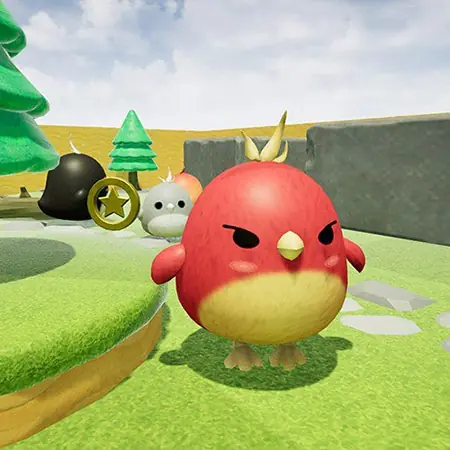
Hyper-casual: Angry Birds

Hybrid casual: Gardenscapes

Mid-core RPG: Granblue Fantasy
Genre selection is the largest single lever on profitability. Two teams with the same budget, working in different genres, will hit very different LTV ceilings. Hyper-casual games get cheap installs but low LTV. Mid-core RPGs can sustain $50+ LTVs but require multi-million-dollar production budgets. The middle bands, hybrid casual and casual mid-core, have absorbed most of the industry's growth since Apple ATT reshaped attribution.
| Genre band | Typical CPI | Typical LTV (D180) | Payback window | Realistic dev budget |
|---|---|---|---|---|
| Hyper-casual | $0.20-$0.80 | $0.30-$1.20 | 0-60 days | $30k-$80k |
| Hybrid casual | $1.00-$3.00 | $2.00-$6.00 | 60-180 days | $120k-$400k |
| Casual mid-core (match-3, merge) | $3.00-$8.00 | $8.00-$25.00 | 120-300 days | $400k-$1.5M |
| Mid-core RPG or 4X | $8.00-$25.00 | $30.00-$120.00+ | 180-540 days | $1.5M-$8M+ |
These bands are directional, not guarantees. A well-run hybrid casual can outperform a poorly executed mid-core, and vice versa. What matters is that the team picks a band that matches its budget, team size, and risk appetite before writing a single line of code.
Monetization models and how to combine them
A profitable mobile game rarely leans on a single revenue stream. The dominant mix is hybrid: in-app purchases as the primary lever, rewarded video as the retention and secondary revenue layer, a battle pass or season pass for predictable monthly revenue, and a subscription tier for a small share of committed players. Interstitial ads are used carefully because they cost retention if placed poorly.
- In-app purchases (IAP): consumables, starter packs, offers timed to progression walls.
- Rewarded video: opt-in ad views tied to a gameplay reward, usually 5 to 12 percent of ARPDAU.
- Battle pass or season pass: monthly premium track with cosmetic and progression rewards.
- Subscription: VIP tier with daily rewards and ad-free play, typical uptake 1 to 3 percent of DAU.
- Interstitials: used sparingly in casual and hybrid casual to boost non-payer ARPDAU.
Hybrid casual is defined by this mix. It borrows the wide UA funnel of hyper-casual and layers IAP, rewarded video, and meta-progression on top. Titles like Royal Match sit further along the same axis, with match-3 gameplay wrapped in narrative, LiveOps, and a strong payer curve.
Retention benchmarks by genre
Retention is the earliest signal that a game can become profitable. Day 1, Day 7, and Day 30 retention decide whether ARPDAU has room to compound. Below-benchmark retention will collapse LTV even if CPI is cheap.
- Hyper-casual: D1 around 35 to 40 percent, D7 around 10 to 12 percent, D30 rarely above 3 percent.
- Hybrid casual: D1 around 40 to 45 percent, D7 around 15 to 20 percent, D30 around 5 to 8 percent.
- Casual mid-core (match-3, merge): D1 around 45 to 50 percent, D7 around 22 to 28 percent, D30 around 10 to 14 percent.
- Mid-core RPG: D1 around 50 to 55 percent, D7 around 30 to 35 percent, D30 around 15 to 20 percent.
A soft launch that misses D7 by more than 5 points against its target band usually means the core loop or first-time user experience needs another iteration before global launch.
LiveOps that actually drive revenue
LiveOps is where mid-core and top-tier casual games earn most of their lifetime revenue. A weekly cadence of events, limited-time offers, and seasonal content lifts ARPPU by giving committed players fresh reasons to spend. Weak LiveOps is the most common reason a technically sound mobile game fails to become profitable after launch.
For a mobile game production, LiveOps is not a post-launch afterthought. Content pipelines, event tooling, and analytics dashboards should be built alongside the core game so the team can ship a new event every one to two weeks from month one. Game-Ace works with clients through full-cycle game development or game co-development engagements that include the LiveOps toolchain from the start.
Soft launch geo strategy
Soft launch is a controlled release in a smaller market before global launch, used to validate retention, monetization, and stability with real players. The geo choice matters. Common soft launch markets include the Philippines and Vietnam for low-CPI validation of retention and gameplay loops, and Canada, Australia, or the Nordics for monetization validation against tier-1 spending behaviour.
A typical soft launch runs 8 to 16 weeks with a UA budget of $20k to $80k, depending on genre. The exit criteria are retention hitting benchmark, ARPDAU trending inside the target band, and crash-free sessions above 99 percent. If any of those miss, the team iterates before spending global launch budget.
User acquisition channels and where budget flows
Paid UA remains the dominant growth channel for a profitable mobile game. Google Ads (App campaigns), Meta (Facebook and Instagram), and TikTok deliver the largest install volume for most genres. AppLovin and Ironsource cover in-app inventory across other mobile apps and are strong for hyper-casual and hybrid casual. Apple Search Ads captures high-intent iOS installs at higher CPI but usually higher LTV.
Budget mix depends on genre. Hyper-casual leans on AppLovin, Ironsource, and TikTok. Casual mid-core spreads across Meta, Google, and TikTok. Mid-core RPG usually adds Apple Search Ads and influencer campaigns. Cross-network measurement is harder than it was pre-ATT, so most teams model incrementality per channel rather than trusting last-click attribution.
Creative iteration is a production discipline
On modern mobile UA, creatives beat targeting. Ad networks optimise delivery around the creatives that convert, so the team that ships more variants at higher quality tends to win the auction. A live campaign for a casual title often runs 40 to 80 creative variants per week, with the winners scaled and the losers killed inside 72 hours.
Creative production is best treated as a continuous pipeline, not a launch spike. Playable ads, short-form video, and static concepts each need their own workflow. Studios that outsource this work often pair a small in-house creative strategist with an external art and video team so weekly volume stays high without expanding permanent headcount.
Privacy changes and their impact on profitability
Privacy frameworks have reshaped how a profitable mobile game is built and measured. Apple's App Tracking Transparency (ATT) requires user consent for cross-app identifiers, and iOS attribution now runs through SKAdNetwork 4, which delivers postbacks with limited granularity and delay. Android is rolling out the Privacy Sandbox, which will gradually deprecate the advertising ID for similar reasons.
The practical impact is that install-level ROAS is harder to prove, and modelling has become part of the UA workflow. Teams increasingly rely on media mix modelling, incrementality tests, and first-party analytics tied to server-side events. See Google Play Console policies on Privacy Sandbox for the current Android timeline. Games designed with clean first-party event tracking from day one adapt faster than games retrofitted after launch.
When to self-publish and when to work with a publisher
The choice between self-publishing and signing with a mobile publisher is one of the most important decisions in a profitable mobile game plan. Publishers such as Voodoo, Homa, Supersonic by Unity, Rollic by Zynga, and Kwalee bring UA budget, creative testing infrastructure, and market data that small teams cannot match. In exchange, they take a revenue share and often IP influence.
Self-publishing works best when the team has UA capital, an in-house creative team, and the willingness to absorb early-stage losses during testing. A publisher deal usually makes sense for hyper-casual and hybrid casual studios without deep UA experience, or when the team wants to focus on production quality and let a partner handle the paid growth engine.
Cost and timeline to profitability
Time to profitability depends on genre band and monetization design. A hyper-casual title that finds product-market fit can be profitable inside 30 to 60 days of launch, but most fail before hitting that bar. A hybrid casual project usually needs 6 to 12 months post-launch to recover production and UA spend. Casual mid-core and mid-core RPG projects are longer investments, often 12 to 24 months before cumulative profit turns positive.
Production costs pair with those timelines. For a full breakdown across scopes and engagement models, see the mobile game development cost guide. For engine-specific delivery, see Unity game development.
A recent Game-Ace mobile project
Welcome to Demon Runner, a mobile endless runner by Game-Ace

Demon Runner is a stylised mobile endless runner with quick-paced gameplay, character progression, and a loot and chest system tuned to reward skill first. Game-Ace handled full-cycle production, including game design, art, Unity engineering, and a cross-platform store-ready build for Android and iOS.
Related reading: hyper-casual game development guide, idle game development, and how to make a game app.
When to talk to Game-Ace about a profitable mobile game
A profitable mobile game is a production problem, a monetization problem, and a UA problem at the same time. Game-Ace has delivered 200+ games since 2005, with 120+ in-house specialists covering game design, Unity engineering, art, QA, and LiveOps tooling. If mobile is part of your roadmap, Game-Ace's mobile game development studio supports full-cycle delivery, co-development, and team extension from a single studio. Sensor Tower and data.ai publish annual mobile market reports that are useful reading before you scope the project (see the Sensor Tower State of Mobile report).
 How MetaHuman changes game character development
  Game development for startups: budget and MVP guide
  Engineering tower defense games from prototype to live service
  Idle game development: a full production guide
  Gamification in recruitment: what actually works