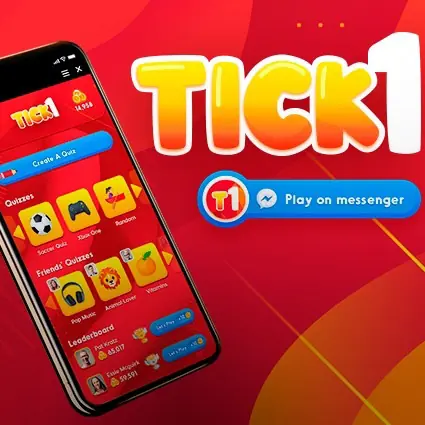
Mobile game development cost usually falls into four practical bands: a simple casual mobile title runs €30,000–€80,000, a mid-core mobile game runs €80,000–€250,000, a hardcore mobile project runs €250,000–€600,000, and a mobile multiplayer or live-service title runs €250,000–€800,000+. Each band reflects team size, art scope, backend complexity, and the platforms targeted across iOS and Android.
These ranges describe a single production cycle from approved game design document to a store-ready build. Live ops, paid user acquisition, and regional content add to the total but are usually planned as a separate post-launch budget. A short discovery phase before production lets a studio convert a brief into a fixed scope, validate the monetisation model, and lock the budget tier before art and engineering scale up. Game-Ace estimates mobile projects from this discovery output rather than from a generic price list, which keeps the quoted range close to what the team actually delivers.
Mobile game development cost by scope
Scope is the first factor that defines a mobile budget. A hyper-casual one-tap title with a short session and a single art style is a fundamentally different production from a mid-core RPG with progression systems, meta-game, and account services. The next level up adds real-time multiplayer, persistent backend, and live ops, which moves the project into a long-term operations budget rather than a single release. The table below shows typical mobile scope tiers used in client estimates at Game-Ace, with rough duration, team size, and core deliverables. Real projects often sit between two tiers, and the final quote is set after a discovery phase where mechanics, art volume, backend, and monetisation are scoped against a target launch date and a target platform set.
Hyper-casual
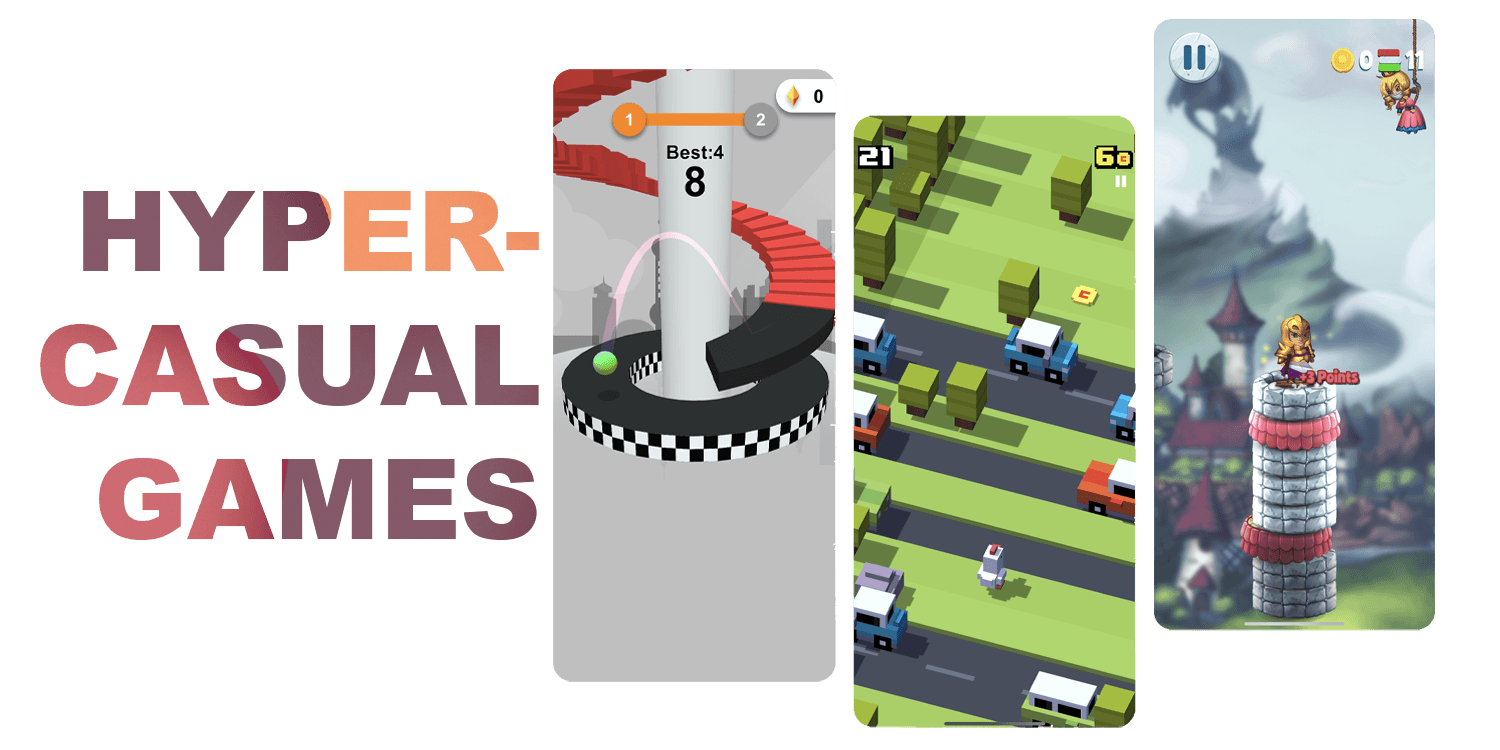 €15,000–€45,000
One core mechanic, single art style, basic ads SDK
Casual
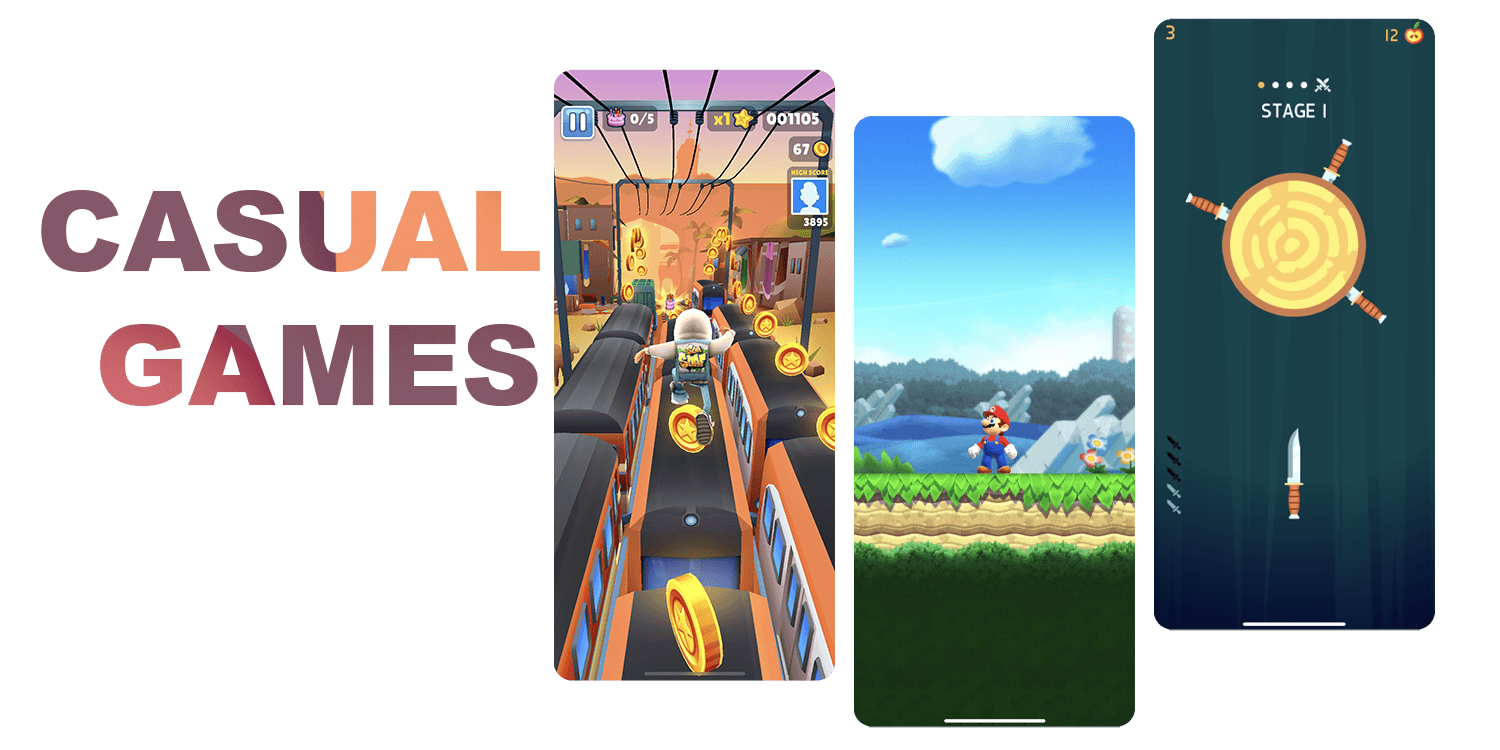 €30,000–€150,000
Meta-game, IAP, analytics, ASO assets
Mid-core
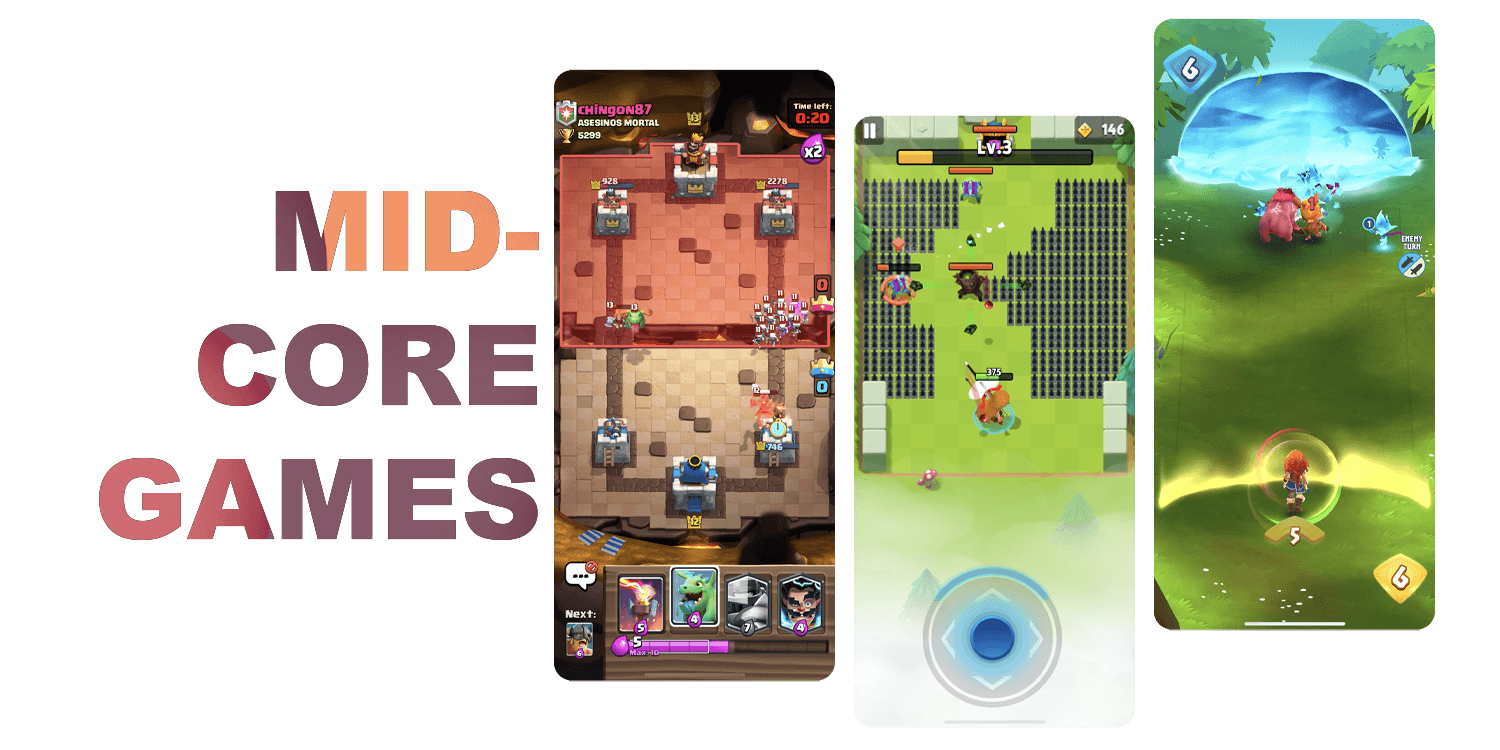 €150,000–€500,000
Progression systems, social features, account services
Hardcore
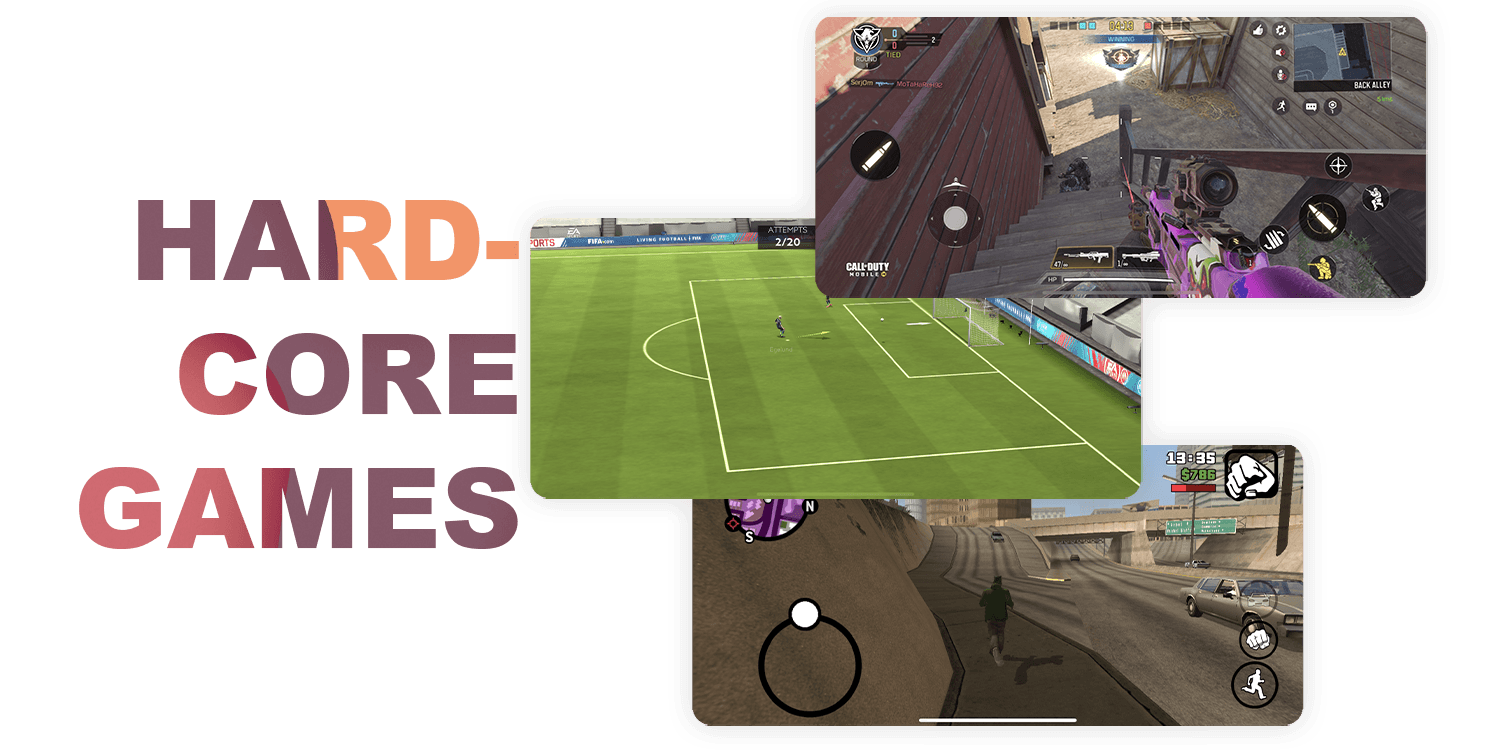 €250,000–€600,000
Deep systems, custom art pipeline, server features
Mobile multiplayer / live service
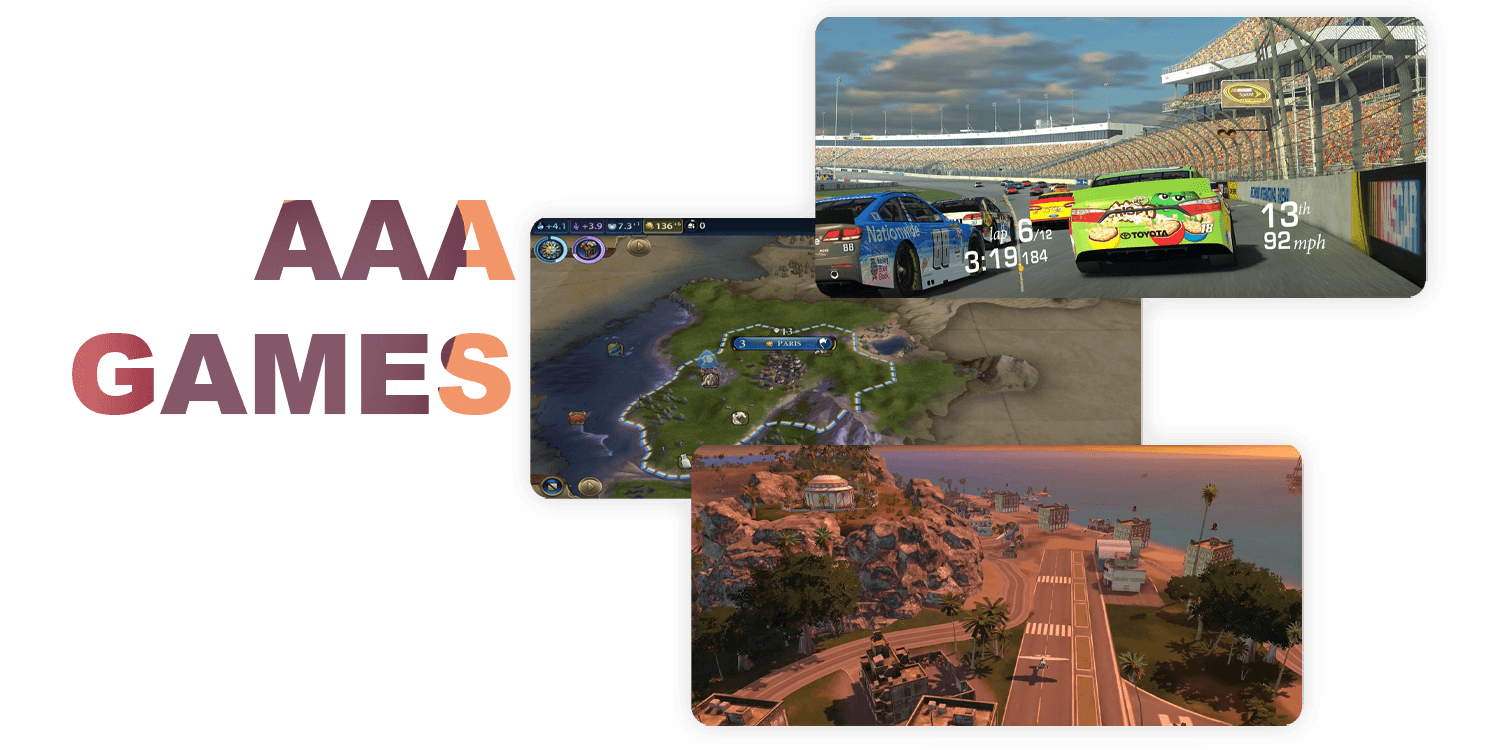 €250,000–€800,000+
Real-time backend, matchmaking, live ops content
| Scope tier | Typical range | Duration | Team size | Core deliverables |
| Hyper-casual | €15,000–€45,000 | 2–4 months | 3–5 people | One core mechanic, single art style, basic ads SDK |
| Casual | €30,000–€150,000 | 3–6 months | 4–7 people | Meta-game, IAP, analytics, ASO assets |
| Mid-core | €150,000–€500,000 | 6–12 months | 6–10 people | Progression systems, social features, account services |
| Hardcore | €250,000–€600,000 | 9–15 months | 8–14 people | Deep systems, custom art pipeline, server features |
| Mobile multiplayer / live service | €250,000–€800,000+ | 12–18 months | 10–18 people | Real-time backend, matchmaking, live ops content |
Factors that drive mobile game development cost
Two mobile projects with the same scope tier can still land at different prices. The variables that move the budget the most are art volume, engineering depth, the platforms targeted, and the engagement model used to build the team. A simple casual game with a small 2D art set will be cheaper than a casual game with stylised 3D characters and animated environments. A mid-core game that ships with cloud save and account services is heavier than one that runs fully offline. A title shipped on iOS and Android at the same time carries more device-matrix testing than a single-platform release. Game-Ace plans these factors during the discovery phase so the cost driver mix is visible before production starts.
- Team size and seniority mix across designers, engineers, artists, and QA.
- Art scope, including character count, environments, and animation volume.
- Engineering depth, especially backend, multiplayer, and account services.
- Monetisation model, with IAP, ads SDKs, subscriptions, or hybrid setups.
- Platform targets, including iOS, Android, and any HTML5 build.
- Live ops scope and the planned post-launch content cadence.
Mobile-specific cost factors
Mobile development carries cost factors that desktop and console builds do not. Store submission and review on the App Store and Google Play add cycles for binary review, content rating, and policy compliance. Device fragmentation on Android forces a wider QA matrix and longer compatibility testing. App Store Optimisation requires screenshots, short videos, and localised metadata, all of which are real production tasks rather than marketing extras. Localisation for mobile usually covers at least English plus a target list of regional markets, and audio for mobile often needs both short SFX sets and adaptive music. Game-Ace plans these items inside the production budget so they are not discovered as hidden costs after the first build is ready.
- App Store and Google Play submission, review cycles, and policy fixes.
- Device matrix testing across iOS and Android, including older models.
- ASO assets: store screenshots, short videos, localised metadata.
- Localisation, often 5–10 languages for a casual or mid-core launch.
- Audio production: SFX library, adaptive music, voice over when needed.
- Paid user acquisition planning with a target CPI and LTV model.
Mobile game development cost by team model
Team model has a direct effect on mobile game development cost and on how the budget is consumed over time. A fixed-price full-cycle contract gives a single quote for an agreed scope and is suitable when the design document is stable. A Team Extension model lets a client add specialists into an existing internal team and pay per allocated role, which is suitable when the client already owns the production process. A Co-development model splits ownership of specific systems or content tracks between the client and the studio, and is suitable for projects where the client wants to keep core gameplay in-house and delegate art, backend, or porting. The table below compares the three engagement models against typical mobile project setups.
| Engagement model | Cost structure | Best fit on mobile | Typical commitment |
| Full-cycle | Fixed scope, fixed price, milestone-based | Casual and mid-core titles with approved GDD | 3–12 months end to end |
| Team Extension | Monthly rate per allocated specialist | Studios scaling existing mobile teams | Rolling, 3 months minimum |
| Co-development | Mixed: per-system fixed plus monthly roles | Mid-core and multiplayer with shared ownership | 6–18 months |
Tech stack and how it changes mobile cost
Engine and tech stack choice changes both upfront cost and long-term cost of ownership for a mobile title. Unity covers most casual, mid-core, and mobile multiplayer projects with mature mobile tooling, addressable assets, and a wide hire pool. Native iOS and Android builds are used when the project relies on platform-specific APIs, AR features, or hard performance limits, and they usually cost more because two codebases are maintained in parallel. HTML5 builds are useful for instant playables and web-first distribution but add work when ported to native stores. Studios behind mobile-first titles such as Monument Valley, Florence, Reigns, Mini Metro, and Sky: Children of the Light have shown that strong art direction and tight scope often matter more than engine choice when budget is limited.
- Unity with C#, Addressables, and URP for most casual and mid-core titles.
- Native iOS (Swift) and Android (Kotlin) for AR, sensors, or strict performance budgets.
- HTML5 builds for instant playables and ad-network playable creatives.
- Backend stack with Firebase, PlayFab, or a custom service layer for accounts and live ops.
Live ops and post-launch budget
A mobile title rarely stops at launch. A casual game with IAP and ads needs at least a small live ops budget to ship balance updates, seasonal content, and store creatives. A mid-core or multiplayer mobile title needs a permanent live ops setup with a producer, a designer, an engineer, an artist, and QA support. Post-launch budgets usually run at 20–40% of the initial production budget per year for active titles, and they can be higher in the first year if user acquisition is paid. Marketing on mobile is its own line and often equals the production budget for a competitive launch. Game-Ace plans live ops scope during the discovery phase so the team and tooling are ready before the first store update.
Hidden mobile costs that often miss the first budget
Several mobile-specific cost items are often missing from a first budget and surface later as change requests. Store revenue share takes 15–30% of gross IAP and subscription revenue depending on programme tier, which affects net economics rather than upfront cost but should be modelled before launch. Certification can include age rating fees, regional content rating, and platform-specific compliance work. ASO can require several rounds of screenshot and video updates per year. Mobile audio licensing for stock music can add a recurring fee. Customer support tooling, anti-fraud, and analytics dashboards are real production line items, not bonus features. A short cost-of-ownership review before contract signing helps move these items from hidden to planned.
About Game-Ace
Game-Ace has worked on mobile titles since 2005, with 120+ in-house specialists and 200+ delivered games across iGaming, casual, mid-core, and multiplayer formats. The team scopes mobile budgets from a written game design document, a target platform set, and a target launch date, and confirms the range during a paid discovery phase. To see how the team approaches scope, see the mobile game development service page, browse the Game-Ace portfolio for released mobile titles, or contact our team with a brief.
 How MetaHuman changes game character development
  Game development for startups: budget and MVP guide
  Engineering tower defense games from prototype to live service
  Idle game development: a full production guide
  Gamification in recruitment: what actually works