
Game-based learning is instruction delivered inside a purpose-built game, where players learn by playing rather than by reading or watching. Studies from RAND, the U.S. Department of Education, and corporate L&D benchmarks report 10-25% higher knowledge retention and 20-40% higher engagement versus traditional e-learning modules, along with measurable transfer of skills into real tasks when the game systems mirror the target performance.
If you are scoping a purpose-built game-based learning title for K-12, higher-ed, or corporate training, talk to Game-Ace.
What game-based learning actually means
Game-based learning means the learning objectives live inside the game itself. The mechanics, feedback loops, and win conditions are the instruction. A player advances by demonstrating a target skill, not by clicking through slides that award points on the side. This separates the discipline from gamification, which adds badges, streaks, or leaderboards to a non-game workflow, and from the broader serious games category, which also covers simulations for training, therapy, or advocacy.
| Format | Where the learning lives | Engagement | Best fit |
| Game-based learning | Inside a purpose-built game | High and sustained | Skill acquisition, decision training, K-12/higher-ed curriculum |
| Gamification | Layered on non-game workflow | Short-term boost | Compliance, LMS engagement, habit loops |
| Serious games | Inside a game, broader intent | High, scenario-driven | Simulation, safety, medical, defense, advocacy |
| Standard e-learning modules | Slides, quizzes, video | Low to moderate | Compliance, onboarding, product knowledge |
The learning science behind game-based learning
Game-based learning is grounded in constructivism, situated cognition, and flow theory. Players build knowledge by acting on it inside a system that responds. Csikszentmihalyi's flow model explains the engagement side: when challenge and skill scale together, players stay in a focused state that supports encoding and recall. Well-designed feedback loops close the gap between action and outcome in seconds, not weeks, which is why game-based learning outperforms lecture formats on transfer.
K-12, higher-ed, and corporate use cases
In K-12 classrooms, game-based learning covers math, reading, science, coding, and social-emotional learning. Successful titles integrate with the teacher: dashboards showing per-student mastery, alignment to state standards, and session lengths that fit a 25-45 minute lesson. Studios building for this segment must plan for district procurement cycles, COPPA compliance, and per-seat pricing.
Higher-ed game-based learning tends toward simulation and case-based play, delivered LMS-integrated through LTI 1.3 with single sign-on and grade passback. Corporate teams use game-based learning for skills that fail in lecture format: cybersecurity decisions, sales conversations, negotiation, and safety-critical procedures. Well-designed titles typically hit 85-95% completion versus 40-60% for equivalent e-learning modules.
The instructional design pipeline
Production usually follows six stages.
- Learning objectives and competency mapping with an instructional designer.
- Mechanic-to-objective alignment, so succeeding at the mechanic proves the learning.
- Content authoring: scenarios, assets, questions, feedback text.
- Playable prototype and learner testing, adjusted based on observed learning gains.
- Full production with art, engineering, VO, localization, and analytics instrumentation.
- Pilot with a control cohort, then rollout.
Measuring outcomes: gains, retention, transfer
Three metrics matter for game-based learning. Learning gains are measured by pre-test versus post-test on the same competency. Retention is measured with delayed post-tests at 30, 60, or 90 days. Transfer is measured by observed performance on a real task, the hardest and most valuable metric. In-game analytics also capture stealth assessment: how long a learner deliberates, where they fail, which mechanics they master first.
VR extensions, analytics, and accessibility
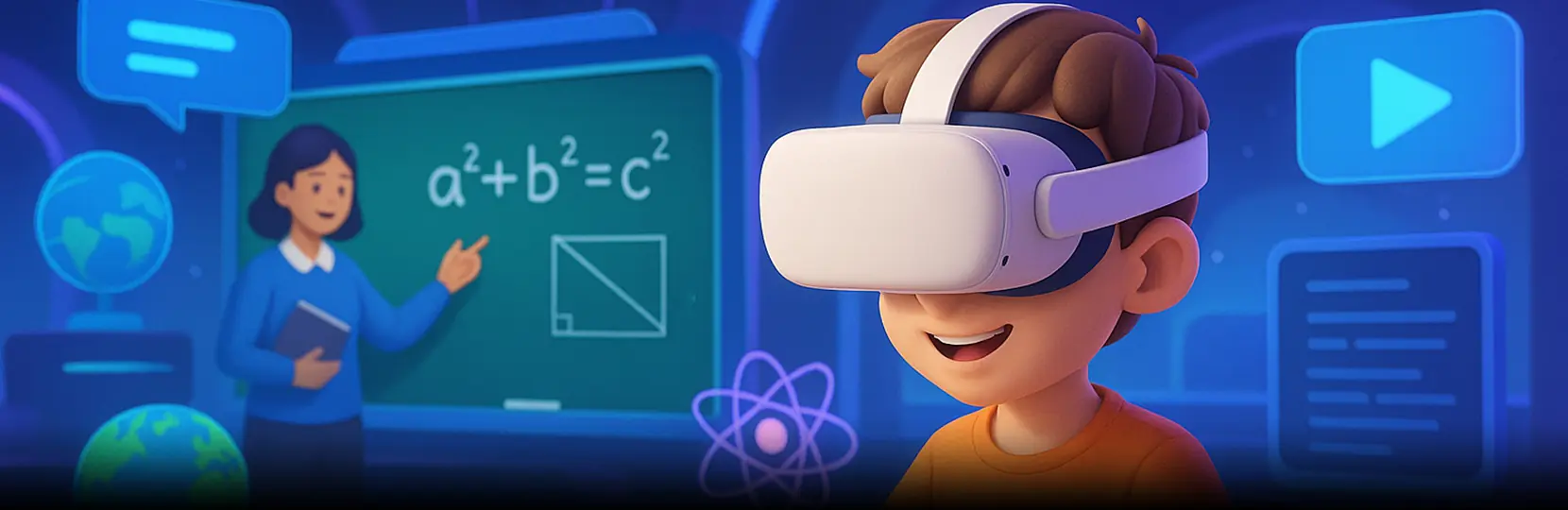
VR game-based learning fits high-fidelity skill training where physical presence changes the outcome: surgery, welding, aviation safety, and public speaking. See virtual reality game development for the underlying production track.
Modern titles emit xAPI statements to a learning record store, capturing granular events beyond what SCORM tracks. SCORM 1.2 and 2004 remain widely required by corporate LMS, and LTI 1.3 is the standard for launching from a higher-ed LMS.
Accessibility is a design requirement, not a late-stage patch. WCAG 2.2 added success criteria for focus visibility, dragging alternatives, and consistent help. For children's products, COPPA in the U.S. and GDPR Article 8 (GDPR-K) in the EU control data collection, consent, and advertising, data minimization and no behavioral advertising are the baseline.
Production pipeline, cost, and timeline
A production-ready title is built by a mixed team of instructional designer, game designer, engineers, artists, QA, and audio. Unity is the most common engine for cross-platform delivery, with Unreal chosen for high-fidelity 3D simulation. Typical team size is 4-10 specialists for a mid-scope title over 4-9 months.
A focused browser-based title with a single learning objective starts from €40,000 and delivers in 3-4 months. A cross-platform mobile title with LMS integration typically sits in the €80,000-€180,000 range over 5-8 months. Full-scope simulations with VR, multi-language voice, and enterprise LMS integration run €200,000-€500,000+ over 9-18 months.
A game-based learning case from the Game-Ace portfolio
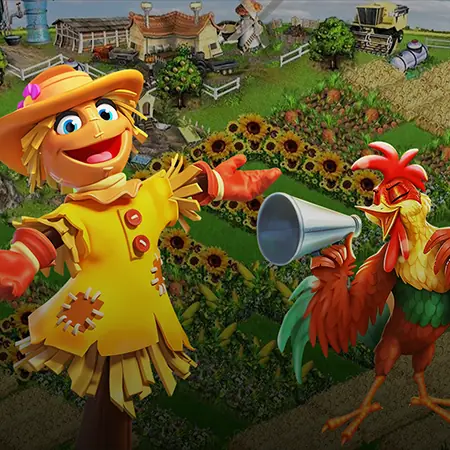
Welcome to Financial Garden, a financial literacy game by Game-Ace
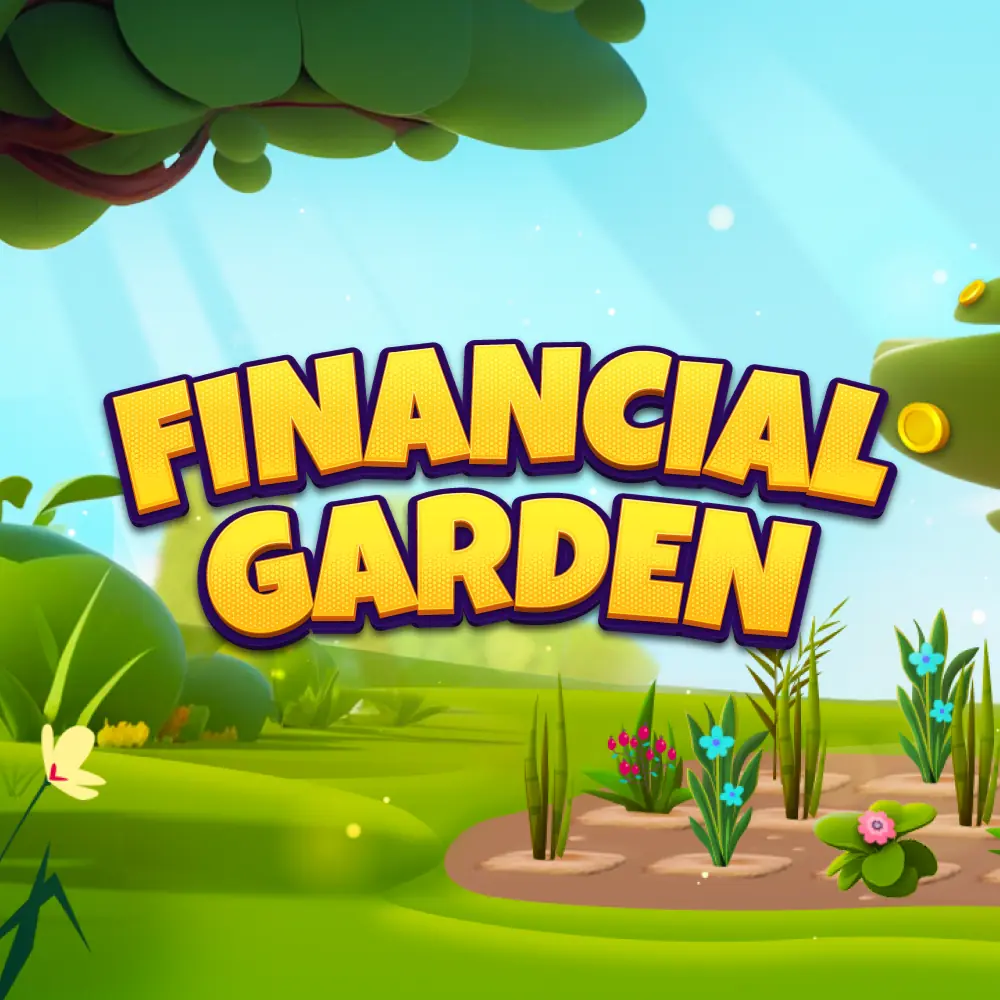
Financial Garden is a gamified financial education quiz Game-Ace built for Pinnacle Financial Strategies, where credit union and community bank account holders complete interactive courses, earn badges, and grow a virtual garden as they progress, replacing an outdated training tool.
When to talk to Game-Ace about game-based learning
Game-Ace has been building games since 2005, with 120+ in-house specialists and 200+ delivered titles across mobile, web, VR, and multiplayer categories. Educational and serious game work sits alongside our commercial game production. If a purpose-built game-based learning title is on your roadmap, Game-Ace's custom game development studio delivers full-cycle production, co-development, and team extension, with NDA and full IP transfer on every engagement. See also educational games for kids.
 How MetaHuman changes game character development
  Game development for startups: budget and MVP guide
  Engineering tower defense games from prototype to live service
  Idle game development: a full production guide
  Gamification in recruitment: what actually works