
Gamification in recruitment means using game mechanics, simulations, and interactive assessments to source, screen, and evaluate candidates. In current enterprise practice, it shortens time-to-shortlist by 30 to 50 percent, raises assessment completion above 90 percent on mobile, and produces structured behavioral and cognitive data that hiring managers can defend under EEOC and EU AI Act scrutiny.
What gamification in recruitment covers today
Recruitment gamification is not a single product. It is a layer that sits across the talent funnel and turns key decision moments into measurable interactions. The most common formats are situational judgment simulations, cognitive mini-games (memory, pattern recognition, risk balancing), behavioral games modeled on neuroscience research, coding challenges for technical roles, and short scenario-driven onboarding experiences.
What separates a serious recruitment game from a quiz is the data model. Every candidate action becomes a labeled signal: decision speed, risk tolerance, attention to detail, collaboration bias. Those signals feed a scoring model that is documented, testable, and auditable by HR, legal, and works councils.
Scoping a custom recruitment game or a branded assessment simulation?
Where gamification fits in the talent funnel
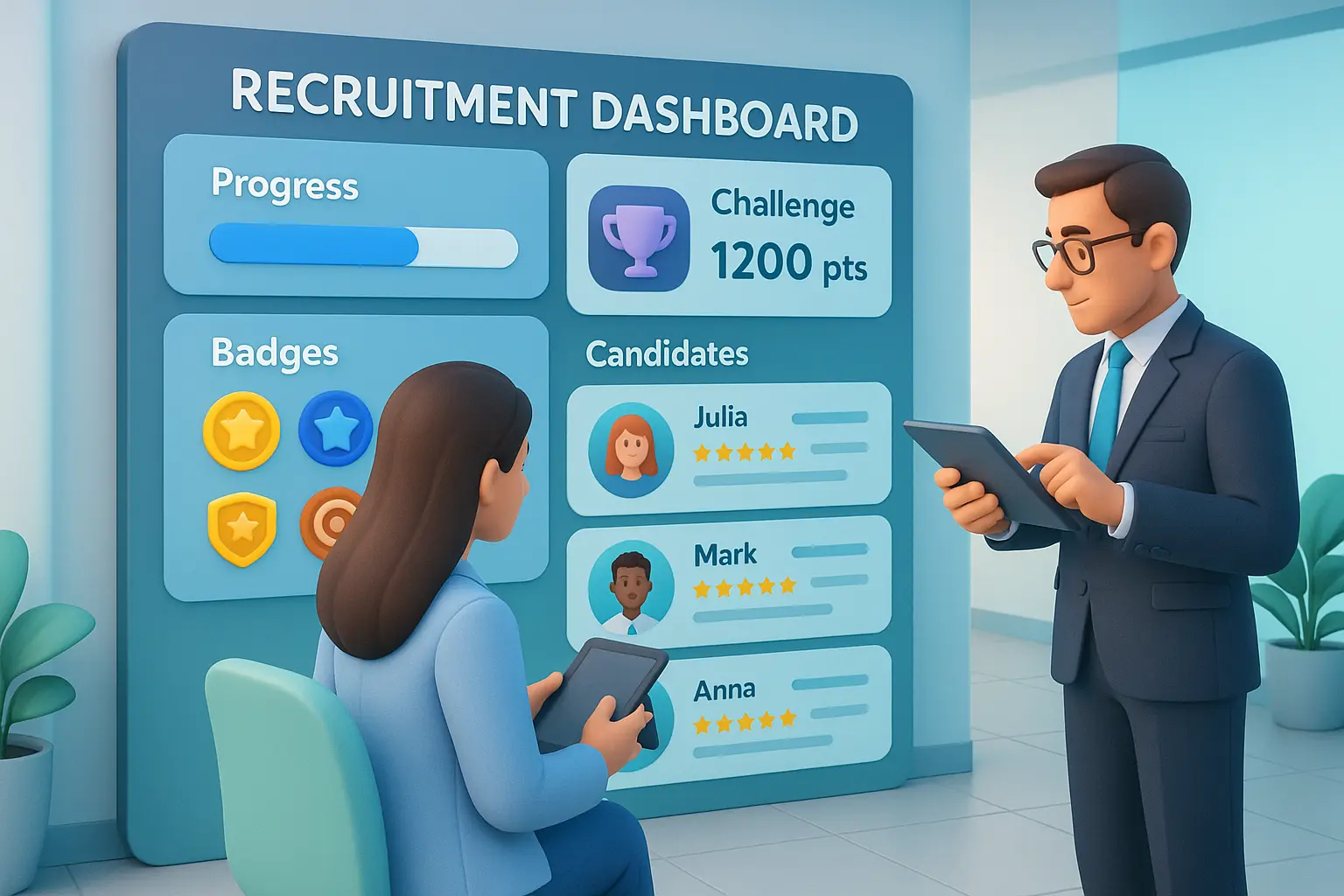
Gamified recruitment fits four distinct funnel stages, and each stage rewards a different game format:
- Sourcing: employer-brand games and challenge campaigns that attract passive candidates and generate a warm applicant pool.
- Screening: short cognitive or behavioral games that replace CV keyword filters at the top of the funnel.
- Assessment: role-specific simulations for technical, sales, customer service, and leadership positions.
- Onboarding: scenario-driven experiences that reinforce culture, compliance, and role-specific workflows in the first 30 days.
A common mistake is deploying one platform for all four stages. Sourcing games optimize for reach and viral share; assessment games optimize for validity and bias control. Treating them as the same product produces weak results on both ends.
Assessment game formats used in recruitment gamification
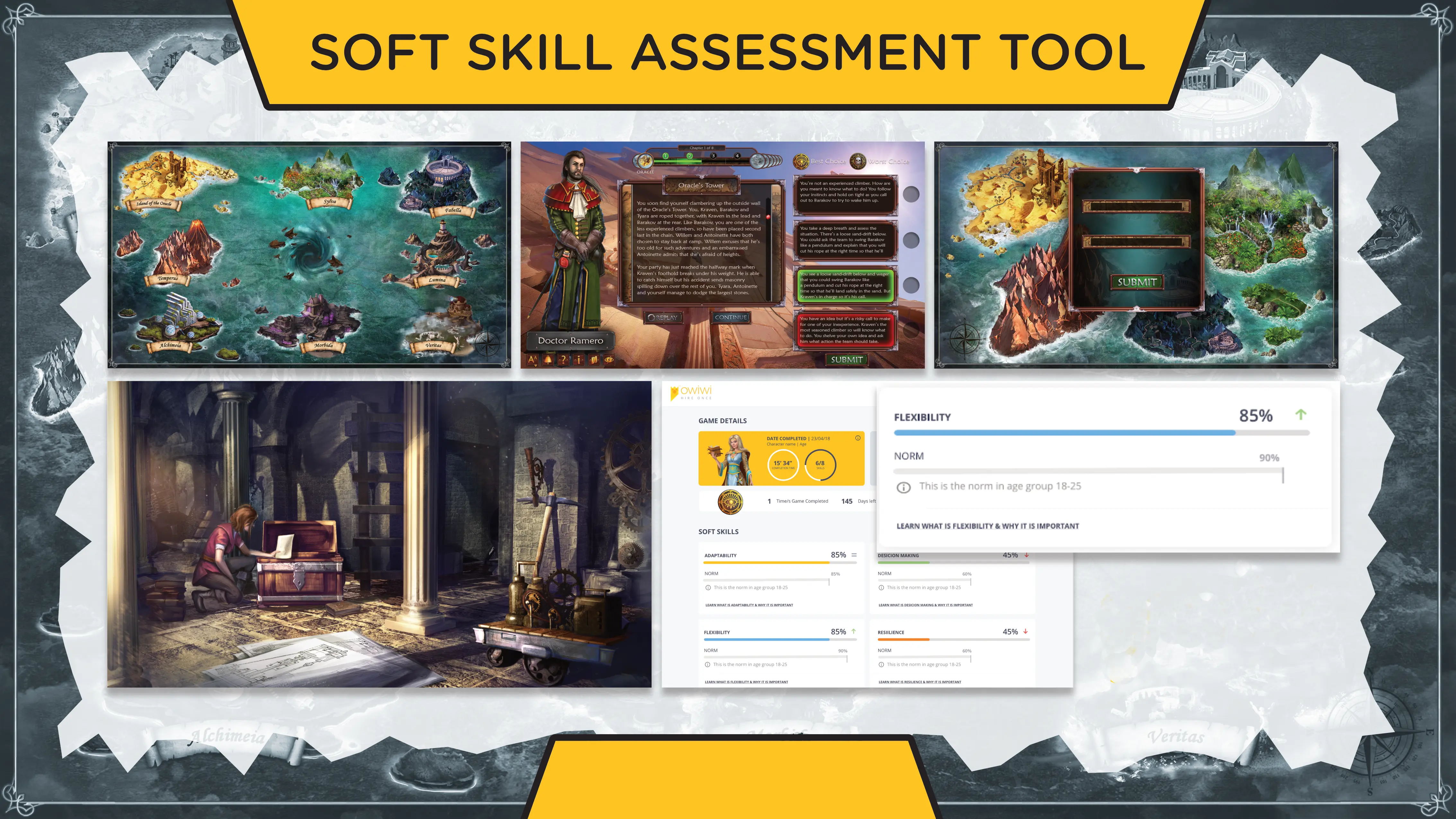
Assessment games fall into four working categories that HR technology buyers now recognize as standard scope. Situational judgment simulations put the candidate inside a workplace scenario (an angry customer, a missed deadline, a conflicting instruction) and record how they resolve it across several forks. They work for customer service, sales, management, and healthcare roles where behavioral fit matters as much as skills.
Cognitive mini-games measure processing speed, memory, focus, and risk calibration through short abstract tasks. Pymetrics popularized this format around neuroscience research, and it remains a strong screening layer for graduate and high-volume hiring. Behavioral games model traits like collaboration, learning agility, and stress response through gameplay decisions rather than self-report questionnaires. Coding challenges (HackerRank, CoderPad, Codility, custom) close the loop for technical hiring and are increasingly bundled with review workflows.
Enterprise examples that shape gamification in recruitment
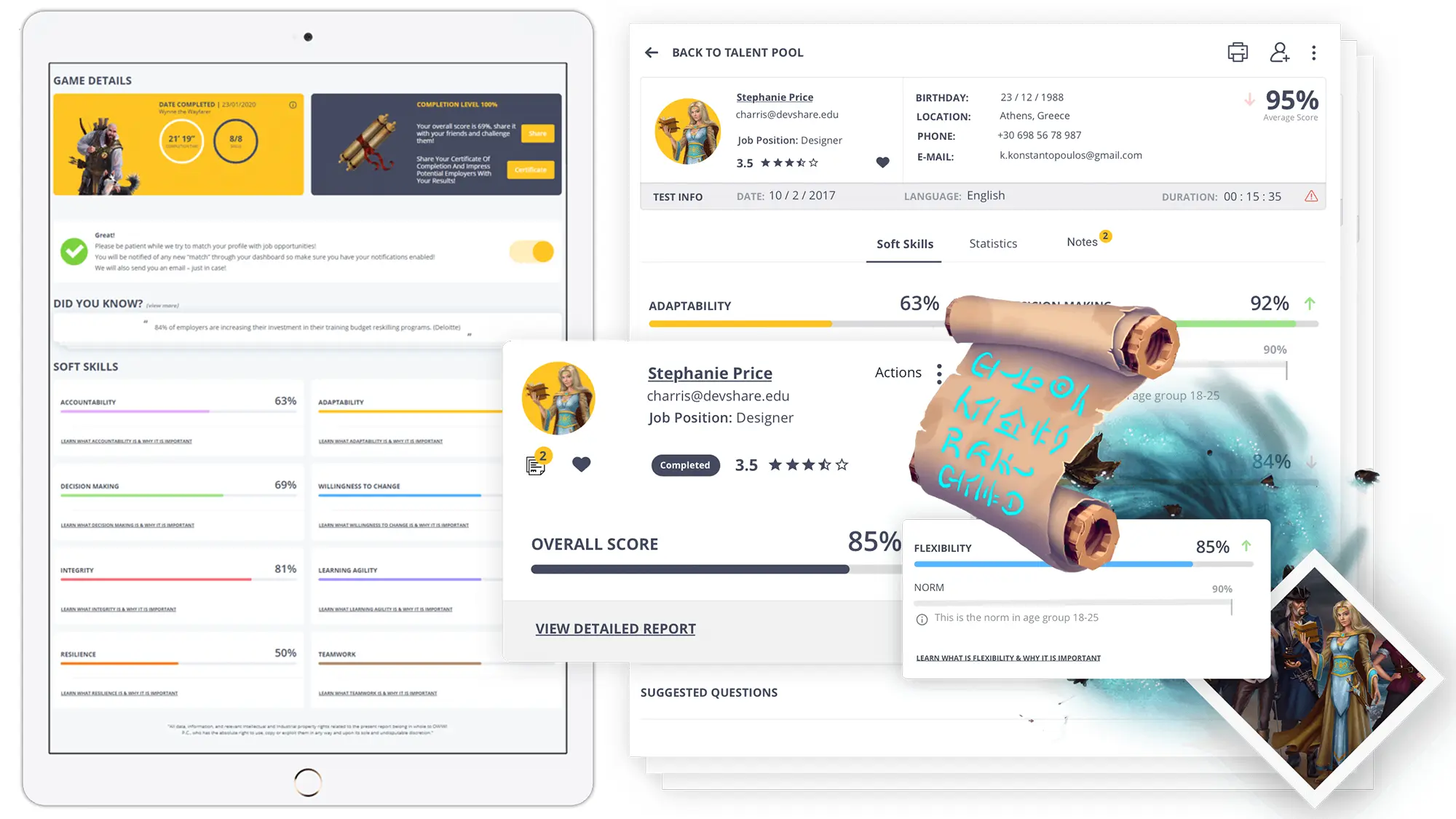
Four well-documented enterprise programs remain the reference points for how large employers deploy recruitment gamification at scale.
- Unilever + Pymetrics (now Harver): neuroscience-based cognitive games replaced early-stage CV screening for graduate hiring, cutting time-to-hire and expanding demographic diversity of the shortlist.
- L'Oreal Reveal: a business simulation used for internship and graduate recruitment across multiple markets, doubling as an employer brand and assessment tool.
- PwC Multipoly (Hungary): a multiplayer online business simulation where candidates solve real consulting-style problems in teams, used to identify commercial and collaboration skills.
- Deloitte Leadership Academy: an internal learning platform with gamified progression that also feeds internal mobility and succession decisions.
These programs share three properties. They are validated against on-the-job performance data, documented well enough to defend under legal review, and integrated into the ATS so recruiters see game outcomes alongside standard candidate records.
Bias, fairness, and the current regulatory backdrop
Any gamified assessment that influences a hiring decision is now treated as a high-risk AI system in the EU and a covered selection procedure under EEOC guidance in the United States. That reality shapes how new recruitment games are scoped.
The EU AI Act requires documented risk assessments, quality management systems, human oversight, and post-deployment monitoring for AI systems used in recruitment and worker management. In parallel, the EEOC technical assistance on AI in hiring reminds employers that the four-fifths rule and Title VII still apply when a game or algorithm sits inside the selection process.
Practical consequences: candidate-facing games must offer accessibility accommodations, scoring models must be documented and testable, adverse impact must be measured across protected classes, and the entire pipeline needs a clear audit trail. Serious recruitment game vendors and custom builds both need this scaffolding before launch, not after.
Candidate experience metrics that actually move
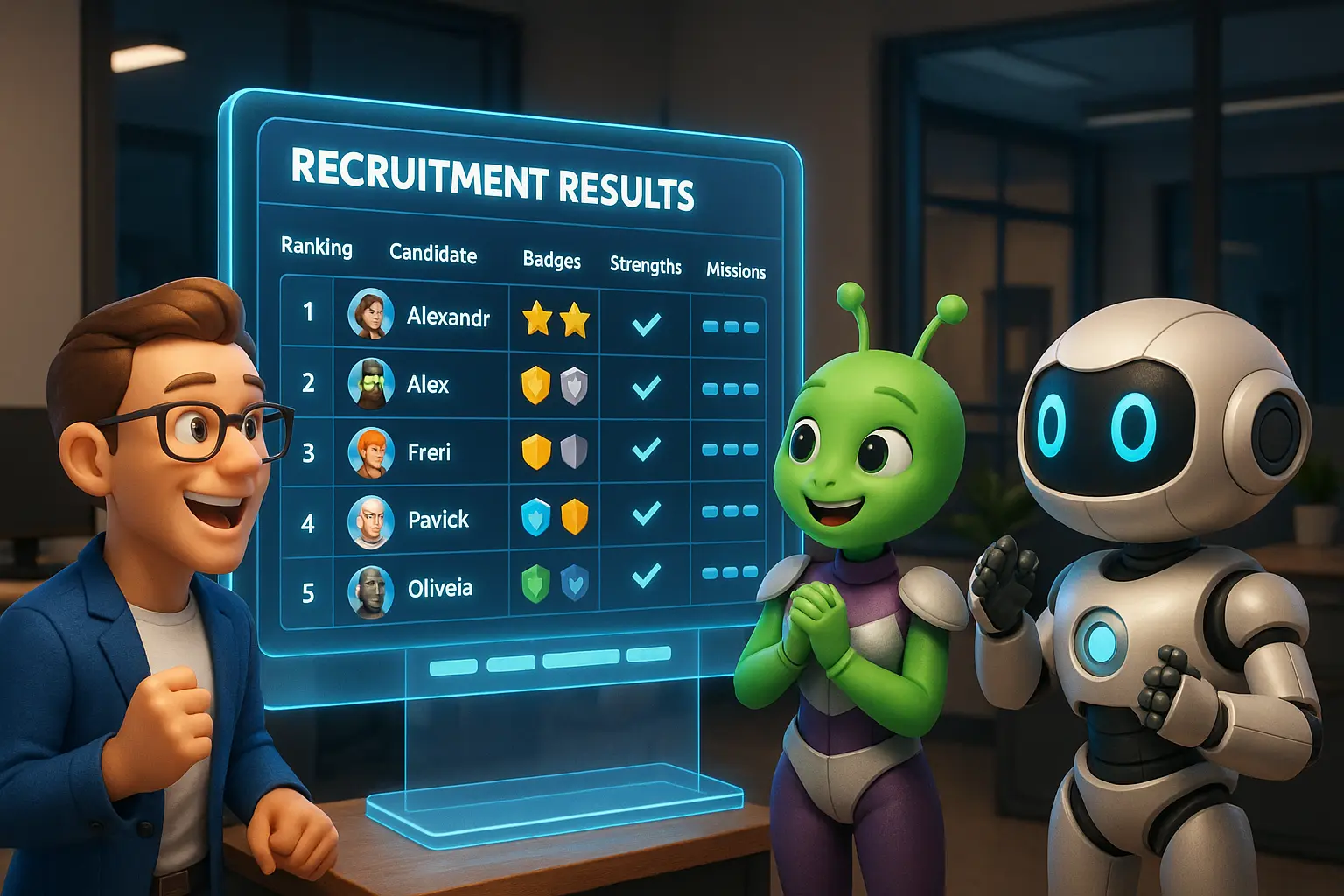
Gamification in recruitment succeeds or fails on measurable candidate experience shifts, not on aesthetic polish. The metrics that hiring teams track after a rollout are assessment completion rate (target 85 to 95 percent on mobile), median time to complete (target 20 to 30 minutes for early screening), Net Promoter Score from candidates whether hired or not (target above 30), self-reported clarity of role expectations after gameplay, and shortlist diversity compared with the previous funnel.
A rollout that only improves recruiter throughput but drops candidate NPS is a red flag. Modern candidates share hiring experiences publicly on Glassdoor, Reddit, and LinkedIn, and a poorly designed gamified assessment can damage employer brand faster than it fills roles.
Integration with Workday, Greenhouse, Lever, and iCIMS
Assessment game data has no operational value unless it lands cleanly inside the ATS the recruiter already uses. Every serious deployment involves an integration decision. Workday integrations typically use the Workday Recruiting Assessment Connector or the Workday Extend framework for deeper embeds. Greenhouse offers the Harvest and Ingestion APIs plus a partner marketplace slot for assessment vendors. Lever exposes its Data API and Snapshot API for two-way sync. iCIMS integrates via the Talent Cloud Marketplace and custom middleware for legacy accounts.
For custom recruitment games, the integration is usually built around candidate ID pass-through, scored result payload, and status callback into the ATS stage machine. Off-the-shelf platforms come pre-integrated with the major ATS, but with limited flexibility on scoring model and branding. Custom builds trade longer setup for full control of the data model.
Mobile-first design for gamified recruitment
Mobile-first is now the baseline, not the upgrade. In high-volume hiring (retail, hospitality, logistics, entry-level tech) more than 70 percent of candidate sessions start on a phone, and desktop-only assessments cut completion by half.
A mobile-first recruitment game needs one-hand playable controls, session lengths under 15 minutes per module, offline-tolerant progress saving, and accessibility support for screen readers and reduced motion. Landscape-locked simulations and heavy 3D scenes still have a place for graduate assessment centers, but they do not belong at the top of the funnel.
Custom recruitment game vs off-the-shelf platform
The choice between custom and off-the-shelf is usually decided by three factors: number of hires per year, importance of employer brand differentiation, and the sensitivity of the role data. For volumes above 5,000 candidates per year in a single job family, custom economics start to work. For smaller volumes, off-the-shelf gets teams live faster and cheaper. Employer brand differentiation (finance, luxury, tech, hospitality) is a strong argument for custom, since branded gameplay travels through LinkedIn and TikTok in a way generic assessments do not.
| Dimension | Pymetrics / Harver | HireVue | Custom recruitment game |
|---|---|---|---|
| Setup cost (EUR) | 30k-80k / year | 40k-120k / year | 120k-300k one-time |
| Per-candidate cost | 20-60 | 30-100 | Amortized over volume |
| Deployment time | 4-8 weeks | 4-8 weeks | 5-9 months |
| IP ownership | Vendor | Vendor | Employer |
| Brand fit | Limited | Limited | Full |
When to talk to Game-Ace about gamification in recruitment
The right moment to bring in a production partner is after HR has confirmed the target roles, expected candidate volume, and the ATS the assessment must sit inside, but before the vendor shortlist is closed. That is the point where a serious game production studio like Game-Ace can advise honestly on whether an off-the-shelf platform is enough, or whether the employer brand and volume justify a fully custom recruitment game.
If gamification in recruitment is on the roadmap, Game-Ace, a custom game development studio, handles serious game design, full-cycle production, and integration work with the same in-house team that ships commercial titles. Related capabilities include Unity game development and full-cycle game development for teams that need production capacity beyond the recruitment scope. For deeper reading, see the Game-Ace article on gamification in education, and the SHRM overview of gamified hiring practices.
 How MetaHuman changes game character development
  Game development for startups: budget and MVP guide
  Engineering tower defense games from prototype to live service
  Idle game development: a full production guide
  AI recruitment games: from real-time assessments to better hires