
AI recruitment games are interactive assessments that score how candidates think, decide, and react inside short simulated tasks. HR teams use "AI recruitment games" to replace or supplement resumes and phone screens with objective, per-second behavioural data. The output is a shortlist ranked on skills the role actually needs.
If you are scoping an AI recruitment game or gamified onboarding, talk to Game-Ace.
What AI recruitment games actually do
An "AI recruitment game" is a browser or mobile mini-game with a defined psychometric or task-based construct behind it. The engine logs clicks, latencies, choices, and error recovery, then an ML model turns those signals into competency scores. A recruiter sees a dashboard, not raw telemetry. Some titles use classic cognitive tasks; others use full role simulations: incident triage for support hires, code review puzzles for engineers, campaign planning for marketers.
The difference from a legacy online test is real-time adaptation. Difficulty and branching change per candidate, so two applicants for the same role rarely see identical playthroughs.
Why "AI recruitment games" beat traditional psychometric testing
Two reasons. First, engagement: candidates finish. Completion rates for AI recruitment games are consistently higher than for legacy timed tests, which reduces top-of-funnel drop-off. Second, signal density: a five-question personality inventory gives a recruiter five data points. A ten-minute AI recruitment game gives thousands. The SHRM guidance on talent acquisition treats structured, behaviour-based evaluation as best practice for reducing hiring risk, and game-based assessment sits comfortably inside that frame.
Traditional testing measures what a candidate says about themselves. AI recruitment games measure what they do under mild pressure. It is not a replacement for the interview, it is a filter that lets recruiters spend interview time on the top 15 percent instead of the top 60 percent.
Types of AI recruitment games and where they fit
Five formats cover most use cases today. The right one depends on the role, the volume of applicants, and how much integration engineering the HR stack can absorb.
| Game type | What it measures | Best-fit roles | Typical deployment |
| Aptitude | Numerical, verbal, logical reasoning | Graduate hires, analyst roles | Pre-screen inside ATS |
| Personality | Big Five traits, work-style preference | Sales, service, leadership | Post-application, before interview |
| Skill simulation | Role-specific technical execution | Engineers, designers, ops | Standalone URL after screen |
| Situational judgement | Judgement under branching scenarios | Customer support, healthcare | Mid-funnel filter |
| Team simulation | Cooperation, role-fit, negotiation | Managers, cross-functional hires | Assessment centre replacement |
One important point on situational judgement games in regulated hiring: LinkedIn Talent Solutions research on candidate experience shows that transparent scoring criteria and a clear explanation of what is being tested raise trust more than the actual test difficulty. Show candidates the construct.
How the AI actually scores a candidate
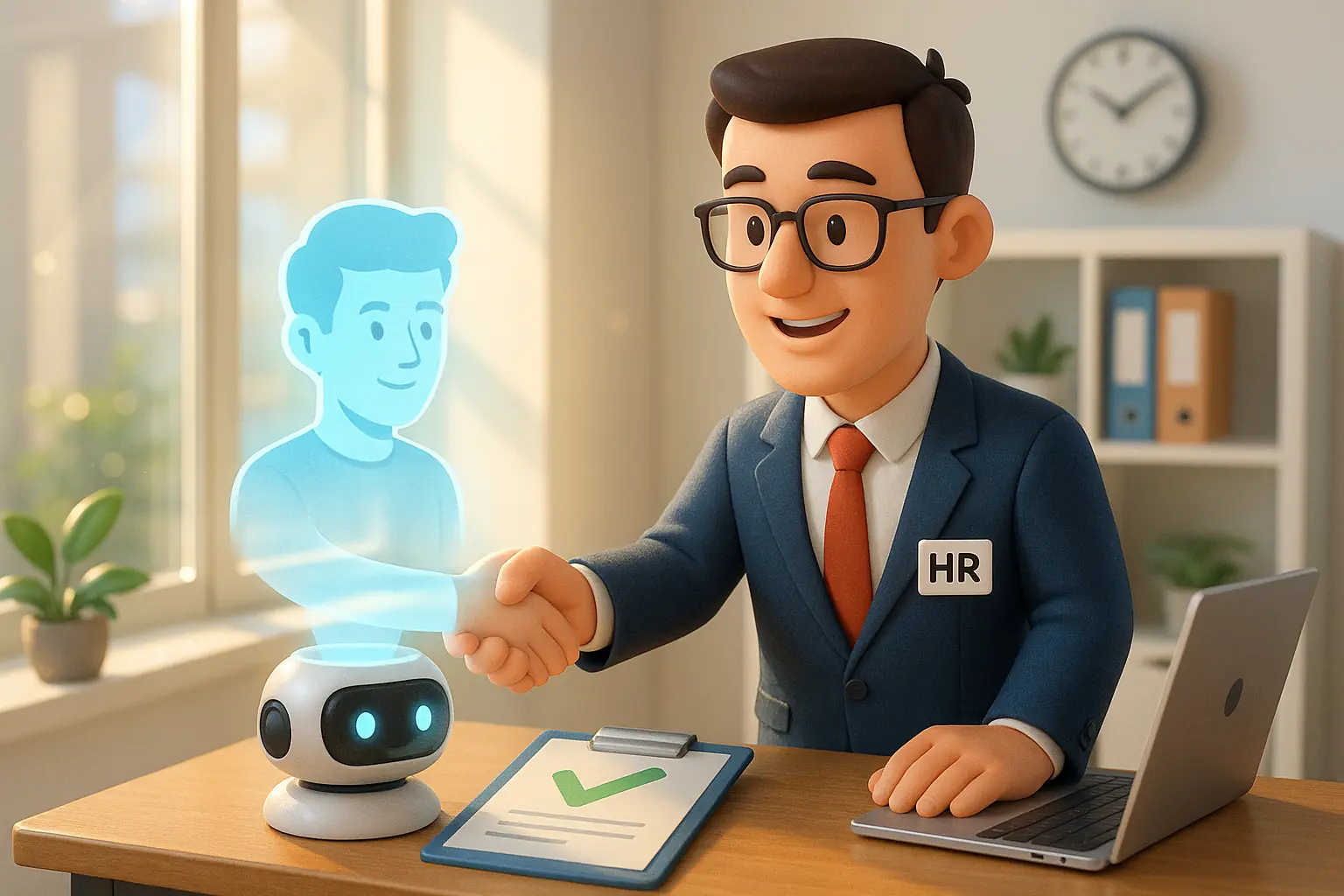
Three layers, usually. Layer one is feature extraction: every interaction becomes a numeric feature, mean decision latency, first-move time, error recovery rate, exploration versus exploitation ratio, consistency across trials. A ten-minute session typically produces 300 to 800 features. Layer two is a scoring model, often gradient-boosted trees or a shallow neural network trained on historical incumbent data. Layer three is the calibration and fairness pass: subgroup performance is checked, features that correlate too strongly with protected attributes are down-weighted or removed. Well-built AI recruitment games version-control this pipeline and re-audit quarterly, that is where most in-house builds cut corners.
Where AI recruitment games work well by role
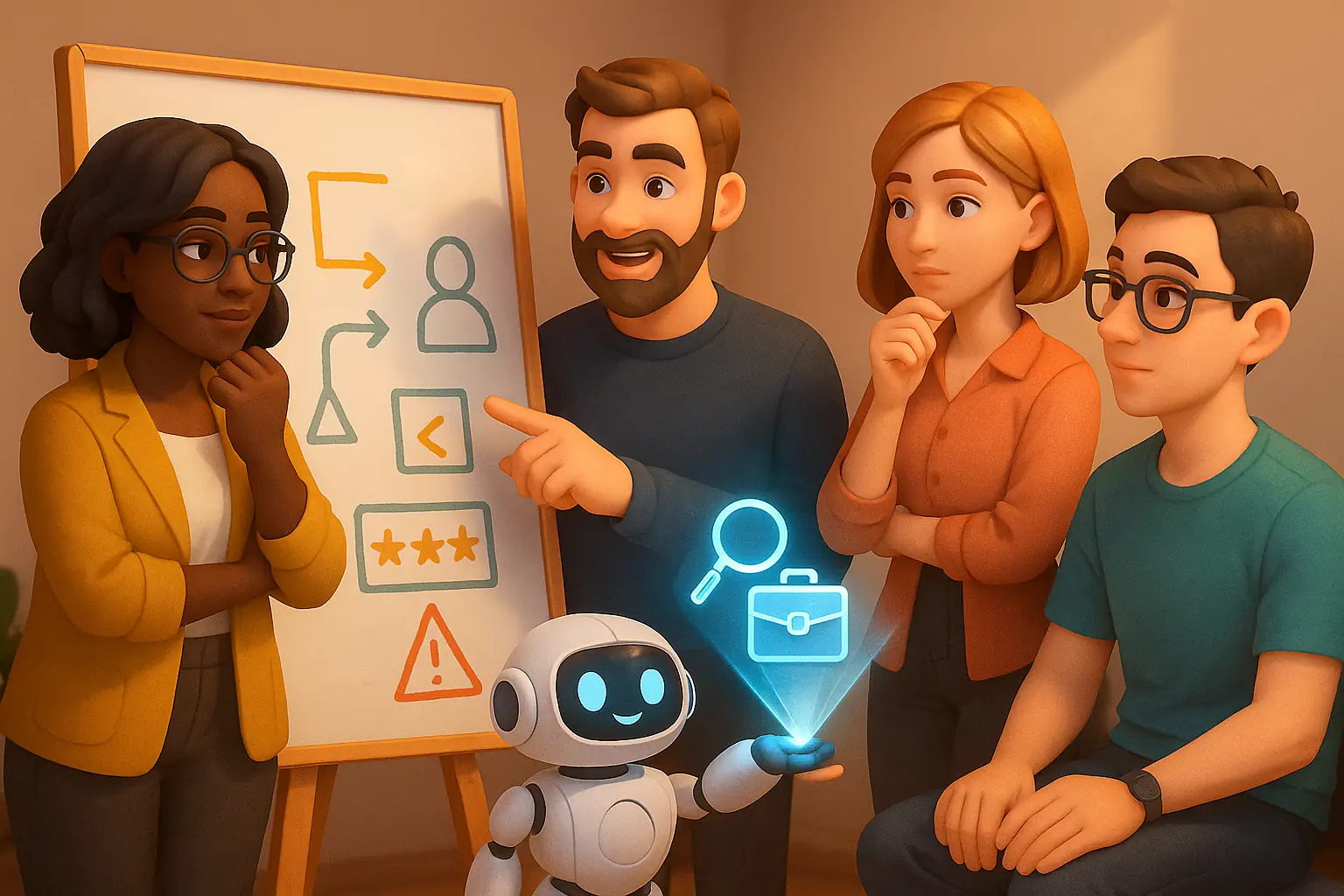
- Engineering hires: skill simulations with real code artefacts and read-write logs beat trivia by a wide margin.
- Support and service: branching conversation trees with tone scoring and de-escalation choices predict on-the-job performance better than personality inventories alone.
- Sales: negotiation micro-simulations with objection handling, priced against expert rubrics.
- High-volume graduate intake: aptitude games are a defensible way to shortlist thousands without a full assessment centre.
- Executive and specialist roles: game-based assessment adds noise, not signal. Interview-and-references still wins here.
Data protection, bias, and what regulators actually check
AI recruitment games collect behavioural biometrics. That puts them inside GDPR Article 22 (automated decision-making) in the EU and inside the New York City Local Law 144 audit regime in NYC. HR teams that skip the impact assessment run real legal risk, not theoretical.
- Explicit consent before the session starts, with plain-language explanation of what the game measures.
- Right to human review of any adverse hiring decision informed by the game score.
- Annual independent bias audit with published summary (mandatory in NYC, best practice everywhere).
- Data retention capped, usually 90 to 180 days after the hiring decision.
- No inference of protected attributes (age, gender, disability, ethnicity) from behavioural features.
Vendors that cannot show a technical write-up of their fairness pipeline should not be in the shortlist.
Integration with ATS and HRIS
Modern AI recruitment games ship with a Workday, Greenhouse, Lever, or SAP SuccessFactors connector. The score, a shortlist recommendation, and a link to the full report land inside the candidate record. If it does not integrate, it will not survive the second recruiter using it, that is the single biggest reason internal pilots die.
When to talk to Game-Ace about AI recruitment games
Talk to us early if you are scoping a custom AI recruitment game rather than buying an off-the-shelf platform. Custom makes sense when the role is highly specific (regulated iGaming ops, a rare technical stack, an internal simulation of your own product) or when data ownership is a hard requirement. We work with your in-house HR team, your I/O psychologist or assessment vendor, and your data protection officer. Game-Ace handles the game design, the ML pipeline scaffolding, the ATS connectors, and the audit-ready documentation.
For adjacent projects, gamification or serious game development may be a closer fit than a full recruitment build. If the goal is a learning game for young users rather than adults, educational games for kids is the right entry point. Full production capability sits in full-cycle game development, and if you only need staffing rather than a turnkey build, hire game designers is the fastest path in.
If AI recruitment games are on your roadmap, Game-Ace, a custom game development studio, partners with HR and product teams on serious-games and gamified assessment builds from concept to live release.
 How MetaHuman changes game character development
  Game development for startups: budget and MVP guide
  Engineering tower defense games from prototype to live service
  Idle game development: a full production guide
  Gamification in recruitment: what actually works