Slot game assets are the visual, audio, and interface elements that make up a playable slot game. The standard production set covers reel symbols, the frame and reel grid, the background, the UI and HUD, the paytable, win animations, idle animations, transition animations, bonus game art, and sound. Each category has its own production scope, file format, and handover requirements.
This guide walks through the ten categories an art studio typically delivers on a slot project and the production details that matter when scoping the work.
The 10 categories at a glance
| # | Category | What it covers |
| 1 | Reel symbols | Low-pay, mid-pay, high-pay, scatter, wild, expanding and stacked variants |
| 2 | Frame and reel grid art | Machine frame, reel housing, separators, paylines overlay |
| 3 | Background art | Themed backdrop, layered parallax art, ambient elements |
| 4 | UI and HUD | Spin, bet, balance, autoplay, settings, win meter |
| 5 | Paytable graphics | Symbol values, payline diagrams, feature explainers |
| 6 | Win animations | Symbol-level win effects, frame shimmer, particles, big-win overlays |
| 7 | Idle animations | Ambient symbol motion, background loops, attract-mode cycles |
| 8 | Bonus game art | Free-spin scenes, pick-and-click art, wheels, mini-game backgrounds |
| 9 | Transition animations | Spin start and stop, bonus trigger wipes, scene changes |
| 10 | Sound assets | Symbol pops, reel stops, win jingles, ambient loops, voice |
1. Reel symbols

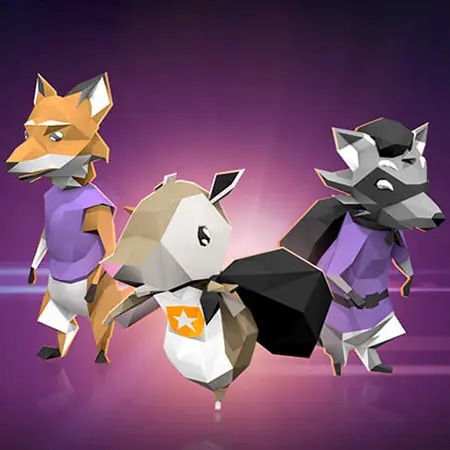
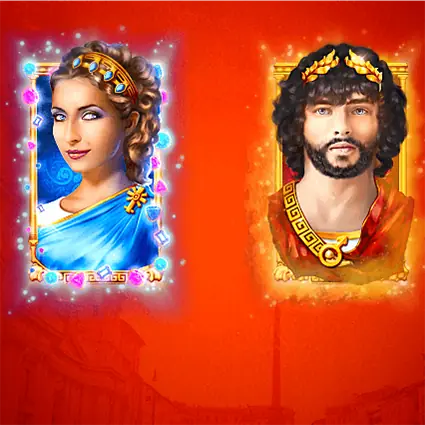
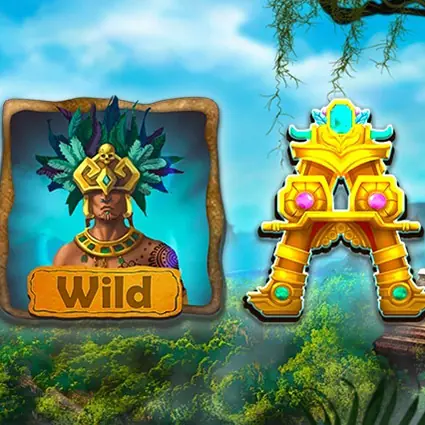
Reel symbols are the icons that land on the reels and trigger payouts. A typical slot uses 9 to 12 unique symbols grouped by value: low-pay symbols (often card ranks A, K, Q, J, 10, 9), mid-pay symbols (themed objects), and high-pay symbols (themed characters or premium items). Two special symbols sit outside the pay hierarchy: the wild, which substitutes for other symbols, and the scatter, which triggers bonus features.
Each symbol typically has multiple states: idle, win, and sometimes near-win or anticipation. Standard resolution targets are 256x256 to 512x512 pixels per state, depending on device and engine. Symbols are delivered as transparent PNGs, often packed into a spritesheet with a JSON atlas for engine import.
When symbols are animated, they are usually rigged in Spine 2D or DragonBones. The rig is delivered as a project file plus baked spritesheet fallbacks for clients without runtime rig support.
2. Frame and reel grid art

The frame and reel grid sit around and behind the symbols. The frame is the machine border that defines the play area; the reel grid is the housing that holds the symbol slots, often with vertical separators between reels. These elements set the visual tone of the slot more than the symbols themselves: a stone-carved frame reads very differently to a neon arcade frame.
Frames are usually delivered as a single layered file with separate masks for backlit areas (so the engine can drive light effects through the frame). Payline overlays, when used, are produced as a separate transparent layer that the engine can show or hide per paying combination.
3. Background art

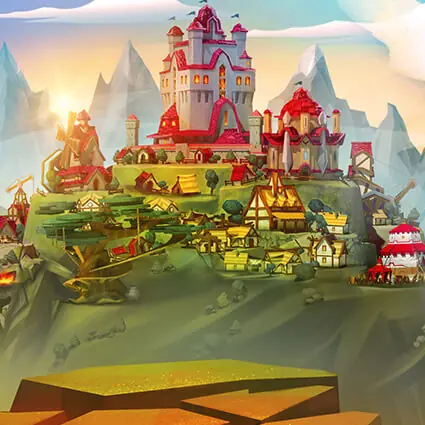
The background is the painted scene behind the reels. Slot backgrounds are usually built as multiple layers: a far layer (sky, distant scenery), a mid layer (architectural or environmental detail), and a near layer (foreground props near the reels). Layered art lets the engine apply parallax during reel spin or bonus triggers.
Backgrounds are typically delivered at the full target canvas resolution (commonly 1920x1080 base, with mobile-portrait adaptations at 1080x1920). Each parallax layer is exported as a separate transparent PNG.
4. UI and HUD

The UI and HUD are the controls and information panels that the player interacts with directly: spin button, bet selector, balance display, autoplay, settings, win meter, info button, paytable button. UI design follows the slot theme but must remain readable across device sizes.
UI assets are produced as individual transparent PNGs or as a single sprite atlas. Each interactive element typically has three states: idle, hover or pressed, and disabled. On mobile, UI scaling is planned at the start of production so the HUD remains usable at 16:9, 18:9, and 21:9 device ratios.
5. Paytable graphics

Image credit: bonusbandit[.]com
The paytable shows the player how the slot pays. It lists every symbol with its payout per matching combination, often with a small payline diagram. Modern slots include a separate explainer page for the bonus features (free spins, wilds, scatter triggers, multipliers).
Paytable graphics are static art rather than animation, but they still take production time because they encode the slot's math. Most slot art studios deliver paytable layouts as PSD or Figma files plus exported PNG screens; the actual symbol values are filled in by the game logic team based on the slot's certified math.
6. Win animations

Win animations are the most animation-intensive category in a slot. Every paying combination needs a visual reward proportional to the win size. The standard tiers are small-win, medium-win, big-win, mega-win, and a top-tier "max-win" sequence for jackpots or maximum payouts.
Each tier usually combines several layered effects: symbol-level glow or shimmer on the paying symbols, a frame flash, particle effects (coins, sparks, light bursts), and a centered overlay with the win amount. The big-win and above tiers often play a short pre-rendered cinematic.
Win animations are delivered as Spine 2D rigs, particle definitions, and pre-rendered MP4 or WebM sequences for the heaviest effects. Production scope for this category alone can equal the rest of the art combined on a feature-rich slot.
7. Idle animations
Idle animations keep the slot alive when the reels are not spinning. They include ambient symbol motion (a character on a high-pay symbol breathing or blinking), background loops (waves, drifting clouds, flickering candles), and attract-mode cycles that play if the slot sits unspun for a configured period.
Idle animations are usually shorter loops than win animations, but they run constantly, so they need to be memory-light. Most idle animations are Spine 2D loops of 2 to 5 seconds. Background loops are sometimes exported as short MP4 or WebM clips when the engine can stream them efficiently.
8. Bonus game art

Image credit: Sega Slots
Bonus games are the secondary screens that play when a slot triggers a feature: free spins, pick-and-click, wheels, ladders, and themed mini-games. Each bonus type has its own art scope: a free-spin round often reuses the base reel art with a new background and frame, while a pick-and-click bonus needs a full new scene with interactive elements.
Bonus art is scoped per feature. A simple free-spin variant might take a fraction of a base-game art budget; a multi-stage bonus with original characters and three sub-features can be as expensive as the base game itself. The handover usually mirrors the base game: background layers, UI elements, animations, and any new symbol variants.
9. Transition animations
Transition animations cover the moments when the slot changes state: the reels start spinning, the reels stop, a scatter triggers a bonus, the bonus round ends and the base game returns. These transitions are short - usually a few hundred milliseconds to a couple of seconds - but they carry most of the slot's perceived "feel".
A polished slot has a distinct transition for each meaningful event: reel-start sweep, reel-stop bounce, anticipation spin (slower reels when a scatter is one symbol away), bonus trigger wipe, and a return-to-base-game transition. Each is delivered as a Spine 2D animation or a pre-rendered sequence depending on complexity.
10. Sound assets
Sound is the tenth category and often the most underestimated. A slot needs ambient background music, a reel-spin loop, individual symbol-stop pops, win jingles per tier, a big-win cinematic track, bonus-game music, UI clicks, and optional voice (announcer cues, character lines).
Sound assets are delivered as MP3 or OGG files, sometimes both, to cover engine and browser playback differences. Each track is mastered for game loudness rather than music loudness so the slot does not blow out a player's headphones at default volume. Cue sheets list the in-game trigger for each sound so the integration team can wire them to the right event.
How slot art is scoped for outsourcing
Scoping a slot art project usually starts with the math design and a short brief: theme, target market, number of symbols, list of bonus features, target devices, and any operator-specific delivery requirements. From there, the art studio produces a category-by-category quote.
Typical timelines for a single slot:
- Base game art (reel symbols, frame, background, UI, paytable): 4 to 8 weeks.
- Win, idle, and transition animations: 3 to 6 weeks, often in parallel with the static art.
- Bonus game art: 2 to 5 weeks per bonus, depending on complexity.
- Sound design: 2 to 4 weeks, typically the last production step before integration QA.
These ranges assume a dedicated art team. Smaller teams or shared resourcing extend timelines proportionally.
Common file formats and handover
A standard slot art handover usually includes:
- Layered source files (PSD or Figma) for every art category.
- Exported PNG spritesheets with JSON atlas (TexturePacker or similar) for symbols and UI.
- Spine 2D or DragonBones project files plus baked spritesheet fallbacks for animations.
- Pre-rendered MP4 or WebM clips for heavy cinematic moments (big-win, mega-win, bonus intros).
- Audio files in MP3 and OGG, with a cue sheet mapping each file to a game event.
- A delivery README with the slot's art version, build notes, and any known limitations.
The integration team uses this package to wire the art to the slot's math engine. The math itself - reel strips, win logic, RTP, volatility - is set by the game design team and certified by an accredited test lab. Art studios do not write or certify the math.
Build A Bag shows how slot assets can support not only one static theme, but also live seasonal content with changing symbols, text, and coin mappings.
Build A Bag: slot assets built for live seasons
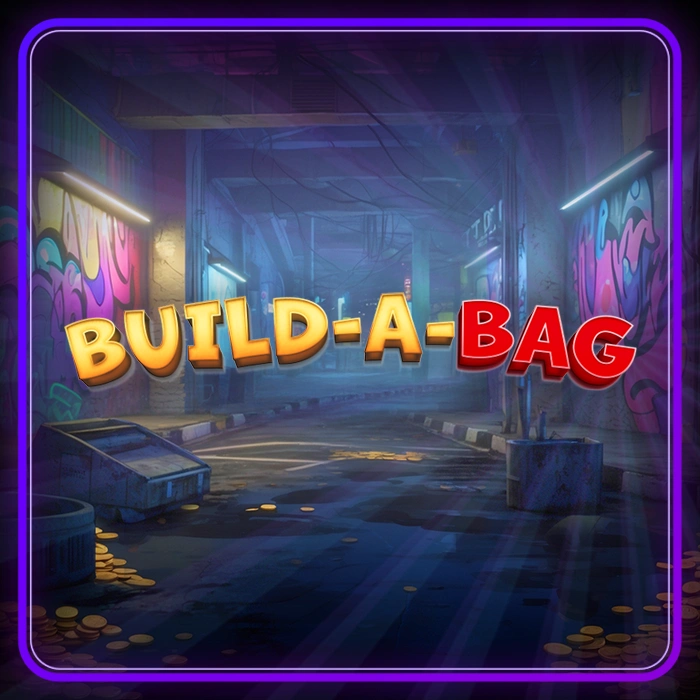
Build A Bag uses crypto-themed assets for changing seasons and coin rewards. Game-Ace created symbols, UI, reel states, paylines, win effects, and bonus animations. Dynamic loading lets operators swap visuals, text, and coin mappings via admin panel without rebuilding.
About Game-Ace
Game-Ace is a custom game development studio based in Cyprus, founded in 2005. The team includes 120+ in-house specialists across art, animation, engineering, and QA, with a portfolio of 200+ delivered projects since opening. The studio produces slot art and animation across the categories above as part of its slot game art service, and contributes to broader game art and design projects when a publisher needs more than the art layer. Selected references are on the Game-Ace slot art portfolio page; deeper credits are shared under NDA.
Scope note: Game-Ace handles art, animation, and sound production for slot games. The studio does not issue RNG or RTP certifications (those are performed by accredited test labs) and does not act as a regulated iGaming software provider. If a studio or operator is scoping a slot art package and wants a production partner, you can contact our team to discuss the project.
 Game predictions in sports: free-to-play formats that scale
  Crash games: what they are and how they're built
  How to create crypto casino games: 7-step guide
  VR casino development: how to build more immersive and engaging social games
  3D and AI avatars in casino: how they boost acquisition, retention, and time-on-device