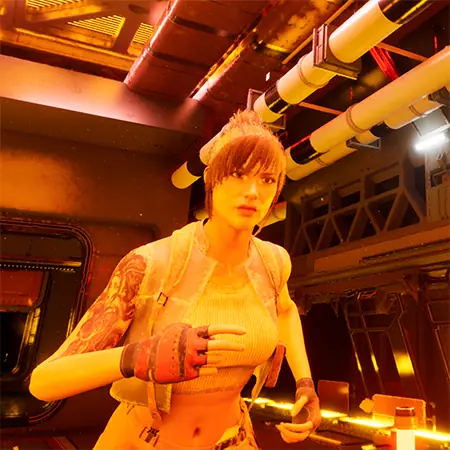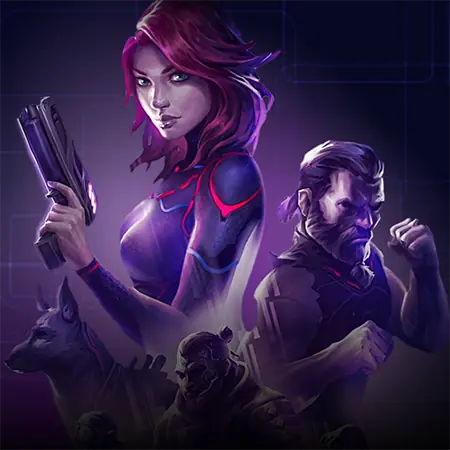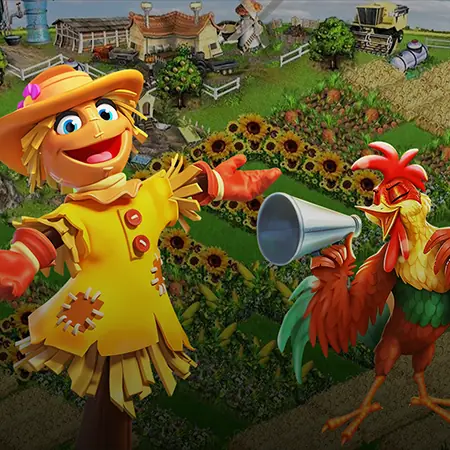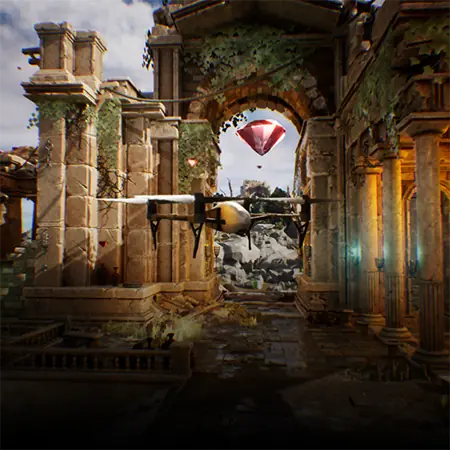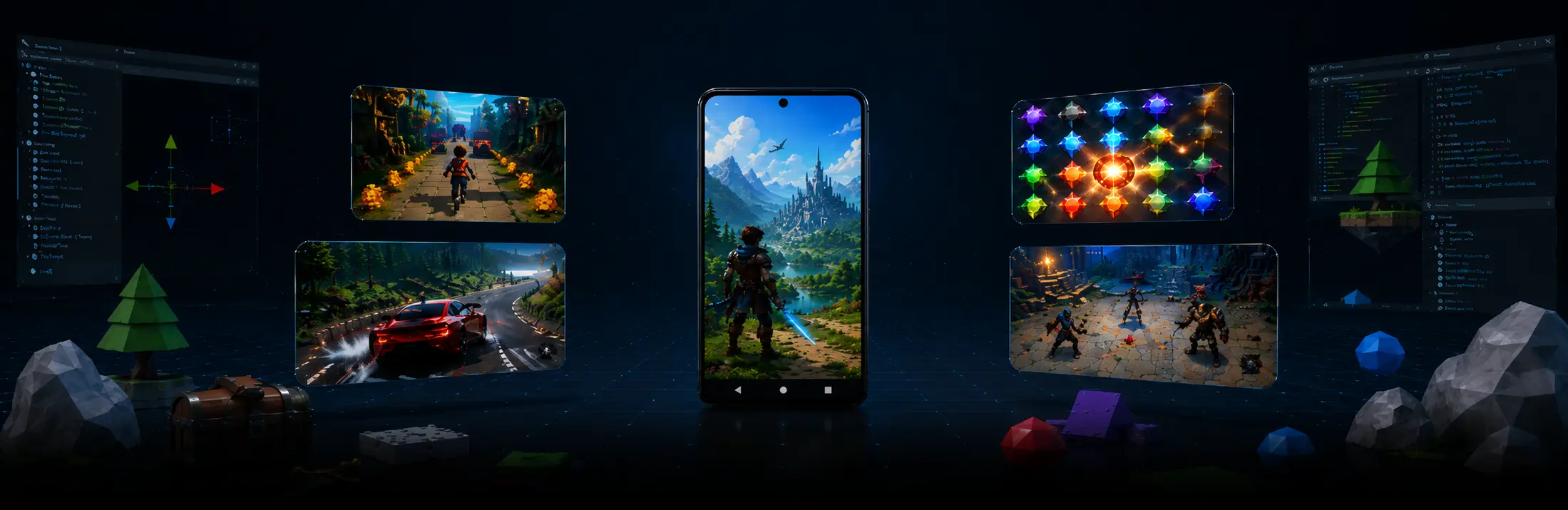

Which top Android games are built with Unity? Genshin Impact, Honkai: Star Rail, Pokemon Go, Among Us, Sky: Children of the Light, Monument Valley 3, and AFK Journey are all Unity-built Android titles released or live during 2020–2026. Unity also powers Brawl Stars, Crossy Road, Subway Surfers, Alto's Odyssey, Reigns, and Mini Metro on Android.
Best Android games with Unity
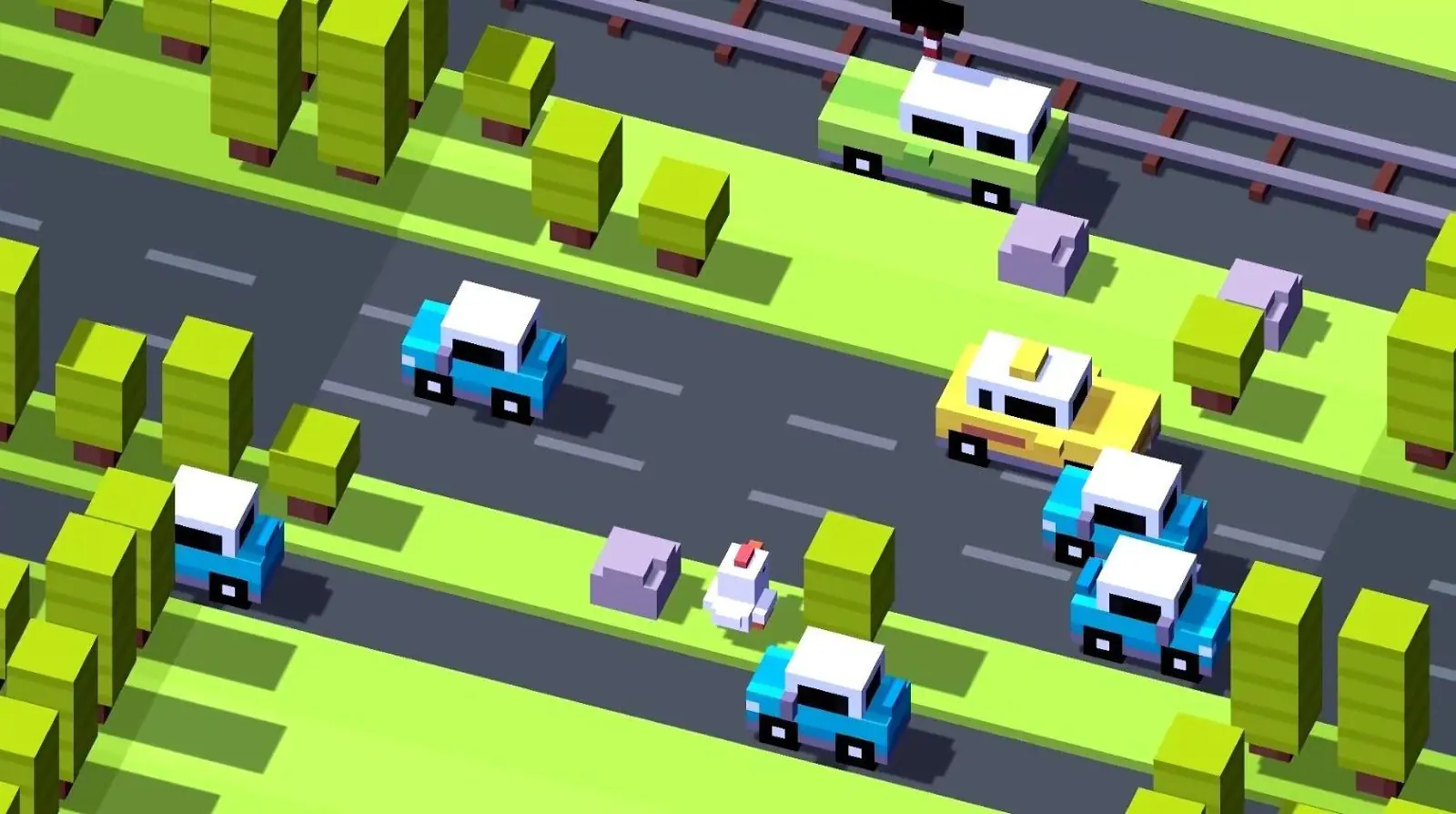
Unity is one of the most widely used engines for Android, covering casual, puzzle, social, mid-core RPG, and live-service categories. The article catalogs current 2020–2026 Unity-built Android titles, then walks through the production stack, monetisation layer, Google Play submission, performance work for device fragmentation, an offline-capable picks section, and live ops. The structure is built for studios planning a new Android Unity project and for product teams reviewing an in-flight build. Each section answers a specific buyer or producer question, with named titles, packages, and concrete handover notes.
Why Android games with Unity dominate the platform
Unity remains a default choice for Android because it covers the full mobile pipeline from prototype to store-ready build in one toolchain. C# scripting, the Asset Database, the Universal Render Pipeline (URP), Addressables for content delivery, Burst Compiler and Jobs for performance-critical code, and the Android build target with IL2CPP and ARM64 give a project a working baseline within days. Google Play accepts the Android App Bundle (AAB) format that Unity produces directly, with Play Asset Delivery for content packs. Cross-platform parity with iOS is preserved through a single project, which keeps content production, QA, and localisation budgets predictable for studios serving multiple regions.
Categories of Android games built with Unity
The Android-Unity catalog spans several commercial categories. Each has a typical production scope, a primary monetisation model, and a retention profile. The table below summarises the categories used in this article, with a typical production timeline and the monetisation pattern most often seen in 2020–2026 releases.
| Category | Typical scope | Primary monetisation | Retention profile |
| Hyper-casual | 4–8 weeks | Rewarded ads, interstitials | Short sessions, low D7 |
| Casual / puzzle | 3–6 months | IAP plus rewarded ads | Daily sessions, mid D7 |
| Endless runner / arcade | 3–5 months | Rewarded ads plus IAP | High DAU, mid D30 |
| Social and narrative | 6–12 months | IAP, season passes | Mid DAU, high session length |
| Mid-core RPG and live ops | 12–24 months | IAP, gacha, season pass | High D30, long LTV |
Notable 2020–2026 Android games with Unity
Public Unity Android references cover a wide commercial range. Genshin Impact and Honkai: Star Rail by miHoYo / HoYoverse run on Unity with custom rendering and live-ops backends, both shipping on Android with regular content updates. Pokemon Go by Niantic uses Unity with ARFoundation patterns for location and AR. Among Us by Innersloth scaled from a small mobile release into a global social deduction title. Sky: Children of the Light by thatgamecompany ships social online play on Android. AFK Journey by Lilith Games and Cult of the Lamb mobile by Massive Monster are 2024 Unity Android releases. Monument Valley 3 by Ustwo Games continues the studio's isometric puzzle line. Brawl Stars by Supercell uses Unity for its Android multiplayer arena title. Crossy Road, Subway Surfers, Alto's Odyssey, Reigns, Florence, and Mini Metro remain reference cases for indie and arcade work.
- Genshin Impact (miHoYo): Unity, Android live-service RPG
- Honkai: Star Rail (HoYoverse): Unity, Android turn-based RPG
- Pokemon Go (Niantic): Unity, Android AR and location
- Among Us (Innersloth): Unity, Android social deduction
- Sky: Children of the Light (thatgamecompany): Unity, Android social adventure
- AFK Journey (Lilith Games, 2024): Unity, Android RPG
- Cult of the Lamb mobile (Massive Monster, 2024): Unity, Android port
- Monument Valley 3 (Ustwo Games, 2024): Unity, Android puzzle
- Brawl Stars (Supercell): Unity, Android multiplayer arena
Unity stack for Android development
The Unity stack for Android centers on render pipeline choice, asset management, performance packages, and platform integrations. The Universal Render Pipeline (URP) is the default for new Android projects and scales from low-end devices to high-refresh screens with one shader set. Addressables handle content delivery and memory control across device tiers. Burst Compiler and the Jobs System take CPU pressure off hot paths. ECS / DOTS is used selectively for entity-heavy gameplay. ARFoundation ships ARCore on Android via a single project. Cinemachine, Cloud Build, and Mobile Notifications cover camera systems, automated AAB output, and FCM-driven retention.
Render pipeline choice for Android
| Pipeline | When to use | Strengths | Trade-offs |
| Built-in Render Pipeline | Legacy projects, simple 2D | Mature, well-documented | Limited modern features |
| Universal Render Pipeline (URP) | Most new Android projects | Mobile-first, scriptable, scalable | Some assets need URP versions |
| High Definition Render Pipeline (HDRP) | Not used for Android | High-end PC and console | Not mobile-friendly |
- URP: default render pipeline for Android
- Addressables: content delivery and memory control
- Burst Compiler and Jobs: CPU performance for hot paths
- ECS / DOTS: entity-heavy gameplay when scope requires it
- ARFoundation: ARCore on Android via a single project
- Cinemachine: camera systems without custom scripts
- Cloud Build: automated AAB output for branches
- Mobile Notifications: retention loops with FCM
Monetisation stack for Android Unity games
Monetisation on Android Unity titles usually blends in-app purchases, rewarded ads, and event-driven sales. Unity IAP is the engine-native layer for Google Play Billing, covering consumables, non-consumables, and subscriptions. LevelPlay provides ad mediation across Unity Ads, IronSource, and partner networks, with AdMob often used as a secondary or alternative network. Firebase covers analytics, Remote Config, A/B Testing, and Crashlytics. Live-service titles such as Genshin Impact and AFK Journey layer gacha, season passes, and event currencies on top of this base, while casual and arcade titles lean on rewarded ads and small IAP bundles.
Google Play submission and Android delivery
Google Play accepts the Android App Bundle (AAB) format. A Unity project produces an AAB through the Android build settings with IL2CPP and ARM64 enabled, which is the Play minimum for 64-bit compliance. Play Asset Delivery is used for larger content sets, with install-time, fast-follow, and on-demand asset packs supported through Addressables. Signing keys are managed through Play App Signing for production releases. Internal, closed, and open testing tracks are used for staged rollouts. Pre-launch report results inform the device matrix before the first production release.
Performance optimisation for Android device fragmentation
Android fragmentation is the main reason Unity Android projects budget for performance from week one. A typical project sets per-tier frame-time budgets for low, mid, and high-end Android profiles, then validates with Unity Profiler, Frame Debugger, and Android GPU Inspector. Texture compression uses ASTC as the primary format with ETC2 as fallback. Static and dynamic batching, plus GPU Instancing, reduce draw calls in scenes with repeated geometry. Thermal testing on physical devices, especially mid-range Android, catches sustained-session throttling before live exposure.
- Frame-time budgets per device tier (low, mid, high)
- ASTC primary, ETC2 fallback for texture compression
- Static and dynamic batching plus GPU Instancing
- Unity Profiler, Frame Debugger, Android GPU Inspector
- On-device thermal testing for sustained sessions
- IL2CPP plus ARM64 builds for Google Play compliance
Offline-capable Unity Android games
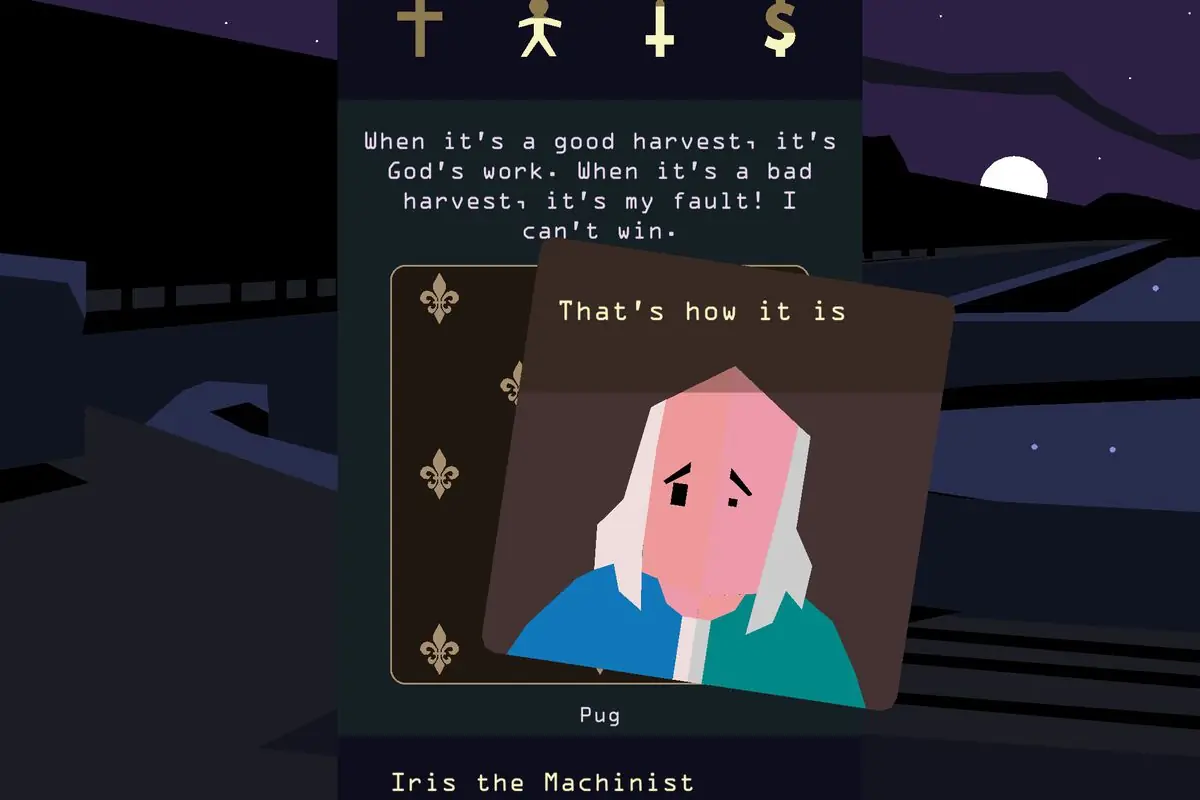
Several well-known Unity Android titles play fully or mostly offline, which matters for travel, low-connectivity regions, and parental-control use cases. Monument Valley 3 by Ustwo Games is an offline puzzle release from 2024. Alto's Odyssey by Snowman is an offline endless runner with no required network session. Reigns by Nerial is an offline narrative card game. Mini Metro by Dinosaur Polo Club is an offline strategy puzzle. Florence by Mountains is an offline narrative experience. Crossy Road Castle by Hipster Whale is mostly offline outside of friend invites. Stardew Valley by ConcernedApe ships on Android as a single-player offline farming sim that is widely documented as Unity-built on mobile. These titles cover the buyer query for offline-capable Unity Android picks.
- Monument Valley 3 (Ustwo Games): offline puzzle, 2024
- Alto's Odyssey (Snowman): offline endless runner
- Reigns (Nerial): offline narrative card game
- Mini Metro (Dinosaur Polo Club): offline puzzle strategy
- Florence (Mountains): offline narrative
- Crossy Road Castle (Hipster Whale): mostly offline arcade
- Stardew Valley (ConcernedApe / mobile port): offline farming sim
- Monument Valley 1 (Ustwo Games): offline puzzle classic
Unity on Android in international markets
Unity is the dominant engine for Android in many regions where the Android install base outweighs iOS. In LATAM (Brazil, Mexico), Southeast Asia (Indonesia, Vietnam, the Philippines), MENA, and CIS, a large share of new Android releases ship on Unity for cost, hiring, and tooling reasons. Search data for Unity Android topics shows active interest in Spanish, Portuguese, Indonesian, Arabic, Russian, and Vietnamese, which signals that both developers and players in those markets engage with this content. Studios serving any of these regions benefit from a localisation pass on UI strings, store listings, and in-game text, which Game-Ace supports on Unity Android projects when localisation is in scope.
Post-launch live ops on Android
Live ops on Android Unity titles is shaped by the update cadence in Google Play and the analytics signal from Firebase or a custom backend. A typical live-ops loop covers content drops via Addressables, Remote Config for tuning, A/B Testing for retention experiments, and event scheduling tied to season calendars. Crashlytics and Play Console vitals drive stability targets, with per-tier crash budgets and ANR limits. For live-service RPGs the cadence is usually a major patch every six weeks plus event content between patches, while casual and arcade titles run lighter cycles tied to seasonal hooks.
About Game-Ace
Game-Ace is a B2B game development studio founded in 2005, with 120+ in-house specialists and 200+ delivered games. The team covers Unity game development for mobile, browser, and cross-platform projects, including Android-first Unity builds with URP, Addressables, performance work, and Google Play release. The Game-Ace portfolio shows the range of delivered Unity work across casual, mid-core, and live-service categories. For a scoped estimate on a new Android Unity project or an in-flight Unity Android build, contact our team.
 How to make a game app: a practical guide from idea to launch
  Unity 6 for game development: what actually changed
  Rapid game development with Unity: from prototype to build
  Unity 2D vs 3D: choosing the right dimension for your game
  Best game engines: a working shortlist