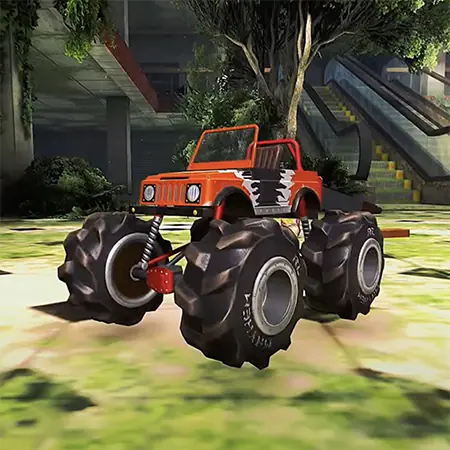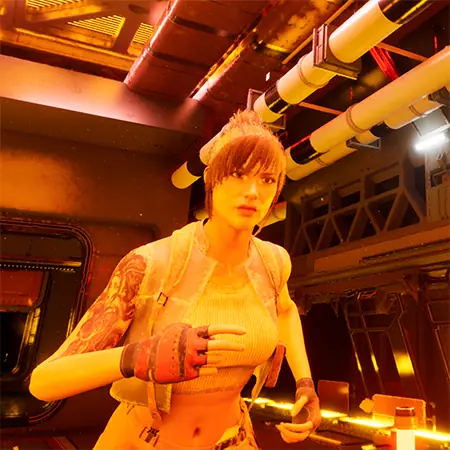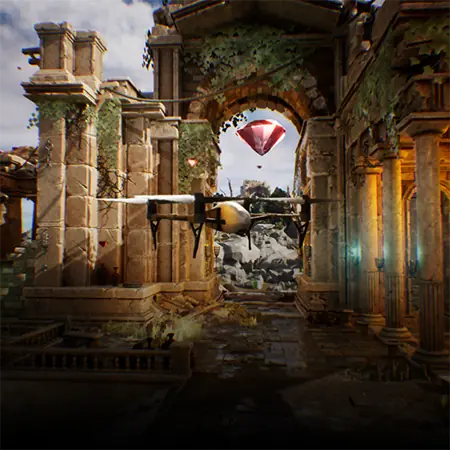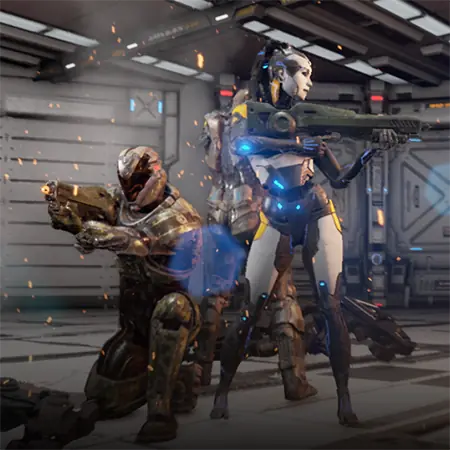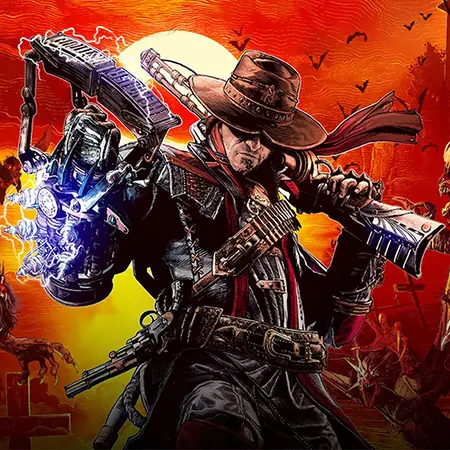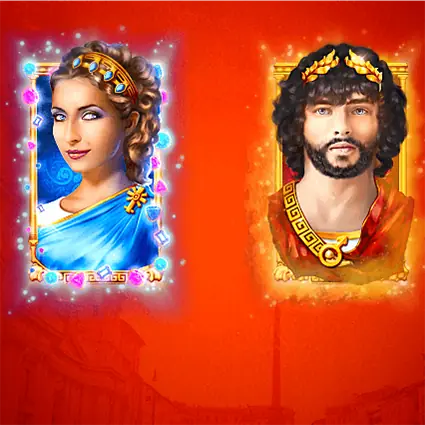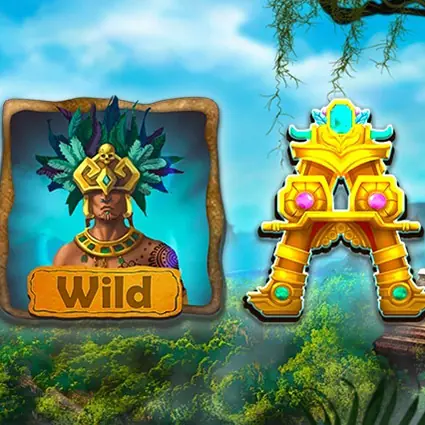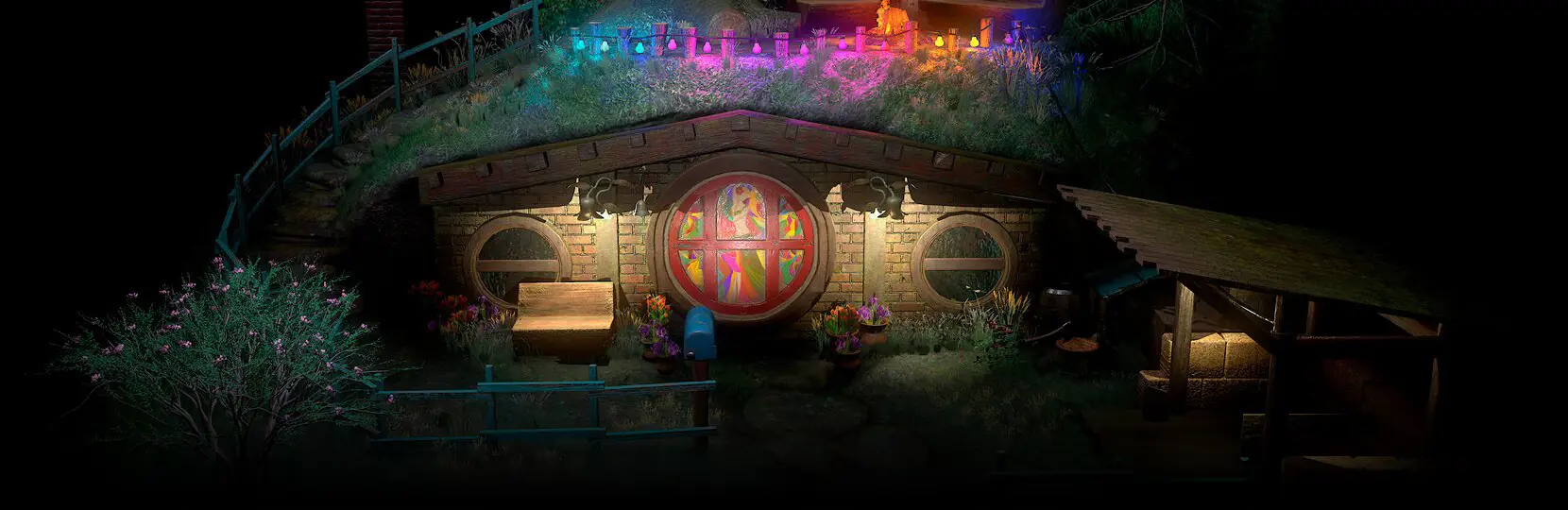

Game environment modeling is the production discipline that turns concept art into playable 3D geometry: modular kits, hero assets, terrain meshes, foliage, and prop sets that hold up under lighting, streaming, and target-platform budgets. Done well, game environment modeling delivers a world that reads clearly at a glance and stays inside memory, draw call, and polycount ceilings on every device the game ships to.
If you are scoping an environment asset pipeline, an open-world modular kit, or co-development on level art with your in-house team, see the Game-Ace game art and design services page for scope and engagement models.
What game environment modeling actually covers
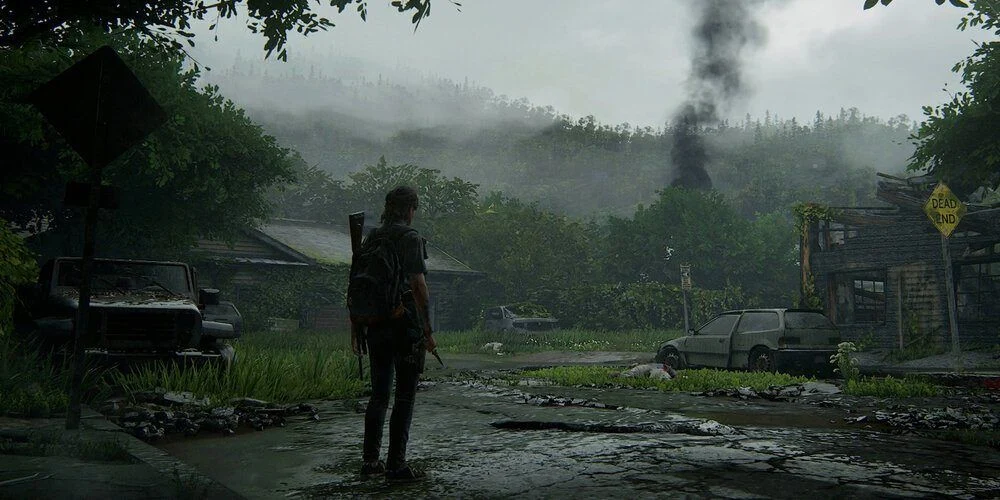
Environment modeling sits between concept art and in-engine lighting. Concept defines mood and silhouettes; modeling produces the meshes, UVs, and textures that render those silhouettes at runtime; lighting and post make them shippable. On a typical 3D project the environment modeler owns the modular kit, hero assets, terrain sculpts, decal sheets, and foliage cards, then hands them off to the tech-art and lighting teams.
The output is not just a lot of models. It is a tiled, budgeted, and reusable asset library where each mesh has a defined role, a polycount ceiling, a LOD chain, and a texture set that fits inside the project atlas. A well-modeled environment can be lit three different ways without breaking; a badly modeled one forces the lighting team to fake fixes for the entire production.
Scoping a modular kit, terrain build, or a full environment pipeline?
Approaches to game environment modeling
There is no single correct method. The right approach depends on the platform, the art style, the reuse profile of the world, and how much of the pipeline is systems-driven versus hand-authored. Five approaches dominate current production, and most shipped worlds combine two or three of them.
| Approach | Best for | Typical tools | Budget range |
|---|---|---|---|
| Modular kits | Interior levels, urban environments, tiled worlds | Blender, Maya, Substance, Unreal/Unity | €40,000-€200,000 |
| Monolithic hero meshes | Cinematic set pieces, story locations, hub scenes | ZBrush, Maya, Substance, Marmoset | €25,000-€120,000 |
| Photogrammetry / scan-based | Photoreal exteriors, natural surfaces, cliff and rock kits | RealityCapture, Metashape, Polycam, Substance | €30,000-€180,000 |
| Procedural generation | Open worlds, roguelikes, terrain and vegetation | Houdini, World Machine, Gaea, SpeedTree | €80,000-€300,000+ |
| Hand-crafted bespoke | Stylized indie worlds, narrative games, VR arenas | Blender, Maya, Substance, hand-painted textures | €35,000-€150,000 |
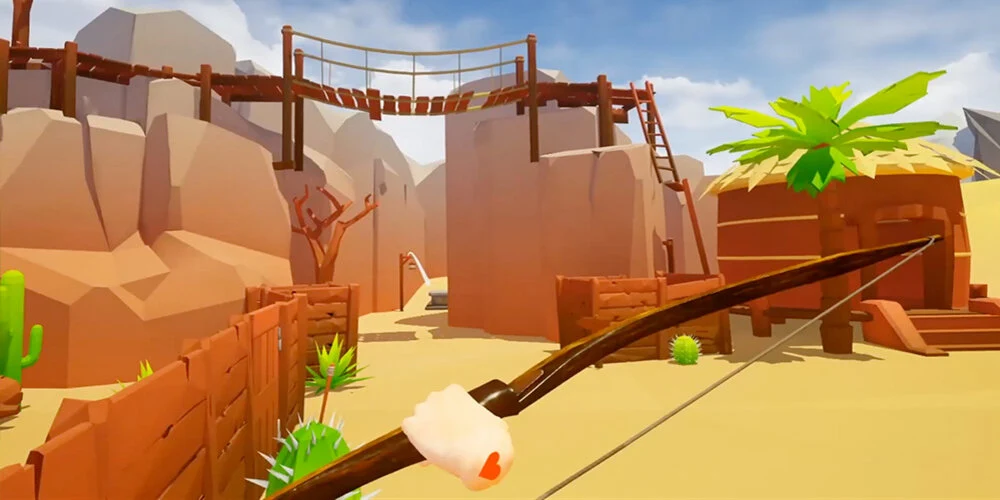
Modular kits versus monolithic environment modeling
Modular modeling breaks a world into tileable pieces: wall segments, floor tiles, corner joints, roof caps, prop variants. The kit is designed once and reused everywhere. Monolithic modeling treats each hero location as a single sculpted mesh, unique to that scene. Most shipped 3D games use both.
Kits win on production speed and memory: one 4K wall texture atlas covers dozens of rooms. Monolithic hero meshes win on silhouette and story moments, where a bespoke shape reads better than a kit-assembled one. A common mistake is going monolithic on levels that a kit would have solved in a fraction of the time. For deeper reference on the mesh-construction side of both approaches, see the 3D modeling for video games guide.
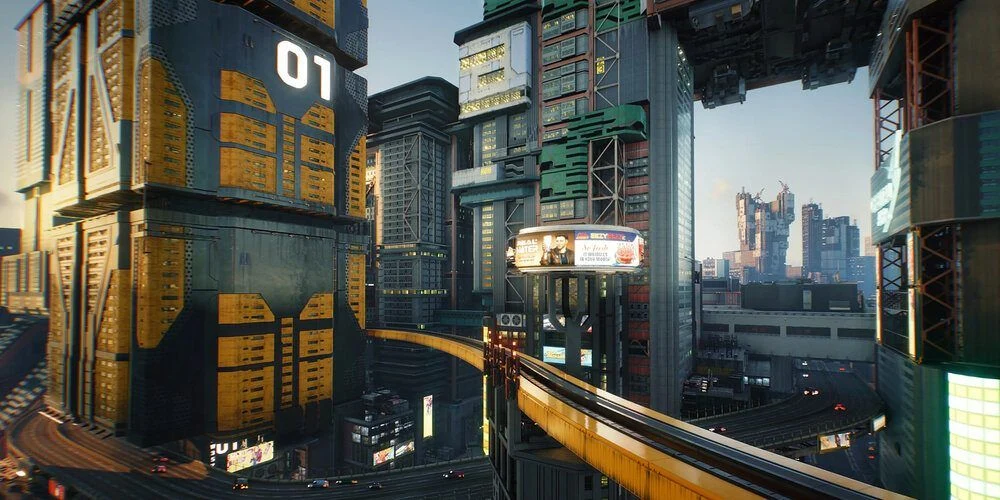
Polycount budgets and LOD chains
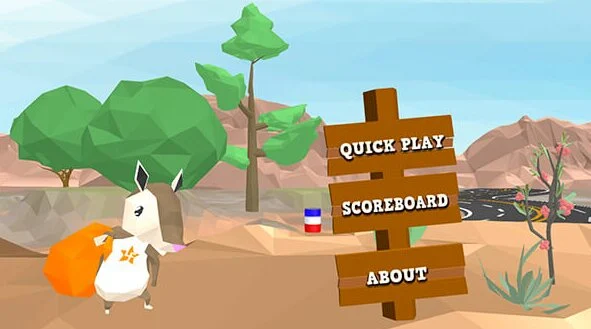
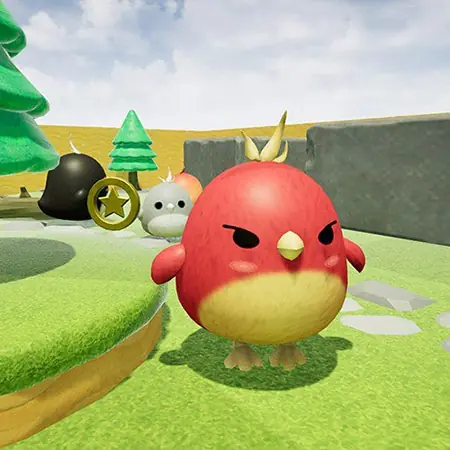
Low-poly, mobile-budget environment
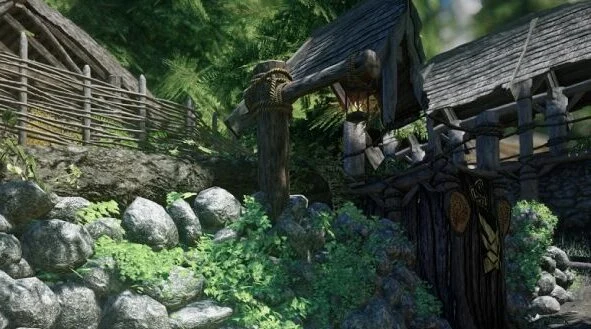
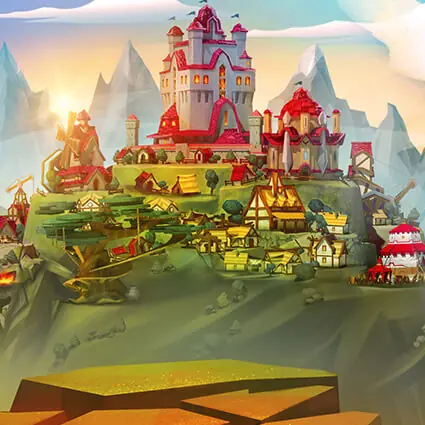
High-poly, PC/console-budget environment
Every environment mesh ships with a budget. Two, actually: triangle count and draw call cost.
Mobile targets stay tight. A typical mobile hero prop lands around 1,500-4,000 triangles, with a 512 or 1024 texture. Mid-range environment tiles sit at 200-800 triangles. Foliage cards are single quads or two-triangle billboards.
PC and console budgets scale up an order of magnitude. Hero assets on a mid-scope PC title comfortably run 15,000-40,000 triangles, and Nanite-based Unreal Engine 5 pipelines push virtual geometry that removes the polycount ceiling in exchange for stricter memory and streaming budgets. Nanite does not remove the need for LODs on non-Nanite assets, and it does not help with foliage, translucency, or animated meshes.
LOD chains are still the default optimization outside Nanite. A typical chain is LOD0 hero, LOD1 at 50 percent, LOD2 at 20 percent, LOD3 as a billboard for distance. Environment leads set the LOD ratios per asset category, not per asset. The low-poly models guide covers the mobile end; the high-poly models guide covers the sculpt-to-bake side.
Tools studios use for game environment modeling
The toolchain is stable across most studios. Runtime is almost always Unreal Engine 5 or Unity 6. Mesh authoring splits between Blender, Maya, and 3ds Max, with ZBrush for high-poly sculpts and retopo pipelines. Terrain and vegetation lean on Houdini, SpeedTree, and dedicated tools like Gaea. Texturing goes through Adobe Substance 3D Designer and Painter, with scanned surfaces pulled from Quixel Megascans.
- Runtime: Unreal Engine 5 (Nanite, Lumen, World Partition), Unity 6 with URP or HDRP.
- DCC (mesh): Blender from Blender Foundation, Autodesk Maya, 3ds Max, ZBrush for hero sculpts.
- Terrain and vegetation: Houdini, World Machine, Gaea, SpeedTree.
- Texturing and materials: Adobe Substance 3D Designer and Painter, Marmoset Toolbag for bake and preview.
- Scan-based content: Quixel Megascans for surfaces, atlases, and 3D scans.
- Photogrammetry capture: RealityCapture, Metashape, Polycam for on-site scanning.
Tool choice follows the art style, not the other way around. A stylized mobile project does not need Nanite or Megascans. A photoreal exterior build without a scan pipeline will burn weeks on hand-authored surfaces that a Megascans atlas would deliver in a day. For teams already committed to Unreal, the Unreal Engine 3D modeling step-by-step guide covers ingest, material setup, and Nanite gotchas.
The environment modeling pipeline, step by step
Every environment asset moves through a repeatable pipeline. Skipping steps costs more downstream than doing them properly the first time.
- Reference and brief: concept sheet, mood board, silhouette pass, polycount and texture budget.
- Blockout: low-poly proxy geometry at correct scale, dropped into the engine for sightline and layout checks.
- High-poly sculpt: ZBrush or Blender sculpt for hero assets, tileable trims for shared surfaces.
- Retopology: clean quad mesh at final polycount, ready for UV.
- UV unwrap and layout: single-atlas or trim-sheet UV depending on asset class.
- Bake: normal, curvature, ambient occlusion, and position maps baked from high to low in Marmoset or Substance.
- Texture: Substance Painter for hero assets, Substance Designer for tileable materials.
- Engine ingest: import with correct scale, collision, LODs, and material assignments.
- In-engine QA: light check, silhouette check, memory and draw call budget review.
Studios that ingest assets straight from DCC into the engine without a bake and QA pass usually pay for it later, when a lighting artist finds broken normals in a hundred assets at once. Sable and Firewatch, both stylized worlds with small teams, ship as cleanly as they do because their asset pipelines are strict, not because their scenes are small.
Game environment modeling in Game-Ace projects
This recent Game-Ace project illustrates the range of environment modeling work covered by the team.
Welcome to Skyscraper, an Unreal Engine atmospheric environment by Game-Ace
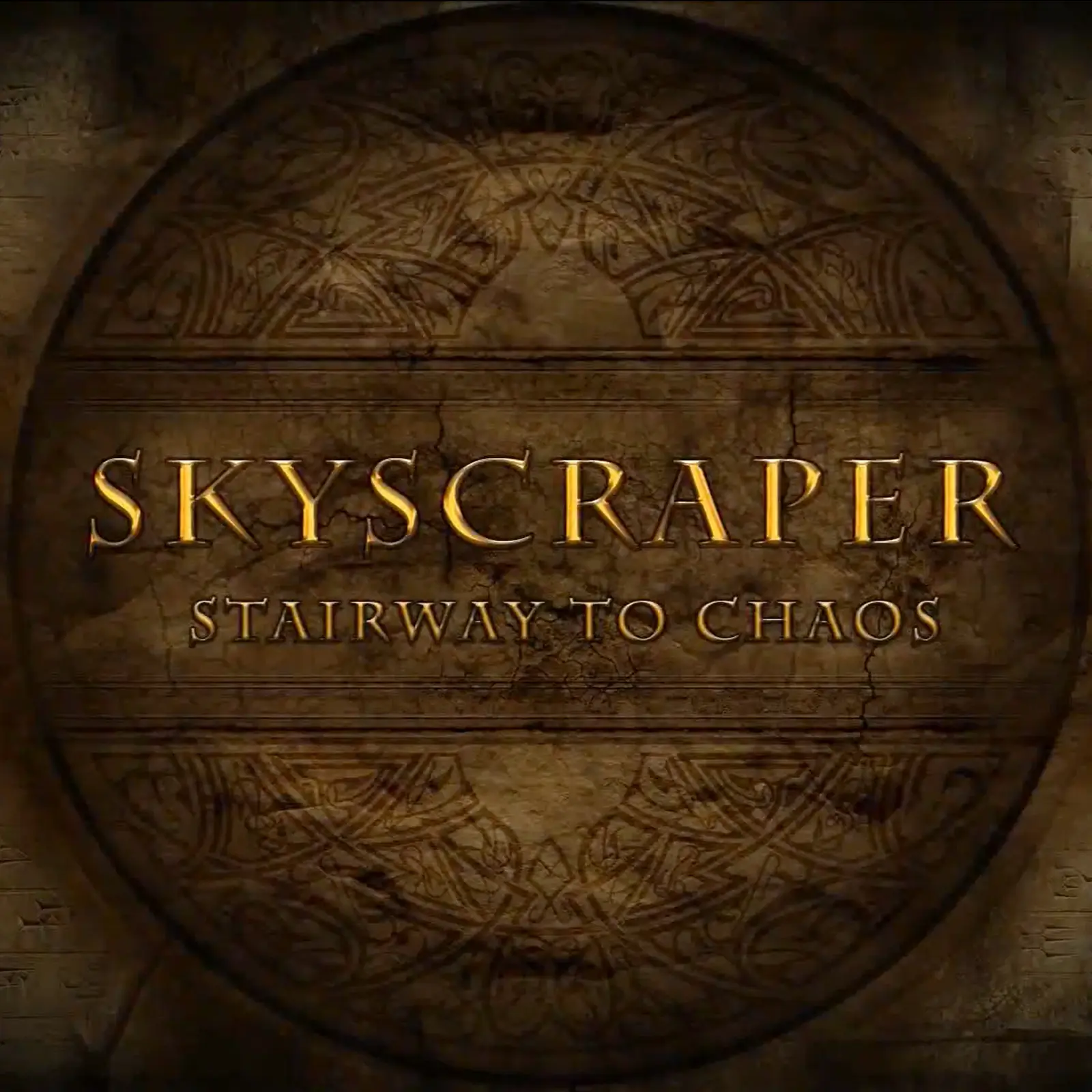
Skyscraper is a third-person horror shooter built in Unreal Engine with dense interior environments. The modeling team built a modular interior kit, prop set, and hero assets with clean UVs and a tight texture atlas, tuned to hold up under low-light dynamic rendering without blowing the performance budget.
Outsourcing environment modeling without breaking the pipeline
Outsourced environment modeling works when the external team is treated as a production partner rather than a task queue. Style guides, mesh templates, a shared naming convention, and a reference scene in-engine remove most of the friction. A poorly scoped hand-off usually shows up two months in, when re-work costs more than the original saving.
Common engagement shapes at Game-Ace: a dedicated environment pod on a project, milestone-based delivery of a modular kit or biome, or a team-extension model where 3D modelers hired from Game-Ace sit inside the client’s Perforce and Jira. Environment work often pairs with 3D game art outsourcing and VFX services when a project needs particles, decals, or destruction layered on top of the modeled world.
Environment modeling versus environment design
The two terms are often used interchangeably and should not be. Environment design is the art direction discipline: mood boards, colour scripts, level layout intent, and the visual language of the world. Environment modeling is the production discipline that builds the actual meshes, UVs, textures, and LODs. A designer defines what the world should feel like; a modeler ships the geometry that makes it feel that way.
In small teams the same artist covers both. In production teams they are separate roles with separate deliverables. Teams scoping the design side should read the game environment design guide, which covers art direction, categories, and the pipeline from concept to shipped level.
When to talk to Game-Ace about game environment modeling
Game environment modeling becomes a Game-Ace conversation when a project needs specialised production capacity: a full modeling pipeline from blockout to engine ingest, a dedicated environment pod on a running production, or a team-extension of environment artists dropped into an in-house pipeline. Game-Ace can join at concept, at asset production, or on a milestone-only basis with clear IP transfer and Perforce or Git LFS handover.
 3D and AI avatars in casino: how they boost acquisition, retention, and time-on-device
  Character skinning for game-ready 3D animation
  Procedural generation in games: what actually works in production
  3D modeling for video games: a production overview
  3D character modeling for game production