
To make a blockchain game, start with the game concept and decide which part of the loop actually needs a chain. Then pick a network (Immutable zkEVM, Ronin, Polygon, Base, or Solana), design the token and asset model, write and audit smart contracts against ERC-721, ERC-1155, or ERC-6551, integrate a wallet SDK such as Sequence with account abstraction and session keys, wire the game client (Unity, Unreal, or HTML5) to the chain, cover App Store and MiCA compliance, then launch through your own client plus Epic, Steam, or browser.
If you are scoping how to make a blockchain game or need a co-development partner for the on-chain layer, talk to Game-Ace.
Step 1: pin down the game concept and tokenomics
The first decision is not technical. It is deciding what the chain adds to the game. If ownership of a collectible, transferability of a rare item, or a shared player-driven economy is the point, the chain earns its place. If not, a Web2 backend will ship faster and cost less.
Once the on-chain role is clear, tokenomics follows the game loop. A single asset class (NFTs for characters) is far simpler than a dual-token model (governance token plus in-game currency). Dual-token designs need sinks, faucets, and price stability logic, and most 2021-era projects underestimated how hard that is. Set the emission rate, the primary sale plan, and the marketplace fee before the first smart contract is written.
Scoping the on-chain layer for a new or existing game?
Step 2: choose the right chain for a blockchain game
Chain choice drives cost per transaction, wallet UX, developer tooling, and which audience the game can realistically reach. There is no universal winner. The table below compares five active chains used for blockchain game development.
| Chain | Type | Typical tx fee | Wallet UX options |
|---|---|---|---|
| Immutable zkEVM | Ethereum L2 (ZK) | Cents or free (gas sponsorship) | Passport wallet, email login, custodial and non-custodial |
| Ronin | EVM sidechain (Sky Mavis) | Very low | Ronin wallet, delegated key support |
| Polygon PoS + CDK | Ethereum L2 stack | Cents | MetaMask, WalletConnect, custom app chains via CDK |
| Base | Ethereum L2 (OP Stack) | Cents | Coinbase Smart Wallet, ERC-4337 native |
| Solana | L1 | Fractions of a cent | Phantom, Backpack, embedded wallets |
A short rule of thumb: EVM L2s (Immutable zkEVM, Polygon, Base) win on tooling and cross-project asset portability. Ronin wins for tightly integrated first-party economies. Solana wins on raw throughput and cost when the game does not need EVM asset interop. Arbitrum Nova and Arbitrum Orbit are also viable for app-specific chains but require heavier infra work.
Step 3: design and write the smart contracts
Most blockchain games rely on three token standards. ERC-721 is a unique NFT (a specific sword, a character). ERC-1155 is a semi-fungible token (100 identical health potions). ERC-6551 is a token-bound account that lets an NFT own other assets, a character NFT that owns its own inventory of ERC-1155 items.
Contract scope stays small on purpose. Complex game logic belongs off-chain because on-chain execution is expensive and public. On-chain code should cover mint, transfer, marketplace hooks, and any rule that must be trust-minimised. Every contract that touches player value should be audited before mainnet, and the audit trail should be kept for future compliance requests.
Reference contract patterns are documented in the Immutable zkEVM developer docs, which cover ERC-721 and ERC-1155 templates plus royalty enforcement, a common pain point on chains where royalties are not automatic.
Step 4: solve wallet UX with Sequence, embedded wallets, and account abstraction
Wallet UX decides whether normal players can actually reach the game. Asking a first-time player to install MetaMask, back up a seed phrase, and pay for gas kills conversion. The current answer is embedded or smart wallets that hide the crypto surface until the player wants control.
Common building blocks: email or social login, custodial key management with a self-custody upgrade path, gas sponsorship (the game pays gas), and session keys so the player does not sign every action. The Sequence developer docs document this pattern well, embedded wallets with progressive decentralisation. Similar options include Immutable Passport, Coinbase Smart Wallet, and Privy. Whatever the choice, integrate it before internal playtests, not after, because it shapes the entire onboarding funnel.
Step 5: fix signing UX with ERC-4337 account abstraction
ERC-4337 is the standard that unlocks smart accounts on Ethereum and L2s. In practice it lets the game batch signatures, pay gas on the player’s behalf, use session keys that expire, and set spending limits. Without it, every on-chain action forces a signature popup that ruins pacing.
- Session keys: the player approves a short-lived key once, then the game signs routine actions (crafting, matches, cosmetic changes) with no popup.
- Gas sponsorship (paymasters): the game or publisher pays gas so the player never touches a wallet balance for small actions.
For a game where players hit the chain frequently, these two together make the difference between feeling like a game and feeling like a DeFi app.
Step 6: define IP and asset ownership before mint
A blockchain game creates a legal gap between the token (owned by the player) and the underlying artwork or IP (usually owned by the studio). Every serious blockchain game project needs written terms covering what the NFT holder can and cannot do, commercial use, derivative rights, revocation triggers, and what happens if the game shuts down.
Well-drafted terms protect both sides. Templates such as Can’t Be Evil (a16z) or NFT License 2.0 (Yuga variants) are starting points, but any project reaching a real audience should have a lawyer review the license, primary sale terms, and marketplace disclosures before mint.
Step 7: plan marketplace and secondary sales
Secondary trading is where a large share of long-term value moves in Web3 games. The three usual paths: run a first-party marketplace inside the game client, integrate an ecosystem marketplace (Immutable, OpenSea on Polygon, Magic Eden on Solana), or both. First-party keeps fees inside the operator; ecosystem marketplaces bring liquidity but split revenue.
Royalty enforcement varies by chain. On some networks royalties are optional at the marketplace level; on others they are enforced by allowlists. Pick a chain whose royalty model matches the business plan, or budget for enforcement work.
Step 8: cover App Store policy, MiCA, and other regulation
Distribution and compliance shape what a blockchain game can actually do inside consumer channels.
- Apple App Store guideline 3.1.1 restricts in-app purchase of crypto assets and requires NFT display to run through standard IAP for any paid unlocks. Secondary sale flows must be view-only inside the app.
- Google Play allows blockchain games but restricts tokenised gambling and requires clear disclosure when NFTs are involved.
- EU MiCA applies to token issuance and stablecoin use; a fungible in-game token distributed at scale in the EU likely falls under MiCA scope.
- FATF Travel Rule affects wallet transfers above jurisdiction-set thresholds.
- Any loot-box style mechanic that resembles gambling can trigger local gaming law (UKGC, MGA, various US state rules).
Compliance is not a launch-week task. It should influence chain choice, wallet flow, and marketplace design from the start.
Step 9: build the tech stack (Unity, Unreal, or HTML5)
A typical blockchain game stack has three layers: game client, backend, on-chain layer. Client engines split by target:
- Unity with a Web3 SDK (Immutable Unity SDK, Sequence Unity SDK, thirdweb Unity SDK): most common for cross-platform mobile and PC.
- Unreal Engine with a Web3 plugin: used where the visual bar is higher and the team is Unreal-native.
- HTML5 or WebGL: used for browser-first Web3 games where wallet extensions integrate directly.
Backend still runs game logic, matchmaking, persistence, and anti-cheat. The on-chain layer handles mint, transfer, and marketplace only. Bridging the two is where most integration bugs happen, so a clean event pipeline (indexer, queue, reconciliation) is worth building early. Game-Ace Unity game development teams typically pair a Unity client with a Web3 SDK and a Node or Go backend running on cloud infra.
Step 10: cost, timeline, and launch platforms
Cost and timeline depend on how much of the loop is on-chain. Three rough tiers:
- Web3 wrapper on a Web2 game (NFT cosmetics, wallet login): €40,000-€120,000, 3-5 months on top of existing game.
- Mid-scope Web3 game (economy, marketplace, one asset class): €200,000-€600,000, 8-14 months.
- Full Web3 game with on-chain economy, custom chain or L2 deployment, and audit: €800,000+ and 12-24 months.
Launch usually goes through more than one channel: a first-party client from the studio site, PC distribution through Epic Games Store and Steam where the store policy allows, mobile through App Store and Google Play with the compliance constraints above, and a browser build for maximum reach. Full-cycle blockchain projects also fit well with full-cycle game development or game co-development engagement models depending on the team you already have.
Blockchain and casino projects from the Game-Ace portfolio
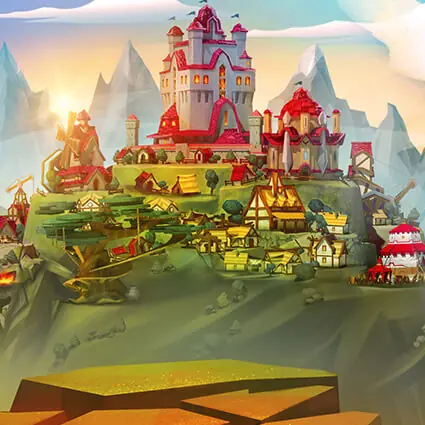
This case shows the Web3 scope Game-Ace has shipped.
Welcome to Nomadland, an NFT play-to-earn strategy RPG by Game-Ace
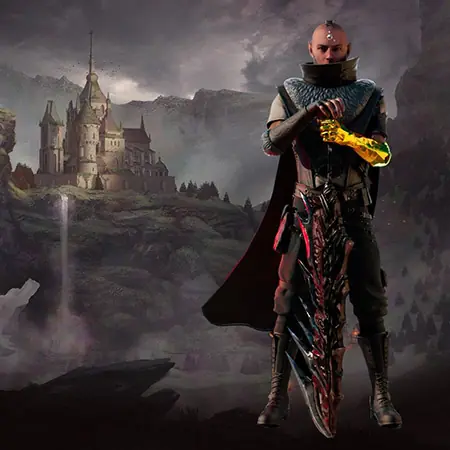
Nomadland is a turn-based action RPG on hexagonal fields where every weapon, creature, and piece of armor is an NFT that players earn in PvE or PvP and trade on a marketplace. Game-Ace covered full production including game design, art, engineering, and blockchain integration, built on Unreal Engine 4.
Related reading
For an active vendor map: top Web3 gaming companies. For a listicle of shipping studios: blockchain game companies.
When to talk to Game-Ace about blockchain game development
Game-Ace has delivered 200+ games since 2005 with a 120+ specialist team, including Web3 titles across NFT strategy RPG and crypto slot formats. If you are planning how to make a blockchain game end to end, Game-Ace, a custom game development studio, covers full-cycle production, co-development, and team extension from a single Cyprus-headquartered team.
 What is a blockchain game? A definitional guide
  Top blockchain gaming companies you should know