
Staff augmentation for game studios is a delivery model where an external partner embeds vetted specialists directly into your production team under your management and pipeline. Studios use staff augmentation when a live-ops sprint needs extra Unity engineers, a milestone slips because of a rigging bottleneck, or a co-development scope requires senior backend capacity for six months without a permanent hire.
What staff augmentation means in game development
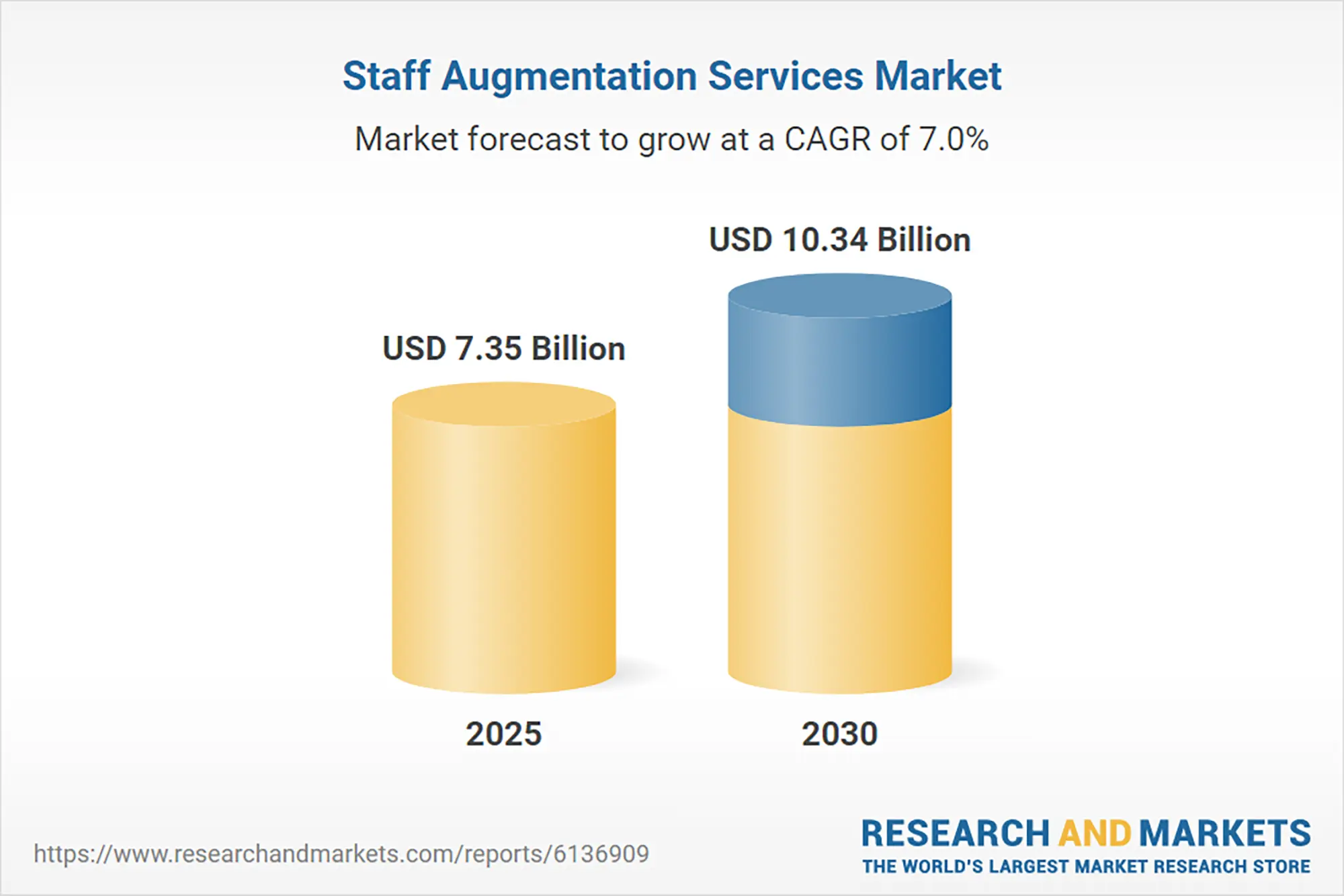
Staff augmentation places contract specialists inside the client's team, working under the client's producer, sprint plan and repository access. The partner handles sourcing, HR, payroll, retention and back-office overhead. The client keeps full control of scope, priorities, code review and design decisions. In game production this model is used when the internal team has the process and vision but lacks specific hands, most often Unity or Unreal engineers, technical artists, riggers, animators, backend developers, LiveOps engineers or QA leads.
Unlike full outsourcing, there is no separate vendor-owned team writing a black-box deliverable. Unlike a permanent hire, there is no long recruitment cycle, no severance risk and no benefits overhead. The engagement is time-based, usually monthly, and can flex up or down as milestones shift.
Staff augmentation vs team extension vs outsourcing vs co-development
The four models sit on a spectrum of client control. Staff augmentation and team extension are close cousins and the terms are often used interchangeably. In practice, staff augmentation usually means one to a few individual specialists slotted into an existing team. Team extension usually means a small dedicated group, sometimes with a lead, that acts as a stable satellite of the client's studio for a longer period. Outsourcing hands over a defined scope and deliverable to the vendor. Co-development splits ownership of a system or module between two studios that collaborate on the same product.
| Model | Client control | Delivery risk | Cost model | Best fit |
| Staff augmentation | High. Client manages sprint and code review. | Low for scope, medium for individual fit. | Time and materials, monthly per specialist. | Filling specific skill gaps inside an existing team. |
| Team extension | High. Client owns roadmap; vendor owns retention. | Low for scope, low for continuity. | Monthly FTE rate per role, stable over 6-24 months. | Long-term satellite team on live-ops or a large title. |
| Full outsourcing | Medium. Vendor plans and executes to a spec. | Medium. Depends on spec quality. | Fixed price or milestone-based. | Well-scoped modules, ports, art packs, QA cycles. |
| Co-development | Shared. Two studios split ownership of systems. | Medium. Interface boundaries matter. | Mixed. Monthly team plus milestone gates. | Complex multi-team productions with shared IP. |
When to use staff augmentation on a game project
Staff augmentation fits situations where the internal team owns the vision but does not have the exact hands to hit a milestone. A live-ops title that suddenly needs two more Unity engineers for a seasonal event. A studio that wins publisher funding and needs three riggers for four months to clear an animation backlog. A backend team that needs a senior server engineer to harden matchmaking before soft launch. In each case, hiring permanently would take three to six months and would leave the studio over-staffed after the peak.
Typical triggers include milestone slippage, a scope increase mid-production, a specialist skill gap (Unreal Niagara, Unity DOTS, Photon Fusion, dedicated servers, technical art), or a hiring freeze on permanent headcount with an open contractor budget.
Roles studios most often augment

The most common staff augmentation roles in game production are engineering and technical art, because these skills are the hardest to hire fast on the open market.
- Unity engineers (C#, URP or HDRP, Addressables, DOTS, PlayFab, Firebase).
- Unreal Engine engineers (C++, Blueprints, Gameplay Ability System, Niagara, replication).
- Backend engineers (dedicated servers, matchmaking, Redis, cloud infrastructure, LiveOps tooling).
- Technical artists, riggers and animators for character and creature pipelines.
- 2D and 3D production artists for environments, props, UI and marketing assets.
- QA leads and automation engineers for regression, compatibility and performance testing.
- LiveOps engineers and analysts for seasonal content, telemetry and A/B systems.
How onboarding works with staff augmentation
Onboarding starts before the first sprint. The client shares an NDA, a role brief, the tech stack, the sprint cadence and the repository access requirements. The partner sends CVs of pre-vetted specialists, usually within one to two weeks. The client interviews and selects. Once contracts are signed, the specialist gets repository access, build system access, project management access (Jira, Notion, ClickUp) and joins the client's daily standup.
A structured two-week ramp is normal. Week one is codebase walkthrough, environment setup and shadowing. Week two is first small tickets under close review. From week three the specialist takes normal sprint tickets. Timelines shrink when the specialist has prior experience with the exact stack.
IP protection, NDA and source control
IP ownership is straightforward with staff augmentation done correctly. The client owns all code, assets and documentation produced by the augmented specialist. The contract assigns work-for-hire rights on delivery. An NDA covers pre-release material, unannounced titles and confidential systems. Reputable partners also carry internal NDAs with their own specialists, so the chain of confidentiality is complete.
Source control access is the client's call. Most studios grant per-branch access on Perforce, Git LFS or Plastic SCM. Sensitive systems (payments, anti-cheat, DRM) are often ring-fenced.
Repository and pipeline access
Augmented specialists work inside the client's toolchain, not a parallel one. That means the client's version control, CI, build farm, bug tracker, chat, art review tools and design docs. The partner does not spin up a mirror pipeline. This is what makes staff augmentation feel like an internal hire rather than an outsourced deliverable, and it is also what keeps code review, security scans and QA automation consistent across the team.
Sprint integration and day-to-day collaboration
Augmented specialists join the client's sprint ceremonies. Daily standup, sprint planning, retro, code review, art review. They report to the client's producer or lead, not to an external account manager. Time-zone overlap matters. Four hours of overlap per day is usually enough for standup, ad hoc pairing and reviews. Longer overlap suits very tightly coupled feature work.
Management overhead the client keeps
Staff augmentation does not remove management work, it changes what that work looks like. The client's producer still writes tickets, prioritises, reviews and approves. The partner removes recruitment, HR, payroll, benefits, laptops, office and retention work. For a studio adding two to five specialists this is usually a net time saving of one to two producer-days per week compared to a permanent hire cycle.
Cost model: time and materials vs monthly FTE rate
Two pricing shapes dominate. Time and materials bills hourly against timesheets and suits short or unpredictable scopes. Monthly FTE billing charges a fixed rate per role per month and suits stable, longer engagements. Rates depend on role seniority, region and stack. For CEE-based partners, a mid-level Unity engineer typically sits in the €5,500-€8,500 per month range, a senior Unreal engineer in the €8,000-€12,000 per month range, and a senior technical artist in a similar band. Backend and LiveOps roles trend a little higher.
These figures compare favourably with fully loaded permanent hire costs in Western Europe or North America once benefits, recruitment fees, laptops, office and retention risk are included. According to public industry benchmarks such as the Deloitte Global Outsourcing Survey, cost optimisation and access to scarce skills remain the top two drivers of external talent decisions across sectors.
Risks and how to mitigate them
The main risks are individual fit, knowledge continuity and time-zone friction. Fit is mitigated by treating augmented specialists like any hire, with a real interview and a two-week trial. Continuity is mitigated by written documentation, code review and a partner that keeps a bench for replacements. Time-zone friction is mitigated by agreeing on the overlap window before onboarding and by using async written updates.
One risk that studios sometimes overlook is diffuse ownership. If a system is co-owned by an internal engineer and an augmented one, the client should still designate a single technical owner. That keeps architectural decisions coherent.
How procurement scoping usually works
A typical scoping cycle takes two to four weeks from first call to signed SOW. The client shares role requirements, stack, sprint cadence and start date. The partner responds with candidate CVs, rate cards and contract terms. The client interviews and selects. Legal reviews the master services agreement, NDA and data processing terms. Purchasing sets up the vendor and payment terms. For repeat engagements with an existing partner, scoping can compress to under a week.
Recent Game-Ace staff augmentation work
Welcome to Hopster's Alphabet Hotel, a preschool learning app built with Hopster

Hopster's Alphabet Hotel is a learning app for toddlers, built for TV startup Hopster. Game-Ace contributed engineering and 2D art capacity to deliver the alphabet-learning mini-games and animated interface, working as an extension of Hopster's product team on a sprint cadence.
Two quick next steps depending on where you are in the process:
For context on the size and shape of the game industry workforce that staff augmentation partners draw from, the annual ESA Essential Facts report tracks employment, studio counts and regional distribution across the US market.
When to talk to Game-Ace about staff augmentation
If you are planning a sprint that needs Unity, Unreal, backend, technical art, animation, QA or LiveOps capacity that you cannot hire permanently in time, Game-Ace can embed pre-vetted specialists into your team from a 120+ in-house studio, part of Program-Ace since 2005. Engagement models include staff augmentation for individual specialists, team extension for stable satellite groups, co-development for shared-ownership modules, and full-cycle production for turnkey scopes. Standard terms cover NDA, work-for-hire IP transfer, repository access on the client's version control and a two-week ramp before full sprint output. See also how to hire game developers for the direct-hire alternative.
 Hire Roblox developers: where to find and how to scope
  VFX artists: the powerhouse behind engaging visual experiences
  Game artists for hire: where to find and how to scope
  What a technical artist does and how to hire one
  Concept artist for hire: how to scope the engagement