
Back to top

Game Development for Startups: How to Build a Game with a Small Budget in 2026

March 26, 2026

Let’s face it: starting a video game company sounds exciting. But gathering friends to brainstorm and code rarely leads straight to indie stardom.

But the reality is grueling – a relentless marathon where persistence outweighs flashy beginnings.

We are operating in a landscape where global gaming revenues have surpassed $200 billion. The sheer volume of cash in this industry is staggering. However, that number is a double-edged sword for newcomers. Yes, the opportunity is limitless, but the competition is fierce, and the market is saturated. Today, a fun idea for a game is just the bare minimum to enter.

What sets successful startups apart? Disciplined execution, scalable systems, savvy monetization, and deep product-market fit.

At Game-Ace, a custom game development company, we’ve seen passion turn into profit, but we’ve also seen ideas fail due to poor budget management. If your vision exceeds your resources, this guide will show you how to build a game startup in 2026 without going broke.

The Myth of the "Zero Dollar" Studio

Yes, some renowned studios began with very little money, but the key takeaway is that success relies on far more than just passion. It requires a calculated approach to community support. Understanding realistic game development cost ranges early helps avoid planning mistakes.

When venture capital isn't an option, crowdsourcing becomes your lifeline and your very first marketing push. Platforms like Kickstarter and Indiegogo have enabled hundreds of gaming projects, but simply posting a text description and asking for funds won't work anymore. Running a successful campaign is an exhausting, full-time job. To attract backers eager to support a unique vision, you need:

  1. A highly polished, emotionally resonant pitch that clearly communicates what makes your game different
  2. A tight, playable demo that lets people experience your vision firsthand
  3. A fiercely unique concept — mechanics, storytelling, or both — that gives people a reason to care

A prime historical example is the indie darling Undertale. It started with a minimal team and an almost non-existent budget. Toby Fox ended up self-funding the business originally, but because of its subversive storytelling and unique mechanics, it became a cult classic, ultimately generating over $50 million in sales revenue. If you want to understand how this ecosystem actually works when done right, reviewing Kickstarter success stories is practically mandatory reading for indie founders.

If you decide to pursue formal funding instead, remember that investors expect more than enthusiasm. A great pitch alone isn't enough for grants or publishers — they demand a bulletproof business plan and a scalable technical strategy.

Finally, build a lean, committed team. Don't overhire. Attract versatile talent who genuinely believe in your vision, and if cash is tight, offer revenue sharing to reward that early dedication.

The Funding Ecosystem for Startups Game Development in 2026

Funding Avenue The Reality of the Pitch Best Suited For
Crowdsourcing (Kickstarter) You need a highly playable demo and a massive grassroots marketing push. Highly unique, niche, or narrative-driven games with distinct art styles.
Angel Investors & VCs Requires a rigorous business plan, clear monetization strategy, and scalable technical roadmap. Startups aiming to scale rapidly and capture mass-market mobile or PC audiences.
Publishing Deals You trade a percentage of your revenue (and sometimes IP control) for upfront funding and marketing muscle. Teams with a great core game that lack the expertise to handle global distribution.
Grants & Festivals Highly competitive. Winning provides non-dilutive cash and massive industry exposure. Innovative, boundary-pushing concepts that might be too risky for traditional VCs.

The Blueprint: Why You Need a Game Design Document for Startups Game Development

The biggest mistake? Jumping into coding without a plan. Lack of preparation leads to disaster.

Software development – especially game development – requires rigorous planning. A rock-solid Game Design Document (GDD) is essential. This document guides your team. Before any art or code, you must define exactly what you are building.

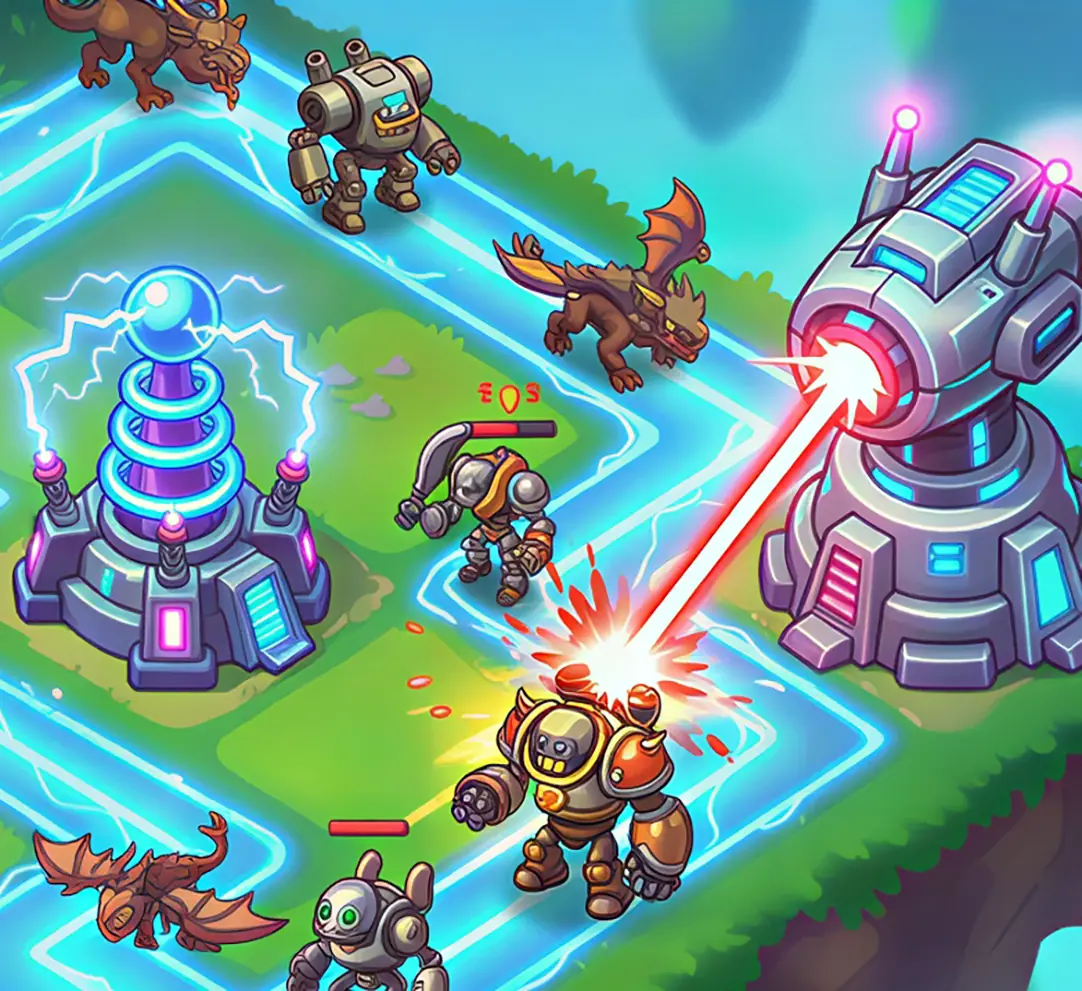
For example, a Tower Defense game sounds simple until you face its technical demands. All core mechanics, market research, and platform details must be mapped out in your GDD to avoid costly revisions.

The Gospel of the Gray-Box Prototype: How to Build a Game Efficiently

Game development follows a structured progression, even at the prototyping stage.

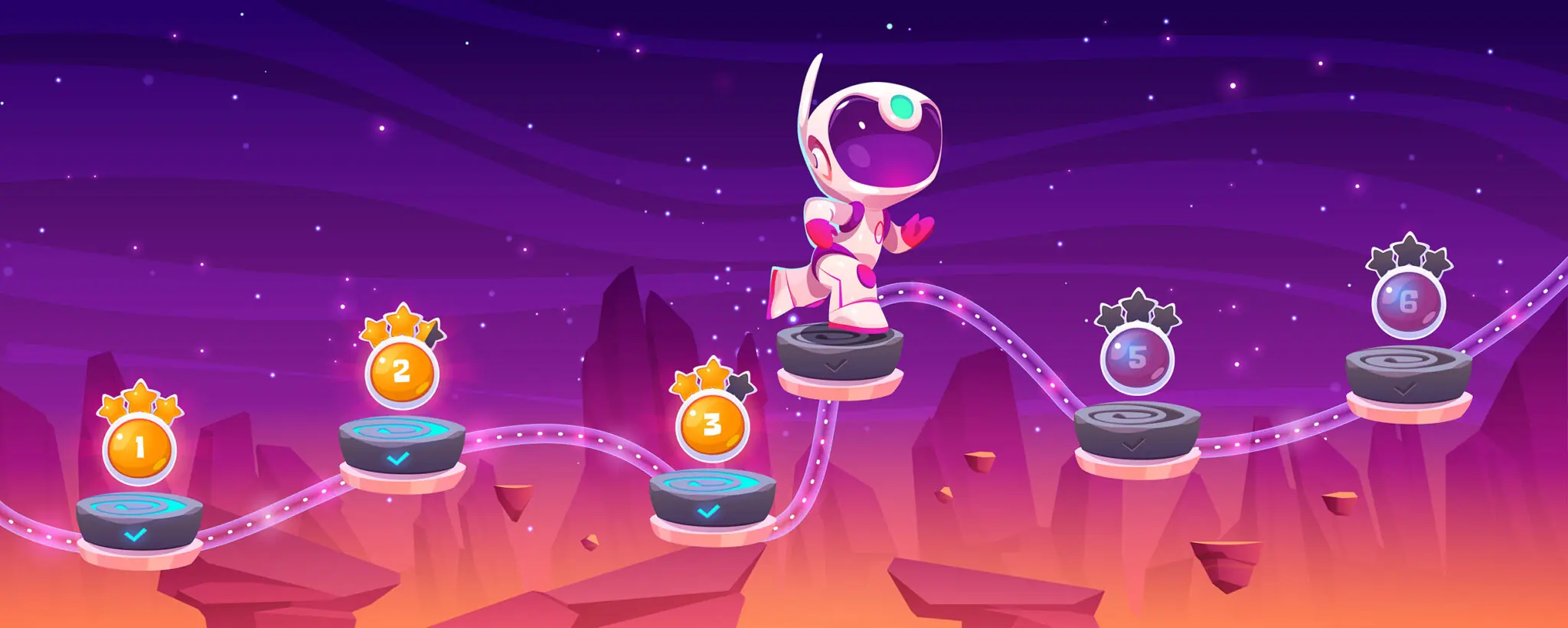
Game development process for startups visual roadmap illustration

Once your GDD is set, begin prototyping. This is the critical phase for validating core mechanics before investing in polish. We preach this because we’ve seen the alternative. Mastering the MVP (Minimum Viable Product) prototyping phase saves you thousands of dollars. Prototypes should focus on core mechanics – using basic visuals to test gameplay. Validate satisfaction and balance before spending on art assets.

During this phase, you should also be doing heavy wireframing. Tools designed for wireframing are incredibly effective for mapping out the non-gameplay structural elements:

  1. How does the player navigate the menus?
  2. How many clicks does it take to access the payment system?
  3. How does the social media connectivity actually flow?

The main takeaway: stay agile. Plan iteratively, test quickly, and be ready to adapt your approach based on real user feedback.

The Engine Dilemma: Picking Your Tech Stack

Choosing your development environment is a massive strategic decision. Today’s game engines aren’t just code editors; they are massive platforms packed with advanced tools, asset libraries, and rendering capabilities.

If you are a startup operating on fumes, you have to look at the free tools. A decade ago, building a custom engine was a nightmare rite of passage. Today, companies like Unity and Unreal Engine provide free versions of their platforms to independent developers. And don’t let the word "free" fool you. These are industrial-grade platforms powerful enough to build legitimate, AAA-quality games.

When founders ask us what they should use, we usually point them toward a deep dive into Unity vs Unreal Engine. Generally speaking, Unity is one of the most popular and user-friendly options for professional game development. It uses C#, a highly robust language that can handle complex game logic without leaving junior developers' brains melting. It’s perfect for 2D, mobile, and complex strategy games.

Unreal Engine is a powerhouse for high-fidelity 3D environments, but the learning curve is steep. Then there's native C++. It's the most common language for custom-engine development, granting total hardware control, but it is painstakingly slow to write. For a startup trying to launch an MVP in six months, building a game framework. It's the most common language for custom-engine development, granting total hardware control, but it is painstakingly slow to write. Now-code engines allow new developers to produce polished games without writing a single line of traditional code. They are great for simple arcade concepts, but they will absolutely choke if you try to build a massive, system-heavy RPG on them.

But engine choice is secondary to understanding your game’s core subject. Authenticity matters; code is just a tool for bringing your knowledge to life.

The Cold Hard Math of Analytics

Let’s say you finish the game. The core loop is fun, the art is decent, and the menus work. You launch it.

Finishing the game is just the start of your real work.

How do you know if your game is actually balanced? How do you know if your tutorial is teaching players, or just annoying them into quitting? You don’t guess. You look at the data.

Analytics drive success in a modern gaming startup. Use them to monitor core metrics: player engagement, drop-off, and monetization friction. Without platforms like Google Analytics, Unity Analytics, or Mixpanel, you risk missing vital data. Survival requires mastery of game analytics.

Taking a data-driven approach allows you to optimize specific, granular elements of your game. You can fine-tune game mechanics and adjust in-app purchases based on how real people are actually behaving in your software.

Look at the giants of the mobile industry. The developers behind Candy Crush Saga didn’t just stumble into a billion-dollar franchise. They used ruthless, obsessive analytics to optimize every single element of their game. They tracked where players failed, where they spent money, and where they got bored. That data-driven approach led them to generate well over $1 billion in revenue (as noted in various industry reports around 2023). They let the data dictate the design.

Knowing Your Audience: Niches and Platforms

In 2026, the gaming market is wildly diverse. You have to decide early on who you are actually building this game for. Are you targeting the mass-market mobile crowd? The hardcore PC strategy players? The console crowd?

Making your game compatible with a wide variety of devices sounds like a great idea on paper. It obviously helps you reach a significantly wider audience. But behind the scenes, it is a massive technical headache. If each version of the game is not programmed independently and optimized specifically for that hardware, you end up with low-quality, buggy iterations. A UI that feels incredibly precise with a mouse might be completely unplayable on a touchscreen.

Speaking of UI, never underestimate the sheer destructive power of a clunky menu. If players have to fight your interface just to equip an item or navigate a tech tree, they are going to uninstall. Period. Friction kills retention. If you are developing for touchscreens, treating fundamental mobile UX principles like absolute gospel isn't just a good idea – it is a matter of survival.

Beyond traditional platforms, smart founders are looking at emerging niches. We are witnessing a massive appetite for custom game apps tailored to highly specific audiences. For teams moving in this direction, understanding how to make a game app that aligns product, audience, and store strategy is essential:

  1. Smartwatch gaming: As wearable technology becomes ubiquitous, this has evolved into a highly viable, underserved niche. These projects require a totally different design philosophy: ultra-short, burst-style gameplay sessions built specifically for tiny screens.
  2. Educational game concepts: This sector is experiencing a quiet explosion. Adult learners and working professionals make up a fast-growing demographic that actually has disposable income. Gamified tools can transform traditionally dry, corporate subjects into highly interactive experiences that dramatically increase user motivation and knowledge retention.
  3. Narrative-driven AR/VR experiences: In an era of endless, disposable live-service content, deep single-player games remain a top choice. AR and VR concepts are completely revolutionizing this interactive storytelling space, giving startups a chance to build immersive experiences that literally weren’t possible five years ago.
  4. Arcade and investment games: These tight, complex experiences continue to attract fiercely loyal, specialized communities.

Keeping Them Hooked: Retention and Live Ops

Your game’s long-term success relies entirely on the enjoyment and loyalty of your users. If they download it, play it for ten minutes, and never open it again, your startup will fail.

Continually updating the game is how you survive. You have to constantly fix bugs, patch exploits, and add new features to keep users coming back. In the mobile space, games are treated as live services. If you aren’t updating, you are dying.

You are going to face a lot of adversity. Players will complain. Reviews will be harsh. You have to look to your users for continuous guidance on how to improve the game. Collecting and acting on user feedback is essential.

And then there is the technical side of retention. Bugs kill games. Your security has to be ironclad, especially if your project involves:

  1. User accounts and personal profiles.
  2. In-game microtransactions and payment gateways.
  3. Sensitive biometric data.

When a game handles this kind of sensitive data, it is imperative to take the appropriate steps to protect it. A single data breach or a bug that double-charges a player will destroy your studio’s reputation overnight. This is why having a dedicated QA testing pipeline is the secret to viral success. Quality Assurance isn’t just about finding typos; it’s about protecting your players’ trust.

How to Actually Make Money: Monetization Models

You need to know how your game is going to make money before you write the first line of code. Period.

Mobile games historically make an absolute ton of money through the free-to-play (F2P) model. They rely heavily on In-App Purchases (IAP). This is the most basic, proven way to monetize a massive audience. You give the core game away for free, and you sell extra lives, cosmetic items, premium currency, or convenience features. But there is a fine line between a fair F2P game and an exploitative one. You have to study F2P monetization best practices so you don’t alienate your entire player base with greedy pay-to-win mechanics.

But F2P isn’t the only way. Premium models (where players pay a flat fee upfront) still offer distinct advantages, especially in the PC and console space, where players want an uninterrupted, complete experience. Subscription models are also fantastic if you are building a massive live-service game that constantly delivers new content.

And then there is the frontier. In 2026, the Play-to-Earn (P2E) model has opened up entirely new revenue streams for startups. This is a massive shift. Exploring the future of play-to-earn crypto games reveals how developers are building ecosystems where players can earn real money or cryptocurrency by simply playing, completing tasks, or trading digital assets. It’s complex, the economic balancing is difficult, but the potential is astronomical.

Breakdown of 2026 Monetization Strategies

Monetization Model How It Works in Practice The Catch
Free-to-Play (F2P) Free download. Revenue comes from in-app purchases (IAP) and ads. Requires a massive volume of players and incredibly careful balancing to avoid "pay-to-win" accusations.
Premium (Paid) User pays a single upfront price for the full game. You have to convince the player your game is worth the money before they even try it. Marketing is incredibly difficult.
Play-to-Earn (P2E) Players earn real-world value (crypto/tokens) through gameplay. Developing a sustainable digital economy that doesn’t collapse from inflation is incredibly hard.
Subscription Players pay a recurring monthly fee for access. You are obligated to constantly provide high-quality updates to justify the ongoing cost.

The Secret Weapon: Outsourcing and Partnerships in Game Development for Startups

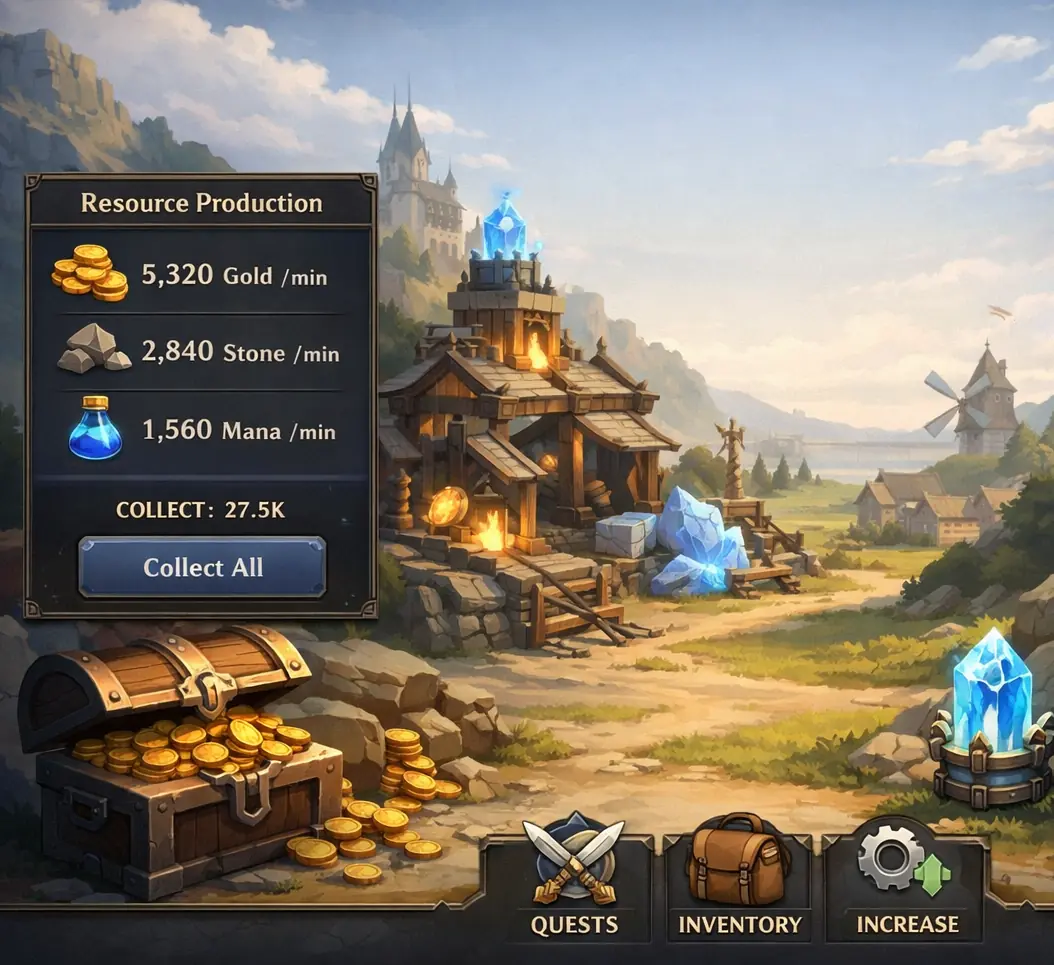
Game development work environment used by professional development teams

Here is the harsh truth that many founders refuse to accept until it’s too late. Building a full, multi-disciplinary development team in-house from scratch is a massive financial risk. It increases costs, it causes massive delays as you try to build company culture, and it leaves you exposed if a key programmer quits halfway through the project.

For many startups, the difference between success and failure often lies in knowing when to ask for help. A professional game development company provides the precise technical strength, strategic clarity, and sheer scalability that startups desperately need to compete in this demanding market.

When you partner with an established studio, the immediate advantages are clear:

  1. Direct access to a deep roster of experienced developers, technical artists, and system designers.
  2. A complete bypass of the exhausting, traditional hiring process.
  3. Integration of proven workflows right from day one.
  4. Battle-tested production processes that have successfully shipped dozens of titles.

A good partner doesn’t just write code; they provide strategic direction. They help you validate your ideas, launch a lean product, optimize the performance, and scale intelligently when the game starts gaining traction. We have stepped in to save projects that were literally weeks away from shutting down because the in-house team couldn’t fix their own architecture.

Rather than treating development as a one-time transaction, smart founders build long-term collaborations. A long-term partnership offers continuous product improvement, much faster feature rollouts, and shared strategic alignment. It drastically reduces the onboarding time for new updates because the external team already knows your codebase inside and out. It transforms a chaotic startup project into a sustainable, highly efficient product ecosystem.

Why We Love Working with Startups: Turning Bold Dreams into Playable Realities at Game-Ace

In the fast-evolving world of game development, one thing stands out more than ever: startups are the heartbeat of innovation.These teams are dreamers with big visions, the ones pushing boundaries, experimenting fearlessly, and injecting fresh variety into the industry. Without startups, there would be no bold experiments ("try and error" moments that lead to breakthroughs), no viral hits born from raw passion, and far fewer of those exhilarating "we did it!" success stories that inspire the entire gaming ecosystem.

But let’s be honest, building a game as a startup is rarely a straight path. The challenges are real and often overwhelming:

  1. Tight budgets: How do you balance limited funds with ambitious ideas? Many teams face rejection after rejection from studios that see only constraints, not potential.
  2. Planning pitfalls: Rushing into full development without solid foundations can burn through half the budget on art or prototypes, leaving little for core mechanics, polish, or launch.
  3. The emotional rollercoaster: Juggling multiple fires at once, from scope creep to market uncertainty, can feel isolating and even discouraging.

At Game-Ace, we’ve been there from the start (since our roots in 2005 as a full-cycle game development studio). We never forget what it’s like to chase a vision under pressure. That’s why we thrive on partnering with startups; it keeps us sharp, creative, and outside the box.

A Recent Win: Bringing a Mobile Game Dream Back to Life

One of our latest startup clients reached out for 3D art and animation on a small mobile game still in early development. Budget? Extremely tight. They’d already been turned away by several studios, polite "no thanks,"" but the door stayed closed.

Why didn’t they approach us sooner? Their words surprised us: "You guys look expensive, and we know our budget is small."

We sat down (virtually) for a focused, hour-long call and a few thoughtful emails. We asked the right questions: What’s truly essential at this MVP stage? What can we prioritize, simplify, or phase later? Together, we restructured the scope to focus on high-impact assets that fit their reality while maintaining the core vision.

Result? The project is moving forward, the dream is alive, and they’re building momentum without compromise. Sometimes, that’s all it takes: listening deeply and finding clever ways to deliver value within constraints.

Another Lesson: The Power of Smart Planning

Last year, a different startup came to us with beautiful art already completed, but half their budget was gone, and there was no clear roadmap. They wanted a full-featured betting-style mobile app built and published in just 3 months.

Possible? Technically, yes. Advisable? Absolutely not.

It took nearly three weeks of candid conversations to shift their mindset: Start with a solid Game Design Document (GDD) first. Map mechanics, user flows, monetization, and risks before diving into heavy development. Skipping this step is a common trap that leads to rework, overspending, and frustration.

Once we aligned on that foundation, the path became clearer and far more sustainable.

At the End of the Day…

Startups face a storm of challenges simultaneously. Big or small, wild or underestimated, we listen, we consult, and we help. Because every project we take on could be the next long-term partner, the next industry-shaker, or simply someone’s lifelong passion brought to life.

If you’re a founder grinding through early-stage game dev, tight budget, big ideas, or planning headaches, know this:

We’re not just another studio. We’re partners who get it.

Drop us a message if you’d like to chat about turning your vision into something playable. Who knows, your startup might just be the next story we love telling.

What about you? What’s the biggest hurdle your startup is facing right now in game dev? Feel free to contact us, let’s spark some ideas.

The Final Reality Check

Making a video game in 2026 is hard. Making a video game that actually makes money is a monumental achievement. The market is loud, the technical hurdles are massive, and the financial margins are razor-thin.

But it is entirely possible. You don’t need fifty million dollars in a bank account to start. Here is what you actually need:

  • Absolute discipline.
  • A rock-solid design document.
  • The patience to relentlessly prototype your mechanics with gray boxes until the gameplay loops are undeniably fun.
  • A suitable engine like Unity that aligns with your scope, allowing hard analytics – not just your gut – to dictate how you balance the final product.

Whether you are targeting a massive free-to-play mobile audience, carving out a niche with a smartwatch game, or building the next big narrative-driven indie hit, the rules of survival are the same. Do not try to do everything yourself. If you are drowning in technical debt, find an experienced partner who knows how to navigate the storm. Keep your team small, keep your scope tight, and protect your players’ data like your business depends on it, because it absolutely does.

Startups are the lifeblood of this industry. They take the risks that the massive corporate studios are too terrified to touch. So build the prototype. Run the numbers. And get your game out there.

If you need a team that can help you plan, build, or scale your game without wasting time and budget, contact us at Game-Ace. We will review your idea, suggest a practical approach, and help you move forward with clarity and confidence.

Average rating 4.9 / 5. Votes: 15
Related posts
Related Engineering the Next Generation of Tower Defense Games Related How to Turn Idle Game Development into a Scalable, Long-Term Revenue Product Related Key Trends Shaping Gamification in Recruitment for 2026 and Beyond Related How to Create Crypto Casino Games the Right Way Related AI Recruitment Games: From Real-Time Assessments to Better Hiring Outcomes
Contact us robot
Get in touch
menu
Get in touch
Game-Ace logo loader