
Arcade game design is the craft of building short, high-feedback play loops that read in seconds and reward mastery over minutes, whether the screen sits in a cabinet, a browser tab, or a phone. The format still works because attention is scarce, sessions are short, and a clear score with an escalating difficulty curve remains one of the most reliable retention engines in the medium.
If you are scoping arcade game design for mobile, browser, or a cabinet build, talk to Game-Ace.
The arcade core loop and why it still holds attention
The arcade core loop is a compact cycle of read, act, react, and score that resolves in under a second and repeats until a run ends. A player enters, sees the field, presses an input, and gets an unambiguous outcome: a jump cleared, a target hit, a coin collected, or a miss that ends the run. Nothing sits between intent and result. This is the discipline that separates arcade game design from other genres and the reason the format survives every platform shift.
The loop holds attention because it front-loads the reward. Within thirty seconds the player understands the goal, the failure state, and the rhythm of progress. There is no tutorial layer to sit through, no dialog to read, and no menu tree to navigate.
Metal Slug 3 — a classic run-and-gun arcade core loop
High-score mechanics and the reason players return
The high-score is the oldest retention hook in games and still one of the strongest. A visible number that goes up gives the player a reason to try again without any narrative. Modern arcade titles layer leaderboards, personal bests, ghost runs, and daily seeded challenges on top of the base score, which multiplies the reasons to reopen the app. Multipliers, chains, and near-miss bonuses reward skilful play without punishing new players.
Difficulty ramp and the second-minute problem
Difficulty ramp is the curve that carries a player from the first easy run to a challenging middle game without a spike that breaks trust. A working ramp usually holds the first sixty seconds at a low intensity, doubles the pressure over the next two minutes, and then plateaus with variety rather than raw speed. If the ramp jumps too fast the player quits at the second-minute mark, which is where soft-launch retention curves usually break. Ramp tuning is a data job: designers instrument the game to log time-to-first-death, score at 30, 60, and 120 seconds, and the exact obstacle that ended the run.
Immediate feedback: audio, haptics, and visuals
Immediate feedback is the layer that makes arcade game design feel alive. Every input needs a confirmation within a frame or two, delivered through a screen shake, a particle burst, a short sound, or a controller rumble. When feedback lags by even 100 milliseconds the game feels underwater. The MDN Web Audio API reference is the current source for low-latency sound on browser builds and is worth reading in full before scoping a web arcade title.
Feedback is layered: a hit triggers a sound, a flash, a small camera punch, and a score popup at the same instant. Losing plays a different sound, freezes the screen for a beat, and then transitions to a restart prompt inside a second.
The House of the Dead 2: Remake — light-gun feedback done right
One-input control schemes and session length
One-input control is the design constraint behind most successful mobile arcade titles. A single tap, a single swipe, or a hold-and-release covers the entire input surface. The constraint forces the design toward clarity and makes the game readable in seconds. It also broadens the audience: players with limited motor control, players on cracked screens, and players learning on a friend's phone all reach the fun faster.
Session length in arcade titles sits between 30 seconds and 3 minutes for a single run, with players stringing 4 to 10 runs into a session that lasts 5 to 15 minutes. Ads sit between runs, not inside them, and progression rewards land at the end of a run so the player has a reason to start the next one.
Monetization for mobile arcade titles
Mobile arcade monetization runs on two rails: rewarded video ads and low-friction in-app purchase. Rewarded video is the workhorse and typically carries 60 to 75 percent of revenue on a well-tuned title. IAP layers on top with a starter pack in the first session, a no-ads offer once ad frequency is felt, a small subscription for daily rewards, and event-driven bundles tied to seasonal skins. ARPDAU for arcade titles usually sits in the $0.04 to $0.15 band, driven more by rewarded-video tuning and a live events calendar than by install volume. See hyper-casual game mechanics for the design language this overlaps with.
Cabinet, mobile, and web: the same design on three canvases
Cabinet, mobile, and web arcade titles share a core loop but split on input, session length, and monetization. A studio scoping a new arcade product should pick one canvas first and design against its constraints rather than trying to serve all three from the same build.
| Format | Typical session | Primary input | Monetization |
| Classic cabinet arcade | 2 to 5 min per credit | Joystick + buttons | Coin drop or card credit |
| Modern mobile arcade | 30 sec to 3 min per run | Single tap or swipe | Rewarded video + IAP |
| Hyper-casual arcade | 20 sec to 2 min per run | One-input tap or hold | Interstitials + rewarded video |
| Web arcade | 1 to 4 min per run | Keyboard or touch | Display ads, subscription portals |
Daytona USA — a classic cabinet arcade racer
Retention hooks beyond the score
Retention in arcade game design lives in three layers beyond the raw score. A daily challenge with a fresh seed brings the player back once a day. A weekly leaderboard reset gives long-tenured players a reason to compete without freezing out newcomers. A collection meta-layer, usually skins or characters unlocked at score thresholds, extends the reason to play past the first week. The best-performing mobile arcade titles ship a live events calendar with a weekend seeded challenge, a mid-week bundle, and a monthly seasonal skin drop, a cadence that pushes Day 30 retention from the low single digits into the 8 to 12 percent band on soft launch.
Tools and engines for arcade production
Unity is the default engine for mobile and cross-platform arcade titles because of its C# runtime, mature ad SDKs, and IL2CPP builds that stay smooth on low-end Android. Godot is a lighter open-source alternative for 2D-only titles where a small binary and a permissive licence matter. For browser channels, PixiJS or Phaser cover the 2D case with a 2 to 5 MB budget. Backend needs are usually light: PlayFab or Firebase cover leaderboards, cloud save, and event configuration for the first year of live operation. The Unity mobile ads mediation documentation is the current reference for LevelPlay integration.
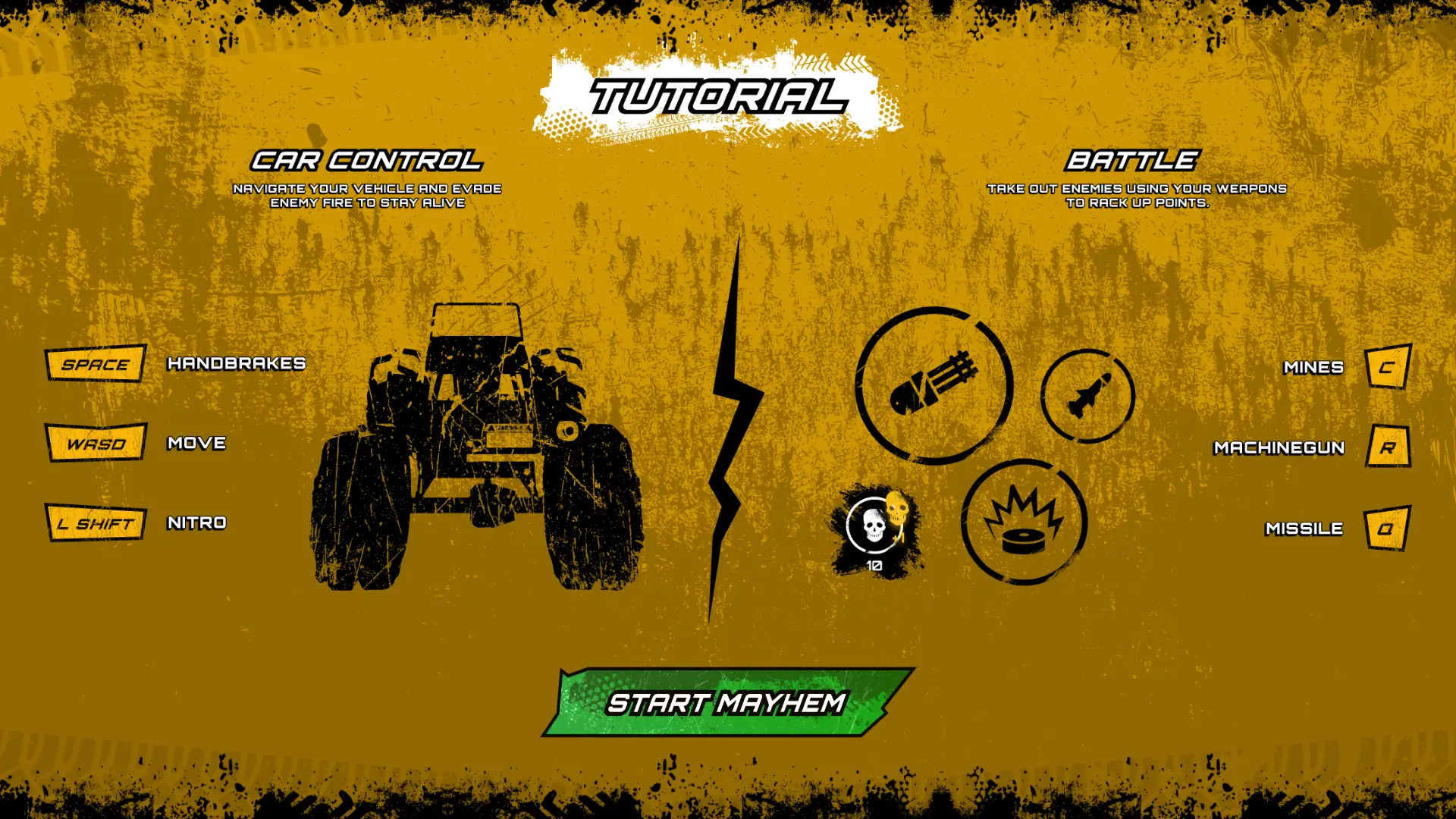
RC Mayhem, a racing arcade prototype by Program-Ace
An arcade case from the Game-Ace portfolio
Welcome to Demon Runner, a mobile arcade endless runner by Game-Ace

Demon Runner is a mobile-first endless runner built in Unity with reflex-based dodging and striking. Runs score distance, timing, and combat, while loot chests support progression. Game-Ace handled the full development cycle, from gameplay systems to launch.
Talk to Game-Ace about your arcade project
If you are scoping arcade game design for a mobile release, a browser channel, or a cabinet build, talk to Game-Ace.
When to talk to Game-Ace about arcade game design
Talk to Game-Ace when the core loop is validated on paper and the studio needs a production team to build the prototype, tune the difficulty ramp, integrate ad SDKs, and prepare a soft launch. A first playable typically lands in 4 to 8 weeks, with a soft-launch build in 3 to 5 months depending on art scope. Game-Ace's custom game development studio works with full-cycle delivery, co-development, and team extension from a 120+ specialist team based in Cyprus, active since 2005 with 200+ delivered games. Related service: full-cycle game development.
 How to design learning games for kids
  Game environment design for production-ready worlds
  Narrative game design: from concept to shipped story
  Game UX: a practical guide for studios and product teams
  How can different video game art styles enhance your project?