
A QA game tester is a specialist who validates game builds against design, performance, and platform requirements before players ever see them. The role blends structured test design with hands-on gameplay verification. This piece covers what the job looks like day-to-day, which skills to screen for, what a "QA game tester" typically costs, and how outsourced hiring works.
If you are scoping QA game testers for a new build, a live game, or a device-lab team, talk to Game-Ace.
What a QA game tester actually does
A "QA game tester" is not just someone who plays a build and reports bugs. The core work is designing repeatable test cases, executing them across target devices, isolating defects to a reproducible steps list, and validating fixes in the next build. Most testers on a live project spend a large share of their week inside a test management tool such as TestRail or Jira with Xray, writing new cases as features land and re-running regression suites after every merge.
The rest of the week goes to exploratory sessions, the human, unscripted play that catches issues no test case predicts.
On a mobile title the same tester may run one hour of scripted checks on iPhone 12 through iPhone 16, then spend two hours pushing edge cases on a low-end Android reference device from a compatibility rack.
Skills a producer should screen for
When a producer hires a QA game tester, the strongest signal is not years in the role, it is the quality of the bug reports the candidate has written before. Ask for a redacted sample. A good one shows clear steps to reproduce, expected vs actual behaviour, build number, device, log excerpt, and severity reasoning.
- Written test-case design (equivalence partitioning, boundary analysis, state transitions).
- Fluency in at least one bug tracker (Jira, YouTrack, Azure DevOps) and one test management tool (TestRail, Xray, Zephyr Scale, qTest).
- Platform literacy, knows what a TRC/XR/lotcheck failure looks like before submission.
- Log reading, can pull a stack trace from Xcode, adb logcat, or an Unreal crash dump without escalating.
- Game literacy for the target genre (a slot tester who has never spun a real cabinet will miss RTP display bugs).
ISTQB Foundation is a nice-to-have signal, not a filter. Portfolio matters more.
Automation is a bonus, not a baseline. Most functional QA on gameplay is still manual because gameplay is non-deterministic. Automation lands on smoke suites, backend endpoints, and build validation, see the roles table below.
QA game tester roles at a glance
A single "QA game tester" title covers several very different jobs. Producers scoping a team usually need a mix, not six of the same person.
| Role | Day-to-day | Tools | Seniority | When needed |
| Functional QA | Executes and writes test cases against feature spec; runs regression per build. | TestRail, Jira, Xray, in-engine debug menus. | Junior to mid. | Every project, from alpha onward. |
| Compatibility QA | Runs a matrix pass across device/OS/GPU combos; owns the device lab. | BrowserStack, AWS Device Farm, physical device rack, Xcode, Android Studio. | Mid. | Mobile, PC, and cross-platform titles before soft launch. |
| Performance QA | Profiles FPS, memory, load times, thermal; files GPU/CPU regressions. | Unity Profiler, Unreal Insights, PIX, RenderDoc, GPUView, adb. | Mid to senior. | Any 3D title targeting console or mid-tier mobile. |
| Localisation QA | Validates translated strings in context, checks truncation, RTL, font fallback, cultural fit. | Crowdin, Lokalise, in-engine locale switcher, TestRail. | Mid, plus native speakers. | Any title shipping in 3+ languages. |
| Certification QA | Runs first-party TRC/XR/lotcheck checklists; prepares submission builds. | Platform holder portals (Sony, Microsoft, Nintendo), TestRail with cert templates. | Senior. | Console submissions and platform re-submissions. |
| QA lead | Owns test plan, staffing, sprint reporting, defect triage with production. | Jira, Confluence, TestRail, meeting rooms. | Senior. | Any team of 3+ testers or any project past vertical slice. |
For type-of-testing details see types of game testing. For where each of these roles slots into a project timeline see video game testing stages.
How much a QA game tester costs
A dedicated outsourced QA game tester in Eastern Europe typically bills at €2,500-€4,500 per month for a junior-to-mid functional role, and €4,500-€7,500 per month for senior, performance, or certification specialists. A shared device lab and a QA lead usually sit on top of that as a small overhead, not a per-tester line.
Short regression passes and cert dry-runs can be bought as fixed-price sprints. A two-week regression pass on a mobile live-ops build with a two-tester pod is a common package.
For a full picture of what QA sits inside, full production cost, see Game-Ace game testing services.
Engagement models for outsourced QA
There are three practical ways to bring in QA game testers.
Team Extension
1-5 testers reporting into the client's QA lead, joining the client's standups and sprint cadence. Best when the client already owns the test plan. See staff augmentation.
Co-development
A full QA pod (2-3 testers plus a lead) integrated with a client development team, sharing Jira and TestRail spaces. Best when the client has no in-house QA lead. See game co-development.
Full outsourced QA
Game-Ace runs the QA function end to end, from test plan authoring to submission. Best for indie teams and mid-scale publishers without a QA org. See game development outsourcing.
Sourcing tested candidates directly is also an option, hire game testers covers vetting and onboarding pathways.
Remote hiring is standard. The public LinkedIn job market shows the current baseline for game QA titles, day rates, and required tooling, a useful cross-reference before locking a budget.
A QA game tester case from Game-Ace
Welcome to Hexagonium, a cross-platform MMO by Game-Ace

Hexagonium is a cross-platform mobile MMO strategy game blending turn-based and real-time combat, kingdom-building, and hero systems, released on iOS and Android. Game-Ace's in-house QA specialists supported testing through development and launch, running functional passes across a range of device tiers.
Where mobile and VR change what a QA game tester does
Mobile QA has its own rhythm, device matrices, thermal runs, and store submission checks dominate. See mobile game testing.
VR QA sits closer to hardware, comfort ratings, guardian boundary checks, and controller mapping edge cases require testers with actual headset hours. See testing VR games.
Working with Game-Ace on QA
If you are scoping QA game testers for a new build, a regression pass on a live game, or a dedicated device-lab team working with your in-house QA lead, talk to Game-Ace.
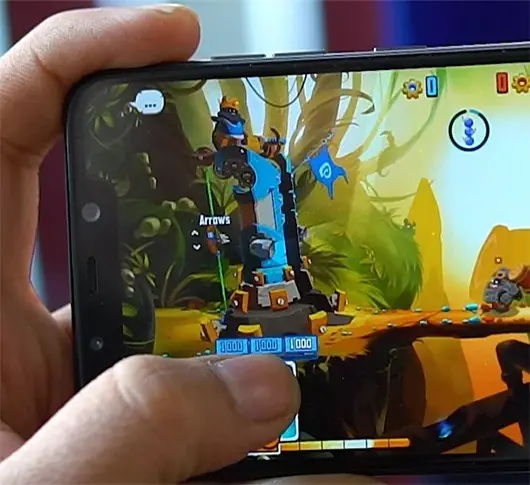 Mobile game testing for iOS and Android: end-to-end guide
  Game QA companies: a buyer's guide for studios
  Video game testing stages, from pre-alpha to live ops
 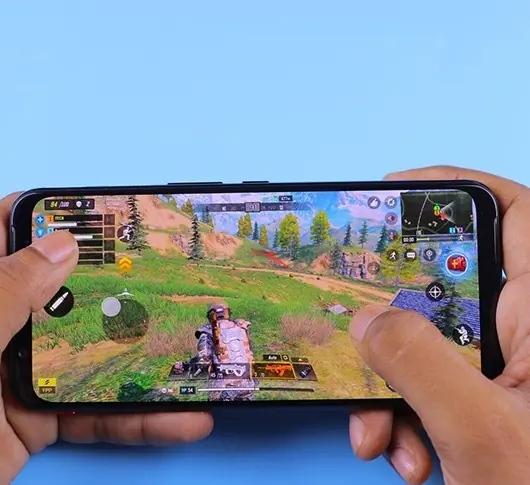 Android game testing that survives device fragmentation
  Types of game testing every studio actually runs