
Roblox trends in gaming describe which genres, mechanics, platform features, and monetisation patterns are driving concurrent users and revenue on Roblox right now. The fastest-growing categories are steal-and-defend tycoons, idle-grow simulators, co-op horror, anime fighters, and fashion social games. Platform-side, Luau type-checking, Open Cloud, AvatarCreator, and Spatial Voice are shifting what mid-budget UGC studios can ship.
This guide covers what is trending on Roblox right now, the genre and mechanic patterns behind the breakout titles of 2023 to 2025, the platform features that change production economics, the monetisation evolution, the AI and creator tools that compress timelines, the rise of brand worlds, and the realistic mid-budget production scope for a Roblox studio.
What is trending on Roblox right now

The fastest-moving titles on Roblox in 2024 and 2025 share a small set of mechanics. Steal a Brainrot fused a tycoon base with steal-and-defend PvP and a meme aesthetic, becoming the breakout title of mid-2025. Grow a Garden took idle-grow loop design from mobile and re-wrapped it around social trading, hitting hundreds of millions of visits. 99 Nights in the Forest brought co-op survival with party-based progression. Forsaken kept the asymmetric horror format healthy. Dress to Impress turned fashion competition into a top-charting social experience. Blade Ball and Volleyball Legends pushed timing-based PvP. Type Soul kept anime fighters near the top of the chart. Pet Simulator 99 extended the simulator-franchise model. Doors stayed dominant in co-op horror. Rivals continued to scale Roblox mobile FPS.
The platform itself is moving as fast as the games. Luau native types, Open Cloud API, MeshPart, EditableImage, AvatarCreator, Layered Clothing, FaceCapture, Dynamic Heads, and Spatial Voice change what a small team can ship. Roblox Assistant and Code Assist reduce the cost of scripting, asset prep, and review.
Top breakout signals from 2023 to 2025:
- Steal-and-defend tycoons (Steal a Brainrot pattern).
- Idle-grow simulators with trading (Grow a Garden pattern).
- Co-op horror (Doors, Forsaken pattern).
- Anime fighters (Type Soul, Blade Ball).
- Fashion social games (Dress to Impress).
- Sport-fighter hybrids (Volleyball Legends).
- Long-tail simulators (Pet Simulator 99).
- Mobile-first FPS (Rivals).
Top Roblox genres and what is working in each
Genre choice on Roblox is a production decision with cost, retention, and monetisation consequences. A simulator with idle-grow loops needs a low-friction first session and a long-tail content pipeline. A tycoon with steal-and-defend PvP needs server-authoritative validation and anti-abuse. A co-op horror needs scene scripting, audio, and small-party matchmaking. An obby remains the cheapest entry point but is the hardest to monetise without a strong gamepass plan or branded sponsor.
The table compares the five most active genres on Roblox by typical player base shape, monetisation pattern, and retention drivers. Reference titles are public Roblox releases.
| Genre | Typical player base shape | Monetisation pattern | Reference titles |
| Tycoon / steal-and-defend | Strong DAU spike on viral push, retention via session-to-session progression | Gamepasses for speed, storage, abilities; dev products for boosters | Steal a Brainrot, NFL Tycoon |
| Simulator / idle-grow | Long tail, high concurrent users, social trading drives stickiness | Gamepasses for capacity; dev products for currency; UGC limiteds | Grow a Garden, Pet Simulator 99 |
| Co-op horror | High average session length, party-based, mid retention | Gamepasses for cosmetics and revives; brand activations | Doors, Forsaken, 99 Nights in the Forest |
| Anime fighter / PvP | Spike on chapter or update, mid retention with content cadence | Gamepasses for characters; dev products for rerolls and currency | Type Soul, Blade Ball, Volleyball Legends |
| Fashion / social | High DAU on mobile, short sessions, strong creator overlap | UGC items, gamepasses for outfits, brand-paid sponsorships | Dress to Impress |
| Mobile-first FPS | Mid retention, controller and touch parity matter, esports-adjacent | Battle pass, gamepasses for weapons and skins | Rivals |
Tycoons and simulators carry most of the top-100 by visits. Co-op horror has the highest session length among the leaders. Fashion social games dominate mobile DAU. Anime fighters spike on content drops; without a chapter cadence they decay fast.
Viral mechanics behind the breakout titles
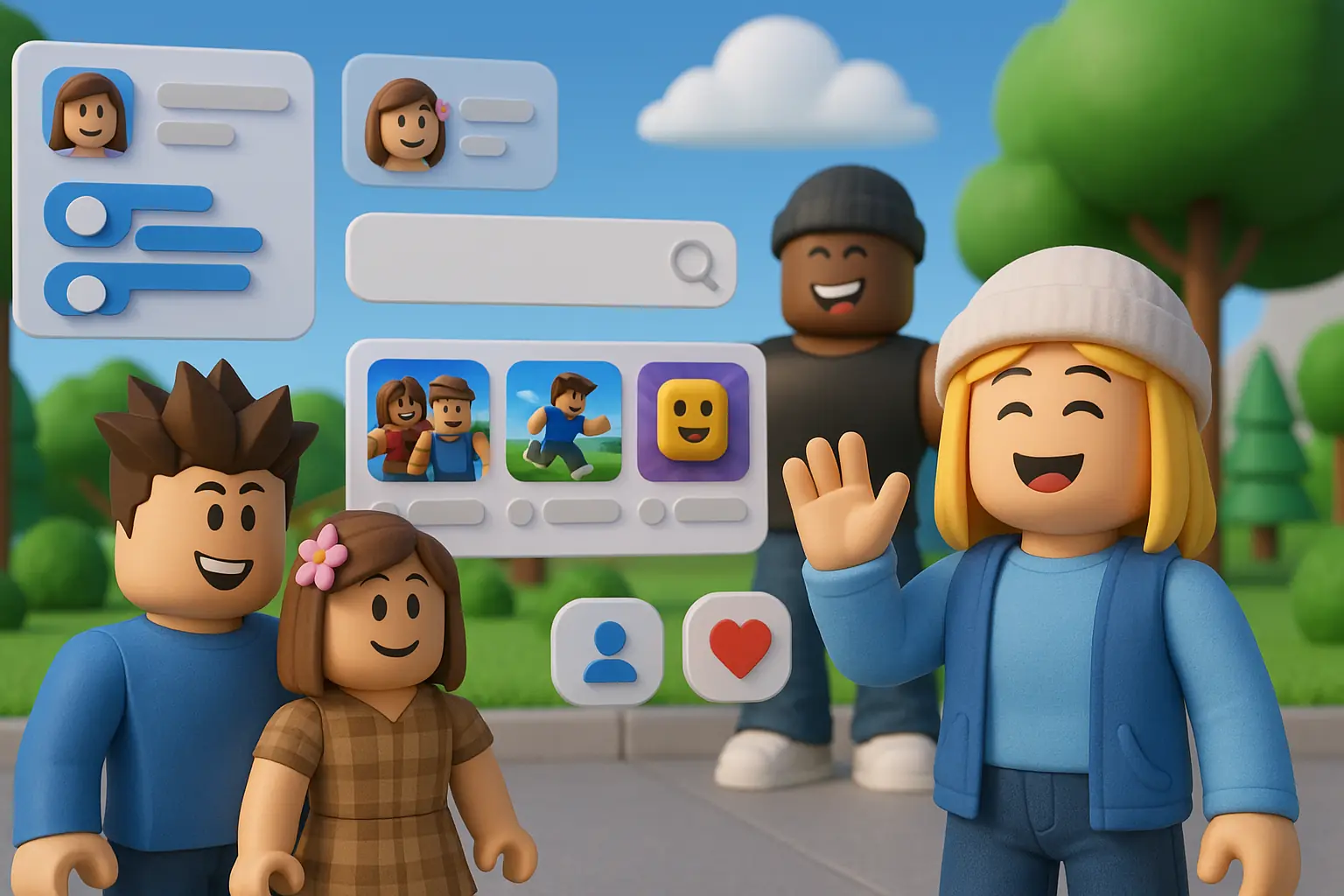
The 2023 to 2025 breakouts share a few mechanics that are now production-ready patterns for new Roblox projects. Steal-and-defend layers a tycoon foundation with PvP raids that create the social loop. Idle-grow uses ambient progression so a session can be five minutes or fifty minutes; trading converts solo play into a social graph. Co-op horror uses small parties (3 to 5 players), scripted scenes, and audio design to create shareable moments. Anime fighters use timing-based combat with a heavy update cadence tied to source material chapters. Fashion social games use rounds (typically 90 to 120 seconds), voting, and persistent wardrobe. Knowing which mechanic carries the loop helps a team scope server logic, art, and live ops correctly.
Common viral mechanics:
- Steal-and-defend PvP layered over a tycoon base.
- Idle-grow progression with trade as the social loop.
- Small-party (3 to 5) co-op horror with audio-driven tension.
- Timing-based duel combat with chapter-driven content cadence.
- Round-based fashion or social judging with persistent wardrobe.
- Trading-driven economy with UGC limiteds.
Roblox platform features that change production economics
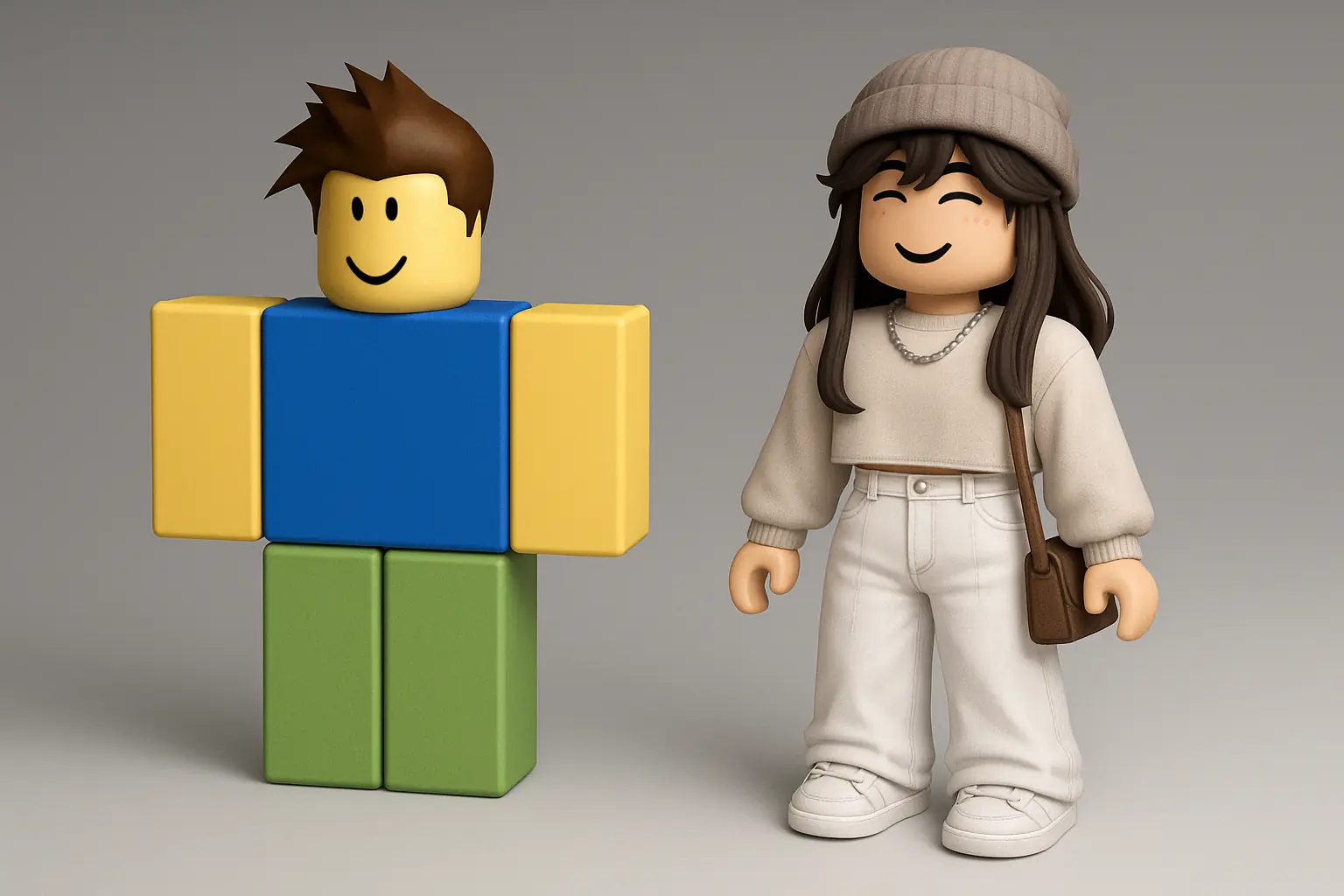
Roblox platform updates from 2023 onwards have changed what a small or mid-budget studio can ship. Luau native types and the improved type-checker make medium-sized codebases maintainable. Open Cloud API exposes data stores, place publishing, and messaging for external pipelines. MeshPart and EditableImage make custom art assets first-class. AvatarCreator, Layered Clothing, and Dynamic Heads expand UGC. FaceCapture brings face animation into normal sessions. Spatial Voice changes social experiences. Roblox Assistant and Code Assist compress scripting time. Each of these reduces the cost of shipping a competitive title.
Roblox platform features used most by 2024 to 2025 breakouts:
- Luau native types and type-checker for safer large codebases.
- Open Cloud API for data store and place publishing automation.
- MeshPart and EditableImage for custom art workflows.
- AvatarCreator and Layered Clothing for UGC fashion.
- FaceCapture and Dynamic Heads for character expression.
- Spatial Voice for social and competitive experiences.
- Roblox Assistant and Code Assist for script generation and asset prep.
How Roblox compares to other UGC platforms for studios
A studio choosing a UGC platform usually compares Roblox to premium shooter franchises Creative (UEFN) and Minecraft Bedrock for marketplace and brand activations. Each platform has different production economics, monetisation rails, and audience. The table summarises the main production trade-offs from a studio perspective, not a player perspective. Engine, scripting stack, monetisation model, and audience age are the four practical decision axes.
| Platform | Engine and scripting | Monetisation rails | Audience and reach |
| Roblox | Roblox Studio, Luau (typed), Open Cloud, AvatarCreator | Robux, gamepasses, dev products, premium payouts, UGC marketplace, brand sponsors | Largest UGC platform; strong under-16 base; growing 17+ and mobile share |
| premium shooter franchises Creative (UEFN) | Unreal Editor for premium shooter franchises, Verse scripting | Engagement payouts based on retention and time spent | Smaller than Roblox; older average age; strong console reach |
| Minecraft Bedrock Marketplace | Bedrock add-ons, JSON and JavaScript | Marketplace coins, paid worlds, no in-experience IAP | Mature audience; strong on Xbox and mobile; slower content velocity |
Roblox is the only platform of the three with full in-experience IAP and a creator-driven UGC marketplace, which is why simulators, tycoons, and fashion games scale fastest there. premium shooter franchises Creative rewards retention and time-spent rather than direct purchase, which favours session-game design. Minecraft Bedrock is a slower velocity marketplace better suited to single content drops.
Monetisation trends and the creator economy

Roblox monetisation has evolved past pure gamepass sales. Premium Payouts reward time spent by Premium subscribers and shift incentive design toward retention. Dev products carry the bulk of revenue for simulators and tycoons through repeated currency or booster purchases. UGC limiteds and the avatar marketplace create a parallel revenue line for studios that ship items. Branded sponsors fund stand-alone or in-game activations. Battle passes (as a scripted pattern, not a Roblox-platform feature) work for fighters and shooters with clear content cadence.
Roblox monetisation channels and where they fit:
- Robux gamepasses for one-time unlocks (speed, storage, characters).
- Dev products for consumable purchases (currency, boosters, rerolls).
- Premium Payouts for retention-driven revenue.
- UGC limiteds and avatar marketplace for items and accessories.
- Brand-paid sponsorships for activations and themed content.
- Scripted battle passes for fighters and shooters.
A balanced Roblox title usually ships with gamepasses, dev products, and Premium-aware design from day one. UGC and brand sponsorships are added once the title has a stable concurrent-user base.
AI and creator tools that compress production timelines

Roblox Assistant (script generation, scene help, code review) and Code Assist (in-editor completions) reduce the cost of medium-complexity scripting work. Texture Generator and Avatar Auto Setup compress art preparation. Open Cloud lets external CI pipelines push places, manage data stores, and publish UGC. For a mid-budget studio shipping a typed Luau codebase with Open Cloud automation, the tooling overhead is meaningfully smaller than it was in 2022. None of these tools remove the need for design, art direction, or live ops, but they compress the time from prototype to playable place.
Where AI and tooling save production time:
- Script scaffolding (Assistant, Code Assist).
- Texture and material generation.
- Avatar Auto Setup and rigging assist.
- Open Cloud automation for publishing and data stores.
- Type-checker for refactor safety on large codebases.
Brand worlds, IP partnerships, and activations
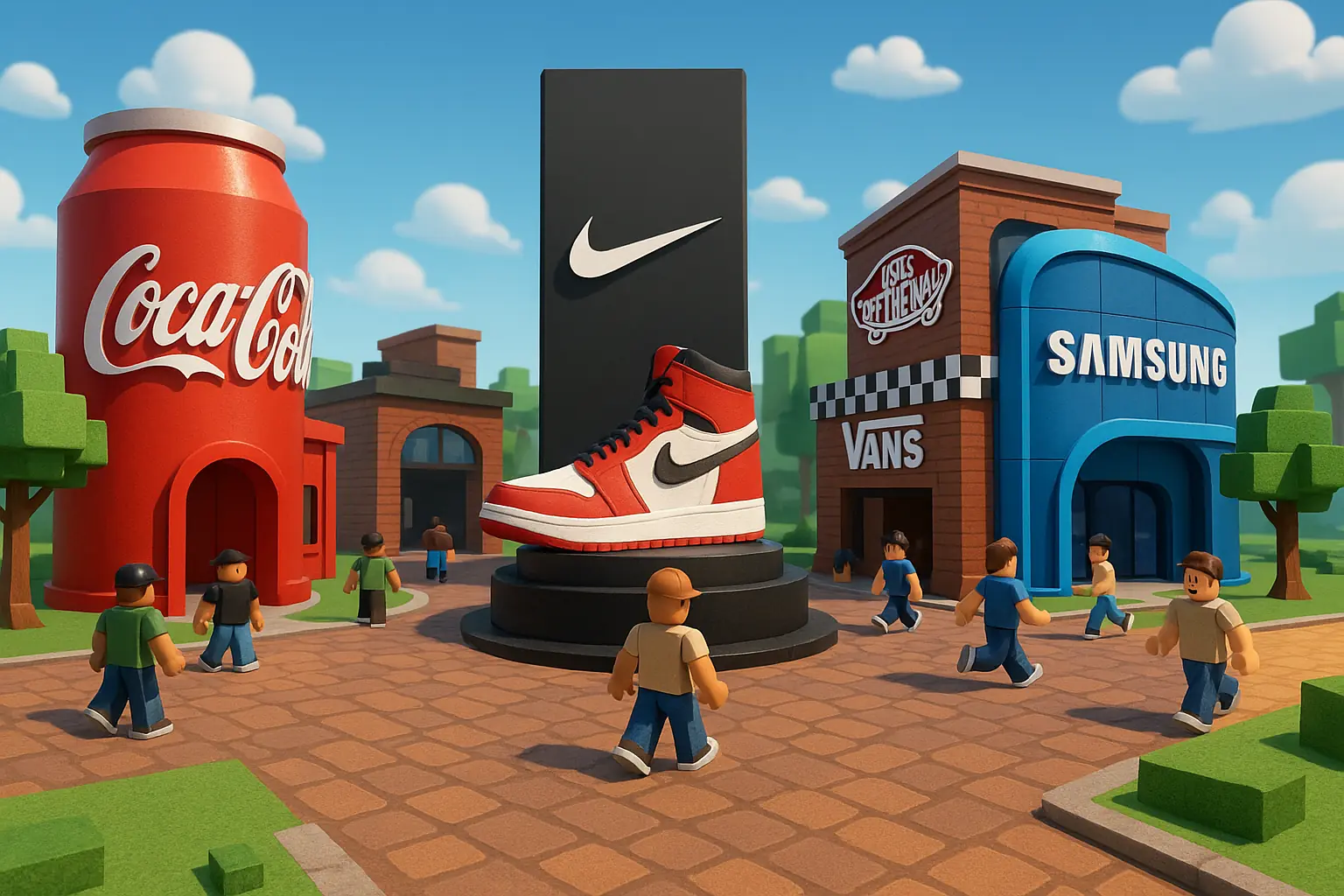
Brand worlds are a parallel growth track on Roblox. Nike Land, Walmart Land, Gucci Town, Spotify Island, Vans World, Forever 21 Shop City, and NFL Tycoon are public examples of permanent or seasonal brand experiences. The production pattern is different from a free-to-play breakout: the budget is paid by the brand, the success metric is dwell time and reach rather than IAP revenue, and the content is updated to a marketing calendar. Studios that ship brand worlds typically run a separate art and creative direction layer on top of standard Roblox engineering.
IP partnerships (anime IPs, sports leagues, film and game brands) are a second activation pattern. They can fund a stand-alone title or sponsor a content update inside an existing top-100 game. For studios entering the Roblox development for brands track, the production discipline is closer to advertising delivery than to a free-to-play live ops loop.
What mid-budget Roblox production actually looks like
A mid-budget Roblox studio in 2024 to 2025 typically runs a team of 4 to 12 people: one or two designers, two to four Luau engineers, two to four artists (modelling, texturing, UI, sometimes a rigger), one or two QA, and a producer. The production runs in Roblox Studio with a typed Luau codebase, an external source-control workflow, Open Cloud automation, and a live ops cadence of weekly or biweekly updates. Budgets for a competitive launch are usually in the tens of thousands of dollars range for pre-launch and a recurring live ops budget after launch. Marketing is usually a separate line, often driven by creator partnerships rather than paid ads.
The production discipline is closer to live ops mobile than to packaged game development. Concurrent users, session length, payer conversion, and retention curves drive the update plan. The breakouts of 2024 and 2025 reached the top of the chart on small teams shipping fast iteration cycles.
About Game-Ace
Game-Ace has delivered game development and outsourcing projects since 2005 with a team of 120+ in-house specialists and 200+ released games across mobile, web, and multiplayer genres. For Roblox engagements, Game-Ace works inside Roblox Studio with typed Luau, Open Cloud automation, and live ops cadence aligned to the client's update plan. Engagement models include Team Extension for Luau engineers and Roblox artists, Co-development for a defined system or content track, and Full-cycle production for a turnkey title.
For Roblox studio engagements see Roblox game development. Reference projects across genres are listed on the Game-Ace portfolio. To scope a Roblox engagement, contact our team.
 Roblox monetization: strategies that actually earn
  Hire Roblox developers: where to find and how to scope
  12 Roblox game ideas that actually work
  Roblox gamified education: a play-to-learn design guide
  Roblox browser game: how to play Roblox in a browser