
Roblox monetization is the set of platform-native ways a creator turns engagement inside a Roblox experience into Robux, and eventually into USD through Developer Exchange. The main methods today are Game Passes, Developer Products, Premium Payouts, Roblox Ads, Immersive Ads, and brand integrations. Everything else is layered on top of these primitives.
This guide covers how Roblox monetization actually works at the platform level, the seven methods creators can combine right now, how Robux revenue-share and DevEx payout math actually lands, how monetisation design changes for kids-focused experiences versus teen and adult experiences, and how brands can monetise Roblox without asking players for money. If you are scoping a Roblox monetisation strategy, a Robux economy design, or platform-native ads integration, talk to Game-Ace. See our Roblox game development services.
How Roblox monetization actually works today
Roblox monetization is not a single mechanic. It is a set of platform-native payment and payout systems that only exist inside the Roblox client and Roblox Studio. Players buy Robux from Roblox with real currency, spend Robux inside experiences on things the creator has defined, and the creator earns a share of the Robux spent. Creators then convert earned Robux back to USD through the Developer Exchange programme when they qualify. No third-party payment processing runs inside a Roblox experience.
The full monetisation surface is documented on the Roblox Creator Hub monetization pages.
Two consequences follow from this design. First, monetisation design in Roblox is inseparable from Robux economy design; a Game Pass priced at 500 Robux is a very different offer from one priced at 199. Second, every monetisation feature lives inside Roblox Terms and content policy, including strict rules for experiences aimed at younger audiences.
Scoping a Roblox monetisation strategy or Robux economy design?
Roblox monetization methods available to creators
There are currently seven core Roblox monetization methods a creator can combine inside a single experience. The comparison below is the working shortlist most Roblox studios and brand teams choose from when they scope monetisation for a new project.
| Method | How it works | When it fits | Robux revenue-share basics |
|---|---|---|---|
| Game Passes | One-time Robux purchase, permanent capability in one experience | Recurring buyer intent, permanent unlocks (VIP door, extra inventory slots) | Creator receives Robux net of Roblox's marketplace fee |
| Developer Products | Consumable Robux purchase, can be repeated (currency, boosts, cosmetics) | Free-to-play with soft currency, repeatable spend | Same marketplace fee on each transaction |
| Premium Payouts | Robux paid out based on Roblox Premium subscriber time-in-experience | Long-session, sticky experiences that keep Premium users engaged | Distributed from a Robux pool based on relative engagement share |
| Developer Exchange (DevEx) | Programme to convert earned Robux to USD for qualifying creators | All creators once eligibility and Robux thresholds are met | Fixed rate set by Roblox; details on the DevEx help page |
| Roblox Ads | Platform ad units that drive players into experiences | User acquisition, cross-promotion between owned experiences | Not direct player payment; drives play, which drives other monetisation |
| Immersive Ads | In-world 3D ad placements (billboards, portals) inside experiences | Reach and CPM monetisation without asking the player to pay | Payout based on impressions in supported experiences |
| Brand integrations | Sponsored spaces, branded items, or branded experiences funded by a brand | Brands that need measured campaigns in Roblox rather than direct-to-player sales | Custom deal, usually flat fee plus performance |
Details on the DevEx eligibility rules and current Robux-to-USD conversion sit on the official Roblox DevEx help page.
Roblox monetization strategies that actually work
The strategies below are the ones we see holding up in production for teams shipping in Roblox right now.
First: pick one primary monetisation method for the experience, not all seven at once. A social-hangout experience monetises differently from a competitive PvP arena, and a kids-focused simulator monetises differently again. The choice of Game Passes as the anchor versus Developer Products as the anchor changes the entire in-experience economy design.
Second: design the free path first. Roblox players will abandon an experience in the first minute if the free loop is thin. The paid offers should feel like acceleration or expression, not gating. A useful test: strip every paid item from the experience and confirm the free session still runs 15 to 20 minutes of clean gameplay.
Third: layer Premium Payouts on top of a sticky experience instead of treating it as a standalone strategy. Premium Payouts pay for time, so a strategy of "longer sessions" reads directly into Premium Payouts revenue.
- Anchor on one method (Game Passes or Dev Products) per experience.
- Design and QA the free loop before pricing paid offers.
- Use Premium Payouts as a bonus stream on session-length wins.
- Price offers in Robux the target audience can actually afford.
- Introduce paid offers only after a first-session win, not on the landing screen.
- Track spend-per-visit and refund-rate weekly, not monthly.
Roblox monetization best practices for a healthy economy
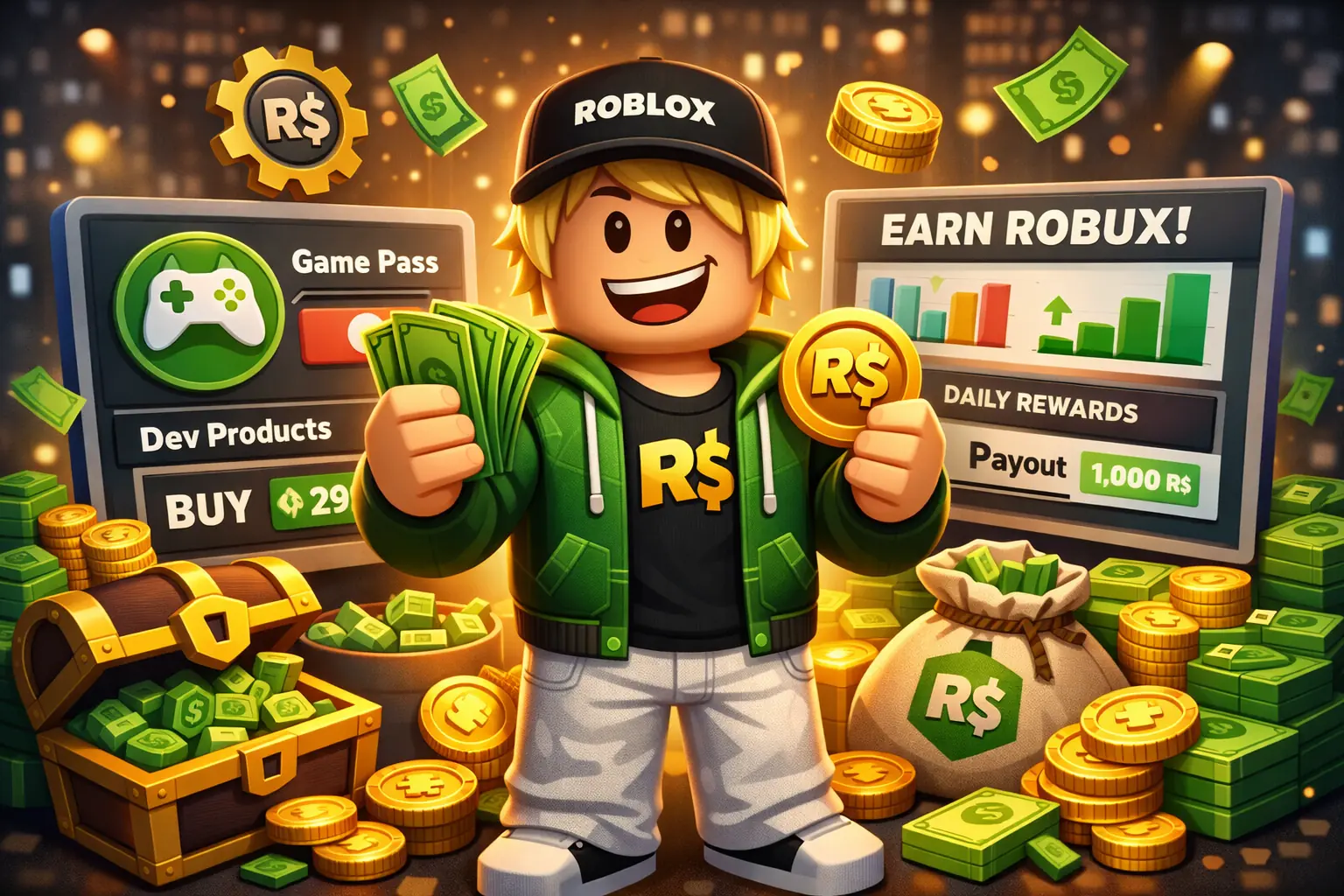
A healthy Robux economy is boring on purpose. The prices are consistent, the perceived value tracks the Robux cost, and no single offer breaks the free-to-play balance. The failure mode is the opposite: five overlapping shops, three currencies, and a Game Pass that trivialises the core loop.
Best practice is to keep the Robux economy visible on one screen, keep the number of paid items small enough that a first-session player can understand every offer, and test price points against the target audience's actual Robux balance rather than an aspirational one.
Roblox monetization methods for kids-focused experiences
Roblox skews young. A large share of the daily audience is under 13, and monetisation for that audience carries extra design constraints that go beyond platform Terms.
For kids-focused experiences, the working rule is: no pressure loops, no aggressive scarcity, no dark patterns, and price points a parent can approve without a second thought. Game Passes for cosmetic and expressive unlocks work; consumables that push repeated small spends do not. Roblox's own policies restrict some monetisation surfaces for younger audiences, and content moderation applies before an offer ever reaches a player.
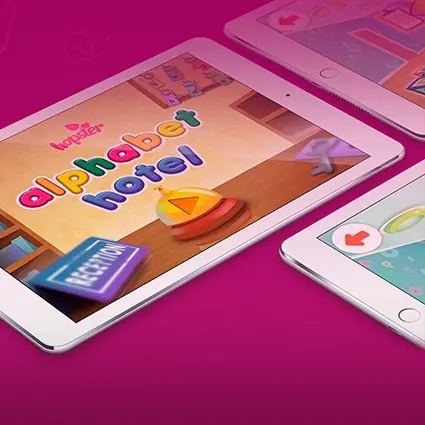
Game-Ace's Hopster's Alphabet Hotel is a kids IAP reference in the same spirit: expressive unlocks, no pressure, parent-friendly price points. It is a mobile IAP project, not Roblox, but the monetisation design lens carries over cleanly to Roblox kids experiences.
How brands monetise Roblox without direct-to-player sales
Brand monetisation on Roblox is a different game from creator monetisation. A brand is not usually trying to earn Robux; a brand is trying to reach an audience inside Roblox and measure the campaign. The three working models are Immersive Ads, sponsored branded experiences, and hybrid deals with a top creator on the platform.
Immersive Ads sit inside supported experiences and pay creators on impressions. A branded experience is a full standalone build funded by a brand, usually with retail-tie-in items and events. Hybrid deals put branded content into an existing top experience for a defined window.
Game-Ace's Roblox development for brands practice scopes each of these three models against the brand's campaign KPI rather than platform Robux revenue.
When to talk to Game-Ace about a Roblox monetisation strategy
Talk to Game-Ace when a Roblox project is at the point where the free loop is playable and the next question is how to layer paid offers without breaking retention, or when a brand needs a Roblox campaign scoped against a real KPI. Typical scopes: Robux economy design for a new experience, monetisation refactor on a live experience with weak spend-per-visit, Immersive Ads and brand-experience scoping, and DevEx-ready payout planning.
Related reads on the Game-Ace blog: how to make a Roblox game, how much it costs to make a Roblox game, and how to hire the best Roblox game developer.
 Roblox trends in gaming: what is working now
  Hire Roblox developers: where to find and how to scope
  12 Roblox game ideas that actually work
  Roblox gamified education: a play-to-learn design guide
  Roblox browser game: how to play Roblox in a browser