
The best language for game development is the one that matches your target engine and platform. C++ powers Unreal Engine and custom engines where performance is non-negotiable. C# is the default for Unity and now Godot. Lua drives Roblox, LOVE, and most game modding. GDScript is native to Godot 4. Rust is growing through Bevy. JavaScript and TypeScript ship browser and Instant Games. The best programming language for games is usually decided by the engine your team already ships in.
If you are scoping a game and still choosing an engine and language, talk to Game-Ace.
C++ for Unreal Engine and custom engines
C++ remains the best language for game development when you need direct memory control, deterministic performance, and access to engine internals. Unreal Engine 5 exposes its full API through C++, and every shipped Unreal title includes at least some gameplay C++ alongside Blueprints. The trade-off is engineering cost: C++ has a longer onboarding curve, stricter build pipelines, and heavier debugging cycles. Reference: Unreal Engine C++ documentation.
C# for Unity and Godot
C# is the best language for game development on Unity, and it is now a first-class option in Godot 4. Unity 6 ships a mature C# scripting runtime with IL2CPP ahead-of-time compilation for mobile and console targets, fast iteration through hot reload, and a hiring pool that spans mobile, web, and enterprise developers. C# is the pragmatic pick for most mobile and indie mid-budget projects. Reference: Unity scripting overview.
Lua and Luau for Roblox, LOVE, and modding

Lua is the best programming language for games built on Roblox, LOVE, Defold, and many modding pipelines. Roblox uses Luau, a typed dialect maintained by Roblox, which adds gradual typing, faster VM performance, and safer sandboxing than reference Lua. Outside Roblox, Lua often appears as an embedded scripting layer inside C++ engines for designers and modders to author gameplay without rebuilding the engine.
GDScript for Godot native workflows
GDScript is a Python-styled language built specifically for Godot. It compiles to bytecode, integrates tightly with the Godot editor, and offers the fastest iteration loop in the engine. Godot 4 also supports C# and, through GDExtension, C++ and Rust. Mixed-language Godot projects are common: GDScript for UI and gameplay glue, C# or C++ for performance-sensitive systems.
Rust for Bevy and custom game engines

Rust is a growing but still niche option for game development. Bevy is a data-driven game engine written in Rust, while wgpu supports custom cross-platform rendering. Rust’s ownership model helps prevent many memory-safety errors without a garbage collector, making it useful for performance-sensitive engines, simulation systems, and multiplayer back ends. However, Rust still has a smaller game development ecosystem and talent pool than C++, C#, and GDScript.
JavaScript, TypeScript, and Python
JavaScript and TypeScript support browser games and lightweight cross-platform projects. PhaserJS is common for 2D development, while Cocos Creator uses TypeScript.
Python is rarely used for game runtime code but remains common in Blender, Maya, Houdini, automation, and content pipelines.
Swift, Kotlin, and Verse
Swift and Kotlin are the best programming languages for games written natively for iOS and Android without a cross-platform engine, unlocking the smallest binary sizes and tightest platform integration for lightweight puzzle or utility games. Verse is the scripting language for Unreal Editor for Creators (UEFN); teams building inside the UEFN ecosystem must use it, the only supported gameplay scripting layer in that environment.
Blueprints and mixing languages in one project
Blueprints are Unreal Engine’s visual scripting system, not a text language, but the primary gameplay authoring tool for many Unreal titles. Most shipped games use more than one language: a Unity mobile title might combine C# gameplay, native C/C++ plugins for platform SDKs, and Python build tooling. Mixed-language stacks are the norm, and the best language for game development inside a single project is usually the combination that matches production stages.
Hiring implications and performance versus productivity
Language choice shapes hiring cost and team availability. Unity C# developers are the largest hiring pool in games. Unreal C++ engineers are more senior on average and cost more per seat. GDScript, Rust, and Verse have small talent pools, which pushes teams toward external hiring or training. For teams that need to scale fast, Game-Ace offers Unity development and Unreal Engine development, plus dedicated hiring routes to hire Unity developers or hire Unreal Engine developers.
Every language pick is a trade between runtime performance and team productivity. C++ and Rust sit at the performance end. C#, GDScript, and Luau sit closer to productivity. The best programming language for games in a given project is the one that keeps frame time inside budget while letting the team ship features on schedule.
Language comparison at a glance
| Language | Primary engine | Hiring pool | Learning curve | Typical use |
| C++ | Unreal, custom | Mid, senior | Steep | Performance-critical, custom engines |
| C# | Unity, Godot | Large | Moderate | Mobile, indie, mid-budget |
| Lua / Luau | Roblox, LOVE | Niche | Low | Roblox economy, modding |
| GDScript | Godot | Small | Low | Godot native projects |
| Rust | Bevy, tools | Very small | Steep | Netcode, tools, engines |
| JS / TS | PhaserJS, Cocos | Large | Low | Browser, Instant Games |
A language-choice case from the Game-Ace portfolio
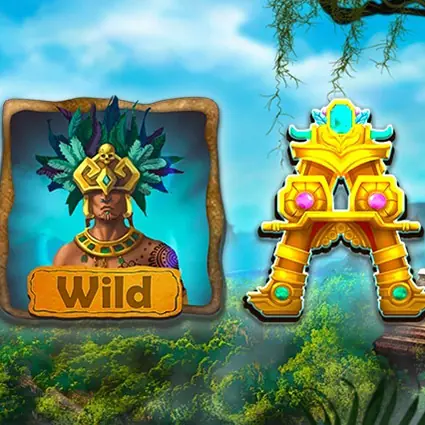
Welcome to Maya Slots, a cross-platform slot game by Game-Ace

Maya Slots is a browser-first casino slot with Ancient Maya visuals, delivered end to end by Game-Ace. The runtime uses JavaScript and web tech for cross-platform reach without a native install, keeping animated symbols and reel motion smooth across desktop and mobile browsers alike.
When to talk to Game-Ace about the best language for game development
Language choice is one of the earliest and most expensive decisions in a project. Game-Ace, a custom game development studio, has 120+ in-house specialists and 200+ delivered games across Unity, Unreal, web, and Roblox stacks. Talk to Game-Ace when you need a language and engine call that fits your team, timeline, and target platforms, and a full-cycle production route after the decision.
Related reading: Unity vs Unreal engine comparison and the best game engines overview on the Game-Ace blog.
 How MetaHuman changes game character development
  Game development for startups: budget and MVP guide
  Engineering tower defense games from prototype to live service
  Idle game development: a full production guide
  Gamification in recruitment: what actually works