

A proof of concept (POC) in game development is a short, focused build, typically 4–8 weeks long, that proves one core idea is technically feasible and engaging before the team commits to full production. It answers a single question: does this work? A POC is smaller than a prototype, a vertical slice, or an MVP, and it is the cheapest place to make mistakes.
This guide explains what a POC includes, how it differs from a prototype and an MVP, what a handover from a vendor should look like, when it is worth commissioning and when it is not, and how Game-Ace builds POCs. For the related service offering see Game Prototyping.
POC vs prototype vs vertical slice vs MVP
These four terms are used loosely in the industry. Treat them as four production stages with distinct purposes.
| Stage | Question it answers | Typical duration | Output | Audience |
| Proof of concept | Does this single core idea work? | 4–8 weeks | Playable test of one mechanic or technical question; greybox visuals | Internal team, technical lead |
| Prototype | Which design directions are worth pursuing? | 4–10 weeks | One or more playable variants of a gameplay loop | Internal team, design lead |
| Vertical slice | What does the finished game feel like at production quality? | 2–4 months | A polished segment representative of the final game | Publishers, investors |
| MVP | Is this product viable in market? | 4–9 months | Minimum shippable game with paying or testing users | Market, soft-launch users |
A POC validates feasibility. A prototype explores design space. A vertical slice sells the finished feel. An MVP tests market viability. Many studios run them sequentially; some skip a stage when the answer is already known.
When a game project needs a POC
Commission a POC when:
- The core mechanic has no validated precedent in a shipped game.
- A technical risk (performance budget, multiplayer netcode, novel input device, AI behaviour) is unproven on your target platform.
- You need a working artefact for an investor or publisher pitch and a deck is not enough.
- The team is split on whether the idea is fun, and you want a fast playable answer.
Skip the POC when:
- The genre and mechanics are established and there is a shippable reference you can study.
- The timeline is short and the technical uncertainty is low.
- You already have a tested prototype from a previous project.
The cost of a wrong-direction POC is small. The cost of skipping a needed POC and discovering the problem in month four of production is large.
What a POC must prove
A focused POC validates one of four things, sometimes two together, rarely more:
- Core mechanic feel. Does the central verb of the game (drive, fight, build, escape) feel right when you actually play it?
- Technical feasibility. Does the engine, target platform, and budget support the planned approach (frame rate, draw calls, memory, network)?
- Player intent. Does an outside tester read the mechanic the way the designer intended within the first minutes?
- Production assumption. Can the planned content pipeline (procedural generation, level kit, animation system) actually deliver at scale?
A POC that tries to prove everything proves nothing. Pick one or two and design the scope around them.
Game-Ace POC: RC Mayhem
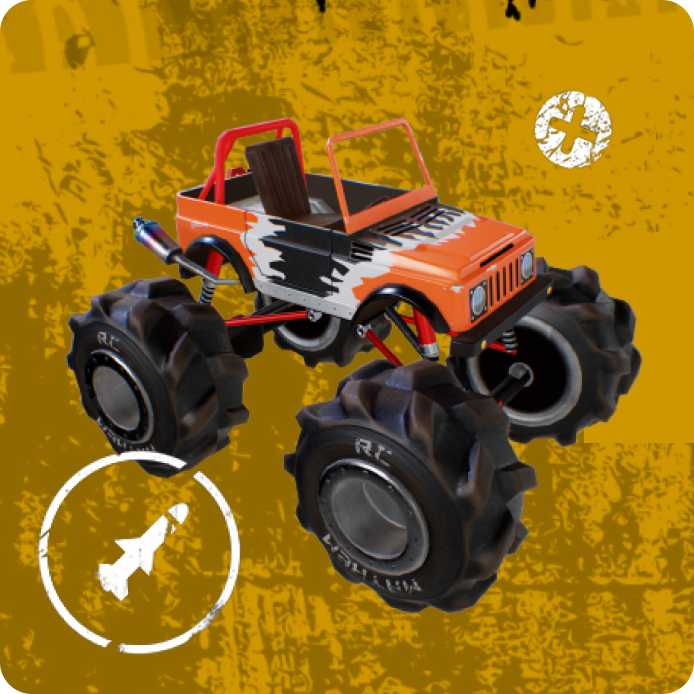
Game-Ace built RC Mayhem, a fast-paced RC racing POC in Unity in roughly one month. The build focused on validating the core racing feel through responsive vehicle handling, dynamic obstacles, strategic boosts, and cross-platform performance. A compact scope helped the team test before broader production planning.
Steps in POC development
- Define the question. Write down, in one sentence, what the POC must prove. If two sentences are needed, scope is already drifting.
- Pick the technology. Choose the engine, target platform, and version of any third-party SDKs. Stay close to what the full project will use so the POC is portable forward.
- Build a vertical pencil-test of the mechanic. Greybox art, working input, working systems, no polish, no menus beyond the minimum.
- Run blind playtests. Watch new players touch the POC without instructions. Note where the mechanic reads correctly and where it does not.
- Decide and document. Either approve the direction, change a specific element, or stop. Record the reasoning so it survives team changes.
Two sprints (2–3 weeks each) are a common rhythm. A POC that runs longer than 8 weeks usually has the wrong scope.
Game-Ace POC: the Infinite Escape
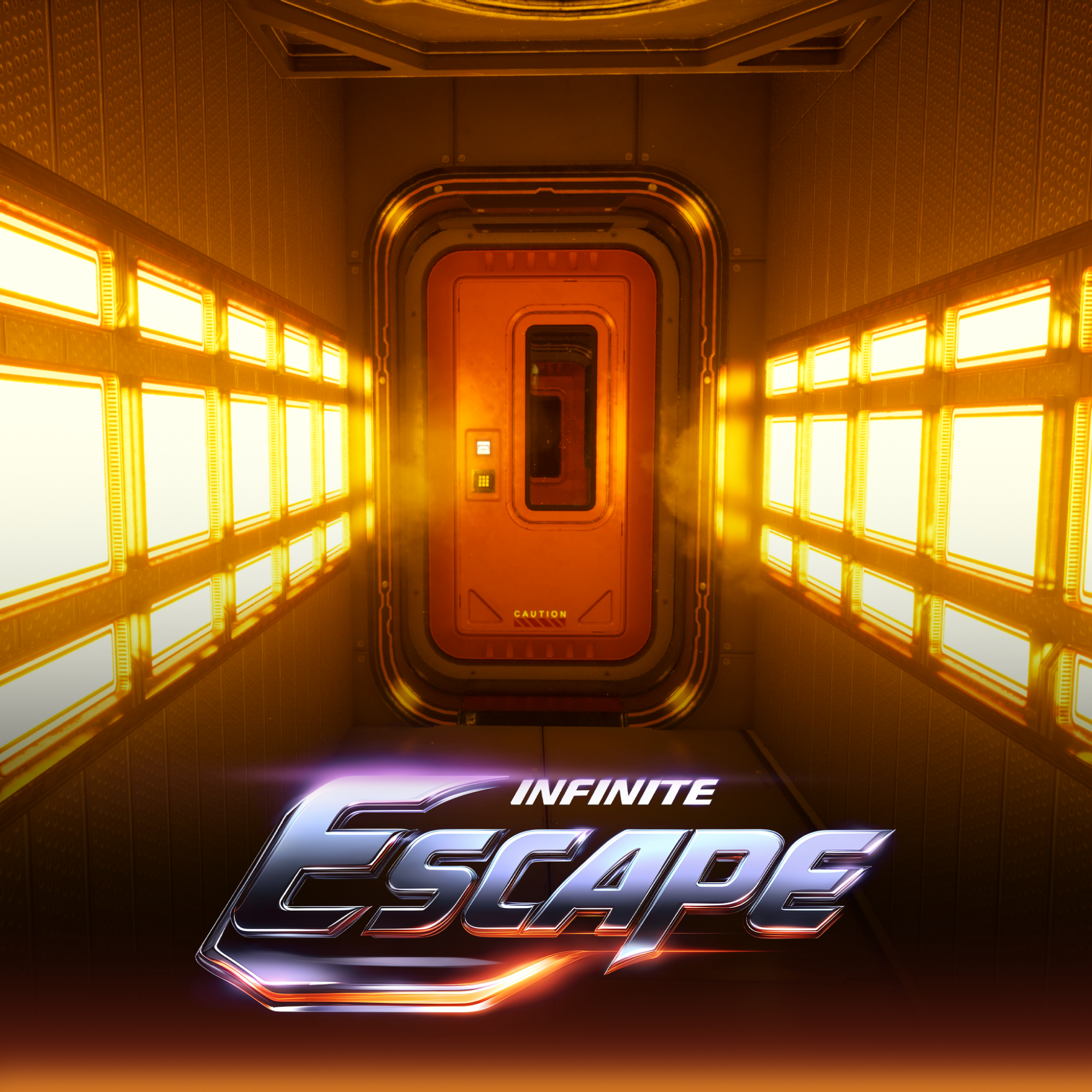
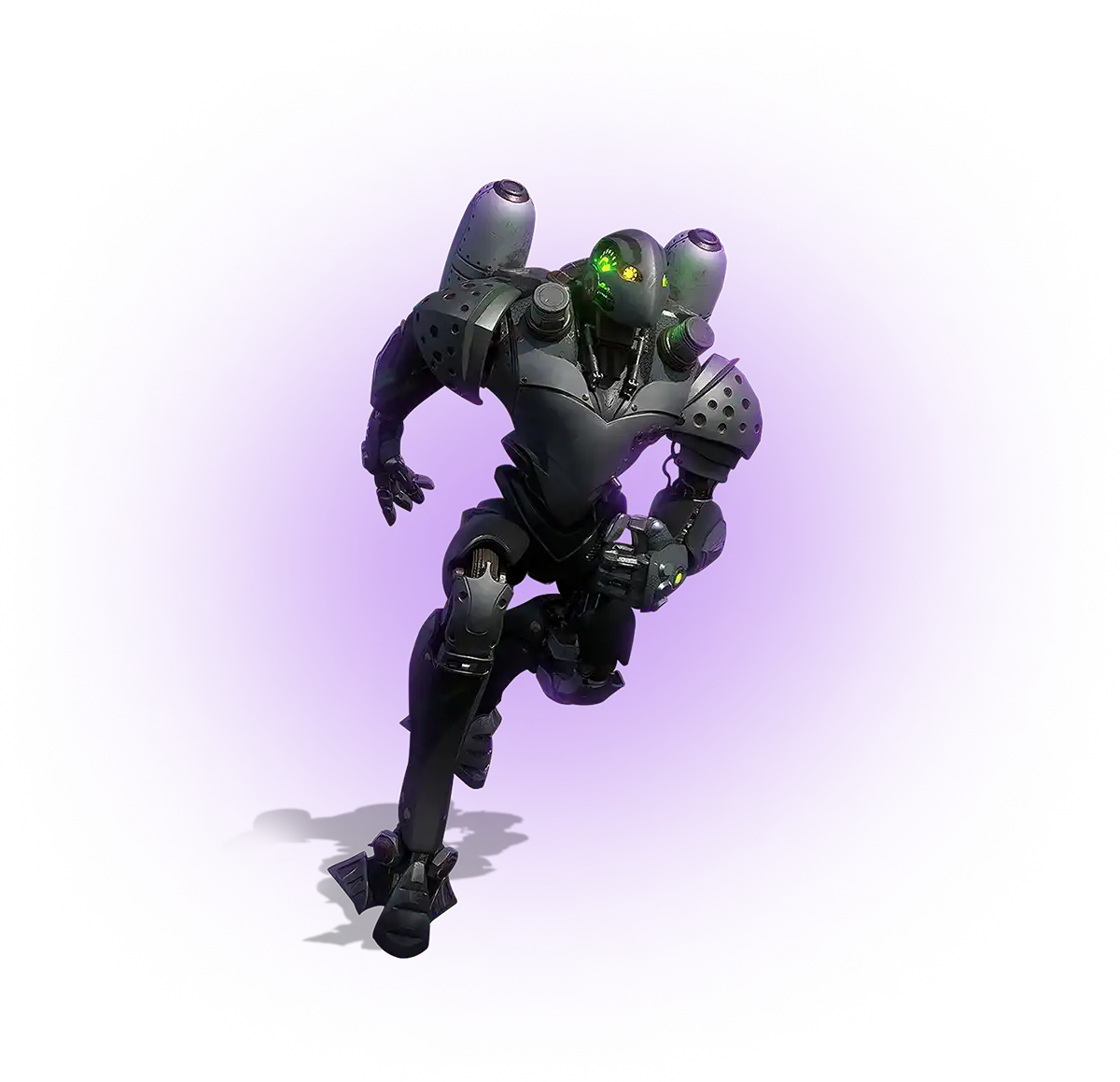
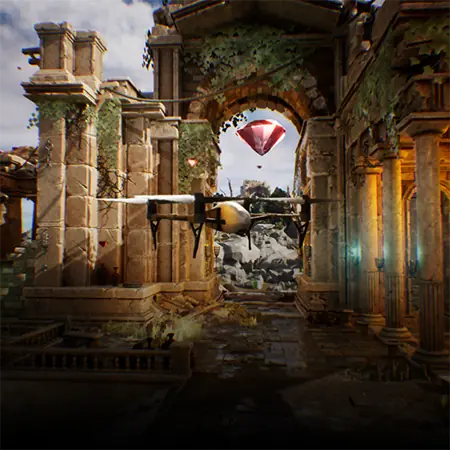
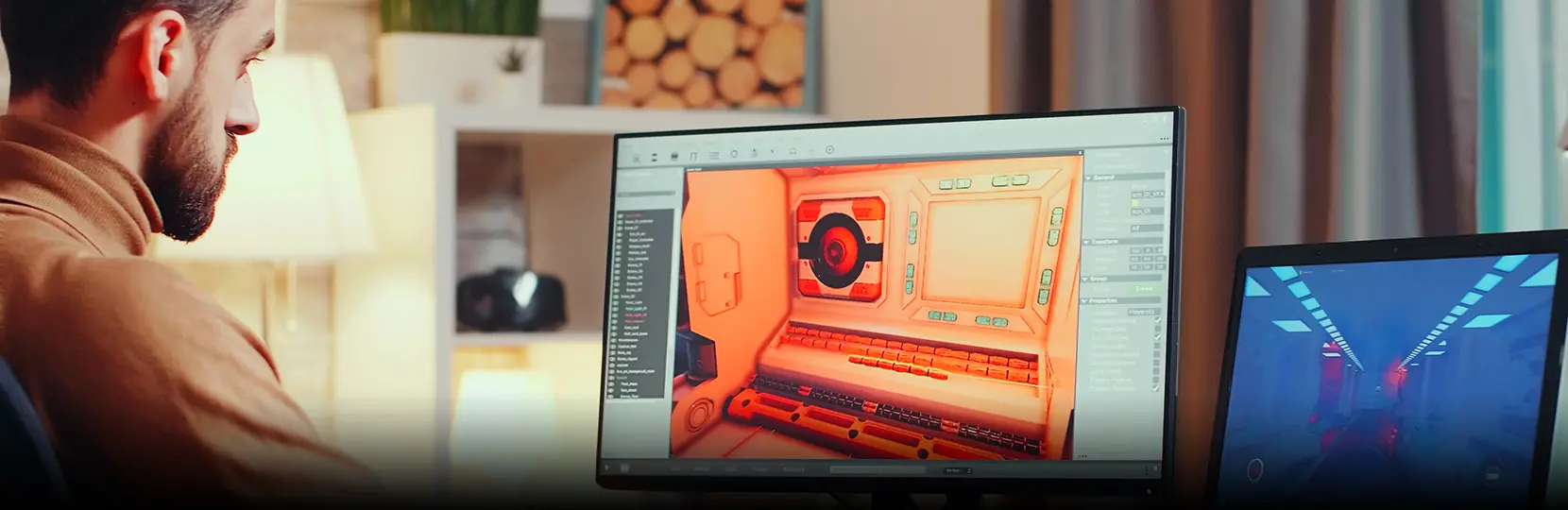
Game-Ace built The Infinite Escape, a sci-fi endless runner POC in Unreal Engine. The build validated the dynamic tunnel environment, procedural obstacle generation, lane-based movement, responsive controls, and scalable difficulty. The project confirmed the core run-jump-dodge loop.
What a POC handover includes
When a vendor delivers a POC, the standard handover at Game-Ace covers:
- Playable build (target platform; usually a development build, not a store-ready release).
- Source project files in the agreed engine (Unity or Unreal), under client ownership after acceptance.
- Engineering notes: what was implemented, what was stubbed, what was avoided and why.
- POC outcome report: what was validated, what was not, what surprised the team.
- GDD draft or update reflecting what the POC changed.
- QA notes from internal testing.
- Recommended next steps and a scope sketch for the next stage (prototype, vertical slice, or production).
All work is covered by NDA. IP and source code transfer to the client on acceptance.
What a POC costs and how long it takes
A focused POC typically runs 4–8 weeks, with the exact team composition defined after scoping. At Game-Ace, a proof-of-concept build starts from €20,000 for focused mechanic validation. The final cost depends on scope, engine, target platform, prototype fidelity, and any platform-specific risk that needs to be tested. Multiplayer netcode, advanced rendering, AI behavior systems, or novel input hardware can extend both the timeline and the budget.
Brief Game-Ace on your POC
Common POC challenges and how to handle them
Scope creep. Resist the pressure to add a second mechanic, a menu, or art polish. If the question changes, write a new POC scope rather than expanding the current one.
Polish trap. Greybox is the right finish level. Polishing a POC produces a worse production deliverable because the team commits to art and UX choices before the design is locked.
Validation without playtests. A POC that only the development team plays is an opinion, not validation. Build in two short external playtests inside the POC timeline.
Documentation gap. A successful POC that is not written up is the same as a failed POC, because the next sprint cannot use the findings.
Using a POC for funding and partnerships
A working POC is a stronger pitch artefact than a slide deck because publishers and investors can hold the idea in their hands. Useful POCs for pitches:
- Lead with the verb of the game, not the lore.
- Are short - two to five minutes of play covers most mechanics.
- Include a one-page outcome summary so the reviewer knows what was tested and what the next stage looks like.
- Acknowledge what is missing. Reviewers trust honest greybox more than over-polished demos.
A POC is not a vertical slice. If a publisher specifically requests a vertical slice, that is a longer engagement and a different scope.
Scaling from a POC to a full production
The transition from POC to production is where most projects lose momentum. Three rules keep it on track:
- Treat the POC as throwaway code where useful. Keep the validated systems; rewrite the stubbed and quick-hack systems before they harden into tech debt.
- Lock the design that the POC proved. Resist redesigning what already works. New ideas go into a backlog for the next planning cycle.
- Plan the next stage in writing. The POC outcome report becomes the input to either a prototype scope, a vertical slice scope, or a production GDD for a larger team that may later need to hire game developers.
Working with Game-Ace on a game POC: next steps
A focused proof of concept usually validates one core idea in 4–8 weeks, with the exact team composition defined after scoping. It gives stakeholders a controlled way to test a direction before committing to full production. Match the POC to the question: a single core mechanic, a technical risk on the target platform, a production assumption, or a player intent check. Then decide on three things before starting: which engine the full project will use, who owns the source code and what the handover includes, and how the POC outcome will be documented so the next production step can act on it.
When to talk to Game-Ace
Game-Ace builds game POCs in Unity and Unreal Engine for teams that need to validate a core mechanic, technical risk, target platform assumption, or pitch-ready gameplay direction before full production. Engagements we cover:
- Focused POC for one core mechanic or technical risk, usually completed in 4 to 8 weeks and starting from €20,000.
- POC paired with a playable build, design documentation, playtest findings, and a production transition plan.
- Scaling from POC to full-cycle production or game co-development on Unity or Unreal Engine, with validated systems and project knowledge carried forward where the client chooses continuity.
- Investor or publisher pitch prototype with a short playable build, documented validation outcome, and clear next-stage scope.
Game-Ace’s delivered portfolio includes RC Mayhem, a Unity-powered RC racing prototype, and The Infinite Escape, a sci-fi endless runner prototype built in Unreal Engine with a dynamic tunnel, procedural obstacle generation, and multi-platform performance optimization. A typical engagement starts with a concept brief, scope definition, technical feasibility check, and agreed validation goals before prototype development begins. At handoff, the client receives the playable build, prototype code, design notes, playtest findings, and a production transition plan.
If you have a mechanic, a technical risk, or a publisher pitch that needs a working answer, contact our team and we'll come back with a focused POC scope. Browse our portfolio for past POC and prototype work.
 How MetaHuman changes game character development
  Game development for startups: budget and MVP guide
  Engineering tower defense games from prototype to live service
  Idle game development: a full production guide
  Gamification in recruitment: what actually works