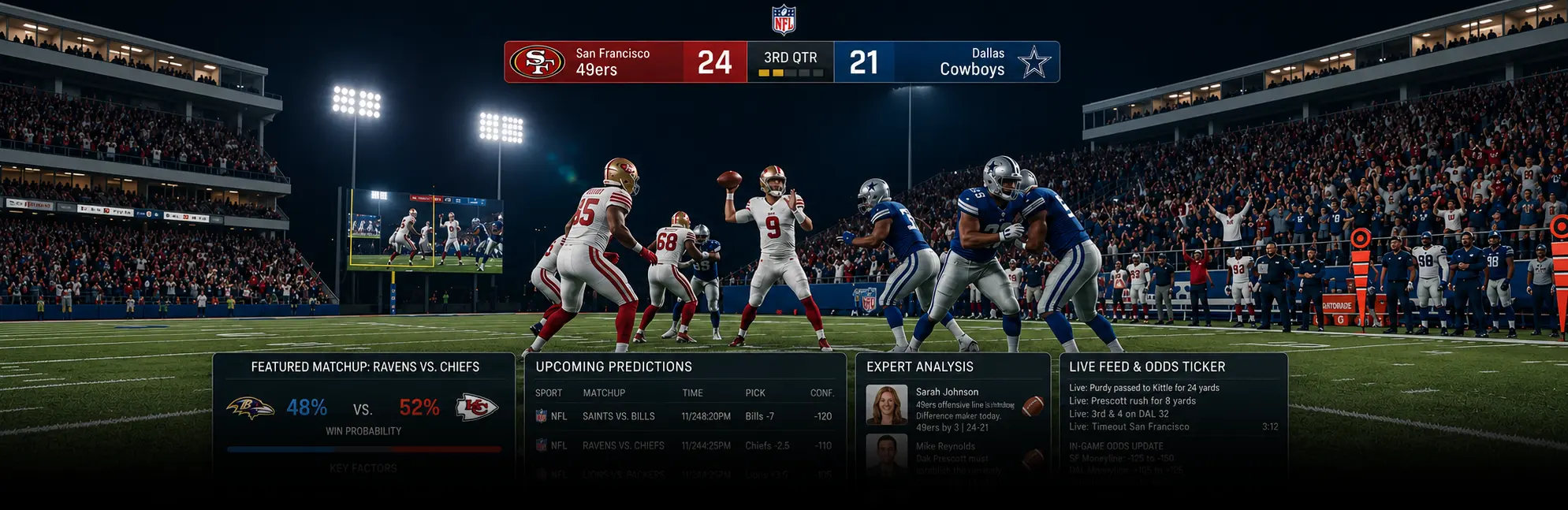

For decades, arguing about the next play from the couch was just part of watching the game. The viewer watched, the broadcast played, and that was the end of the transaction. But things look completely different now. Today, game predictions in sports serve as a central mechanism for capturing and keeping audience attention.
In this article, game predictions in sports are discussed from a product and fan engagement perspective, not as sportsbook, wagering, or betting mechanics. The product strategy here focuses squarely on gamification. We are talking about media broadcasters, professional sports clubs, and independent fan communities building interactive digital tools. Providing audiences with the ability to forecast match events, which can range from a final score to predicting if a specific player will pull off a steal in the next quarter, transforms passive viewers into highly active participants.
Market data shows that AI and data analytics are becoming central to sports technology. A SportsPro and Sportradar study cited by TechRadar found that more than 80% of sports organizations already use AI in sports operations, while 78% expect advanced data analytics to have a major impact on performance and fan-facing experiences. Younger demographics, particularly Gen Z, often skip full traditional broadcasts entirely in favor of snackable, interactive touchpoints. Game-Ace applies its experience in real-time systems, gamification, AI-powered product design, and interactive software development to help companies build sports prediction platforms focused on forecasting, engagement, and fan participation.
In this article, we’ll cover:
- What game predictions in sports are.
- How AI and real-time data support prediction mechanics.
- What features sports prediction platforms need.
- How prediction games improve fan engagement.
- What businesses should consider before building this type of product.
What Are Game Predictions in Sports?
Game predictions in sports are digital interactions that ask fans to forecast what may happen before or during a sports event. These predictions can focus on match outcomes, player performance, score ranges, tournament results, or live in-game moments.
You use these systems to validate a fan’s sports knowledge. You might ask them to predict possession stats, total running yards, or simply who takes the next penalty kick. To build this out right, you must understand the different tiers of forecasting logic.
- Casual fan predictions. Think of a standard social media poll. It is flat. It doesn't read live match data, and the interaction ends the moment the user clicks a button.
- Data-driven forecasts. These usually live as static infographics shown before kickoff. The system looks at basic historical stats and generates a pre-match probability graphic.
- AI-assisted predictions. Here, machine learning steps in. The algorithms process thousands of variables to calculate shifting live probabilities while the match actually happens.
- Interactive prediction mechanics. This is your actual software product. You build a user interface that lets the fan log their own forecast, compare it against the computer’s logic, and fight for a spot on a global leaderboard.
The goal is to manufacture emotional investment. If a fan makes a digital prediction on a Tuesday, they have a massive reason to open your app on Sunday to see if they were right. That significantly improves daily active user metrics, driving a measurable increase in return sessions.
How Do Game Predictions in Sports Work?
You can’t just drop a text box onto a mobile screen, ask for a score, and assume the job is done. Real forecasting architecture is heavy and complex. The data has to move from the stadium sensors to a cloud database, get crunched by an algorithm, and push down to a user’s phone before the referee blows the whistle.
Here is what the actual technical workflow looks like:
- Data collection. You pull raw statistics and live telemetry from third-party sports APIs.
- Data cleaning and normalization. You strip out the errors and format the messy data so your databases can read it properly.
- Model selection. You route the clean data through specific machine learning algorithms built for your target sport.
- Forecast generation. The backend calculates the probability scores and generates the actual prediction prompts.
- Real-time updates. You recalculate every single number the moment an event happens on the field.
- User-facing presentation. The frontend UI updates the graphics smoothly without forcing the user to refresh their screen.
- Feedback loops. You settle the scores, award the points, and feed the actual result back into the AI to make it smarter.
Data Collection and Preparation
Machine learning models depend entirely on high-quality data ingestion. They require historical match logs, player fatigue index numbers, weather updates, and live spatial tracking. However, third-party APIs often return inconsistent or incomplete data structures. You might get a missing comma in a JSON file, or a player ID might not match your internal database.
If the backend sends inaccurate or incomplete data into the model, prediction quality drops, and user trust suffers. That breaks trust instantly. Because of this, data engineers spend an uncomfortable amount of time writing validation scripts. They clean, scrub, and normalize the incoming information before it ever touches the predictive engine.
Forecasting Models and AI Logic
Machine learning doesn't own a crystal ball. Applying AI in game development and sports technology relies strictly on math and historical patterns. If you want to predict a pure win or loss, you deploy classification models. When there is a need to estimate a specific numeric value, such as projecting a team to score 112 points tonight, developers implement regression models.
Time-series forecasting tracks the momentum shifts during the match itself. The computer simply spots patterns far faster than a human analyst. It looks at ten years of game tape in a fraction of a second to guess what happens in the next ten minutes.
Real-Time Updates During Live Events
Sports are chaotic. A star player rolls an ankle in the first three minutes, and every pre-game prediction becomes worthless instantly. To handle this kind of volatility, your backend requires aggressive streaming data pipelines.
Latency directly affects the quality of live sports prediction experiences. If the television broadcast shows a goal, but your app takes 45 seconds to update the live win probability, the user gets frustrated and uninstalls the software. Low-latency infrastructure guarantees the user dashboard shifts in real-time alongside the live action on the screen.
The Role of AI in Sports Predictions
AI introduces scale. Before machine learning, sports media relied on a room full of analysts to generate interesting stats. Now, a platform can push a million unique, personalized prediction prompts to a million different fans simultaneously.
But you have to keep your expectations grounded. AI operates completely inside the box of the data you buy. It ignores human emotion, locker room drama, and random luck.
Models also suffer from "drift." The tactical meta of any sport changes constantly. A machine learning model trained entirely on soccer matches from five years ago won't accurately predict the high-pressing systems teams use today. Roster changes and new coaching styles mean you must continuously retrain the AI.
Transparency is arguably your most important design feature. Always present AI insights to users as data-driven probabilities, never as guaranteed facts.
Not every sports prediction product needs advanced AI from day one. For an MVP, simple statistical logic, clear scoring rules, and reliable data integration may be enough to validate the user experience. AI becomes more valuable when the product scales, collects enough behavioral data, and needs personalization, segmentation, or dynamic prediction prompts.
What Data Powers Sports Prediction Platforms?
To map out your API architecture and your licensing budget, you need to understand exactly what information feeds the beast. You have to layer different types of telemetry to get a reliable output.
| Data Type | What It Includes | How It Drives the Software Product |
| Historical match data | Past win/loss records, head-to-head performance, specific venue history. | Gives the models a long-term baseline to understand which team historically dominates. |
| Player performance data | Exact injury history, passing accuracy, top running speeds, fatigue metrics. | Fuels the highly specific micro-predictions for individual athletes. |
| Team-level metrics | Field formations, total possession stats, established coaching habits. | Uncovers tactical mismatches and predicts the pacing of the game flow. |
| Live event data | Instant score updates, clock stoppages, foul counts, substitution alerts. | Triggers the instant recalculation of live math on the frontend UI. |
| Contextual data | Extreme weather severity, stadium altitude, intense travel fatigue. | Adds physical reality and friction into the sterile mathematical models. |
| User interaction data | Which buttons fans tap, screen time metrics, drop-off analytics. | Powers your UI personalization and determines when to send push notifications. |
| Content engagement data | How many articles a user reads, or which video highlights they watch. | Connects media consumption directly back to the interactive prediction loops. |
How Game Predictions Improve Sports Fan Engagement
Why should a business invest heavily in this kind of architecture? Because active fans stick around, and high prediction completion rates translate directly to business value. Stats Perform’s 2026 report on interactive fan engagement draws on insights from 675 sports media executives and highlights how AI, changing fan expectations, and sponsor priorities are shaping sports media strategies for 2026.
When a user logs a forecast on your platform, they suddenly care about a mid-season match they would have otherwise ignored. They check their phone during the commercial breaks. They obsess over community leaderboards on Monday mornings.
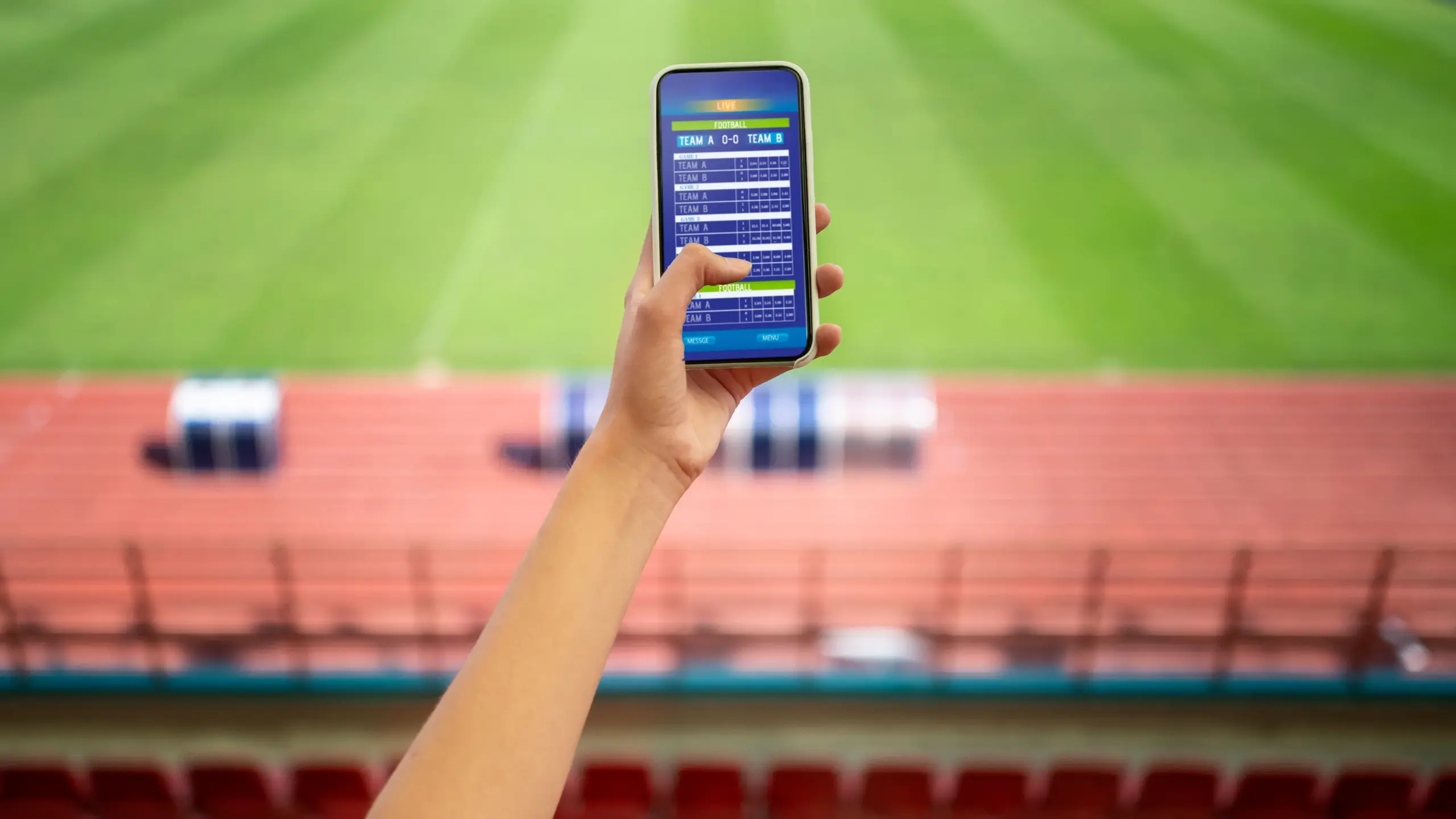
You can run simple pre-match polls to build early hype on a Tuesday. You launch live micro-forecasts on a Saturday afternoon. You settle up the team challenges on a Sunday night. You end up with a sticky, highly retained audience. And because there is no financial risk involved for the user, you bypass the complex regulatory friction associated with real-money betting while keeping the app brand-safe.
This interactive loop provides an excellent mechanism for gathering zero-party data, refining your user segmentation, and ultimately increasing the premium value of your digital sponsorship inventory.
Gamification in Sports Prediction Products
Showing a raw percentage on a screen is incredibly boring. Game design fixes that problem.
- Experience points. Reward participation so users feel progress even before they master prediction accuracy.
- Streak multipliers. Give regular users a reason to return several days in a row.
- Unlockable badges. Recognize major prediction wins, upset calls, and long-term participation milestones.
- Leaderboard mechanics. Let fans compare results across global rankings, private groups, or brand-sponsored challenges.
If you want to calibrate these mechanics correctly, you should look into professional gamification development services. The feedback loops need to reward users without making the app feel cheap or distracting from the actual sport. The mechanics must complement the viewing experience perfectly.
Personalization and User Segmentation
Never ask a dedicated basketball fan to predict a cricket match. You have to segment your audience aggressively.
If an app user only tracks one specific forward on their local team, the system needs to serve them player-specific prediction prompts exclusively for that athlete. Tools like AI game assistant integration allow platforms to process user history and serve highly tailored micro-predictions, adapting the interface to what the fan actually cares about. Personalized UI cuts out the noise. When the fan feels like the application was built specifically for their narrow interests, your churn rates drop significantly.
Sports Predictions vs Prediction Games
Sports predictions and prediction games are closely connected, but they are not the same thing. A sports prediction can be a forecast, probability, statistic, or expert insight. A prediction game turns that forecast into an interactive product where users make picks, earn points, join leaderboards, and return for future challenges.
This distinction matters for businesses. A prediction model may inform the user, but a prediction game creates participation. For sports media brands, esports platforms, and fan engagement products, the game layer is what turns data into retention.
Academic research on sports game predictions shows that asking fans to predict a game outcome before watching can influence their curiosity and evaluation of the viewing experience.
B2B Use Cases for Game Predictions in Sports
Because this technology doesn't rely on wagering, it is highly flexible. Dozens of different tech and media verticals leverage predictive features to capture market share and deepen personalized fan engagement.
- Sports media platforms. Broadcasters add second-screen trivia and live predictive polls during halftime shows to stop viewers from changing the channel.
- Club and league fan apps. Professional teams collect valuable zero-party data via fan polls, which they then use to increase the value of their digital sponsorship inventory.
- Fantasy sports products. App developers fill the engagement gaps between weekly draft days by offering daily prediction mini-games.
- Sports streaming platforms. OTT providers drop interactive polling overlays directly on top of the live video player.
- Second-screen experiences. Publishers of mobile sports games and standalone fan apps use these tools to build daily habits via live stat tracking and social guessing mechanics.
- Esports and digital sports platforms. Gaming organizations deploy live predictions in their chat streams to keep audiences engaged during massive, multi-hour tournaments.
- Brand-sponsored fan engagement campaigns. Consumer brands monetize leaderboards by associating their corporate logos with winning fan moments.
- Training and analytics dashboards. Internal teams use predictive modeling to simulate scenarios and prepare for upcoming matches.
- Community platforms and social prediction games. Independent startups build purely social applications where the main gameplay loop is simply challenging your friends.
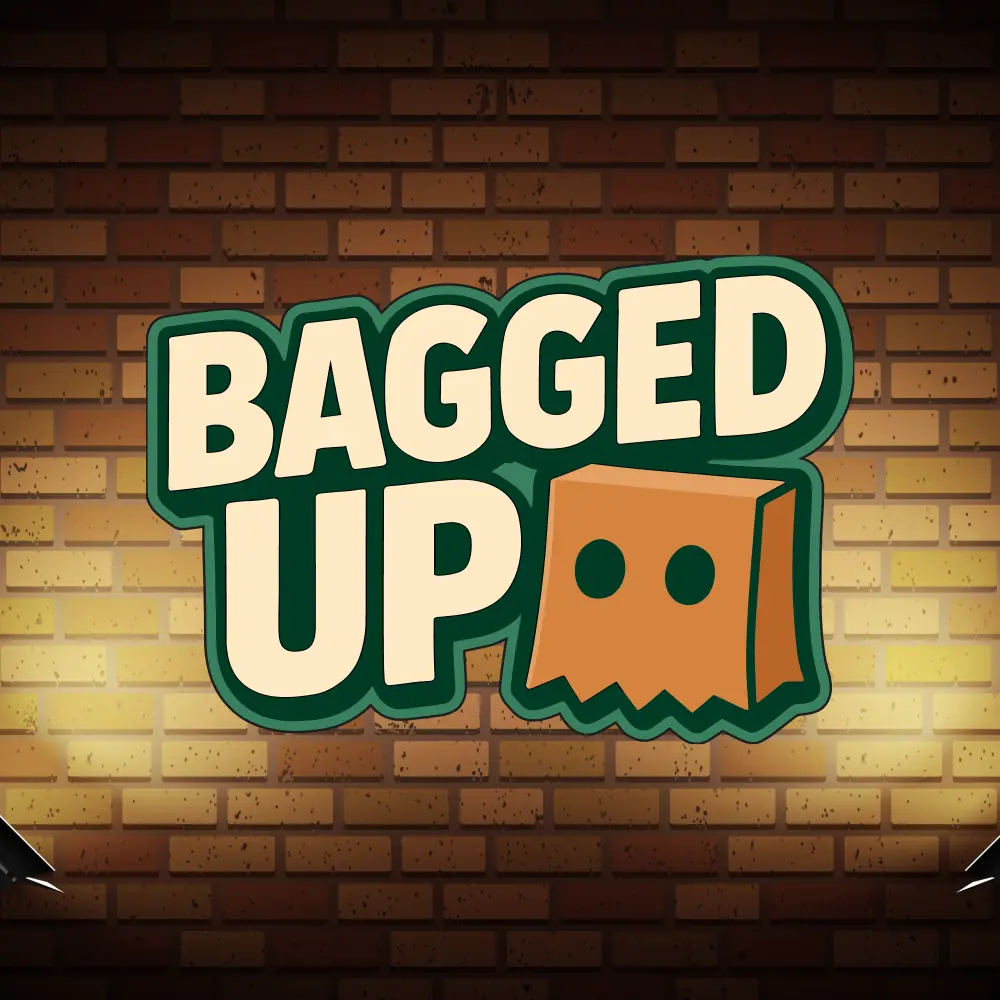
Bagged Up: Building a Mobile-First Sports Prediction Game

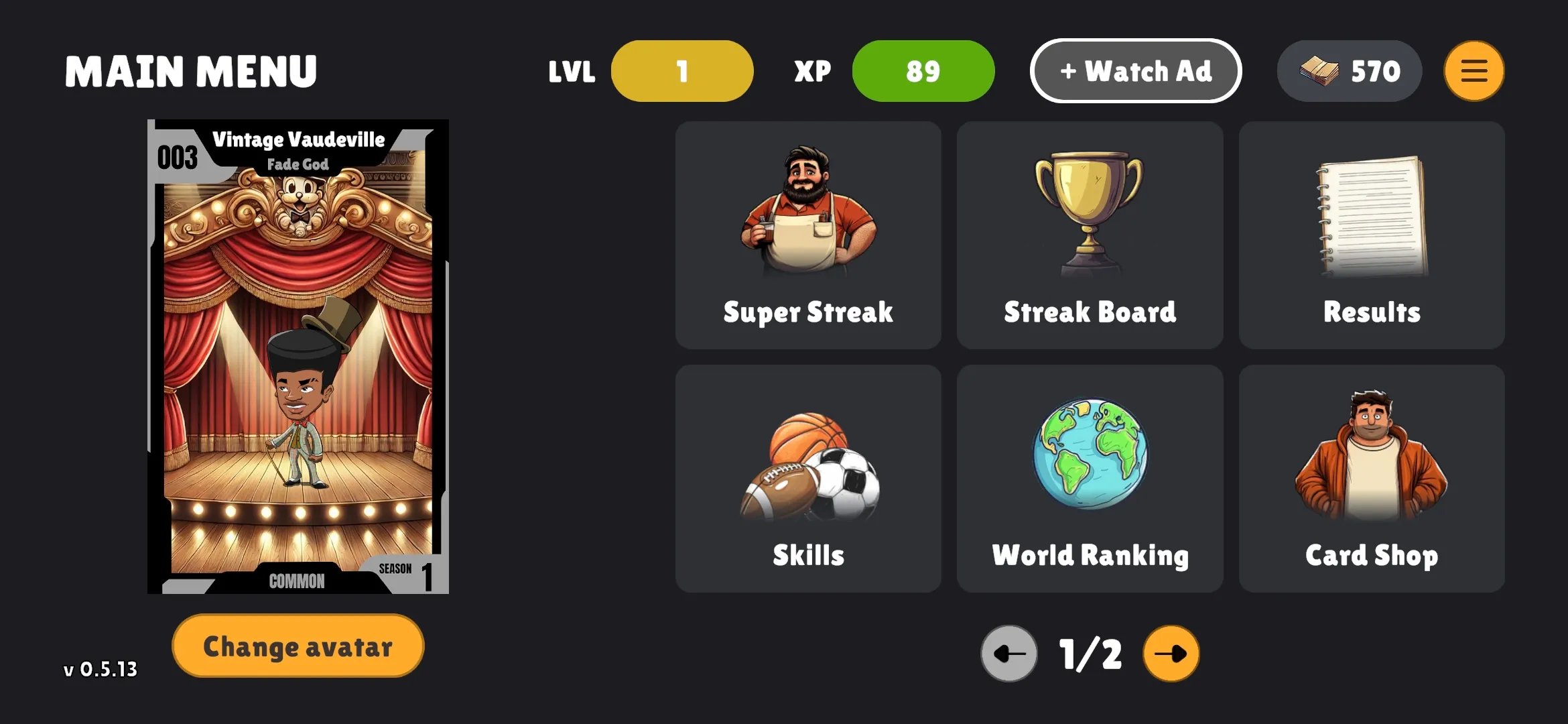
Bagged Up is a mobile-first sports prediction game where users answer questions, earn points, compete on leaderboards, and collect avatar cards. Developed by Game-Ace in Unity for iOS and Android, the project combined prediction mechanics, Firebase logic, and PlayFab services.
Key Features of a Sports Prediction Platform
Writing product requirements for this type of software requires a harsh balance. You need a flashy frontend, but you need an ironclad backend to support it.
- User profiles. A dedicated dashboard for tracking individual accuracy metrics, levels, and earned badges.
- Match prediction flows. Clean, fast UI cards that let users submit forecasts with a single tap.
- AI-generated probability insights. Visual meters that show exactly what the computer thinks is going to happen next.
- Live data integration. Direct, authorized data pipes connected to official sports API providers.
- Real-time recalculation. The math engine that updates live probabilities the second a play finishes.
- Leaderboards. Global ranking screens and private friend-group ladders to drive social competition.
- Rewards and achievements. The digital progression systems are tied directly to the gamification loop.
- Push notifications. Smart alerts for settled predictions that bring the user back into the app organically.
- Admin dashboard. Internal tools that allow your operations staff to manage gamification rules, tweak logic, and fix errors.
- Content management. A simple CMS to push news updates or highlight videos alongside the prediction modules.
- Analytics dashboard. Deep business intelligence tools tracking daily active users and feature drop-off rates.
- Moderation tools. Chat filters and ban tools to keep community interactions clean and brand-safe.
- API integrations. The necessary hooks to connect your app data to external CRM and marketing software suites.
- Security and compliance controls. Ironclad data protection to ensure user information stays completely locked down.
Technical Architecture Behind Real-Time Sports Prediction Systems
Designing this infrastructure requires careful planning around traffic spikes, data latency, and system resilience. The system must handle sudden spikes in concurrent traffic during major live events. When a massive championship game kicks off, thousands of users will all hit the submit button at the exact same second.
| System Layer | What It Actually Does | Typical Tech Stack Examples |
| Data ingestion layer | Pulls raw statistics and live event triggers rapidly from external APIs. | Webhooks, REST, Apache Kafka. |
| AI/ML service layer | Hosts the predictive models and crunches the heavy live math. | Python, TensorFlow, managed cloud ML endpoints. |
| Backend application logic | Manages user accounts, settles game rules, and awards points. | Node.js, Go, microservices architecture. |
| Real-time event processing | Pushes live data to mobile phones instantly without forcing a page refresh. | WebSockets, Server-Sent Events, Redis Pub/Sub. |
| Database and caching | Stores the heavy history and caches live queries to prevent total system crashes. | PostgreSQL, MongoDB, Redis. |
| User-facing frontend | The actual interactive UI the fan touches and taps. | React Native, Vue.js, specific native mobile frameworks. |
Backend and API Development
Scalability is not a luxury here; it is mandatory. If your backend chokes during the final minutes of a playoff game, the product dies. A microservices approach helps isolate the CPU-intensive math engine from the basic user interface. This separation ensures that even if the database is struggling to calculate a million points at once, the user can still navigate the app menus without the software freezing.
AI Model Integration
In practical business terms, implementing AI requires three distinct phases. First is feature engineering, which simply means deciding exactly which stats actually matter to the outcome. Second is inference, which runs the live numbers against the model. Finally, you have the retraining pipeline. Roster overhauls and coaching shifts ruin old models, so your AI must ingest new data constantly to remain relevant.
Real-Time Infrastructure
You cannot just poll a server every ten seconds to check for a score update. That approach wastes massive amounts of server resources and creates unbearable user lag. Technologies like WebSockets hold a persistent, open connection directly to the user's device. When a goal happens, the server pushes the update down the pipe immediately. This low-latency setup is absolutely critical for live micro-predictions.
Challenges in Building AI-Powered Sports Prediction Software
This technology looks incredible on a pitch deck, but actual software development is complex. You will hit very real roadblocks.
- Data licensing costs are steep. Official sports data APIs cost real money, and if their servers go down, your app crashes right alongside them.
- Latency synchronization creates risk. Television broadcasts are always delayed by a few seconds, depending on the network. If your app updates faster than the TV screen, you might accidentally send a push notification that spoils a game-winning goal for the viewer.
- Cold-start problems limit accuracy. If you launch a prediction feature for a highly niche, emerging sport, your AI simply will not have enough historical data to generate accurate probabilities.
- Unclear probability shifts damage trust. Users lose trust extremely fast if your live probabilities jump around wildly without clear UI explanations.
- UX can become cluttered fast. Overenthusiastic designers often try to cram too many statistics onto a single mobile screen.
- Cloud costs can spike suddenly. Real-time infrastructure must be strictly optimized for moments when concurrent user traffic experiences massive, sudden surges.
Design Principles for Prediction-Based Sports Products
Your backend can be flawless, but a bad frontend ruins the entire experience. Product design in this space requires intense focus on clarity and speed.
Keep predictions painfully simple. Translate dense mathematical outputs into clean, readable probability bars. Never promise certainty. If an AI suddenly shifts its live probabilities dramatically, explain why immediately with a brief UI tooltip indicating a player injury or a severe weather change.
You must separate the complex analytics dashboards built for hardcore power users from the simple one-tap interfaces built for casual fans.
Most importantly, reward participation over accuracy. If a fan gets five predictions wrong in a row, give them a small digital reward just for showing up and participating. You do not want bad guessers getting frustrated and quitting the platform. Keep the community mechanics healthy, lighthearted, and focused on the fun of the debate.
Trends Shaping Game Predictions in Sports
According to MarketsandMarkets, the global sports analytics market is projected to grow from USD 2.29 billion in 2025 to USD 4.75 billion by 2030, at a CAGR of 15.7%. The report also lists fan engagement, predictive analytics, social media analytics, and AI-based analytics among the key market areas.
- AI-powered personalization. Users expect your app to know exactly what teams they care about the moment they log in.
- Real-time micro-predictions. Instead of simply guessing who wins the game over three hours, fans want to guess the outcome of the very next play.
- Interactive broadcasts. Prediction prompts are becoming more common directly on top of live streaming video players.
- Private prediction leagues. Fan communities are building smaller prediction groups to challenge friends, coworkers, and niche communities.
- Generative AI explanations. Some platforms are experimenting with natural-language explanations for statistical shifts, although product teams must control hallucination risk carefully.
The future points heavily toward a cross-platform fan engagement ecosystem, where media, data, and social interaction all live in the exact same software environment.
How Businesses Can Build a Sports Prediction Product
Do not try to build every single feature on your roadmap all at once. Start small, validate the core idea, and scale up gracefully. Here is a practical, step-by-step roadmap for tech leaders.
- Define the target audience and sport. Pick one single sport to start. Do not try to build logic for basketball, soccer, and tennis simultaneously. Decide strictly if you are building an interface for hardcore stats nerds or casual weekend viewers.
- Choose prediction mechanics. Decide between pre-match polls, high-frequency live micro-guessing, or long-form season forecasting. Stick to one core loop.
- Select data providers. Audit various sports APIs closely. Pay attention to their latency guarantees and their licensing costs. Test their data structures before signing a contract.
- Design AI and analytics requirements. Determine if you truly need a custom machine learning model for the MVP, or if basic statistical math logic will survive the first beta test.
- Build MVP features. Focus entirely on the bare minimum core loop: user login, data ingestion, submitting a guess, settling the score, and updating the rank.
- Test prediction logic. Run the system silently in the background during live matches to check if the math actually works before real users ever see the UI.
- Add gamification. Once the math is stable, layer in the digital badges, the experience points, and the daily streak multipliers to make it sticky.
- Launch with monitoring. Put the app into the wild, but watch your server loads closely. The moment a major game kicks off, your traffic will spike.
- Improve through user data and model feedback. Look at your analytics. Find out exactly where users drop off, fix the UI bottlenecks, and continuously retrain the AI models based on actual usage patterns.
The most successful first versions prioritize a frictionless user flow and reliable external data over a massive catalog of complex features. When the core loop is simple, reliable, and rewarding, engagement becomes much easier to scale.
Need help turning prediction mechanics into a working product?
Why Game Predictions in Sports Are Becoming a Product Opportunity
This software approach is not just a passing gimmick. It solves a fundamental problem for the modern sports industry: holding onto audience attention when a million other apps are fighting for screen time.
Building a platform that merges real-time stats, AI insights, and solid game design gives fans a compelling reason to open your application daily. Game predictions in sports have evolved into the foundation for personalized content and long-term retention. It creates brand new digital real estate. It drives deep loyalty. It completely modernizes how fans experience the broadcast.
Building this kind of real-time infrastructure is highly complex and requires specialized engineering talent. If your company is ready to explore a sports prediction platform or an AI-powered interactive fan app, Game-Ace has the technical background to bring it to life.
Game-Ace helps companies design and develop sports prediction platforms, real-time fan engagement products, and AI-assisted interactive experiences. Whether you need an MVP, a custom prediction game, or a scalable sports engagement platform, our team can support the full cycle from product planning and UX/UI design to backend development, data integration, testing, and launch.
Explore our prediction game development services or contact Game-Ace to discuss your product idea.
 Crash games: what they are and how they're built
  How to create crypto casino games: 7-step guide
  3D and AI Avatars in Casino: How They Boost Acquisition, Retention, and Time-on-Device
  Building a profitable online casino platform
  How to Change Player Engagement and Retention with Social Casino Games