
Game testing is the structured verification of a game build against design, technical, and platform requirements. It covers functional checks of gameplay logic, compatibility across devices, regression coverage between builds, performance and soak testing under real load, and compliance with platform TRC rules. A dedicated QA effort usually starts at the first playable milestone and continues through soft launch, live operations, and post-launch patches.
What game testing includes at each stage of production
A guide to game testing has to start with scope. Game testing is not a single activity, it is a set of disciplines applied at different production stages. During pre-production, QA reviews the GDD and technical design for testable requirements. During vertical slice and alpha, functional and exploratory testing dominate. Beta and release candidate stages add regression, compatibility, performance, soak, localization, and platform compliance passes. Post-launch adds live-ops regression, hotfix verification, and telemetry-driven bug reproduction.
A common mistake is treating QA as a late-stage checkbox. Studios that add testing only in the final month typically ship with a heavy defect backlog and miss the first-party TRC window.
Functional game testing and gameplay verification
Functional game testing verifies that gameplay, UI, saves, progression, monetization, and network features behave as designed. Testers execute scripted test cases from a suite in TestRail, Xray, or a similar platform, and log deviations against the acceptance criteria in the GDD. On the tools side, functional passes rely on Unity Test Framework for unit-level checks inside Unity projects, on Unreal Automation for Unreal Engine builds, and on manual test sessions for content-heavy flows that automation cannot cover economically.
- Core loop verification against the design document.
- Save, load, and progression checks across sessions.
- In-app purchase and receipt validation on iOS and Android.
- Multiplayer session join, disconnect, reconnect, and desync coverage.
- Onboarding and tutorial flow across new-user and returning-user profiles.
Compatibility and device matrix testing
Compatibility testing confirms that the game runs on the supported hardware, OS versions, GPUs, screen aspect ratios, and input devices. Mobile teams maintain a tiered device matrix that covers a low-end reference device, a mid-tier device, and a high-end flagship for each of iOS and Android. PC teams cover Windows 10, Windows 11, and where relevant Steam Deck. Console teams follow the platform holder device families. Cloud device farms such as BrowserStack App Live and AWS Device Farm extend the physical lab when the matrix grows.
Regression testing between builds
Regression testing catches defects that a new build introduces into previously working features. A regression suite is smaller than the full functional suite: it targets the highest-risk flows, core loop, purchases, save integrity, first-time user experience, and runs on every candidate build. In a well-scoped project, a full regression pass on a mobile title is 4-8 hours; on a larger multiplayer title it can be 2-3 days. Automation carries the repetitive checks and manual sessions cover exploratory paths.
Performance testing, profiling, and frame budgets
Performance testing measures frame rate, memory footprint, GPU and CPU load, battery drain, thermal behavior, and network throughput against the target device tier. QA engineers work with Unity Profiler, Unreal Insights, Xcode Instruments, and Android Studio Profiler to reproduce spikes and hand structured reports back to engineering. Frame budgets are set early: 60 fps on mid-tier mobile means a 16.6 ms frame, split between CPU game thread, render thread, and GPU work. QA verifies that the actual budget matches the target across the device matrix.
Common failure mode
Measuring performance only on the developer workstation. QA closes this gap with dedicated device benches that match the actual target hardware tier, not the engineering team’s high-end machines.
Soak, load, and server-side testing for online games
Soak testing runs the game for extended sessions, 4, 12, or 24 hours, to reveal memory leaks, handle leaks, network reconnection issues, and asset streaming failures that only surface after long play. For multiplayer and live-service titles, load testing simulates thousands of concurrent players against the backend using tools like k6, Locust, or Gatling. Both practices are part of a full guide to game testing because they catch defects that unit and functional passes miss.
Platform TRC, compliance, and certification testing
Compliance testing verifies that the build passes platform holder requirements before submission. Console platforms publish Technical Requirements Checklists that cover suspend and resume, controller disconnect, save data corruption handling, account switching, and store-specific behaviors. Mobile stores add their own rules, App Store Review Guidelines and Google Play Policies. A dedicated TRC pass is scheduled before each submission window, and issues are logged with the exact requirement ID to speed up remediation.
Following the ISTQB Foundation Level syllabus keeps terminology consistent across the QA team, and IEEE 829 provides a well-known template for test documentation.
Bug tracking, triage, and reporting
Every defect is logged against a schema that includes title, severity, reproduction steps, build number, device, expected result, actual result, logs, and video evidence. Jira with the Xray or Zephyr plugin is a common stack, and TestRail links test cases to bug records. Triage is a scheduled meeting between QA lead, producer, and engineering lead: each new bug is classified by severity and routed to the responsible discipline.
Blocker: submission or launch cannot proceed.
Critical: core loop broken or data loss on supported device.
Major: feature works incorrectly but a workaround exists.
Minor: cosmetic or low-frequency issue.
CI, automated builds, and test integration
Continuous integration ties QA to engineering by running automated tests on every commit. A typical setup uses Jenkins, TeamCity, GitLab CI, or Unity Cloud Build to compile the project, run unit tests, package a build for each target platform, and push it to a distribution channel like TestFlight, Firebase App Distribution, or an internal HTTP server. QA picks up the labeled build, runs the smoke suite, and marks the build ready for the regression pass.
Comparison: in-house QA vs outsourced QA vs crowd testing vs hybrid
The four dominant delivery models for game testing serve different scope, cost, and coverage needs.
| Model | Best for | Typical cost band | Coverage | Turnaround |
| In-house QA team | Live-service, long-cycle projects | Highest fixed cost | Deep product knowledge | Same-day |
| Outsourced QA vendor | Full-cycle and milestone-based QA | Predictable per-sprint rate | Broad device labs, structured process | 1-2 days |
| Crowd testing | Compatibility and localization spread | Low variable cost | Wide device and locale reach, shallow | 24-72 hours |
| Hybrid (in-house + outsourced) | Studios with a small internal QA lead | Mid-range, scalable | Owner plus scale partner | Same-day to 2 days |
A Game-Ace project that shipped with structured QA
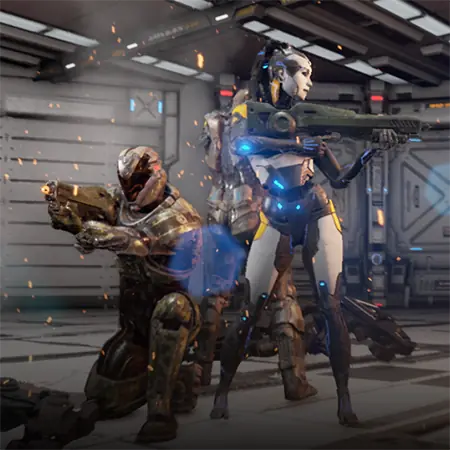
Welcome to Evil West, a co-development contribution by Game-Ace

For Evil West, Game-Ace joined the production as a co-development partner and contributed to the animation and testing pipelines around the shipped console and PC build. The engagement focused on integration into an established studio pipeline with defined QA gates, tracking issues through a shared bug database over the 4-month engagement.
Talk to Game-Ace about your QA scope
If you are scoping functional, compatibility, regression, or compliance passes for a shipping title, talk to Game-Ace.
When to talk to Game-Ace about game testing
Game-Ace has provided game testing since 2005 through a 120+ specialist team that includes QA engineers, automation engineers, and compliance testers. Engagements run as Team Extension, Co-development, or full-cycle QA under NDA with IP transfer at handover. If QA is on your near-term roadmap, Game-Ace’s game testing services cover functional, compatibility, regression, performance, soak, and TRC passes across mobile, PC, console, and web targets, and the wider game development studio Game-Ace can extend the engagement into full-cycle production or co-development when scope grows.
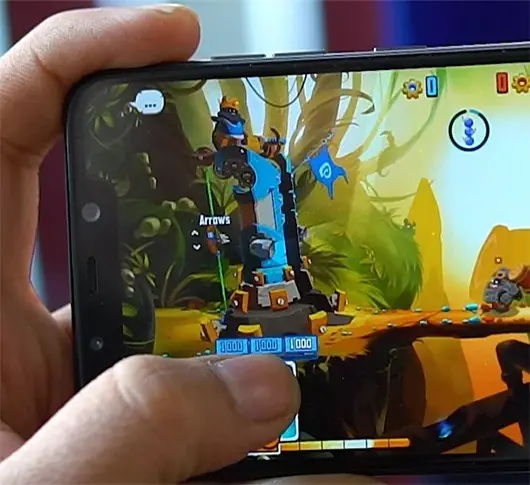 Mobile game testing for iOS and Android: end-to-end guide
  Hiring a QA game tester: skills, cost, engagement models
  Game QA companies: a buyer's guide for studios
  Video game testing stages, from pre-alpha to live ops
 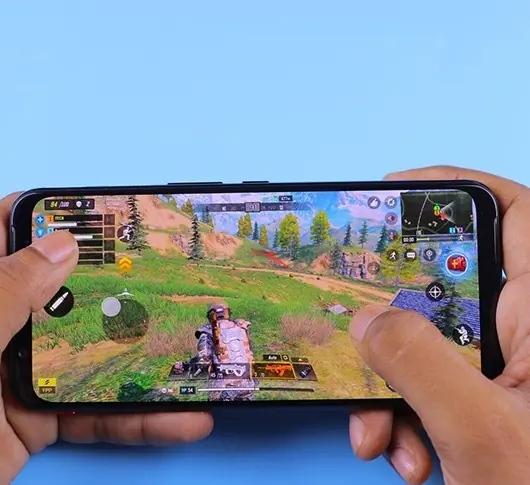 Android game testing that survives device fragmentation