
MMORPG game development is the production of persistent online worlds where hundreds or thousands of players share state, progression, and economy in real time. A working MMORPG project ships a backend service tier, a shard or single-shard topology, interest-managed networking, persistent storage, and a content cadence that keeps the world alive after launch.
This guide covers the defining features, the backend architecture, the networking model, the content pipeline, the economy and progression systems, the live ops loop, and the business models that show up in real production. Reference titles are indie and mid-budget sandbox or themepark MMORPGs.
What defines an MMORPG (and what does not)
An MMORPG is defined by four production constraints that shape every later technical decision. The world is persistent: state survives a player logout and continues to evolve. Concurrency is high: a single shard or zone holds hundreds to tens of thousands of players in the same logical space. Progression is durable: character data, inventory, skills, and social ties carry across sessions. Social systems are first-class: guilds, parties, trade, chat, and reputation are core gameplay, not features bolted on top.
A co-op session game with 64 players and persistent character progression is not an MMORPG; it is a session-based RPG with metaprogression. A lobby-based dungeon crawler is not an MMORPG either. The line is the persistent shared world. Projects that confuse the two underestimate backend cost by an order of magnitude.
- Persistent world: state survives logout and ticks even when a player is offline.
- Shared shard or zone: many players co-exist in the same logical space.
- Durable progression: character, inventory, skills, social graph all persist.
- Social systems: guilds, parties, trade, chat, reputation are core gameplay.
- Live operations: the world receives content, balance, and event updates on a cadence.
Shard architecture: sharded, zone-based, single-shard
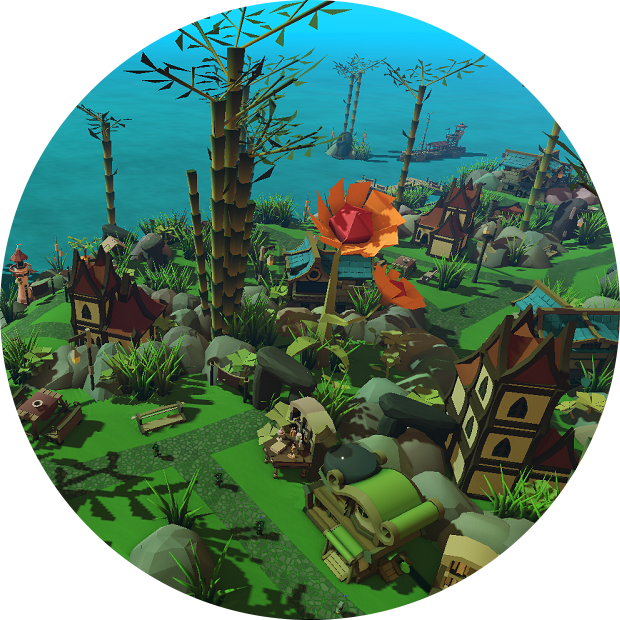
The first major decision is the world topology. Three patterns dominate. A sharded world (Albion Online historically used per-region shards, Pantheon plans sharded servers) runs multiple parallel copies of the world; players pick one and stay there. A zone-based world (Project Gorgon, classical themepark MMORPGs) splits one world into many server processes by area, with seamless or loading-screen transitions. A single-shard world (EVE Online, Mortal Online 2) holds every player in the same universe and uses node load balancing, time dilation, or interest management to handle peaks.
Each choice has cost and design consequences. Sharded worlds are the cheapest to operate but split the community. Zone-based worlds support large total populations but cap fight density per zone. Single-shard worlds enable real player-driven economies but require custom server tech and queueing tools.
| Topology | Player capacity per logical world | Backend complexity | Best fit |
| Sharded | 2k to 10k per shard, many shards | Low to medium | Themepark MMORPG with regional player base |
| Zone-based | 20k to 100k world wide, capped per zone | Medium | Quest-driven MMORPG with structured zones |
| Single-shard | 20k to 60k concurrent in one universe | High; needs custom load balancing | Sandbox MMORPG with player-driven economy |
| Hybrid (mega-shard with campaign instances) | 10k persistent plus instanced campaigns | Medium to high | Season-based MMORPG (Pax Dei pattern) |
Indie teams realistically ship sharded or small zone-based worlds. Single-shard sandboxes are the hardest production target and usually need a bespoke C++ server, the path CCP and Star Vault took.
Backend services an MMORPG needs at minimum
Behind every MMORPG is a tier of dedicated services running independently of the game client. At minimum a project needs a login and account service, a world or zone server that holds live game state, an instance server for dungeons or arenas, a persistence database, a live cache, a matchmaking or party service, a CDN for client patches, an anti-cheat integration, and a telemetry pipeline. Each of these can start small and scale, but skipping any one of them creates a hole that costs more to fix after launch than to build before.
Authentication and session state usually live in their own service so the game server can stay focused on simulation. Persistence is split between a fast key-value or in-memory store (Redis is the common choice) for live state and a durable database (PostgreSQL or Cassandra) for the canonical record.
- Login and account service: authentication, entitlements, ban list.
- World server: holds live state for an open zone or shard.
- Instance server: spins up dungeons, arenas, or housing on demand.
- Persistence database: PostgreSQL or Cassandra for canonical character, inventory, and world state.
- Live cache: Redis or similar for hot session state and short-lived data.
- Matchmaking and party service: groups, raids, queue placement.
- CDN: client patch distribution, asset streaming, regional points of presence.
- Telemetry and observability: Prometheus, Grafana, ELK stack for logs and metrics.
- Anti-cheat: Easy Anti-Cheat or BattlEye integration.
Networking, interest management, and replication
MMORPG networking is not a faster shooter netcode. The bandwidth and CPU budget per player is small, the entity count is large, and most players do not need to know about most other players. Interest management (also called area-of-interest or AoI) is the technique that filters which entities each client receives updates about. A player only gets updates for entities within their visibility radius, current zone cell, or guild context. Without AoI, server cost grows quadratically with players in the same area.
Replication strategy depends on the engine. Unreal Engine's dedicated server model with custom replication graphs is common for first-person and third-person MMORPGs. Unity projects usually run a custom server or middleware (Mirror, Photon, or a SpatialOS-style mesh) plus a hand-rolled AoI layer. Combat tick rates land in the 15 to 30 Hz range for most MMORPGs; reactive PvP combat may push 60 Hz inside instanced arenas.
- Area-of-interest filtering: each client receives only entities within view or relevance.
- Tick rate: 15 to 30 Hz for open-world combat, 60 Hz for arena PvP instances.
- Relevancy distance: tuned per entity type (players, mobs, projectiles, items).
- Server-authoritative movement and combat: protects against speed and damage cheats.
- Client-side prediction with server reconciliation: keeps responsiveness on 100 to 200 ms RTT.
Engine choice for MMORPG production
Engine choice is rarely a clean answer for MMORPG projects. Unreal Engine ships with a dedicated server build, replication graph, and gameplay ability system that map well to MMO combat; the trade-off is heavier client builds and a steeper backend integration for large open zones. Unity is more flexible for top-down and cross-platform MMORPGs, including mobile, but the dedicated-server story requires more custom work or middleware. Bespoke C++ engines remain the choice for single-shard sandboxes where the publisher needs server architecture the engine does not provide.
| Engine | Strengths for MMORPG | Trade-offs | Reference projects |
| Unreal Engine | Dedicated server, replication graph, Gameplay Ability System, mature character controller | Heavier client build, harder mobile target, custom AoI layer for very large zones | Pantheon, several mid-budget MMORPGs in development |
| Unity | Cross-platform reach including mobile, flexible top-down, large middleware ecosystem | No built-in dedicated server pattern, networking middleware or custom server required | Albion Online (custom backend), several indie MMORPGs |
| Bespoke C++ engine | Full control of server topology, single-shard load balancing, custom physics | Multi-year build, large engineering team, no off-the-shelf tools | EVE Online, Mortal Online 2 (Unreal client + custom server) |
Content pipeline: zones, instances, encounters
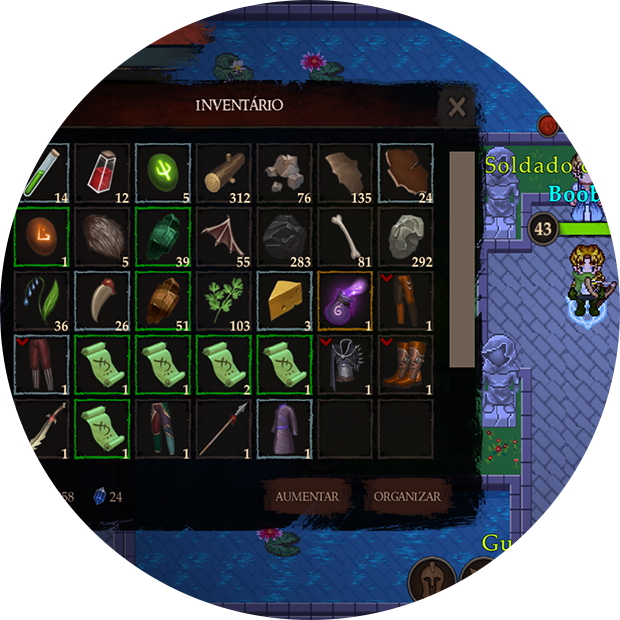
Content cost is what defeats most indie MMORPG projects. A persistent world needs enough hand-crafted content to keep the first 20 to 40 hours engaging, plus procedural or systemic content that fills the long tail. Sandbox MMORPGs (Albion Online, Mortal Online 2) lean on player-driven content: territory control, crafting chains, market PvP. Themepark projects (Pantheon, Project Gorgon) carry the cost of quest design, encounter scripting, and dungeon authoring. A pragmatic indie plan picks one of these and commits.
Zone authoring covers terrain, props, encounter placement, spawn tables, and lighting. Instance content adds boss scripting, mechanics scripting, and reward tables. A working content pipeline includes an in-engine zone editor, a quest or encounter scripting tool, a balance and rewards spreadsheet (often Google Sheets connected to a runtime data table), and a localization workflow.
- Open zone authoring: terrain, biomes, spawn tables, points of interest.
- Instance authoring: bosses, mechanics, reward tables, lockouts.
- Quest or encounter scripting: visual scripting or a designer-facing scripting layer.
- Item and balance data: spreadsheet pipeline that exports to runtime data tables.
- Localization pipeline: string export, translation memory, in-engine preview.
Economy and progression design
MMORPG economy and progression design is where the genre rewards careful production and punishes shortcuts. Faucets (sources of currency and items) and sinks (durability loss, taxes, consumables, repair costs) must be balanced over months, not patch-to-patch. Player-driven economies, the model that built EVE Online and Albion Online, require a deep tracking and sink design from day one; mistakes here cause inflation that is hard to reverse without a wipe.
Character progression is the second long-tail system. Themepark progression (linear levels, gear tiers) is easier to balance but creates content treadmills. Skill-based progression (Project Gorgon, Wurm Online) supports horizontal growth but requires careful cap design. Most indie projects pick one progression axis and build content for it rather than mixing several incomplete systems.
- Faucets: quest rewards, mob drops, gathering, achievement payouts.
- Sinks: durability repair, taxes, consumables, market fees, transmutation costs.
- Progression axis: levels, skill ranks, gear tiers, faction reputation.
- Catch-up systems: bonus experience, gear baseline, mentor systems.
- Anti-bot and anti-RMT: rate limits, behavior detection, account binding.
Business model: B2P, subscription, F2P
MMORPG business models split into three patterns, and the model choice changes the design brief. Buy-to-play (B2P) projects sell the game once and rely on expansions; this fits sandbox MMORPGs with a focused, paying audience. Subscription projects (monthly fee, sometimes paired with B2P) provide predictable revenue and reduce monetization pressure inside the game; the audience is smaller but more committed. Free-to-play (F2P) with cosmetics or convenience monetization reaches the largest audience but demands a constant content cadence and careful pay-to-win avoidance.
| Model | Revenue profile | Design pressure | Reference projects |
| B2P plus expansions | Spike at launch, smaller spikes on expansions | Strong launch content, paid expansion cadence | Mortal Online 2, Pantheon (planned) |
| Subscription (with or without B2P) | Steady monthly revenue, churn-sensitive | Continuous content, low monetization friction inside game | Project Gorgon (subscription option) |
| F2P with cosmetics or convenience | Long tail, conversion rate dependent | Constant content, careful pay-to-win avoidance, live ops driven | Albion Online (F2P since 2019), classic free MMORPGs |
Live operations after launch
Launch is when MMORPG production starts, not when it ends. A working live ops plan covers seasons or expansions on a quarterly or annual cadence, smaller content drops every four to eight weeks, balance patches every two to four weeks, and live events for retention. The publishing team needs a CMS for in-game news, a tool for hotfix balance changes without a client patch, a community moderation pipeline, and a data warehouse to drive content decisions.
Live ops cost is often half of the post-launch budget. A project that does not plan and staff for this loses players faster than it can acquire them. Pax Dei is the cautionary reference: strong systems, weak content cadence, short post-launch life.
- Quarterly or annual season or expansion content.
- Four to eight week content drops with new encounters or items.
- Two to four week balance and bug-fix patches.
- Live events for holidays and retention beats.
- Server-side data-driven balance changes (no client patch).
- Community moderation and reporting pipeline.
- Telemetry and data warehouse driving content prioritization.
Anti-cheat, anti-toxicity, and community systems
Persistent worlds attract bots, gold sellers, and cheaters at scale. Anti-cheat integration (Easy Anti-Cheat or BattlEye) covers client-side process protection, but server-side behavior detection catches the patterns those tools miss: speed botting, market manipulation, kill trading. Reporting tools, audit logs, and a moderation team are part of the production scope, not an afterthought.
Community systems matter for retention. Guild and party tools, mentor and recruit systems, voice and text chat, and reputation systems are core to the genre. Anti-toxicity is a separate workstream: text filtering, voice moderation, mute and ban tooling, and clear codes of conduct. Albion Online and EVE Online publish detailed post-mortems on this work; both projects treat moderation as ongoing engineering, not policy alone.
Realistic indie and mid-budget scope
A first MMORPG project should not target a 10,000-concurrent single-shard sandbox. A realistic indie scope is a small sharded world with one zone of 100 to 300 concurrent players, a focused combat or crafting loop, one progression axis, and a launch content arc of 20 to 40 hours. Project Gorgon shipped this profile with a small team over many years. Mid-budget studios can scope larger: multiple zones, an instance system, a guild and territory layer, and a season cadence; Albion Online reached this scale before going free-to-play.
Budgets fall into wide bands. Indie MMORPG projects with a small team and a shoestring backend cost low six figures per year over multi-year development. Mid-budget MMORPGs with a 20 to 60 person team land in the mid seven figures to low eight figures across a three to five year build. Live ops budget is a separate ongoing line.
About Game-Ace
Game-Ace has delivered game projects since 2005 with 120+ in-house specialists and 200+ released games. The studio provides MMORPG game development services across full-cycle production, co-development, and team extension, with experience across Unreal Engine and Unity dedicated-server setups, backend service tiers, persistence design, and live ops support.
Reference projects across multiplayer, iGaming, and persistent-world work are available in the Game-Ace portfolio. For scoping a new MMORPG project or extending an existing live-ops team, contact our team to discuss scope, architecture options, and engagement model.
 How MetaHuman changes game character development
  Game development for startups: budget and MVP guide
  Engineering tower defense games from prototype to live service
  Idle game development: a full production guide
  Gamification in recruitment: what actually works