
Blockchain gaming companies build games where ownership, in-game economy, or asset transferability live on a public chain. After the 2022-24 downturn, the field has fewer active operators than the headlines from 2021 suggested, but a core group still ships: Immutable, Dapper Labs, Animoca Brands, Gala Games, Sky Mavis, Enjin, Horizon Blockchain Games, Mythical Games, Yield Guild Games, and Rumble Kong League. This guide covers who is actually active, how the market types split, and what to check before you hire a partner.
If you are scoping a blockchain game, a Web3 title, or an NFT-based world, talk to Game-Ace.
State of the blockchain gaming companies market
The Web3 gaming market has stabilised at a lower, more realistic level than the 2021 peak. On-chain activity, wallet counts, and daily unique active wallets for gaming dapps are tracked by DappRadar, which remains the standard reference for Web3 game traction. Token flows and stablecoin volume routed through gaming and NFT sectors are covered in yearly reports from Chainalysis, including the pullback in speculative NFT trading that hit play-to-earn hardest.
The takeaway for a studio scoping a new project: the audience is smaller and more crypto-native than the mainstream projections of 2021, and most surviving projects run on L2s, sidechains, or app-specific chains rather than L1 Ethereum mainnet.
What blockchain gaming companies actually do
Blockchain gaming companies fall into distinct roles. Some run their own game studio and publish first-party titles. Some are infrastructure vendors selling wallet, marketplace, or chain-level tooling. Some are aggregators-publishers who fund and distribute third-party Web3 games. A few are traditional game studios with a dedicated Web3 arm.
| Company type | Primary focus | Revenue model | Examples |
| Dedicated Web3 studio | First-party Web3 games, own IP | NFT primary sales, token, marketplace fees | Sky Mavis, Mythical Games, Horizon Blockchain Games |
| Traditional studio with Web3 arm | Existing game IP extended into Web3 | Mixed: standard sales plus on-chain drops | Animoca Brands |
| Infrastructure and tooling | Chains, wallets, SDKs for game builders | Chain fees, SaaS licensing, ecosystem grants | Immutable, Enjin, Sequence (Horizon) |
| Publisher-aggregator | Investment and distribution across Web3 titles | Equity, token allocation, publishing fees | Animoca Brands, Yield Guild Games, Gala Games |
| DeFi-adjacent gaming | GameFi mechanics blending game and financial primitives | Trading fees, staking, yield mechanics | Axie Infinity (historical) |
The category matters. A game studio scoping full-cycle production needs a partner from the first two rows. A team that already has a game and needs on-chain assets can source infrastructure from the third row and skip the rest.
Ten blockchain gaming companies worth tracking
This list mixes active operators with a couple of historically significant names. Inclusion here means the company either ships today or shaped the Web3 gaming category enough that a buyer researching blockchain gaming companies will encounter the name.

Immutable
operates Immutable X, a zk-rollup L2 focused on gaming, plus a passport wallet and marketplace SDK integrated in shipped games like Guild of Guardians and Illuvium.

Sky Mavis
the studio behind Axie Infinity and the Ronin sidechain. Player counts fell sharply after the 2022 Ronin bridge exploit, but Ronin now hosts third-party games including Pixels.

Dapper Labs
creator of CryptoKitties, NBA Top Shot, NFL All Day, and the Flow blockchain, focused on consumer-friendly NFT experiences with credit-card onboarding.
Animoca Brands
a Hong Kong-based publisher and investor with a large portfolio including The Sandbox and REVV Motorsport.
Gala Games
publisher and node operator behind Spider Tanks and Champions Arena, migrated from Ethereum to Gala Chain.

Yield Guild Games
originally an Axie Infinity scholarship guild, restructured into a broader Web3 gaming DAO focused on quests and player onboarding.

Enjin
long-running Web3 tooling company with the Enjin Wallet, marketplace, and Enjin Blockchain for minting and managing on-chain items.

Horizon Blockchain Games
studio behind Skyweaver, plus the Sequence wallet-as-a-service used by other studios.

Mythical Games
pivoted from Blankos Block Party (sunset 2024) to NFL Rivals and other IP-driven Web3 mobile titles on the Mythos chain.

Rumble Kong League
a basketball-themed IP with an NFT collection and a game roadmap, smaller but frequently cited in sports-adjacent Web3 gaming.
How to evaluate a blockchain gaming partner
Before you shortlist a partner, check five things.
- Shipped games on-chain in the last 18 months, not just token launches or roadmap posts.
- Chain strategy: L2, sidechain, or app-specific chain, and why that fits the game economy.
- Wallet and onboarding approach: custodial, email-based, seedless, or crypto-native.
- Compliance posture on token issuance, KYC, and jurisdictional restrictions.
- Team composition: real game production roles or only crypto engineers.
A vendor that cannot answer the first three clearly is likely a general software shop pitching Web3 without game production depth.
How blockchain gaming companies differ from Web2 studios
The production pipeline is largely the same. Game design, art, engineering, QA, and live ops still dominate the schedule. What changes is a layer of on-chain plumbing: smart contract design, wallet integration, marketplace flows, token or NFT economy design, and compliance. Studios that treat the on-chain layer as a design constraint, where the economy shapes the loop, tend to ship the more durable titles.
Blockchain projects from the Game-Ace portfolio
This case shows the range of blockchain work Game-Ace has delivered.
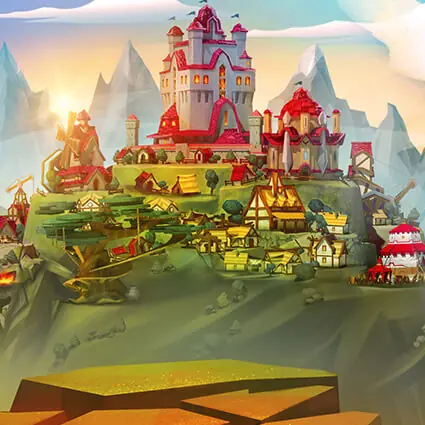
Welcome to Nomadland, an NFT strategy RPG by Game-Ace
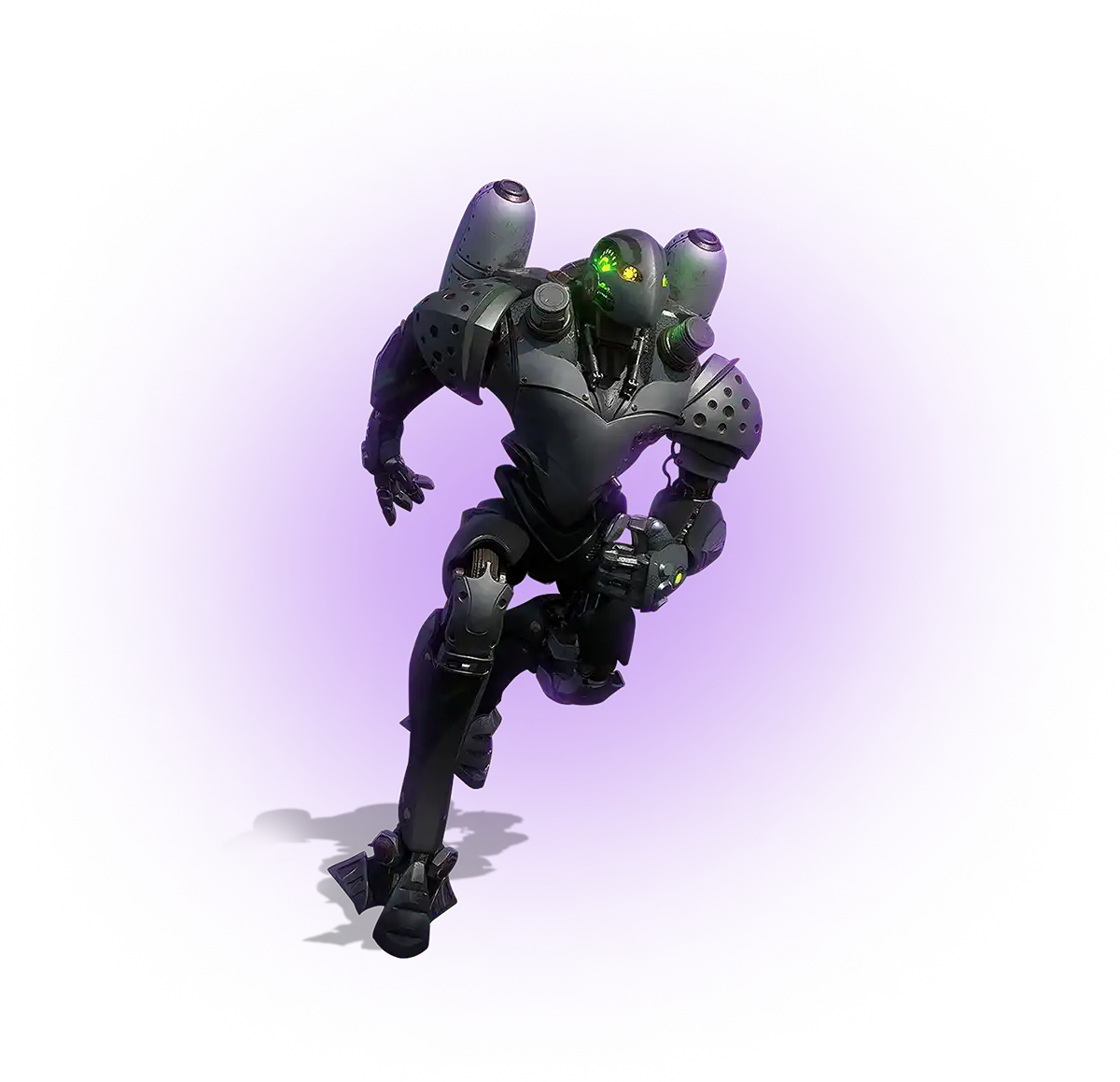
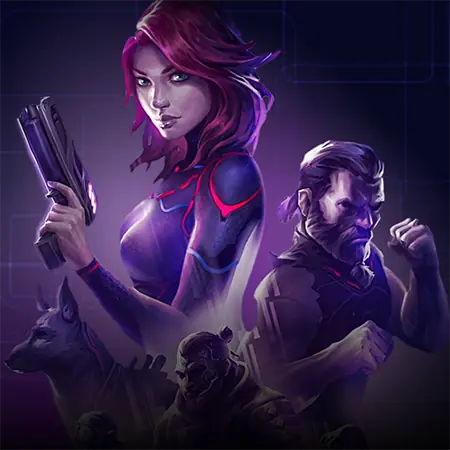
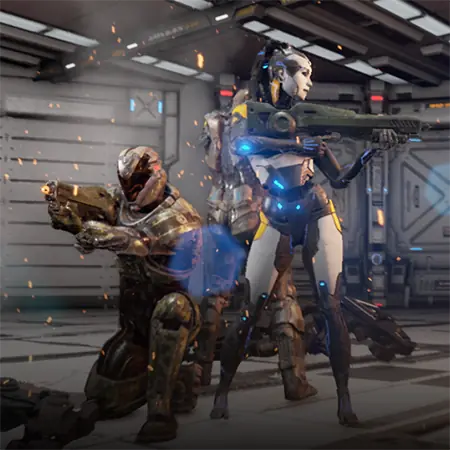
Nomadland is a turn-based strategy and action RPG built in Unreal Engine 4, where players move a squad of troops across hexagonal fields and every weapon, creature, and armor piece is an NFT players earn in PvE and PvP and trade on a marketplace, with the play-to-earn layer kept supplementary to core gameplay.
Related reading
When to talk to Game-Ace about a blockchain game project
Game-Ace has delivered games since 2005 with a 120+ specialist team, including Web3 titles across NFT strategy RPG, crypto slot, and marketplace-integrated formats. If a blockchain gaming project is on the roadmap, Game-Ace’s custom game development studio covers full-cycle delivery, co-development, and team extension from a single Cyprus-headquartered team.
 What is a blockchain game? A definitional guide
  How to make a blockchain game: a practical guide