
Mobile game development time depends on scope, team size, and platform target. A hyper-casual title ships in 6-12 weeks, a casual game in 3-6 months, a mid-core game in 6-12 months, a mobile RPG in 12-24 months, and a live mobile MMO in 24-36+ months. iGaming titles run 3-9 months around certification.
Mobile game development time ranges by game type
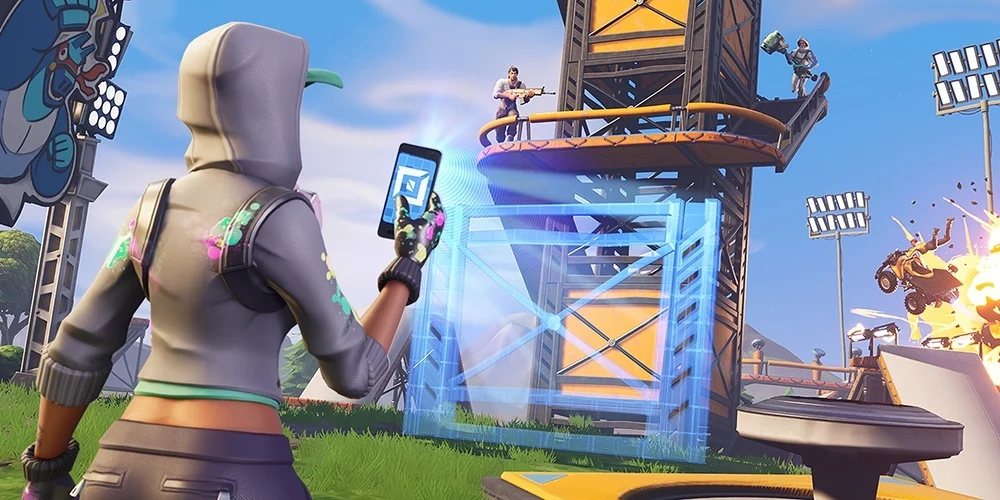
Live-service scale: Fortnite
Mobile game development time varies more by game type than by any other single factor. A one-mechanic hyper-casual runner and a live mobile MMO share the word mobile and almost nothing else. The table below gives realistic launch ranges Game-Ace uses when scoping mobile projects, including the team shape that supports each range and the milestones a build usually hits before store submission.
| Game type | Typical time to launch | Team size | Scope milestones |
|---|---|---|---|
| Hyper-casual | 6-12 weeks | 3-5 people | Single core mechanic, one art style, IAP or ads SDK, soft launch test |
| Casual | 3-6 months | 5-8 people | Meta-game loop, IAP, ads mediation, analytics, ASO assets, soft launch |
| Mid-core | 6-12 months | 8-15 people | Progression systems, accounts, live events, backend, device matrix QA |
| Mobile RPG | 12-24 months | 15-30 people | Class systems, gacha or progression, backend, live ops pipeline, localisation |
| Mobile MMO | 24-36+ months | 30-60+ people | Persistent world, matchmaking, guild systems, anti-cheat, live ops toolset |
| iGaming | 3-9 months | 6-12 people | RNG, math model, RTP documentation, certification, wallet and operator integration |
These ranges cover a single production cycle from an approved game design document to a store-ready build. Live-ops work, paid user acquisition, and post-launch feature waves sit on top of the range shown and usually run at 20-40% of the initial build effort per year for active titles.
Need an accurate timeline for your mobile game build?
Factors that affect mobile game development time
Two mobile projects with the same game type can still finish months apart. The differences usually come from a small set of factors that compound across the production cycle.
- Feature depth and how many systems interact (economy, progression, social, live events).
- Art volume: character count, environments, animation states, VFX budget.
- Backend needs: accounts, cloud saves, matchmaking, live-ops configuration.
- Platform matrix: iOS only, Android only, both, plus optional HTML5 or tablet builds.
- Localisation count and whether audio is voiced in any target language.
- Certification or compliance scope for iGaming, kids categories, or health apps.
- Team seniority mix and how much of the pipeline is in-house versus outsourced.
- Approval cycles on the client side (single decision-maker versus committee review).
Producers who track these factors during scoping avoid the two most common timeline hits: a mid-project art rescope after the first playable, and a backend rewrite when a single-player prototype has to become a connected game. Game-Ace scopes both risks during pre-production so the phase plan carries buffer where it is needed. For a deeper look at how team model changes duration, the mobile game development service page describes the engagement structures Game-Ace uses on mobile builds.
Phase-by-phase breakdown of mobile game development time
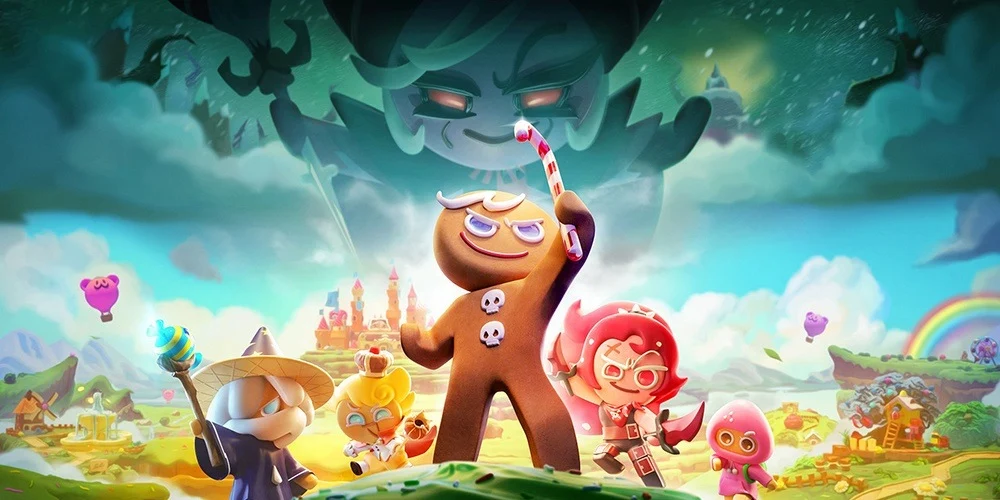
Mid-core: Cookie Run Kingdom
Every mobile project moves through a similar phase sequence. What changes between a casual title and a mobile RPG is the length of each phase, not the phase list itself.
Concept and pre-production covers the game design document, technical design, art style exploration, and a schedule with milestones. On a casual title this is 2-4 weeks. On a mid-core title with backend, 4-8 weeks. On a mobile RPG or MMO, 8-16 weeks with a playable vertical slice at the end.
Production is the longest phase and runs alpha to beta with regular feature milestones. QA runs in parallel across a device matrix. Store submission and soft launch sit at the end.
- Concept and pre-production: GDD, tech design, art style, milestone plan.
- Alpha: core loop playable, main systems in place, first vertical slice.
- Beta: feature-complete, content pass, monetisation live, performance targets met.
- QA: functional, device matrix, performance, compliance, and localisation testing.
- Store submission and soft launch: builds submitted, review response, geo-limited launch.
- Global launch and early live-ops: post-launch fixes, first content patch, KPI review.
For a deeper look at how the phase list applies across engines and platforms, the game development stages article covers each phase in more detail.
How team size and engagement model change mobile game development time
Team size affects duration in a non-linear way. Doubling a 5-person casual team rarely halves the schedule because handover, code review, and integration cost time. On mobile builds, the practical sweet spots are 4-7 people for casual, 8-12 for mid-core, and 15-25 for RPG production, with QA and live-ops added on top.
The engagement model also changes duration. A full-cycle contract runs to a fixed scope and a fixed schedule with milestone acceptance. A co-development engagement plugs a Game-Ace team into a client’s existing mobile production, sharing repository, sprint cadence, and CI. Team extension adds allocated specialists into the client’s pipeline and follows the client’s schedule.
In-house builds move at the pace of the in-house team. Outsourced or hybrid builds move faster when handovers are clean and slower when they are not. Onboarding takes 1-3 weeks in either direction, and it is a real line item on any first mobile schedule.
How to compress mobile game development time

Hyper-casual: Subway Surfers
Timeline compression on mobile comes from parallel work, not from shorter phases. The core lever is running art and engineering in parallel from week one instead of waiting for a full art bible before engineers start building the core loop.
- Parallelise art and engineering: engineers build the core loop against greybox art while art delivers style frames.
- Freeze the game design document early and treat late changes as change requests, not scope adjustments.
- Use engine-ready art templates and shared shader libraries from the start.
- Automate build, test, and store upload with a CI pipeline from the first playable.
- Split QA into daily smoke tests and weekly full regression instead of a single end-of-phase pass.
- Localise in parallel with beta, not after beta lock.
On a casual mobile title, these tactics can compress a 5-month plan to 3.5 months. On a mid-core title, they can save 2-3 months out of a 9-month plan. On a mobile RPG or MMO, the savings are smaller in relative terms but larger in absolute months because parallel content pipelines matter more.
MVP versus full launch timelines for mobile
MVP and full launch are different products. An MVP proves the core loop is fun, retention is real, and the monetisation model works on a small audience. A full launch adds content depth, meta systems, live-ops tooling, and the polish needed for paid user acquisition.
A mobile MVP for a casual title takes 6-10 weeks. A mid-core MVP takes 10-16 weeks. From MVP to full launch, plan for another 3-9 months depending on scope. Studios that skip the MVP step often lose more time on a rescope after the first soft launch than they would have spent on the MVP.
Store submission and soft launch realities on iOS and Android
Store submission is a fixed cost on every mobile timeline. Apple’s review usually returns a verdict within 24-48 hours for a straightforward build, but a first submission with IAP, subscription, or account deletion flows often needs 1-2 rework cycles. The Apple App Store Review Guidelines list every requirement Apple checks on first submission.
Google Play review is usually faster on updates but slower on a first submission from a new developer account, and policy fixes on ads, data safety, or target audience can add a week. The Google Play Developer Content Policies cover every category a mobile title has to comply with.
Soft launch adds another 4-8 weeks on any casual or mid-core title that wants a real retention read before global. On a mobile RPG, soft launch often runs 8-16 weeks across two or three markets. Producers who forget to plan submission and soft launch into the schedule usually lose a full quarter on the calendar. Studios building an iOS-first release will find more platform-specific detail in the iOS game development service page, and Android-first teams can review the Android game development page for the Play Store side.
A Game-Ace mobile game timeline case study
One example from the Game-Ace portfolio shows how the ranges above translate to a real project.
Welcome to Demon Runner, a Unity mobile runner by Game-Ace

Demon Runner is a Unity mobile action-runner with stylised visuals, roll-and-strike combat mechanics layered on the runner loop, and progression tuned for repeat sessions. Game-Ace delivered the runner across Unity engineering, art production, and QA on iOS and Android, on a mid-core mobile timeline.
When to talk to Game-Ace about a mobile game timeline
Game-Ace has delivered mobile titles since 2005 with 120+ in-house specialists across engineering, art, QA, and production. If you want a realistic mobile game development time estimate against a specific scope, Game-Ace’s custom mobile game development studio can scope the phase plan, team shape, and store-submission window on your project brief.
 How MetaHuman changes game character development
  Game development for startups: budget and MVP guide
  Engineering tower defense games from prototype to live service
  Idle game development: a full production guide
  Gamification in recruitment: what actually works