
Puzzle game development is the end-to-end production of games built around logic, pattern recognition, or spatial reasoning, from match-three and hidden object to physics, word, and narrative puzzles. A commercially successful puzzle project needs a defensible core mechanic, tight level design, and a monetisation model matched to session length. This playbook covers scope, engines, team, cost, and go-to-market.
If you are scoping a puzzle game or co-development on puzzle mechanics, talk to Game-Ace.
What actually sells a puzzle game
The mechanic sells the first minute. Retention sells the twentieth. Successful puzzle games such as Monument Valley 3, Baba Is You, Two Dots, and Return of the Obra Dinn all lock a single "one more level" hook inside the first two minutes and defend it across hundreds of levels or hours of content. The hook is usually one verb: swap, rotate, connect, deduce, push. Level design is where the game either survives or churns, every level must teach a new twist on the same verb without breaking the mental model.
Cognitive load research from Nielsen Norman Group's work on cognitive UX is directly applicable, because the moment a level demands a second concept the player has not yet internalised, drop-off spikes. For casual match-three, live-ops content pipeline is the real product. For narrative puzzles, writing quality and pacing matter more than art fidelity.
Puzzle sub-genres and what each one demands
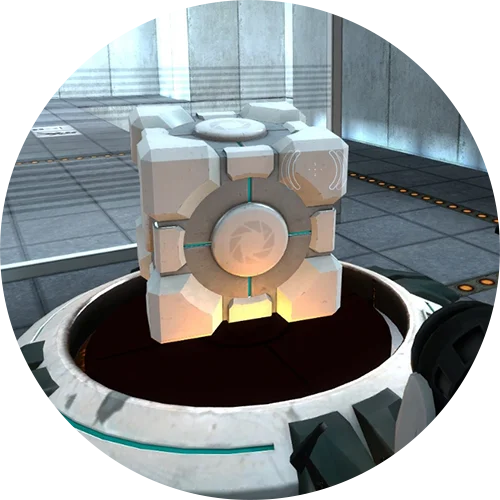
Physics puzzle: Portal 2
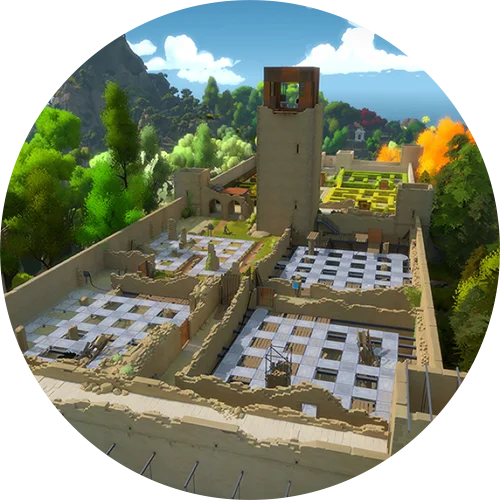
Environmental puzzle: The Witness
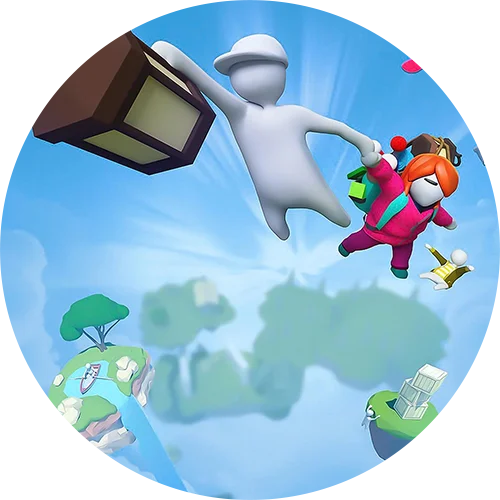
Physics co-op: Human: Fall Flat
Puzzle is not one genre. Each sub-genre has its own session length, art budget, backend needs, and monetisation logic. Scoping the wrong sub-genre against the wrong monetisation model is the single most common reason a puzzle game fails to convert.
| Sub-genre | Core mechanic | Session length | Monetisation | Target audience |
| Match-three | Swap adjacent tiles to align 3+ | 2-5 min | IAP + rewarded ads + live-ops events | Casual mobile, 25-55 |
| Hidden object | Find items in a scene, unlock story beats | 5-15 min | Energy IAP, story-pack purchase | Casual mobile, 30-60 |
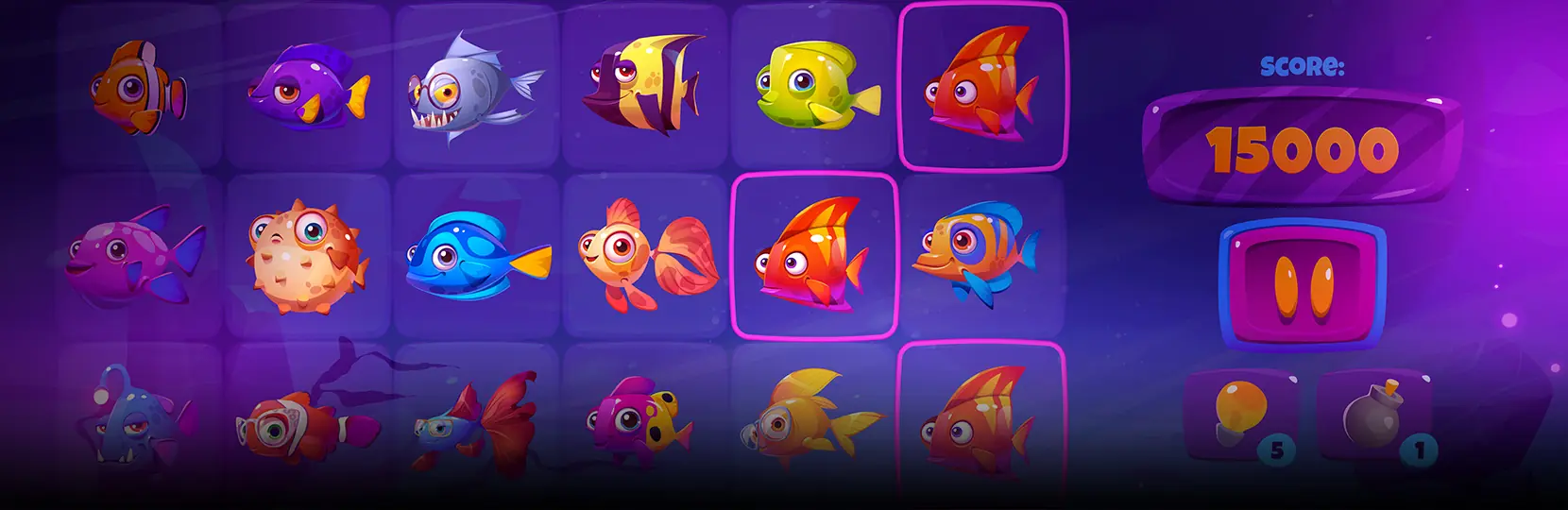
| Physics puzzle | Manipulate objects under simulated physics | 3-10 min | Ads + one-time premium or IAP hints | Casual, all ages, mobile-first |
| Word | Form words from letter sets | 1-5 min | Ads + hint IAP + subscription | Casual mobile, 35+ |
| Logic (sudoku, nonogram) | Deduce values from constraints | 3-20 min | Ads + subscription + no-ads IAP | Focused solo, 25-65 |
| Room-escape / point-and-click | Search, combine items, solve gates | 20-90 min per room | Premium unlock or episodic IAP | Story-driven casual/mid-core |
| Narrative puzzle | Deduction, logic, environmental storytelling | 2-20 hrs total | Premium purchase, PC + console + mobile | Mid-core, 20-45 |
Pick the row that matches the client's audience and revenue model before naming an engine or building a prototype. See match-three game development and casual game development for sub-genre-specific production notes.
Engines and tech choice for puzzle game development
For 2D casual puzzle (match-three, hidden object, word, logic) Unity is the default. Native 2D toolchain, mature 2D physics, best-in-class ad and IAP SDKs, straightforward App Store and Google Play delivery. For physics-heavy 3D puzzle (portal-style, physical room-escape), Unreal Engine 5 gives Chaos physics and rendering headroom out of the box, at the cost of a heavier build pipeline and larger install size.
Godot 4 is a valid choice for indie teams building small logic or word puzzles where open-source licensing matters. For anyone learning either stack, Unity Learn's official curriculum covers 2D puzzle prototypes end to end. Our Unity game development team scopes engine choice against the sub-genre and audience before writing a line of code.
How a puzzle game gets built
A puzzle game moves through six practical stages. Concept and mechanic prototype come first: a paper design, then a 15-20 level greybox that proves the core verb is fun without art. Vertical slice follows, with one polished world, monetisation hooks live, and art direction locked. Content production scales the level pipeline: designers, level scripters, and (for hidden object and narrative puzzles) writers and 2D artists. QA runs in parallel from vertical slice onward. Soft launch in one or two markets validates retention before global release. Live-ops planning starts before launch because casual puzzle economics depend on it.
- Concept and core mechanic proof (paper + code prototype).
- Greybox 15-20 levels, no art, playtest for fun.
- Vertical slice: one world, monetisation live, art locked.
- Content production: level design pipeline at scale.
- Soft launch: D1/D7/D30 retention, ARPDAU validation.
- Global launch and live-ops content cadence.
Skip the greybox and the whole build ships around an untested mechanic. For a broader look at full-cycle game development stages, see the linked service page.
Puzzle game development cost and timeline
A focused single-mechanic 2D puzzle can ship for €30,000-€80,000 in 3-5 months if scope is disciplined. A polished casual match-three or hidden object with live-ops backend, meta layer, and 100+ launch levels typically runs €120,000-€350,000 over 6-10 months. Narrative puzzles for PC or console at Obra Dinn scale start around €200,000 and scale with writing and art. See mobile game development cost for a broader breakdown.
Two variables move cost more than any other: number of launch levels and whether live-ops is scoped in or bolted on after release. Bolting it on is always more expensive.
Monetisation logic per puzzle type
Casual match-three, hidden object, and word titles run F2P with rewarded video, interstitial ads, and IAP for energy, hints, or boosters. Subscription ("no-ads + daily rewards") is a rising second layer. Physics puzzles work well as one-time premium (€2-€5) with optional cosmetic IAP. Narrative puzzles are almost always premium on mobile, PC, or console, priced €5-€20 depending on length, ads break the atmosphere and burn conversion.
Scoping a puzzle project?
If you are scoping a puzzle game (match-three, hidden object, physics, or narrative puzzle), or co-development on puzzle mechanics with your in-house team, talk to Game-Ace.
When to talk to Game-Ace about puzzle game development
Reach out when a puzzle project has a defined sub-genre and audience but needs a production partner for prototype-to-launch, live-ops content pipeline, or a co-development team joining an in-house design lead. Game-Ace has been building games since 2005 with 120+ in-house specialists across design, engineering, art, and QA, and has shipped games including casual puzzle, hidden object, and educational puzzle work. If puzzle production is on the roadmap, Game-Ace's custom game development studio can scope a discovery call and a mechanic prototype in weeks rather than months.
Related reading:
- Mobile game design for session-length and onboarding principles that apply directly to casual puzzle.
- Game engine comparison for Unity vs Unreal vs Godot trade-offs on small-team puzzle projects.
- Hyper-casual game mechanics for the one-verb design language that overlaps with casual puzzle.
- Mobile game development for production, testing, and store-delivery scope on iOS and Android.
 How MetaHuman changes game character development
  Game development for startups: budget and MVP guide
  Engineering tower defense games from prototype to live service
  Idle game development: a full production guide
  Gamification in recruitment: what actually works