
Procedural generation in games is the use of algorithms, noise fields, cellular automata, grammar rules, or constraint solvers, to build levels, terrain, loot, quests, or entire biomes at runtime or at build time. Studios reach for it when the game needs replayable variation (roguelikes, endless runners), scale that no manual pipeline could sustain (open worlds, sandbox), or content that reacts to a seed the player never sees.
What procedural generation in games actually means today
The term covers a much wider surface than "randomly generated levels." In current production, procedural generation in games includes runtime terrain synthesis, offline biome bake, dungeon layout via WFC or BSP, loot tables driven by weighted grammars, quest scaffolding, and even NPC schedules seeded from world state. The output can be fully deterministic, same seed, same world, which is essential for QA and community sharing.
Most shipped games mix the two. Handcrafted set pieces anchor the experience. Procedural systems fill the space between them.
Spelunky 2, for example, generates each floor from handcrafted room templates that the algorithm stitches together under strict solvability rules. The player sees fresh runs. The designer keeps authorial control.
Scoping a game with procedural levels or roguelike mechanics?
Which engines and tools studios use for procedural generation in games
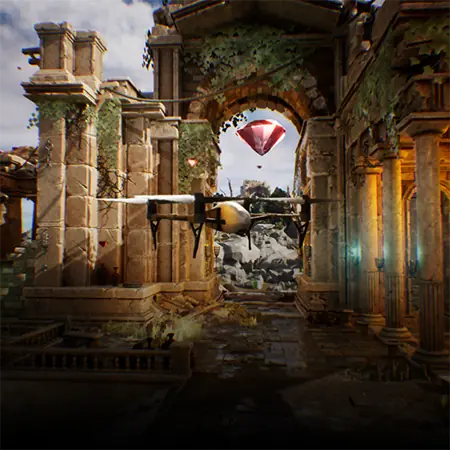
Unity and Unreal both ship first-party procedural tooling now, which changes the build-vs-buy math significantly. Unreal Engine's PCG Framework, introduced in 5.2 and expanded through 5.6, lets teams graph out point sampling, filtering, and mesh spawning without writing C++ for common cases; combined with the Landscape system and Blueprint scripting, small teams can produce dense open-world foliage and prop layouts that used to require Houdini pipelines. On the Unity side, Terrain Tools, Splines, and ProBuilder cover most level-scale work, and studios doing heavier procedural art still export from SideFX Houdini using the Houdini Engine plugin for both Unity and Unreal. For 2D roguelikes and endless runners, most teams write bespoke generators in C# or C++ against a small library of well-understood algorithms rather than dragging in a framework. If you want to see the underlying math, Ken Perlin's own reference page still hosts the original noise implementation, and SideFX's Houdini documentation covers the professional procedural DCC workflow that many AA studios attach to their Unreal Engine game development pipeline for terrain and vegetation.
Common algorithms and where they fit
Not every procedural system needs a novel algorithm. Six well-worn methods cover most production cases. The one you pick depends on whether you want organic shapes, hard geometric structure, or constraint-satisfying tile layouts.
| Method | Best use case | Complexity | Output character |
|---|---|---|---|
| Perlin / Simplex noise | Terrain height, cloud density, biome blending | Low | Organic, smooth gradients |
| Cellular automata | Cave systems, dungeon rooms, erosion passes | Low-medium | Blobby, organic clusters |
| Wave function collapse | Tile-based levels, city blocks, Townscaper-style builds | Medium-high | Constraint-consistent tilings |
| L-systems | Trees, plants, road networks, coral | Medium | Recursive branching |
| Poisson disk sampling | Prop scatter, enemy spawns, foliage | Low | Even, non-overlapping distribution |
| Grammar-based | Quest structure, dungeon layouts, story beats | Medium-high | Rule-driven, hierarchical |
For a full-cycle project, algorithm choice is usually decided in the game design and pre-production phase alongside engine choice.
Procedural generation versus hand-crafted design in production
The framing is misleading. Almost no shipped game is purely one or the other. The real question is which layer is procedural and which is authored.
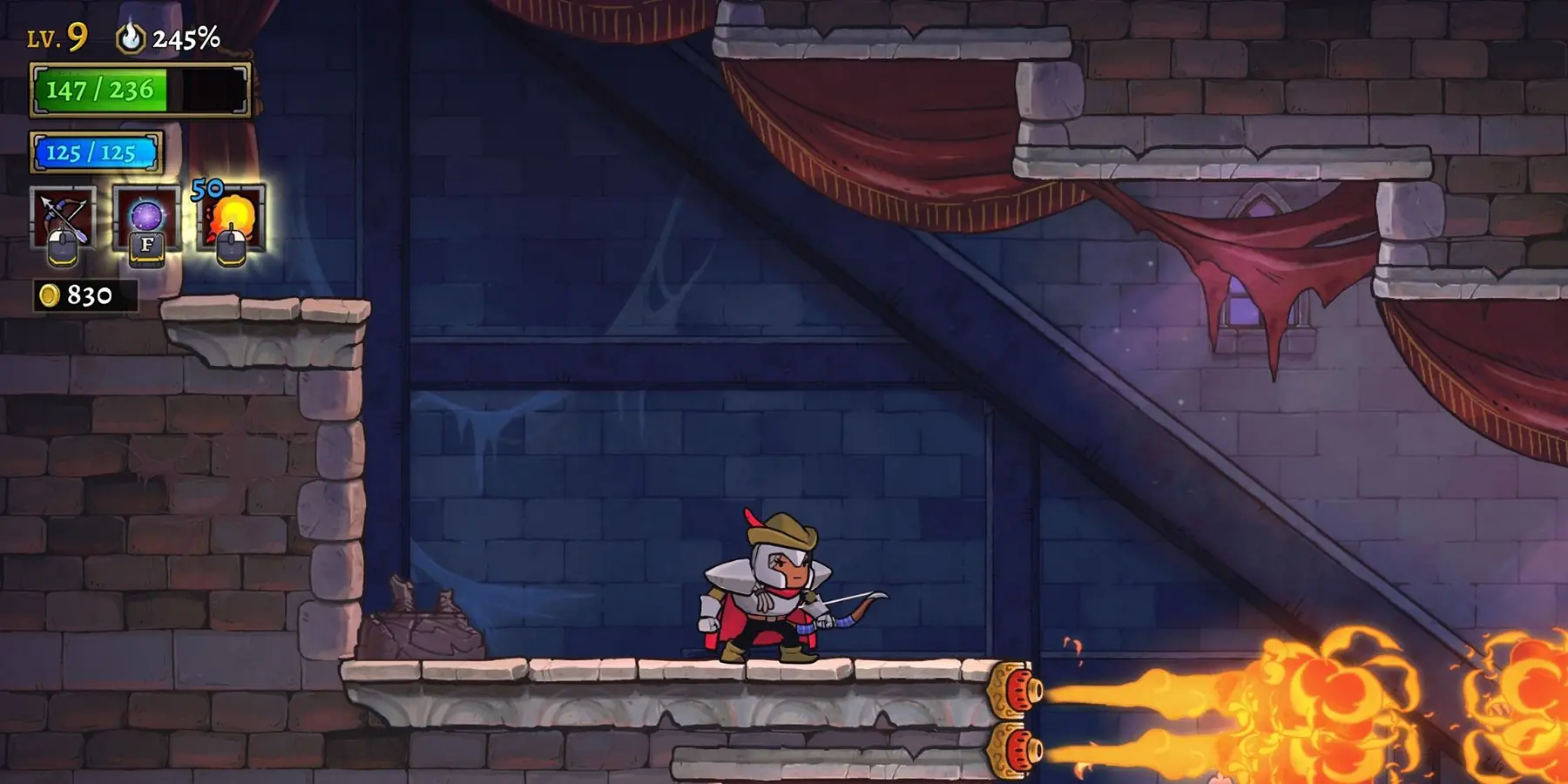
- Hand-crafted room templates plus procedural stitching (Spelunky, Enter the Gungeon, Dead Cells).
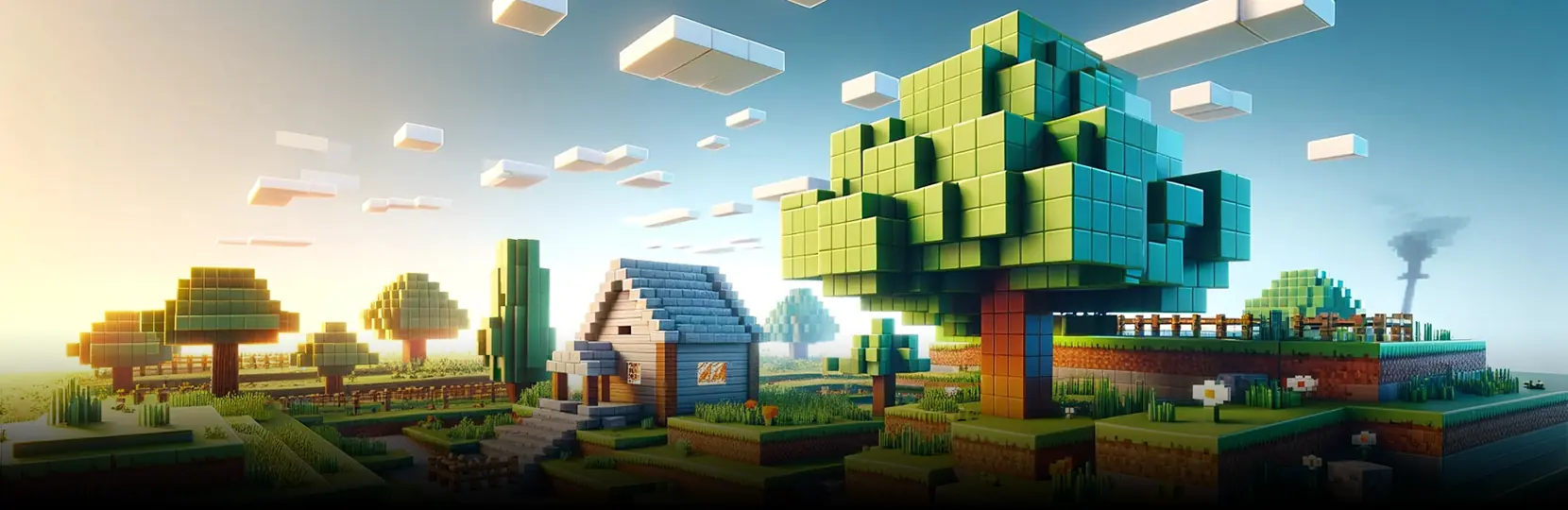
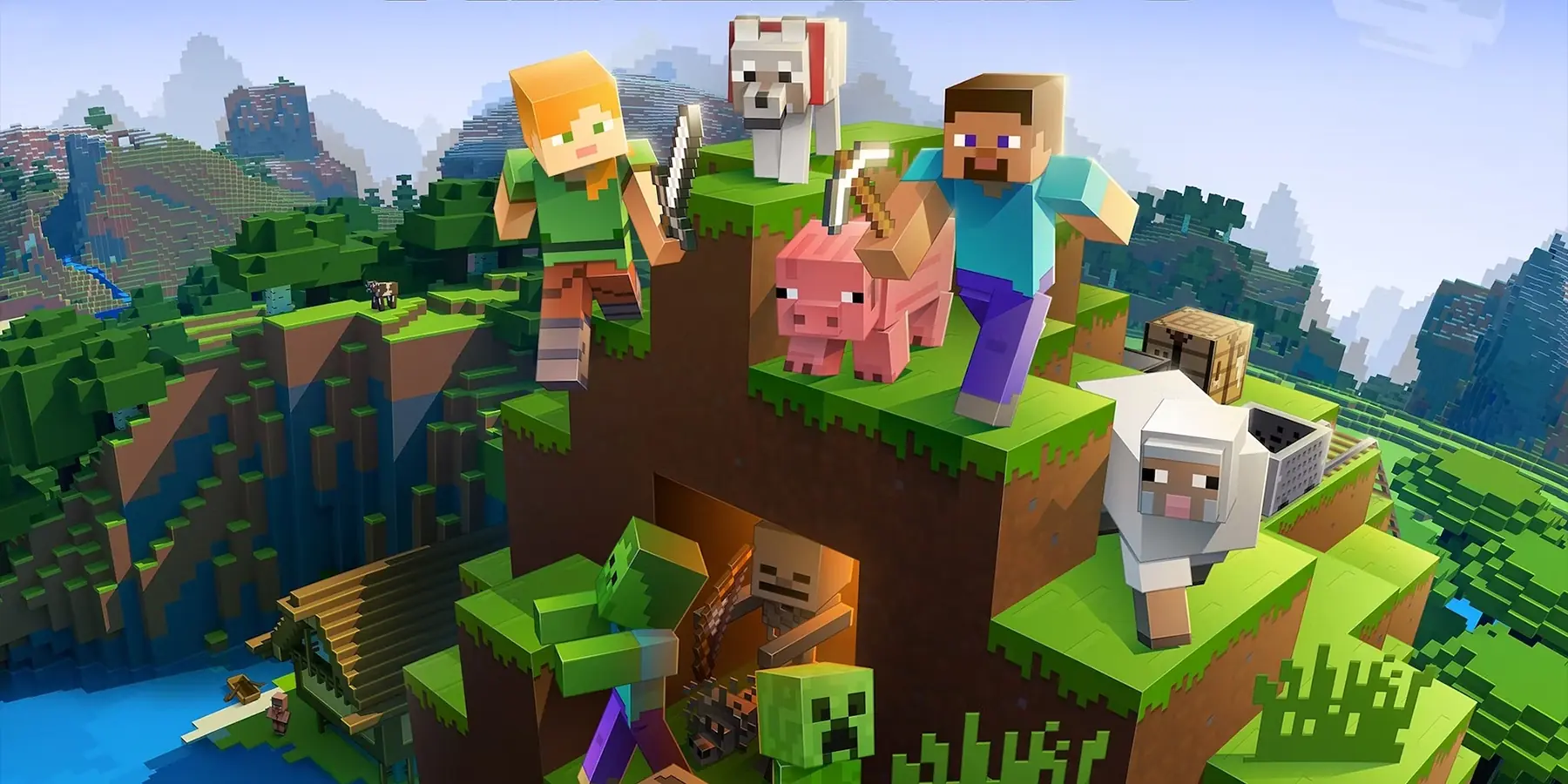
- Procedural terrain plus hand-placed points of interest (No Man's Sky, Valheim, Minecraft structures).
- Procedural loot and stats plus authored item art (Diablo-style ARPGs, Hades boons).
- Procedural quest scaffolds plus authored dialogue trees (Kenshi, Dwarf Fortress adventure mode).
Cost also shifts rather than disappears. Building a solid generator, its debug tooling, and its tuning workflow is a substantial engineering investment. Studios usually recover it only if the game needs many hours of varied content per seed. For a linear 6-hour narrative game, hand authoring is almost always cheaper and better.
Where procedural generation in games goes wrong
Three failure modes account for most of the pain: monotony, unsolvable layouts, and untestable edge cases.
Monotony is the most visible. A generator with too few constraints produces content that reads as identical after the third run, even if the tile hashes differ. The fix is authorial: more distinct set pieces, more variance in the pacing curve, sometimes a hand-crafted opening and boss room per biome.
Unsolvable layouts are more dangerous. A dungeon with no path from start to exit ships as a bug. QA against a procedural generator means running thousands of seeds through automated solvability checks, not sampling by hand. Studios building full-cycle game development pipelines usually spend as much time on generator validation harnesses as on the generator itself.
The third mode is subtle. Rare seed interactions, a boss room adjacent to a shop, a locked door with the key generated behind it, can survive months of internal play and appear only when a community of a hundred thousand players hits them. Post-launch patch cadence matters here.
Where procedural generation in games earns its keep
Roguelikes and roguelites are the obvious fit. Hades, Slay the Spire, Dead Cells, Enter the Gungeon, Rogue Legacy 2, and Balatro all use procedural systems to deliver replayability that hand-authored content could not match at the same team size.
Endless runners are another natural fit. Segments are procedurally sequenced from a pool of authored chunks under difficulty and readability constraints.
Open-world exploration games use procedural terrain and vegetation for scale, Valheim, Terraria, No Man's Sky, and Minecraft could not exist at their sizes without it. Layered on top, hand-placed dungeons and structures give the player anchor points.
Sandbox and simulation genres, Dwarf Fortress, RimWorld, Kenshi, push procedural generation into world history, factions, and simulation state, not just geometry.
How AI is changing procedural generation for games
Machine learning is not replacing classical procedural techniques. It is adding a layer on top of them.
The current production pattern: use a deterministic classical generator for the base layout, then run a trained model to add variation, texture synthesis, dialogue variants, side-quest text, NPC schedules. Studios experimenting with this pipeline treat the ML output as a candidate that a rule-based system validates and constrains, not as ship-ready content. See our deeper write-up on AI in game development for the tooling side.
Generative texture and material synthesis via GAN or diffusion is already in production pipelines for open-world foliage and prop dressing. Full ML-driven level generation remains research-stage for anything more complex than tile placement.
How Game-Ace approaches procedural generation in games
Game-Ace's approach starts with the design question, not the algorithm. What does the player need to feel fresh on run 20? Where is the authored anchor? What is the QA plan for solvability?
From there, engine choice follows the rest of the project. Unity for mobile roguelikes and endless runners where build size and CPU budget matter. Unreal for open-world terrain and vegetation where the PCG Framework and Landscape system carry most of the weight. Houdini for offline bake pipelines when procedural art needs to be authored, not generated at runtime.
Teams usually pair a generator engineer with a level designer and a QA engineer running seed sweeps. Deliverables include the generator source, tuning presets, a debug visualizer, and a test harness that ships thousands of seeds through solvability and pacing checks before every release. For projects that need custom procedural art on top of the generator, our game art and design team produces the authored tile sets, hero pieces, and set-piece assets the algorithm stitches together.
Procedural generation in a Game-Ace project
Welcome to Infinite Escape, a sci-fi procedural tunnel prototype by Game-Ace

Infinite Escape is a sci-fi endless runner prototype set in a dynamically generated tunnel with tile-based obstacle generation. We used UE Blueprints for fast iteration and developed the prototype on a tight production schedule, covering procedural generation logic, visual style, and gameplay tuning.
When to talk to Game-Ace about procedural generation in games
Procedural generation earns its keep when the game needs replayable variation, scale beyond a hand-authored budget, or content that reacts to a seed. It rarely earns its keep on linear narrative games or short vertical slices. If procedural systems are on your roadmap, Game-Ace's custom game development studio supports full-cycle delivery, co-development, and team extension from a single in-house team, with generator engineering, level design, procedural art, and QA seed-sweep validation delivered as one package rather than as separate vendor stacks. For Unity game development or VR game work where procedural systems drive environment variation, the same team scales up or down against the roadmap.
 How MetaHuman changes game character development
  Game development for startups: budget and MVP guide
  Engineering tower defense games from prototype to live service
  Idle game development: a full production guide
  Gamification in recruitment: what actually works