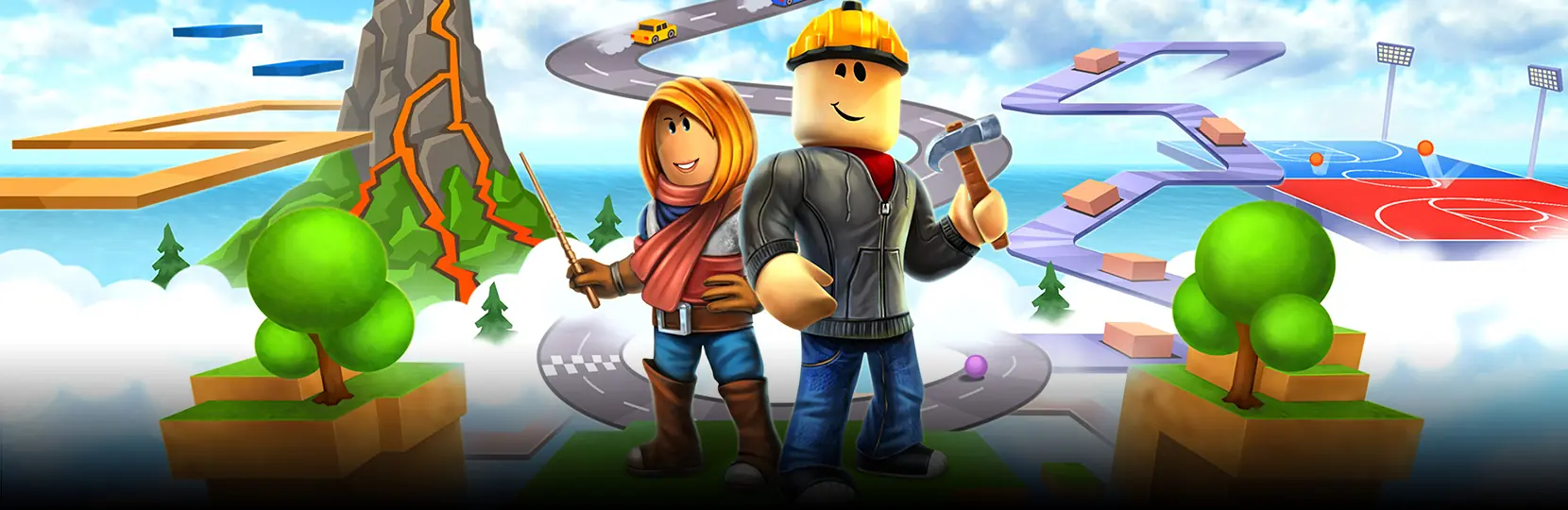
Roblox educational games are interactive learning experiences built inside Roblox Studio and published on the Roblox platform. Schools, EdTech publishers, and brands use them to teach math, language, coding, STEM, financial literacy, and safety skills. They run on the same Roblox client as entertainment titles, but the design pivots on learning outcomes, age-appropriate content, and compliance with COPPA and Roblox Community Standards.
Why Roblox works as a learning platform
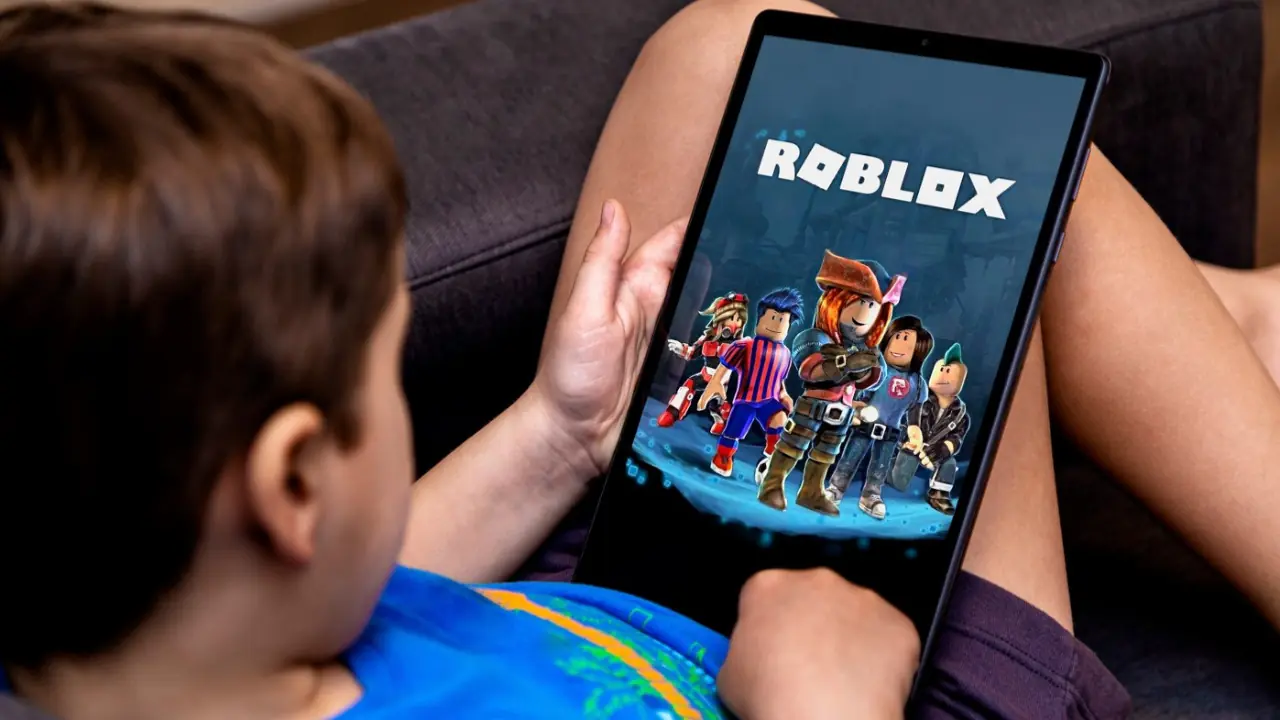
Roblox works as a learning platform because the runtime, the authoring tool, and the social layer are already familiar to the target audience. Roblox Studio is a free engine with Luau scripting, prebuilt physics, and avatar systems. Players reach an experience in two clicks from a school Chromebook, an iPad, or a low-spec home device, which removes the install and login friction that holds back custom apps. Roblox educational games can target ages 6 to 17, with Trust & Safety filters and age-gated chat already in place. The platform also surfaces new experiences inside the discovery feed, so a learning experience can reach learners outside the classroom without a separate marketing channel. Studios building for Roblox can also lean on the Roblox Education program for classroom curriculum guides, which lowers the cost of pedagogy work.
Adoption is uneven. A brand-led campaign with a strong concept and a clear progression loop will outperform a textbook-flavoured experience that ignores how Roblox's social pull actually works in practice with school-age players.
Formats of Roblox educational games
Roblox educational games fall into five practical formats: puzzle obby, quest world, simulator, sandbox world, and classroom companion. Each has a different production cost, age fit, and assessment model. Puzzle obby experiences pair short puzzles with platforming and suit ages 6 to 10; the activity loop is two to four minutes, and the learning lives inside door-gate puzzles. Quest world experiences send the player on a guided journey through a themed map and suit ages 9 to 13; pedagogy lives inside named NPCs, branching choices, and per-chapter assessment. Simulators let the player operate a system, a farm, a city, a body, a factory, and suit ages 10 to 14; they teach by giving the player a budget and consequences. Sandbox worlds let players build inside a constrained ruleset and suit ages 11 to 17; they teach by creation rather than by completion. Classroom companion apps run alongside lessons and are usually short repeatable activities with a teacher-side view. The format choice is the first scope decision: a 10-minute puzzle obby for a brand activation and a 20-hour quest world for a K-12 curriculum sit in different cost brackets, need different team mixes, and require different update cadences after launch.
Roblox educational game formats, target ages, and typical monetisation:
| Format | Best fit age | Typical scope | Monetisation model |
| Puzzle obby | 6 to 10 | 8 to 20 short levels, single map | Free play, gamepass cosmetics, brand-sponsored |
| Quest world | 9 to 13 | Themed map with chapters, NPCs, quests | Free play, gamepasses, classroom licence (B2B) |
| Simulator | 10 to 14 | System loop with progression, upgrades | Free play, gamepasses, developer products |
| Sandbox world | 11 to 17 | Building ruleset, shared world, teacher tools | Classroom licence, district contract, brand sponsorship |
| Classroom companion | 6 to 14 | Short repeatable activity, teacher dashboard | School district licence, EdTech subscription |
Three delivery routes: Roblox Education, brand experiences, and UGC
Three delivery routes exist for a Roblox educational game. The right one depends on the buyer and the learning goal, and the cost gap between them is large.
The Roblox Education official program runs free curriculum and educator partnerships, with classroom safety controls baked in; the downside is limited customisation. Brand-led learning experiences on Roblox are scoped productions for a campaign window, where the studio handles Luau development, art, learning design, and live ops. Independent UGC education titles are creator-built and live in the regular discovery feed; they are the cheapest entry point but come with no district contract and no guaranteed reach. For more on the brand-led route, see Roblox development for brands, which walks through the typical production setup.
Most commissioned projects we see in 2026 land in the brand-led category. School districts often start with Roblox Education and then commission a custom experience once they have learned which formats their teachers actually use during the school day.
What goes into a Roblox educational game build
A production-ready Roblox educational game build covers design, learning specification, art, Luau engineering, QA, accessibility, and compliance. The core team usually includes a producer, a learning designer, a Luau engineer, a 3D artist, a UI/UX designer, and a QA lead. For brand or K-12 builds, Game-Ace adds a compliance reviewer to check the experience against COPPA, the FTC's children's privacy guidance, and Roblox Community Standards before submission.
Production splits into four stages. Pre-production scopes the learning outcomes, the format, the age band, and the assessment model; the output is a learning design document and a GDD that tie pedagogy to mechanics. Production builds the world, the loops, and the Luau systems, with content written in passes and short usability tests run with learners in the target age band. Beta runs a closed playtest with educators or brand stakeholders and resolves Trust & Safety, accessibility, and performance issues. Launch ships the public version and starts live ops: content drops, event hooks, monitoring, and bug fixes.
- Pre-production: learning outcomes, format, age band, assessment, GDD.
- Production: world build, Luau systems, content writing in 4 passes, usability sessions.
- Beta: closed playtest with educators or brand stakeholders, Trust & Safety review, accessibility checks.
- Launch: public release, live ops, content drops, event hooks, monitoring.
For how learning mechanics get translated into game design, how to design learning games walks through the assessment loop.
Engagement design: what makes Roblox learning games stick
Engagement design is the difference between a Roblox educational game that gets bookmarked and one that gets abandoned after one session. The mechanics that work are not unique to Roblox; they are the same loops you see in any well-designed kids' game, applied to a learning subject.
The proven pattern blends a short core loop of two to five minutes, visible progression through XP, badges, and cosmetic unlocks, a social trigger like co-op or leaderboards, and an outcome surface so the player and the teacher know what was learned. Without the outcome surface, the experience becomes entertainment with a thin academic veneer, which is the failure mode of most early Roblox educational games. The hardest part is calibrating challenge against the learning band. Roblox learners are used to fast feedback, so a lesson that takes 8 minutes of reading before the first action loses them. The fix is to fold the lesson into the loop: a math obby teaches by gating doors on correct answers, a coding sandbox teaches by letting the player write Luau snippets that move their avatar, a financial literacy sim teaches by giving the player a Robux-style budget to manage. For how gamification translates into measurable learning outcomes, see gamification in education and how game-based learning drives real results.
- Door gates that require a correct answer or a completed task to open.
- Resource economy that mirrors the subject (water for botany, money for financial literacy, code blocks for programming).
- Quest log with named NPCs so the player has a reason to keep returning.
- Co-op puzzle that needs two players to solve, which builds peer-learning into the loop.
- Reflection moment at the end of each level: a sentence, a score, a shareable card.
Compliance, safety, and age ratings
Roblox educational games clear three compliance gates: Roblox Community Standards, the experience's chosen age rating (All Ages, 9+, 13+, 17+), and the data-collection rules of the country where learners live. COPPA in the US, GDPR-K in the EU, and equivalent local laws apply to any experience that knowingly collects personal data from users under 13. Roblox handles core protections at the platform level; the studio handles any external data flow it adds on top.
Cost and timeline for a Roblox educational game
Roblox educational game cost depends on format, scope, and content depth. The ranges below are mid-market references for 2026 and assume a brand or institutional client, not a solo UGC creator.
A short puzzle obby for a brand activation campaign typically starts from €25,000 and ships in 10 to 14 weeks. It is the fastest route to a public Roblox experience.
A quest world for K-12 or an EdTech publisher lands in the €60,000 to €150,000 range and ships in 16 to 28 weeks. Cost scales with chapter count, voice-over scope, accessibility passes, and whether the build needs a teacher-side dashboard. A multi-chapter sandbox world with classroom tools moves above €200,000 and takes 6 to 12 months for the first stable release.
Live ops is a separate budget. A Roblox educational game lives or dies on the first 90 days of content drops, event hooks, and bug response. Brand campaigns plan 8 to 12 weeks of post-launch content. K-12 builds usually plan a full school year of live ops to align with the academic calendar.
Selected education and kids case from Game-Ace
Direct Roblox case studies are available under NDA. The project below sits close to the Roblox educational game scope by audience, content, and learning intent, and it shows how Game-Ace approaches kids-targeted production for early learners.
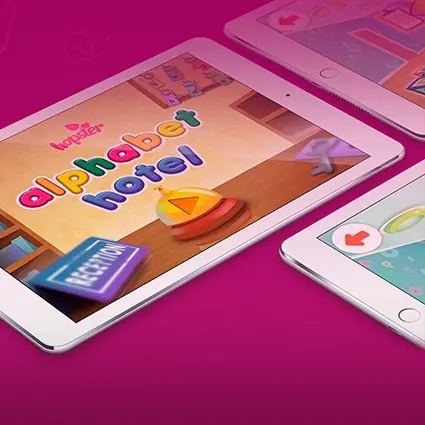
Welcome to Hopster's Alphabet Hotel, a kids alphabet education game by Game-Ace
Hopster's Alphabet Hotel teaches the alphabet through guided scenes and short activities for early learners. Game-Ace handled production and shipped a kids-safe build for a publisher's content library. The same age-band design pattern translates directly to Roblox All Ages experiences.
If you are scoping a Roblox educational experience, a brand-led learning campaign, or a K-12 Roblox game build, talk to Game-Ace.
 Roblox monetization: strategies that actually earn
  Roblox trends in gaming: what is working now
  Hire Roblox developers: where to find and how to scope
  12 Roblox game ideas that actually work
  Roblox gamified education: a play-to-learn design guide