
Gamification in learning applies game mechanics, points, quests, mastery paths, spaced repetition, feedback loops, to structured learning content so learners practice more, remember longer, and reach measurable outcomes. Transforming education through gamification in learning works when mechanics reinforce a specific skill or knowledge objective, and when analytics track learning gains alongside engagement.
What gamification in learning actually means

Gamification in learning is the deliberate use of game mechanics inside otherwise non-game learning content: a Duolingo streak, a Kahoot! quiz round, a Khan Academy mastery badge. The learning content is the product; the mechanics exist to increase practice frequency, sharpen feedback, and hold attention through difficult material. It is not the same as a game built to teach, and it is not a full serious game simulation. The line matters for scoping and budget.
Three formats are often confused. This article stays with the first.
| Format | What it is | Typical cost | Measurement | Best fit |
|---|---|---|---|---|
| Gamification in learning | Mechanics layered on learning content | €15,000-€80,000 | Learning gains + engagement | EdTech products, LMS add-ons, corporate training |
| Game-based learning | Playing a game IS the learning activity | €60,000-€200,000 | Skill mastery inside the game | K-12 concept teaching, higher-ed practice |
| Serious games | Full simulation for training or behavior change | €120,000-€500,000+ | Behavior change, procedure mastery | Medical, defense, cybersecurity, safety |
| Standard e-learning | Slides, video, quizzes without game mechanics | €8,000-€40,000 | Completion + assessment scores | Compliance, onboarding, quick refreshers |
Scoping a gamified learning product for K-12, higher-ed, or corporate training?
The motivation theory behind gamification in learning
Effective gamification in learning is grounded in motivation theory, not in copying arcade patterns. Self-determination theory (Deci and Ryan) identifies three drivers: autonomy, competence, and relatedness. Points and badges alone cover none of these; well-designed mechanics cover all three. Autonomy comes from choice paths and skill-tree branches. Competence comes from mastery loops with visible progress. Relatedness comes from cohorts, leaderboards scoped to a class, or teacher-visible progress dashboards.
Flow theory (Csikszentmihalyi) adds a design constraint: challenge must scale with skill. If a math question is too easy the learner disengages; too hard and they abandon. Adaptive difficulty and mastery-based progression keep learners in the flow channel. Bloom's revised taxonomy provides the outcome map: remembering and understanding are supported well by drill mechanics; applying, analyzing, evaluating, and creating require richer game-based or serious-game formats.
Mechanics that actually improve learning outcomes
Not every mechanic supports learning. The list below is what evidence and practice consistently reward.
- Spaced repetition schedules that surface weak items more often (used by Duolingo, Anki, Quizlet).
- Immediate, specific feedback on wrong answers, not just a red mark.
- Mastery paths that unlock only after demonstrated competence, not after time spent.
- Micro-quests scoped to one learning objective per session (5 to 15 minutes).
- XP tied to skill milestones, not to session count.
- Optional cohort leaderboards that reset weekly to protect motivation of slower learners.
- Streaks paired with a "streak freeze" so illness or travel does not punish real progress.
Points and badges without one of the above are decorative and often reduce intrinsic motivation over time.
Anti-patterns to avoid in gamification in learning
The largest risk is badges-for-badges' sake: awarding rewards for activity that does not indicate learning. A student can watch a video at 2x speed and collect the completion badge without absorbing the content. Ranked global leaderboards discourage the middle 60 percent of learners after two weeks. Punitive streak loss creates guilt and drives churn instead of practice. Over-reliance on extrinsic rewards can also undermine the intrinsic motivation the content itself might otherwise build, a well-documented effect in motivation research.
Age-appropriate design and inclusive learning
Age-appropriate gamification is about cognitive load, reading level, iconography, and reward pacing.
- Ages 4-7: image-first, minimal text, short 3 to 5 minute sessions, adult-visible progress.
- Ages 8-12: reading-supported, character-led narrative, 10 to 15 minute sessions, class leaderboards.
- Ages 13-17: skill trees, social features with safety controls, session length 15 to 25 minutes.
- Higher-ed and adult learners: portfolio-style progress, XP that maps to CV-ready skills.
- Corporate learners: role-based paths, manager dashboards, certificate output.
Inclusive design means colorblind-safe palettes, adjustable text size, dyslexia-friendly font options, screen-reader labels on every interactive element, and captions on any narrated content. WCAG 2.2 AA is the working baseline for K-12 and public-sector procurement.
Analytics, xAPI, and LTI 1.3
Learning analytics is where gamification in learning either proves itself or fails a district review. Two standards matter. xAPI (Experience API, formerly Tin Can) records granular "actor-verb-object" statements to a Learning Record Store: learner X answered question Y correctly on attempt Z with confidence W. It captures the events SCORM cannot, including offline and mobile activity. LTI 1.3, maintained by 1EdTech (formerly IMS Global), is the interoperability layer that lets a gamified activity launch inside Canvas, Moodle, Blackboard, D2L Brightspace, or Google Classroom with single sign-on and gradebook writeback.
Together, xAPI and LTI 1.3 make a gamified product deployable at district or enterprise scale. Without them, the sales cycle for K-12 and higher-ed usually stops at the pilot.
Measuring learning gains, not just engagement
Engagement metrics, DAU, session length, streak length, are easy to collect and easy to overweight. Learning gains are harder and more important. The standard approach is a pretest-posttest design on a defined skill, with a control group where feasible. Duolingo's public research (Vesselinov and Grego) benchmarks its app against one university semester of language study. Prodigy Math publishes standards-aligned progress against Common Core objectives.
A production-ready measurement plan usually includes: a baseline diagnostic, checkpoint assessments at each mastery gate, a delayed retention test 2 to 4 weeks after mastery, and a correlation report between engagement metrics and learning outcomes. If engagement rises but posttest scores do not, the mechanics are decorative and need redesign.
Accessibility, COPPA, GDPR-K, and FERPA
Compliance is not optional in education. Four bodies of rules apply depending on audience and geography.
- WCAG 2.2 AA: accessibility baseline for public-sector and most enterprise procurement.
- COPPA (US, under 13): verifiable parental consent, minimal data collection, no behavioral advertising.
- GDPR-K (EU children): age of consent varies 13 to 16 by member state, parental verification required.
- FERPA (US, K-12 and higher-ed): student records privacy, contract clauses on data use and retention.
For products used inside US school districts, a signed Student Data Privacy Consortium (SDPC) national data privacy agreement often replaces case-by-case FERPA negotiation. Products serving multiple jurisdictions design the data model around the strictest applicable rule, usually GDPR-K.
EdTech product patterns that work
Four learning products show what "gamification in learning" looks like in practice.
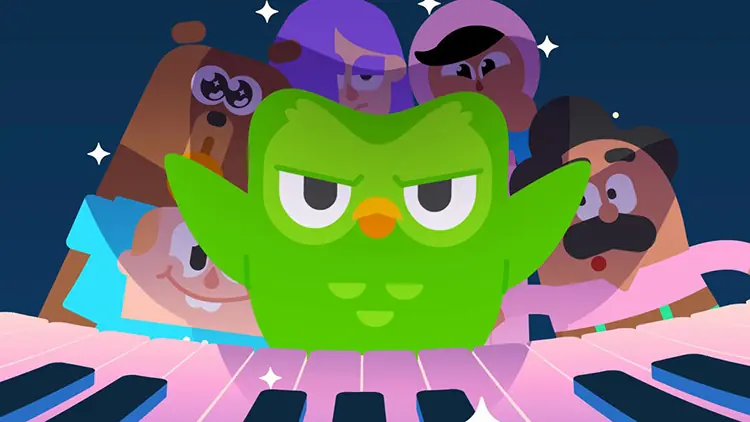
Duolingo integrates streak systems
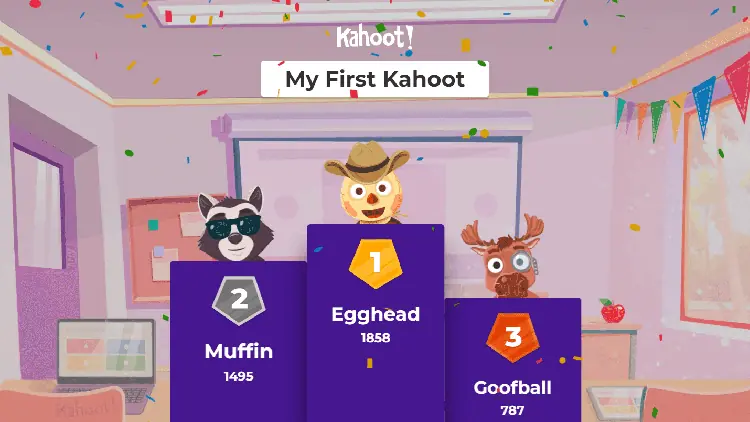
Kahoot! uses real-time quizzes
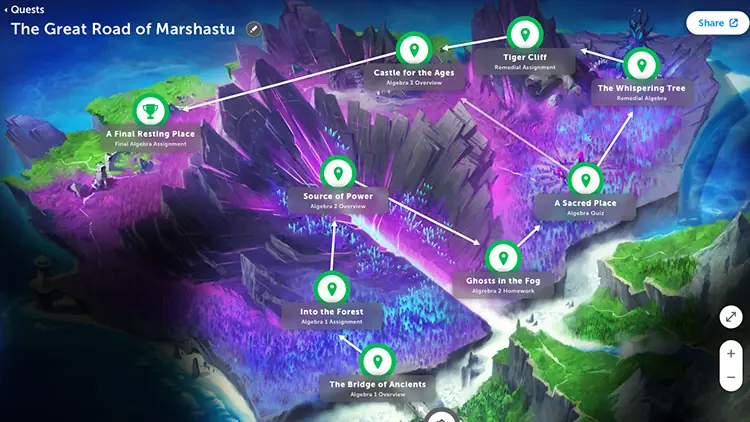
Classcraft turned lessons into games
Codecademy includes achievement badges
- Duolingo layers spaced repetition, streaks, XP, leagues, and a hearts system onto language exercises. The combination makes progress visible and encourages learners to return regularly.
- Kahoot! turns quiz review into a live group activity with time-based scoring. It is used in K-12 education, higher education, and corporate training. The format converts individual recall into shared social practice.
- Classcraft used RPG mechanics to turn classroom activity into a shared progression system. Students earned points, developed characters, and worked in teams, while teachers connected rewards and consequences to classroom goals.
- Codecademy adds badges, streaks, progress tracking, and weekly targets to interactive coding lessons. The mechanics encourage learners to practise consistently and make progress visible across longer courses.
Gamification in corporate and compliance training
Corporate training has different constraints than K-12. Learners are time-poor, cynical about mandatory training, and measured on job performance rather than test scores. Mechanics that work here are microlearning modules of 3 to 7 minutes, scenario branching that mirrors real job decisions, leaderboards scoped to a team rather than a company, and certificates that map to a role or a compliance requirement.
For regulated industries, finance, healthcare, aviation, cybersecurity, completion evidence must survive an audit. That usually means xAPI statements written to a validated LRS, with immutable timestamps and role-mapped completion records. "Nice-to-have" mechanics are stripped; audit-grade tracking is the priority.
The production pipeline for a gamified learning product
A gamified learning product is a learning design task, a game design task, a software task, and a compliance task at the same time. Skipping any of them shows up in the outcome data. The typical Game-Ace production flow is:
- Discovery: learning objectives, target learner profile, standards alignment, measurement plan.
- Learning design: content decomposition into mastery units, assessment items, feedback rules.
- Game design: mechanics selection, economy, session pacing, difficulty curve.
- Prototype: one mastery loop playable in week 4 to 6 for teacher or SME review.
- Production: content pipeline, art, engineering, LMS integration (LTI 1.3), analytics (xAPI).
- Accessibility and compliance pass: WCAG 2.2 audit, COPPA/GDPR-K/FERPA review, data flow map.
- Pilot: 2 to 4 week classroom or team pilot with pretest-posttest measurement.
- Iterate and scale: adjust mechanics based on outcome data, not engagement alone.
Cost and timeline for gamified learning products
A focused gamified module, one subject area, web-based, LTI 1.3 launch, xAPI events, WCAG 2.2 AA, typically ranges €15,000-€40,000 and takes 3 to 5 months from discovery to pilot. A cross-subject EdTech product with adaptive content, teacher dashboards, parent reporting, and native mobile apps usually falls in the €80,000-€250,000 range and takes 6 to 12 months. A regulated corporate compliance training with audit-grade tracking and multi-language delivery adds another 20 to 40 percent to scope.
Content authoring is often the underestimated line item. A subject expert typically produces 8 to 15 vetted assessment items per day; a 12-unit product needs 400 to 800 items. Budget content authoring at 25 to 40 percent of total cost.
A Game-Ace educational and serious-game case
One project from the Game-Ace portfolio illustrates gamification in learning at production scale.
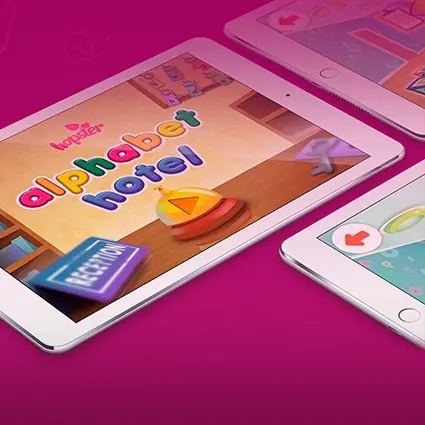
Welcome to Hopster's Alphabet Hotel, a preschool literacy game by Game-Ace
Hopster's Alphabet Hotel teaches early letter recognition through short, character-led activities designed for ages 3 to 6. The mechanics stay quiet, no punishing timers, no ranked leaderboards, while progress signals are visible to parents. Game-Ace handled game design, art, and engineering for the mobile and tablet builds.
When to talk to Game-Ace about gamification in learning
Bring us in when you have a defined learning objective and a target audience, and you need mechanics that will improve measurable outcomes rather than only engagement. We work well on EdTech product builds, LMS-integrated modules, compliance training with audit-grade tracking, and serious-game simulations. Since 2005, Game-Ace has delivered 200+ games across educational, serious, and commercial formats with a 120+ specialist team, full NDA, and full IP transfer to the client. If gamified learning is part of your roadmap, Game-Ace, a custom game development studio, handles full-cycle delivery, co-development, and team extension from a single team. Related reading: gamification services, educational games for kids, gamification in education, and serious games for training and skill development.
 How MetaHuman changes game character development
  Game development for startups: budget and MVP guide
  Engineering tower defense games from prototype to live service
  Idle game development: a full production guide
  Gamification in recruitment: what actually works