
The engineering of tower defense games rests on five decoupled systems: wave manager, pathfinding, tower targeting, projectile pooling, and a balance-math layer that keeps difficulty legible. Tower defense games are a strong outsourcing candidate because scope is bounded, the core loop is well understood, and mobile monetization patterns are proven. Game-Ace builds tower defense games end to end and integrates specialists into existing studio pipelines.
The rest of this article walks the systems, the math, the mobile constraints, and the LiveOps cadence that separate a demo from a shipped title. It also covers where a partner adds value in scoping, prototype validation, and production.
Tower defense games: the working subgenres
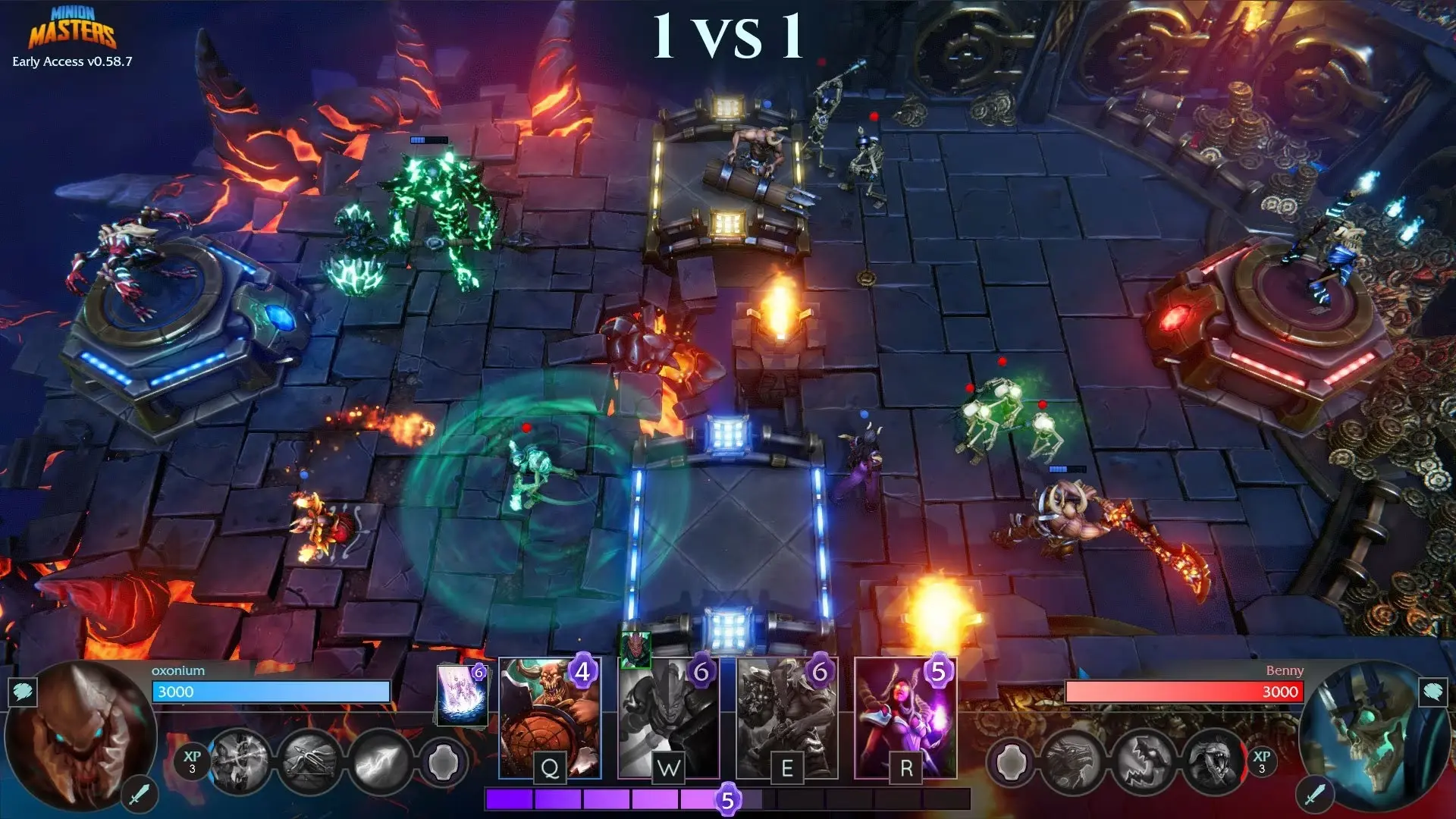
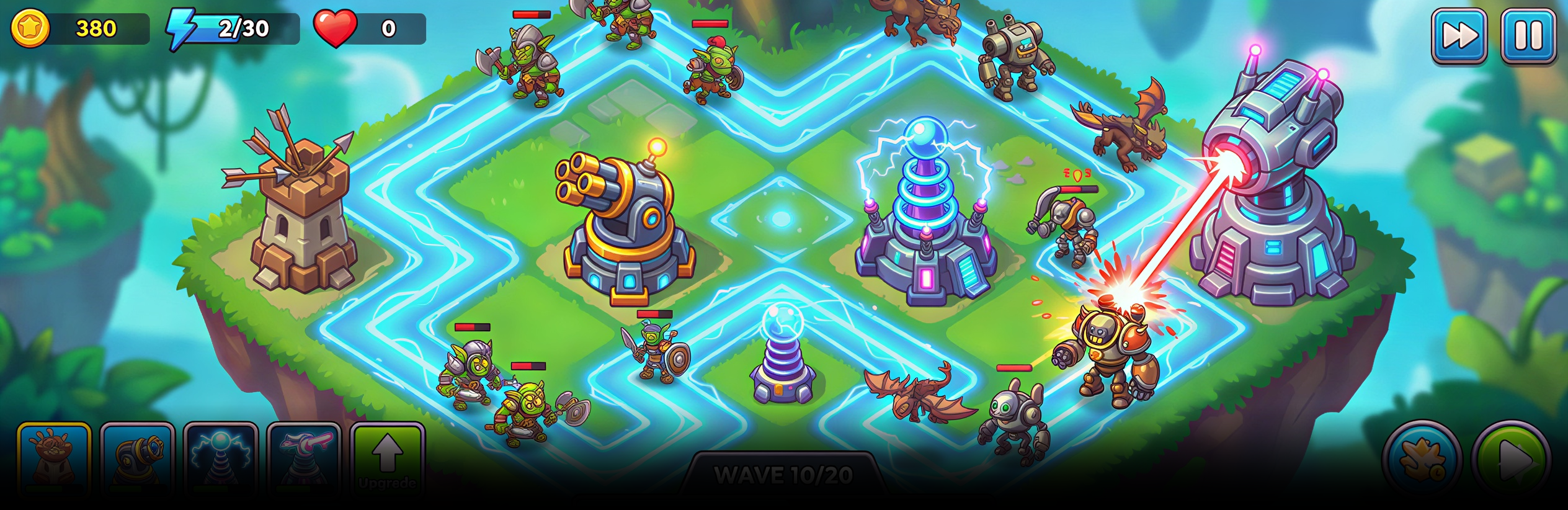
Tower defense games have split into five commercially viable subgenres, and each one drives different engineering choices. Classic lane TD (Kingdom Rush lineage) keeps fixed paths and rewards puzzle-style tuning. Hybrid TD-RPG layers hero units, gear, and meta-progression on top of the wave loop. Tower rush shortens sessions to two or three minutes for hyper-casual audiences. Real-time PvP TD, seen in Rush Royale and Random Dice, adds server-authoritative matchmaking and deterministic simulation. Deck-building TD reframes tower placement as a card draw. Picking the subgenre before scoping is the single biggest cost driver, because netcode, art scope, and LiveOps burden all change with it.
| Subgenre | Core mechanic | Tech complexity | Monetization fit | Art scope |
|---|---|---|---|---|
| Classic lane TD | Fixed paths, wave puzzles | Low to mid | Premium, ads, mid IAP | Small to mid |
| Hybrid TD-RPG | Heroes, gear, meta-progression | Mid to high | Deep IAP, battle pass | Mid to large |
| Tower rush | 2-3 minute sessions | Low | Rewarded ads, IAP boosters | Small |
| Real-time PvP TD | Server-authoritative matches | High | Battle pass, cosmetics, IAP | Mid |
| Deck-building TD | Card draws set placements | Mid | Card packs, battle pass | Mid |
Scoping a new tower defense title or a live-service revamp?
Core systems inside tower defense games
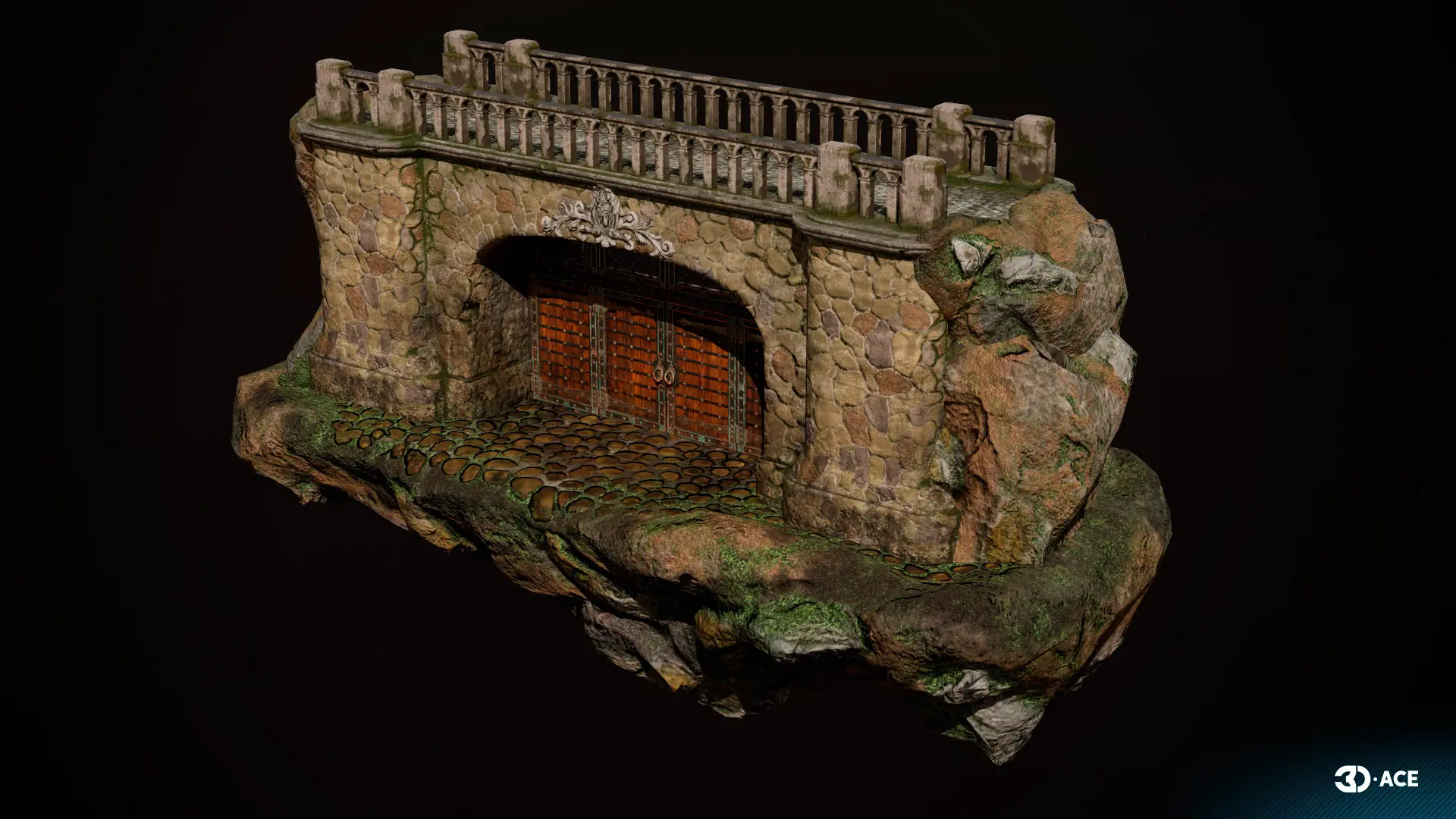
The core loop of tower defense games splits into five services that should not talk to each other directly. A wave manager owns spawn schedules and difficulty ramps. A pathfinding layer resolves routes: A* on a grid for fixed lanes, or a flow field when hundreds of enemies share a destination and per-agent A* would burn the frame budget. Tower targeting runs on a range query with a filter for priority (first, last, strongest, closest). Projectile logic uses object pooling so no allocation happens during a wave. An event bus carries "enemy killed", "wave cleared", and "player took damage" messages so UI, audio, and economy can react without coupling to gameplay code.
In Unity, the enemy and projectile layers are the first candidates for ECS or the Jobs system when counts pass a few hundred. GameObject-based prototypes ship faster and are usually enough for lane TD. Migration to DOTS is a mid-project decision driven by profiler data, not a default choice.
- Wave manager: schedules spawns, ramps difficulty, emits events.
- Pathfinding: A* for grids, flow field for shared destinations, NavMesh for free-form 3D maps.
- Tower targeting: range query plus priority filter, ticked at 10-15 Hz not per frame.
- Projectile pool: pre-allocated on load, recycled on impact.
- Event bus: decouples gameplay from UI, audio, analytics, and economy.
Balance and math for tower defense games
Balance is where tower defense games are won or lost. The math layer starts with a DPS curve per tower tier, a health curve per enemy wave, and an upgrade cost curve that keeps early towers relevant into the mid-game. Wave scaling is usually exponential with a small linear floor: HP grows around 8 to 12 percent per wave, spawn count grows more slowly, and armor or resistance types are introduced at fixed checkpoints to force loadout changes.
Teams that ship well keep this data in versioned spreadsheets or ScriptableObjects, not in code, so a designer can retune without a build. A validation script that simulates a full run against a reference loadout catches broken numbers before QA sees the build. For live titles, the same simulator feeds a weekly balance dashboard. This same discipline shows up in our game economy design guide.
Meta-progression, heroes, and runes
Meta-progression is the retention engine of most modern tower defense games. Kingdom Rush uses star upgrades and hero levels. Bloons TD 6 uses monkey knowledge and hero XP. The engineering pattern is the same: a persistent profile store, a separate meta economy with its own currency, and unlock gates that reference the same tower definitions used in run-time gameplay. Keeping run-scoped state (current gold, tower placements) and meta-scoped state (permanent upgrades, hero levels) in two clean stores avoids the save-corruption bugs that haunt long-running TD titles.
Mobile touch UI for tower defense games
Touch input decides whether a mobile TD feels precise or fussy. Tap targets on tower slots should sit at 44 to 48 pixels at typical device scaling. Drag placement needs a preview with a range overlay that stays visible while the finger is down. A radial menu around a placed tower beats a bottom sheet because it does not cover the map. Pinch-zoom and two-finger pan should never fight the tap-to-select layer, which usually means a small dead zone in touch handling. Studios scoping this layer can review our mobile game development practice.
Speed controls (1x, 2x, 3x) belong on the HUD, not in a menu. Auto-start-next-wave is a single toggle. These small choices lift retention more than any single art upgrade.
Netcode for real-time PvP tower defense
Real-time PvP TD needs a server-authoritative simulation. Client prediction with server reconciliation works for tower placement and card plays. Because tower defense games are deterministic when RNG is seeded, a lockstep model is viable for two-player matches: both clients run the same simulation from the same seed and only inputs cross the wire. Rush Royale and Random Dice both use variants of this pattern. Matchmaking, room state, and the seed generator live on a dedicated backend, usually on managed cloud with regional gateways to keep round-trip time under 80 ms in the target markets.
Performance targets and how to hit them
Mobile tower defense games target 60 fps on mid-range Android hardware from the last three years. The frame budget is dominated by enemy count and projectile count during boss waves, so the fixes are known: pool every projectile and VFX, tick tower AI at 10-15 Hz instead of every frame, batch static geometry, and keep dynamic lights off the mobile build. Texture atlases and sprite batching handle 2D. For 3D lane TD, LOD groups on enemies save more than any shader trick.
Memory is the second axis. Long sessions and endless modes accumulate garbage in scripting languages. A pooled projectile system with pre-warmed capacity, plus a wave-end sweep that returns transient objects, keeps allocations flat.
Unity documents the pooling pattern in its official Object Pooling guide, and the A* Pathfinding Project is the standard commercial package for grid and NavGraph pathfinding in Unity TD projects.
Tech stack choices for tower defense games
Unity is the default engine for tower defense games. It has the 2D pipeline, mobile deployment, and asset ecosystem that match the genre. Unreal makes sense for 3D TD with heavy visual ambition or when the studio is already Unreal-native. Godot is a viable pick for smaller teams shipping stylized 2D TD. See our Unity game development service and the Unity for game development guide for the fuller comparison.
For backend, Photon Fusion, Mirror, or a custom Node/Go service cover PvP netcode. Firebase or PlayFab cover profiles and analytics without a dedicated backend team. For LiveOps content delivery, remote config plus addressables in Unity is the standard pattern. Teams looking to move an existing TD title to a new platform can review our game porting service.
Monetization patterns for mobile tower defense games
Mobile tower defense games monetize through a small set of proven mechanics. Rewarded video ads at wave-fail and between runs. IAP for hero unlocks, cosmetic skins, and time-limited event passes. A battle pass sits well on hybrid TD-RPG. Premium up-front pricing still works for polished single-player TD, as Kingdom Rush and Bloons TD 6 continue to prove on Steam and mobile.
Two anti-patterns to avoid: pay-to-progress that locks core content behind currency walls, and energy systems that limit run count. Both raise short-term ARPDAU and cut long-term retention. Cosmetic IAP and rewarded ads sustain the LTV curve better across a two-year live window.
LiveOps content cadence for tower defense games
LiveOps is where tower defense games earn the second year of revenue. A working cadence is a themed event every four to six weeks, a new hero or tower per quarter, and a balance patch every two weeks. Events reuse the base wave engine with new enemy skins, modifier stacks, and a fresh reward track. The engineering cost of an event, once the event framework is in place, drops to a few days per drop.
When to talk to Game-Ace about tower defense games
Tower defense games reward teams that know the systems cold and can validate the math before art production scales. Game-Ace, a custom game development studio working with studios since 2005, ships tower defense titles end to end and joins existing teams on the parts that need reinforcement. Engagement models include full-cycle production, co-development on a defined system, and team extension for a single sprint or a full release window.
 How MetaHuman changes game character development
  Game development for startups: budget and MVP guide
  Idle game development: a full production guide
  Gamification in recruitment: what actually works
  AI recruitment games: from real-time assessments to better hires