
Facebook Instant Games is Meta’s HTML5 gaming platform that runs titles instantly inside Messenger and selected Facebook surfaces, with no App Store or Google Play install. The platform launched in 2016, remains live under Meta, and today reaches players primarily through Messenger chats, group play, and Facebook Gaming entry points. For studios, Facebook Instant Games development is a lightweight web-first delivery channel with a 200 MB payload cap, rewarded-ad and IAP monetization, and near-zero install friction.
If you are scoping a Facebook Instant Game or a companion web release, talk to Game-Ace.
What Facebook Instant Games are and the current state of the platform
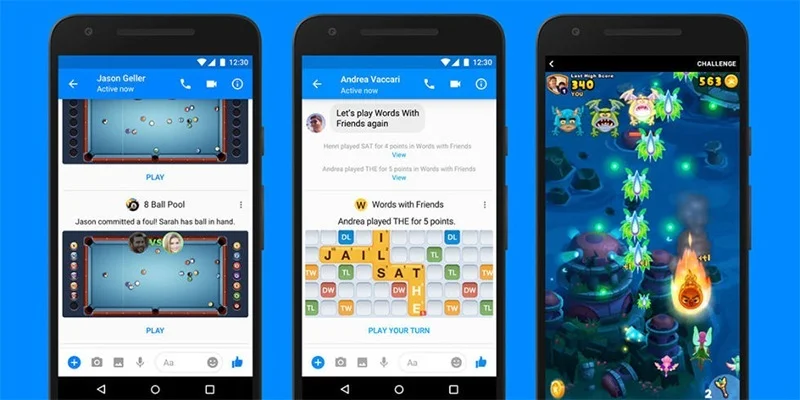
Facebook Instant Games are HTML5 titles that launch inside Meta’s apps without an install. A player taps a shortcut or a shared game link in Messenger, the game streams over the network, and gameplay starts inside a WebView. Since the 2018 discovery peak, Meta has consolidated the surface: Messenger remains the primary entry, Facebook Gaming tabs continue to host casual titles. The platform is still open to new developers and still serves live audiences, especially in casual, puzzle, trivia, and social multiplayer categories.
For a B2B studio, the practical takeaway is that Facebook Instant Games development is best treated as a companion channel for a broader web or mobile release, not as a sole-platform bet.
SDK and tech stack for Facebook Instant Games development
The Instant Games SDK is a JavaScript API exposed inside the WebView. It handles player identity, context, payments through Meta Payments, ads, leaderboards, and cross-promotion. Any HTML5 game that renders through Canvas or WebGL can be packaged for the platform.
- PhaserJS 3.x: the most widely used framework, strong Canvas and WebGL renderer, small bundle size.
- Cocos Creator: TypeScript-first editor with a dedicated Instant Games publish target.
- Construct 3: no-code and low-code option that exports HTML5 bundles compatible with the SDK.
- Unity WebGL: usable when payload is trimmed under 200 MB with Addressables and asset streaming.
- Lightweight custom HTML5 stacks: Pixi.js for 2D, Babylon.js for 3D, or raw Canvas for very small games.
Size, load-time budget, and monetization
Meta enforces a 200 MB uncompressed payload cap on Instant Games bundles. In practice, a healthy target is far below that: builds under 20 MB open within a few seconds on mid-range devices. Load time is the single strongest predictor of session count on the platform, because a Messenger user is one tap away from returning to the chat thread.
Two revenue channels are sanctioned on the platform. Ads through the Audience Network integration (rewarded video, interstitial, banner) requested via the SDK, and in-app purchases through the Meta Payments SDK for currency packs, unlocks, and cosmetics. A live-ops mindset matters, titles that iterate on ad placements and currency sinks month over month outperform static releases.
Entry points, social loops, and analytics
A player reaches an Instant Game through a Messenger chat shortcut, a shared game link in a thread, a Facebook Gaming tab card, or a bot conversation. The SDK exposes the current context to the game, so studios can build features that behave differently in a solo session, a one-to-one thread, or a group chat. Turn-based formats (word games, puzzle duels, trivia rounds) map cleanly to this social loop.
The SDK ships with a leaderboards API that stores per-context and global scores server-side, so the game does not need a separate backend for basic ranking. Analytics come from the Meta for Developers console and can be augmented with a third-party stack for granular funnel work.
QA, compliance, and performance targets
Meta reviews every submitted Instant Game before it goes live, covering technical compliance, content policies, and payments compliance for IAP-enabled titles. QA on the studio side focuses on WebView behaviour across iOS and Android, offline-recovery, and low-bandwidth loading. The reference device is a mid-range Android phone: studios plan for 60 FPS on light 2D content and 30 FPS as an acceptable floor on heavier 3D, with first playable frame under 5 seconds on a 4G connection.
Instant Games vs WebGL browser vs mobile native
| Dimension | Facebook Instant Games | WebGL browser build | Mobile native |
| Install friction | Zero, runs inside Messenger/Facebook | Zero, runs in any browser | App Store or Google Play install required |
| Best-fit games | Casual, puzzle, trivia, social multiplayer | Casual and mid-core web games, portals | Any genre, from casual to mid-core |
| Payload budget | 200 MB cap; sub-20 MB recommended | No hard cap; sub-50 MB recommended | Up to 4 GB, streaming assets common |
| Typical cost (indicative) | €25,000-€90,000 | €30,000-€120,000 | €60,000-€250,000+ |
A Facebook web case from the Game-Ace portfolio
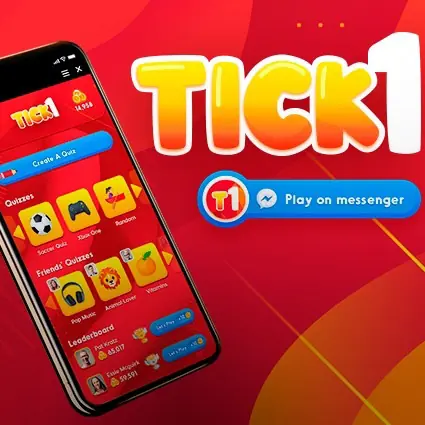
Welcome to Tick 1, a Facebook Instant Game by Game-Ace
Tick 1 is a quiz-style Facebook Instant Game with no wrong answers, where players create, share, and rank quizzes while collecting coins. Game-Ace built the coin mechanics and optimised the game balance and ad system, keeping the game lightweight enough for instant play inside Facebook Messenger.
When to talk to Game-Ace about Facebook Instant Games
Facebook Instant Games development is a fit when the goal is fast reach inside Messenger and Facebook without an install, when the game maps to casual, puzzle, trivia, or social multiplayer formats, and when the team is ready to plan a strict size and load-time budget from sprint one. Game-Ace has produced browser, HTML5, and social games since 2005 with 120+ in-house specialists. If Instant Games is part of a wider web or mobile roadmap, Game-Ace’s custom game development studio handles full-cycle delivery, co-development, and team extension. See also mobile game development, HTML5 game development, and hyper-casual game development.
 How MetaHuman changes game character development
  Game development for startups: budget and MVP guide
  Engineering tower defense games from prototype to live service
  Idle game development: a full production guide
  Gamification in recruitment: what actually works