
Games for business are branded interactive experiences that support marketing campaigns, employee training, and customer retention with measurable outcomes. Companies use them to raise engagement, capture first-party data, and shorten onboarding. Delivery ranges from lightweight WebGL mini-games to Roblox activations, mobile loyalty apps, and VR training simulations.
What games for business actually are
Games for business sit between advertising, product design, and learning technology. They apply game mechanics such as scoring, progression, feedback loops, and rewards to non-game goals: brand awareness, lead capture, customer loyalty, sales enablement, safety training, or compliance certification. In practice a Game-Ace client brief usually starts with a business metric first (qualified leads, activation rate, course completion, dwell time on a booth) and only then moves to mechanic design. That order matters, because a game built for entertainment first rarely converts on a marketing KPI, and a game built for a KPI first still has to be enjoyable enough to sustain sessions of 3 to 15 minutes. The scope covers three practical families: promotional games and branded microsites, gamified customer loyalty, and internal training or serious games.
The category is not new, but the delivery stack has changed. WebGL, Roblox, mobile SDKs, and cloud analytics have lowered the barrier from six-figure custom builds to focused mid-budget projects.
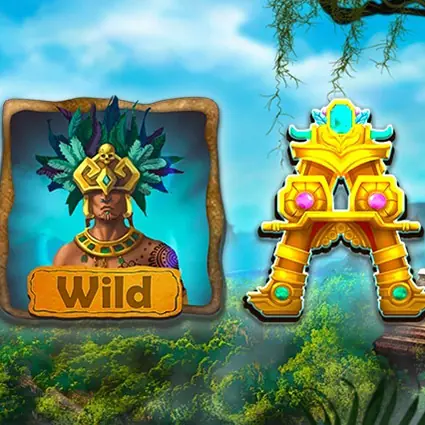
A useful test for whether a business game is worth funding is to ask what data comes out of it. A promotional slot mini-game that only prints a coupon is a marketing cost. The same mini-game that logs session length, product preference, opt-in email, and repeat visits becomes a data source that feeds CRM and future campaigns. Serious games follow the same logic: a compliance simulation that only reports pass or fail is worth less than one that logs decision paths, hesitation points, and second-attempt improvement. When Game-Ace scopes games for business, the analytics layer is defined before art and level design, because retrofitting event tracking after launch usually breaks pacing and forces re-QA.
Scoping a promotional microsite, a loyalty app, or a training simulation?
Where games for business deliver the clearest ROI
The strongest measured returns show up in three places: branded loyalty and re-engagement, top-of-funnel lead capture at events and on landing pages, and internal training that would otherwise need live instructors. Each has different budget expectations and different creative constraints, which is why we usually recommend picking one primary use case per project rather than trying to serve marketing and HR from the same build.
Branded loyalty tends to run on mobile or as a persistent WebGL experience tied to a login. Nike Run Club is the canonical mainstream example: streaks, badges, and guided runs turn a shoe brand into a habit. On the promotional side, McDonald's Monopoly is a physical-plus-digital example that has run since 1987 and returned in the UK in September 2024, still driving measurable traffic uplift. Trade show and event games sit on the opposite end of the scope curve: fast to build, disposable after the event, but expected to capture qualified leads within 60 to 120 seconds of play. Internal training games are the least visible externally but often have the highest per-user payback, because they replace instructor time and cut certification cycles. See our full-cycle game development service page for how scoping usually starts.
How to match a game type to a business goal
Not every business goal maps to the same game type. A lead-gen campaign for a fintech app has different pacing, art, and analytics needs than a compliance course for warehouse staff. The table below summarizes the pairings we see most often in Game-Ace briefs. It is not exhaustive, plenty of hybrid formats exist, but it is a fast filter when leadership is deciding whether to fund a Roblox activation, a WebGL microsite, or a native mobile companion. Budget ranges are indicative for a focused first release, not for multi-year live-ops.
| Game type | Business goal | Typical platform | Indicative budget |
|---|---|---|---|
| Branded mini-game | Lead capture, event activation | WebGL, mobile web | €15,000-€40,000 |
| Loyalty companion | Repeat visits, retention | iOS, Android | €60,000-€150,000 |
| Roblox brand experience | Reach Gen Z and Alpha | Roblox | €40,000-€120,000 |
| Serious training game | Compliance, onboarding, safety | WebGL, desktop, VR | €50,000-€200,000 |
| Immersive expo demo | Premium B2B storytelling | VR, AR, projected | €80,000-€250,000 |
Budgets shift once localization, live-ops, or regulated content is added. For example, an EU-wide loyalty program with GDPR-compliant analytics and three languages usually lands at the top of the range or above.
Marketing games: mechanics that actually convert
Effective marketing games use a small set of proven mechanics: scoring, timed challenges, personalization, and a low-friction reward. Complexity kills conversion at the top of the funnel. If a player cannot understand the goal in 10 seconds, most sessions end before the analytics event fires.
The reward is the design lever most brands underuse. Discount codes work, but escalating rewards (tier 1, tier 2, jackpot) drive more sessions per user. Personalization is the second lever. A game that adapts symbols or difficulty to a player's earlier answers feels custom without needing bespoke content. Chipotle's Burrito Builder on Roblox, launched in April 2022, used exactly this pattern, order-based mechanics that map to real menu behavior.
For direct measurement, the three metrics we usually build dashboards around are session length, opt-in rate, and share rate. Session length tells you if the mechanics work. Opt-in tells you if the reward is worth the friction. Share rate tells you if the concept is culturally sticky enough to earn organic reach, which is what separates a €30,000 campaign that pays back in a week from one that does not.
Regulated verticals, finance, health, alcohol, add a compliance layer that changes the reward system. Cash or product incentives may need age-gating, KYC, or regional lockouts before the first session.
Training and serious games for internal use
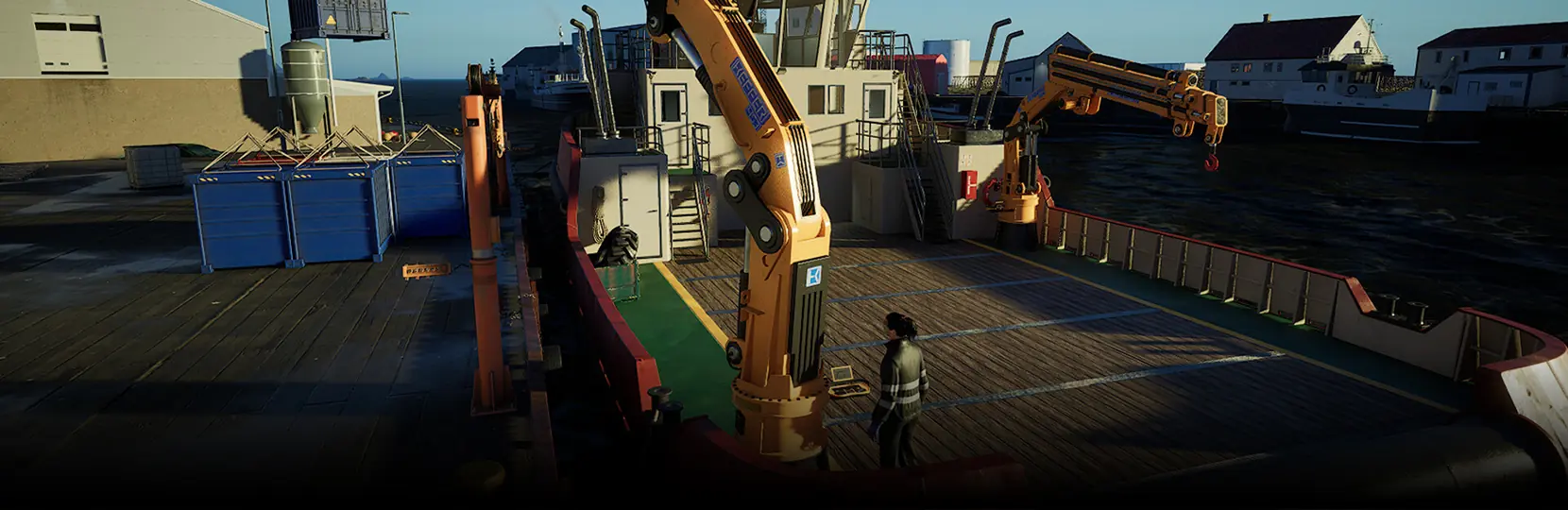
Serious games (the internal, training-oriented cousin of promotional games) are the quietest growth segment inside enterprise learning. They replace or supplement classroom sessions with scenario-based simulations that track decisions, not just completion. A well-scoped training game is usually 30 to 90 minutes of gameplay split across shorter sessions, with branching decision points and a reporting layer that HR or L&D can review. The largest cost item is not usually art; it is subject-matter expert time. A safety course for a logistics operator needs real procedures, real forklift models, real signage. A sales enablement game needs actual product objections and current pricing. Game-Ace typically embeds a producer with the client's SME team for the first four to six weeks to lock content before any implementation begins, because rework on a serious game after content lock is expensive. On the delivery side, WebGL is the default for desk-based training because it runs from a browser without installation and integrates with LMS platforms via SCORM or xAPI. VR is reserved for cases where spatial memory or physical procedure matters, surgical training, safety drills, equipment operation.
Case studies from the Game-Ace portfolio
One recent project shows how these principles land in production.
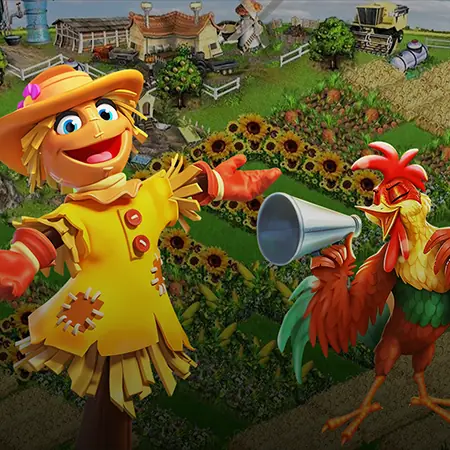
Welcome to Financial Garden, a branded financial literacy game by Game-Ace
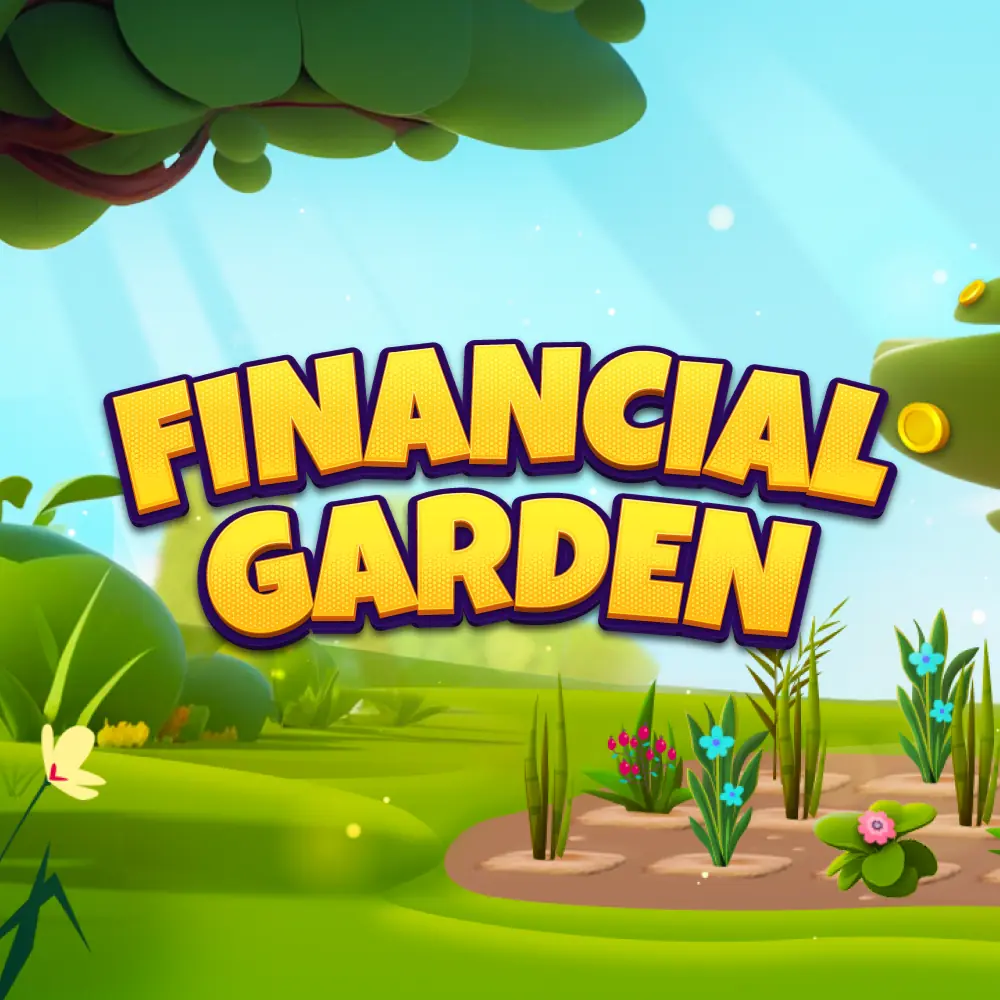
Financial Garden is a gamified quiz Game-Ace built for Pinnacle Financial Strategies to improve financial literacy among credit union and community bank members. Quiz-based progression and 2D gamified assets replace a static tool, optimized for both mobile and desktop, with insight data going back to the institution.
Choosing the right platform for a business game
Platform choice is usually driven by three questions: who is the audience, how long should the experience live, and how much creative control does the brand need. Roblox delivers reach into a Gen Z and Alpha audience of tens of millions of daily active users but comes with revenue share and platform policy constraints. WebGL runs anywhere with a browser, which is ideal for event microsites and campaign landing pages, and it avoids app store review cycles. Native mobile gives the strongest control over data, monetization, and long-term brand identity but demands ongoing store maintenance.
| Platform | Audience | Time-to-launch | Best use case |
|---|---|---|---|
| Mobile (iOS, Android) | Broad consumer, loyalty users | 4-9 months | Loyalty companions, branded utility |
| Roblox | Gen Z, Alpha, social players | 3-6 months | Brand activations, youth outreach |
| WebGL | Landing-page and event visitors | 6-14 weeks | Campaign mini-games, microsites |
| VR / AR | Premium B2B, expo audience | 4-8 months | Immersive demos, spatial training |
For a deeper comparison of engines and delivery models, see our Unity mobile game development service page and the Roblox game development trends piece.
Scoping, budgeting, and running games for business
Most business game projects follow a similar shape regardless of platform: discovery, prototype, production, live ops.
- Discovery: business goal, target metric, audience, and platform decision, usually 2 to 4 weeks.
- Prototype: playable vertical slice for stakeholder sign-off, 4 to 8 weeks.
- Production: art, engineering, analytics, QA, localization, 3 to 6 months for a focused scope.
- Soft launch: limited-audience release with instrumentation to validate KPIs.
- Live ops: content updates, event campaigns, and analytics-driven tuning after launch.
Budget planning should reserve at least 15 to 20 percent for post-launch tuning. Games for business almost never hit their conversion peak at launch; they hit it after two or three data-informed updates. Industry benchmarks on branded gaming consistently show that campaigns which ship an update within 30 days of launch retain meaningfully more users than those that ship no post-launch changes.
When to talk to Game-Ace about games for business
Game-Ace is a game development studio founded in 2005, with 120+ in-house specialists and 200+ delivered games across mobile, WebGL, Roblox, and VR. If games for business are on your roadmap, Game-Ace's custom game development studio handles full-cycle delivery, co-development, and team extension from a single team, with strict NDA and IP transfer as standard. Engagement usually starts with a discovery call, a business-metric definition, and a fixed-scope prototype before full production.
Further reading: WCAG accessibility guidance for interactive content is published by W3C, and current SCORM and xAPI specifications for LMS-integrated training games are maintained by ADL.
 How MetaHuman changes game character development
  Game development for startups: budget and MVP guide
  Engineering tower defense games from prototype to live service
  Idle game development: a full production guide
  Gamification in recruitment: what actually works