
Crash game development is one of the fastest-growing segments in online gambling. Unlike traditional slot titles, crash games give players an active role: cash out before the multiplier crashes or lose the bet. That simple mechanic drives faster rounds, higher engagement, and stronger replay value, making crash games a strategic priority for modern casino platforms.
For operators, startups, and investors exploring iGaming software development, understanding how crash games work is now a strategic priority. These products combine real-time gameplay, scalable backend systems, retention-focused design, and strong monetization potential in a single format. Success depends on more than visuals or RNG logic. Performance stability, fairness perception, and session pacing all directly influence long-term results.
At Game-Ace, we approach crash games as high-demand digital products built around player psychology, technical precision, and measurable business outcomes. In this guide, we explain what crash games are, how they work, why players are drawn to them, and which features help platforms stay competitive in a fast-moving iGaming market.
Need to build your own crash game?
Defining the Genre: What Are Crash Games?
To understand the pure, unfiltered essence of crash games, you must first strip away the high-fidelity 3D graphics, the booming, immersive soundscapes, and the complex gamified meta-layers that modern studios layer on top of them. When you remove the aesthetic dressing, you are left with something that is beautifully ruthless and mathematically elegant.
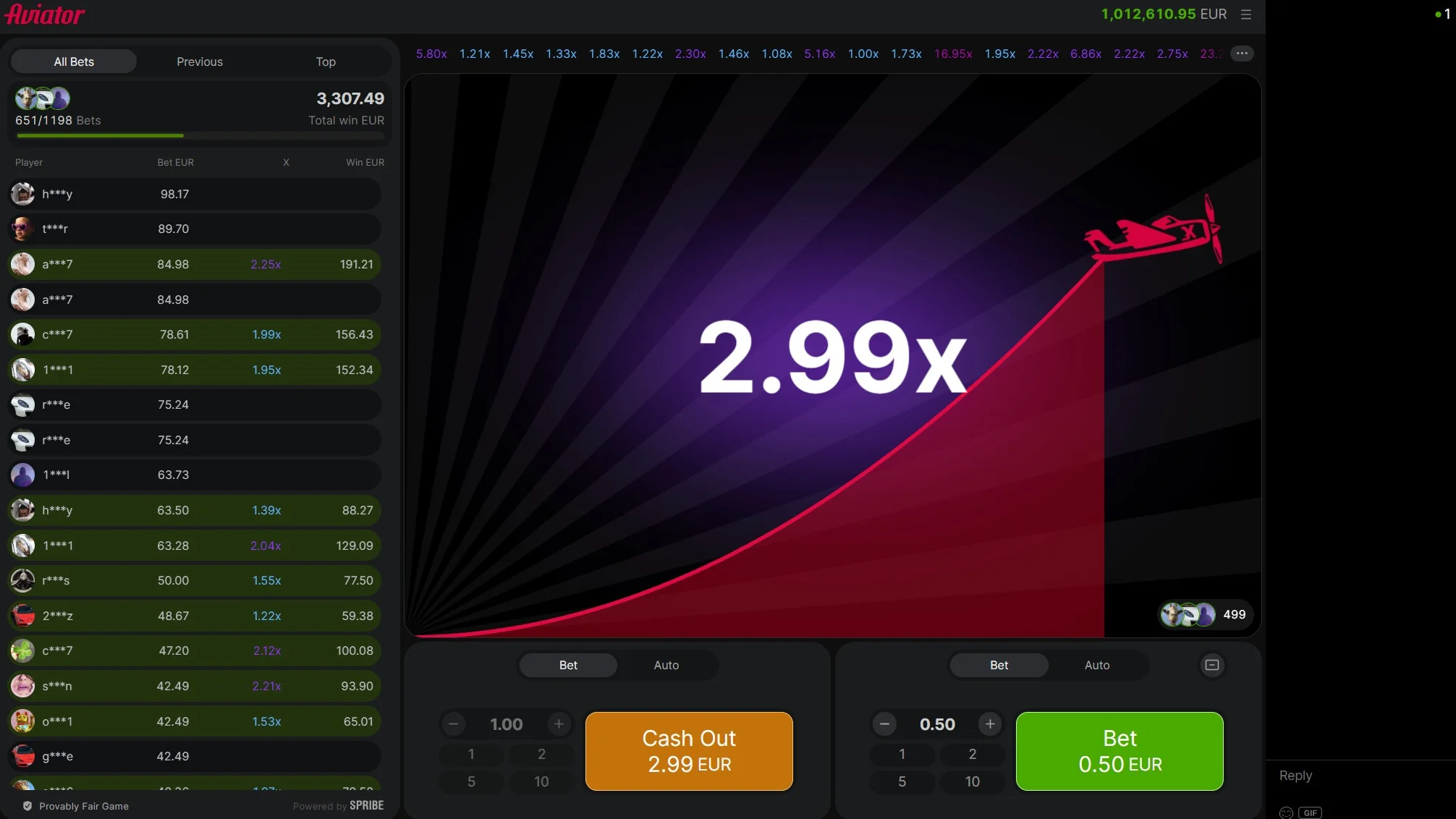
A standard round initiates. A visible number on the screen, the multiplier, starts at a baseline of 1.00x and begins to climb. This increase is often exponential. The player has one job and one job only: hit the cash-out button before that number randomly stops rising and crashes.
That is the entire, fundamental game loop. But within that incredibly brief, split-second decision-making window lies a masterclass in tension design and player psychology. If a player pulls the ripcord and cashes out too early, they secure a tiny, almost negligible profit. They are then forced to sit there, completely helpless, as the multiplier rockets to 50x, 100x, or even thousands of times their initial wager. The regret and the fear of missing out (FOMO) become palpable. On the flip side of that emotional coin, if the player gets greedy, holds on, and waits a fraction of a second too long, the system terminates the round. Their stake is instantly wiped out, and they are left with nothing but the immediate, burning urge to try again.
Traditional video slots determine the outcome the exact millisecond you hit the "spin" button. The spinning reels are just a theatrical animation designed to delay the reveal. Crash games flip this dynamic entirely on its head. The ultimate outcome is still dictated by a Random Number Generator (RNG), but the player actively shapes their own personal volatility curve. The profound feeling of agency, the illusion that your own reflexes and instincts are actively battling the machine, is the key factor that makes crash game mechanics so irresistible.
The Anatomy of a Crash Game Interface
To build one of these titles correctly from a production standpoint, a studio has to absolutely nail the user interface (UI) and the user experience (UX). It cannot feel clunky. It cannot have a single microsecond of input lag. When real money is tied directly to split-second human timing, the UX must be completely frictionless.
Here are the non-negotiable anatomical parts of a standard crash interface, which our studio always meticulously refines:
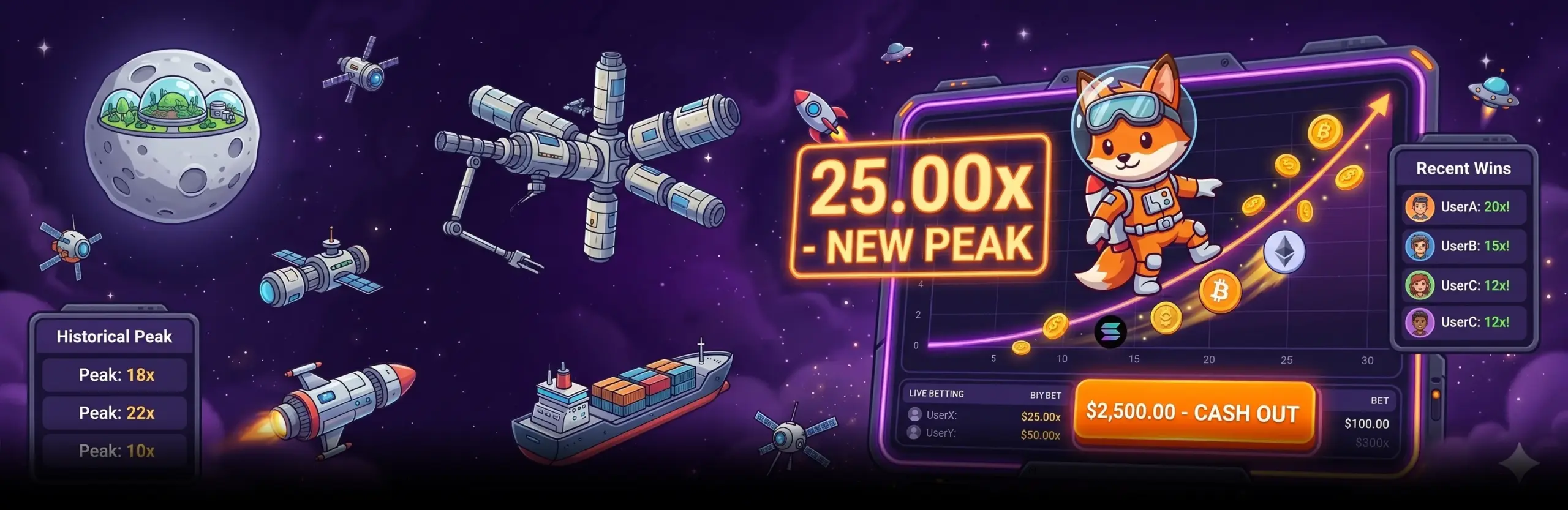
- The Trajectory Canvas: This is usually a simple X/Y axis. Time is the X-axis, and the escalating payout is the Y-axis. It gives immediate, universal context to the rising tension, allowing anyone, regardless of their gaming experience, to understand what is happening instantly.
- The Tension Object: The specific asset moving up the graph. Depending on the theme, it might be a minimalist neon line, a jet plane, a rocket ship, or a rising stock market chart. Its sole purpose is to visually communicate upward momentum and increasing risk.
- The Terminal Point: The crash itself. This is the primary antagonist of our game design. It is an invisible, mathematically generated wall. It might brutally kill the round at 1.01x, instantly destroying everyone’s bets, or it might let the game run for several tense minutes to a massive peak.
- The Eject Button: The manual cash-out trigger. From a UI perspective, it needs to be the largest, most visually distinct element on the entire screen. It is the player’s only weapon and their only means of interaction.
- The Multiplayer Ledger: This is arguably the most important meta-feature for long-term retention. It is a live, scrolling feed showing every other concurrent player in the lobby, how much they wagered, and the exact multiplier at which they cashed out.
Crash Games Evolution: From Crypto Origins to Modern iGaming
These highly engaging titles did not start their life in the heavily regulated boardrooms of massive casino operators. To understand their current trajectory, we must look at their origins, which were slightly wild and unregulated. The very first iteration of what we now confidently call a crash game surfaced back in 2014. It was built by a Canadian software developer named Eric Springer.
His original project was dubbed "MoneyPot." It was a direct, unfiltered reflection of the cryptocurrency zeitgeist at the time. MoneyPot used a bare-bones, almost aggressively simplistic graph explicitly intended to mirror the highly volatile, heart-attack-inducing price swings of early Bitcoin trading. The psychological hook was immediate and powerful: early crypto adopters were essentially betting on a simulated stock market graph, trying desperately to secure their digital coins before the "market" tanked.
Even in its absolute infancy, MoneyPot introduced competitive, community-driven features that would eventually become genre staples. For example, it featured a "last man standing" bonus pool, which actively rewarded the bravest, most risk-tolerant player who managed to hold on the longest before a crash occurred. This early gamification proved highly effective at driving deep engagement among its niche audience.
However, excellent game mechanics never remain niche for very long. The core format was simply too sticky and too profitable. Over time, the genre steadily bled out of crypto-exclusive, underground forums and landed squarely in the main lobbies of massive, mainstream fiat casinos. Today, we are seeing these titles heavily promoted across platforms worldwide, including highly trafficked UK casinos that operate outside the traditional GamStop network. Because the audience has broadened so massively, the presentation, production value, and game design had to evolve accordingly.
We are no longer just looking at jagged, pixelated lines on a black background. The production values expected by modern operators have skyrocketed. Game development studios are now implementing high-fidelity 3D graphics, rich, story-driven narratives, and gamified progression systems that rival those of mid-core mobile games.
Under the Hood: Technical Realities and Crash Game Mechanics
Building a compelling, commercially viable crash game is a remarkably difficult technical endeavor. From the outside, looking at a player’s screen, it may appear to be a simple visual animation tied to a random number generator. Many studios start with a proof of concept to validate gameplay mechanics before moving into full-scale production. However, in practice, it is a highly precise operation that depends on server synchronization, rigorous economic balancing, and strict latency management.
Let’s examine the mathematical reality first. The "gambler’s fallacy" is by far the biggest mental hurdle that players face, and it is something studios have to aggressively and carefully account for in their backend logic. Players look at the rising line on a graph and desperately want to see patterns where none exist. If the game crashes early at a dismal 1.20x for five consecutive rounds, the human brain practically screams that a massive 10x or 50x round is "due" to happen next.
This is, of course, complete mathematical nonsense. Every single round in a properly developed crash game is a fully independent event. The RNG has absolutely no memory. It does not care what happened ten seconds ago, nor does it care how much money is currently on the table. The strict mathematical probability of the game crashing at 1.01x is completely identical whether the very last round paid out 1000x or zero.
Communicating this strict fairness to the player base is paramount. This is exactly why many top-tier games use "provably fair" cryptographic systems, allowing tech-savvy players to manually verify the seed hashes for every round to ensure the studio hasn’t tampered with the outcome.
Furthermore, development teams must carefully balance the financial liabilities for the casino operator. If you design a game that can theoretically hit a 100,000x multiplier, and a high-roller drops a massive wager on the table, you are looking at a potential payout that could severely damage or even bankrupt a smaller casino platform. Therefore, while the multiplier might visually appear to be infinite, incredibly strict, hard-coded caps on maximum payouts are always enforced at the server level.
The Core Technical Pillars of Crash Game Development
| Technical Requirement | Studio Execution Strategy | Operational Benefit |
| Zero-Latency Inputs | Highly optimized WebSocket connections. | Ensures players are never cheated by server lag when cashing out. |
| Provably Fair RNG | Cryptographic hashing of server/client seeds. | Builds absolute trust with a highly skeptical modern player base. |
| Economy Balancing | Hard-coded maximum payout limits (e.g., max win $10,000). | Protects the operator from catastrophic variance and financial ruin. |
| Scalable Infrastructure | Cloud-based, dynamically scaling multiplayer lobbies. | Allows thousands of users to view the same graph simultaneously. Requires strong multiplayer game development expertise. |
Want a stable crash game with provably fair logic and scalable backend?
Pushing the Boundaries: Hybrid Game Design
As any specific gaming genre matures, development studios naturally start looking for innovative ways to mash it up with other proven, lucrative formats. The goal is to capture a wider range of audience segments that might be intimidated by the raw, fast-paced nature of a standard crash graph. A perfect, textbook example of this hybridization is examining how developers are currently blending crash logic with traditional slot machine mechanics. This trend is driving demand for advanced social gaming casino development built around hybrid mechanics.
Case Study: Bad Bass Cash Towers
Let’s look closely at a title like Bad Bass Cash Towers by Indigo Magic. This game is a fascinating, masterfully executed teardown of traditional mechanics for any game designer. The studio made the bold decision to ditch the standard, universally recognized rising graph entirely. In its place, they built a highly volatile single-reel slot format that functionally acts as a crash game.
Instead of watching a single line ascend, the player is presented with three distinct, vertical cash towers. The mechanics of progression and failure are handled very differently here, demonstrating the deep flexibility of the genre:
- The Progression Driver: Players must actively spin the single reel to build the towers step by step. A specific symbol, the Golden Bass Wild, acts as a powerful booster that accelerates progress across the towers.
- The Antagonist: Instead of an invisible mathematical crash generated quietly by the server, the "crash" in this game is physicalized as a specific, highly visible symbol on the reel – the Dog symbol. If the Dog lands during a spin, the game "crashes" and everything currently accumulated on the towers resets back to zero.
- The Ultimate Goal: The game provides a tangible, fixed objective. Maxing out all three towers unlocks a massive 500x bonus, which heavily contributes to the game’s theoretical maximum win of 900x.
- The Math Model: The underlying engine runs incredibly hot. It features extremely high volatility and a very generous default Return to Player (RTP) of 97.57%. The betting limits are designed to capture everyone, ranging from a casual 0.05 all the way up to high-roller territory at 200.
This specific design brilliantly masks the inherent harshness and anxiety of a standard crash game behind the familiar, comfortable, and widely loved aesthetics of a casual fishing-themed slot.
The Live Dealer Revolution: Cash or Crash
If mixing crash mechanics with traditional slots was the logical first step in the genre’s evolution, the second step was bringing the concept directly into the highly lucrative live dealer studio environment. Evolution Gaming accomplished this brilliantly with their flagship title, Cash or Crash. From a pure production and game design standpoint, it is a phenomenal piece of engineering.
They took the normally solitary, hyper-fast-paced nature of the crash genre and deliberately slowed it down. They transformed a ten-second loop into a communal, highly social game show. Players are invited to virtually board an augmented-reality blimp that flies high above a sprawling metropolis. The objective is to slowly climb a physical, 20-step prize ladder. The maximum potential payout is a staggering 50,000x the initial bet.
But the true genius of Cash or Crash lies entirely in how they handle the RNG and the visual representation of failure. There is no digital graph. There are no slot reels. The "crash" is dictated entirely by a physical, lottery-style ball drawing machine located in the center of the live studio.
This physicalization completely changes the emotional vibe and the player’s relationship with the game:
- Green Balls (Progression): These are the player’s allies. Every single time a green ball is drawn from the machine, the blimp is propelled one step higher up the lucrative prize ladder.
- Red Balls (The Crash): This is the physical manifestation of the enemy. If a red ball gets sucked up the tube, the blimp visually bursts, the round instantly ends, and all uncashed wagers are destroyed.
- The Golden Ball (Defense): This is the holy grail of this specific game’s design – a tangible defensive item. Drawing the gold ball gives the player a one-time, unbreakable shield that actively protects them from the next red ball drawn.
The brilliant introduction of the Golden Ball fundamentally alters the player’s internal risk assessment. Suddenly, you have a free pass. It allows the player to push much deeper into high-multiplier, highly volatile territory without the paralyzing, constant fear of a sudden loss. It is a masterstroke in pacing, tension management, and psychological relief.
Structural Comparison of Crash Game Formats
| Feature Set | Classic Format (e.g., Aviator) | Hybrid Slot Format (e.g., Cash Towers) | Live Dealer Format (e.g., Cash or Crash) |
| Game Pacing | Hyper-fast, rounds last mere seconds. | Methodical, spin-by-spin active accumulation. | Slow-burn, highly social, live host-driven. |
| Crash Trigger Mechanism | Invisible digital threshold (Server RNG). | Hostile, visible reel symbol (The Dog). | Physical, drawn item (The Red Ball). |
| Visual Core Representation | Ascending X/Y multiplier curve on a graph. | Three discrete, vertical progression ladders. | 20-step augmented reality studio ladder. |
| Player Defense Mechanics | None. Pure human reaction time required. | None. Risk accumulates heavily with each spin. | The Golden Ball (one-time breakable shield). |
Need a unique crash game concept instead of another Aviator clone?
Advanced Betting Strategies and Player Retention
From a studio perspective, if you force a human player to manually click a bright button every 15 seconds for 2 straight hours, they will eventually experience severe cognitive fatigue. They will make a mistake, get deeply frustrated by a lag spike, and immediately close the application. To combat physical and mental burnout and drive meaningful long-term retention, developers must give players robust, built-in tools to automate their strategies.
We do not just want them playing a raw reaction game; we want them building systems. When a player successfully builds a betting strategy, they become deeply invested in its outcome, not just the flashing lights and sounds on the screen.
Here are the critical, advanced betting tools we analyze and integrate to facilitate deep strategic play:
- The Auto Cash-Out Threshold: A player strictly tells the system, "No matter what happens on the screen, eject my bet exactly at 2.50x." This removes the emotional panic of manual clicks and guarantees perfect execution, regardless of human error or sudden internet latency.
- Continuous Auto-Betting: Automatically re-wagering the exact same amount every single round, so the player doesn’t accidentally miss a massive flight while looking away to answer a text message.
- Stop-Loss Protocols: This is a vital, non-negotiable responsible gambling feature. The system automatically stops betting if the player’s total bankroll drops by a predetermined amount, preventing emotional tilt and reckless chasing of losses.
- Stop-Win Protocols: The exact opposite of the above. It strictly halts the betting session when a specific profit target is hit, actively encouraging the player to walk away from the table a winner.
- The Split Bet Mechanic: Perhaps the most brilliant mechanical addition to the genre. It allows a single player to place two completely separate, distinct wagers on the exact same round.
Let’s dig deeper into that split bet mechanic, because it fundamentally changes the psychology of the entire session. A smart, disciplined player will use the split bet to hedge their risk. For example, they might put $10 on "Bet A" and set the strict auto cash-out to 1.50x. At the same time, they put another $5 on "Bet B" and left the cash-out entirely manual.
If the game successfully clears 1.50x, Bet A automatically cashes out for $15, completely covering the total cost of the entire round ($10 + $5). At that exact, euphoric moment, Bet B becomes a complete "free roll." The player can sit back in their chair, completely relaxed, and watch Bet B climb to 10x, 20x, or 50x, knowing with absolute certainty that they literally cannot lose money on that specific round. It provides the massive dopamine hit of extreme risk with absolutely none of the actual financial anxiety.
The Psychology of the Climb: Why Are Crash Games So Popular?
Aviator crash game
We can debate RTP models, backend architecture, and UI decisions endlessly, but the global rise of crash games is not driven by technology alone. The real driver sits much deeper. These systems are built around how the brain reacts to risk, uncertainty, and control.
At a mechanical level, crash games combine several tightly connected psychological triggers. None of them are new on their own, but in this format they operate together, without interruption, across every round.
The Risk-Reward Loop and Variable Reinforcement
A crash game does not present a fixed outcome. It builds pressure step by step, forcing a decision under uncertainty. That process is driven by a few consistent factors:
-
A rising multiplier that never stabilizes.
The longer it runs, the higher the reward, but the closer the system gets to failure.
-
A constant sense of player control.
The player decides when to exit, even though the underlying outcome is still determined by RNG.
-
Time pressure that cannot be paused.
Every fraction of a second matters. Waiting increases profit potential, but reduces the chance of keeping it.
When the player finally cashes out at the right moment, the system resolves that pressure instantly. The tension disappears in a single click, and that transition from risk to safety is what reinforces the behavior.
At the same time, the reward structure never becomes predictable. Instead, it follows a variable pattern:
- One round crashes at 1.02x
- The next stretches beyond 10x
- Another ends almost immediately
No stable rhythm forms. The brain keeps trying to detect one, fails, and stays engaged. That continuous mismatch between expectation and outcome keeps attention locked on the next round.
The Devastating Power of the Near Miss
Among all engagement drivers, the near miss stands out as the most effective. It does not reward the player financially, but it still triggers a strong response.
Consider a simple scenario. The player targets a 5.0x exit point. The multiplier climbs:
- 3.0x → 4.0x → 4.8x → 4.9x → crash at 4.95x
From a purely financial perspective, this is identical to losing at 1.01x. The outcome is the same. The reaction is not.
The near miss changes perception in a very specific way:
- It creates the feeling that the timing was almost correct
- It suggests that the system can be “read” or predicted
- It pushes the player to try again immediately, with a small adjustment
Instead of ending the session, the loss extends it.
When this effect combines with visible multiplayer activity, the impact becomes stronger. Players see others cashing out at nearby values, which reinforces the idea that success was within reach. That perception drives repetition far more effectively than a standard win-loss cycle.
Over time, these elements build a shared experience around the game:
- Wins are visible and public
- Losses are immediate and frequent
- Outcomes are unpredictable but feel actionable
That combination transforms a simple mechanic into a persistent engagement loop.
Concluding Thoughts on the Architecture of Crash Games
As an experienced custom game development company actively working in this space, we can confidently say that crash games are not a passing fad. They represent a fundamental, structural evolution of casino gaming. They have successfully bridged the massive, lucrative gap between the passive, luck-based entertainment of traditional slots and the high-agency, skill-adjacent demands of modern interactive media.
For developers and operators, the core challenge moving forward is not simply copying the rising graph and changing its color. The challenge is finding brand-new, innovative ways to contextualize that core psychological loop. We will undoubtedly see deeper, character-driven narratives, vastly more complex hybrid mathematical models, and even further integration into massive live studio environments. But the underlying bedrock will always remain exactly the same: that agonizing, beautiful fraction of a second where a human player has to decide if they are brave enough to hold on just a little bit longer.
At Game-Ace, we understand implicitly that building these highly profitable systems requires vastly more than just writing clean code; it requires a deep, fundamental respect for the psychology of the player and the rigorous mathematics of the economy. If your operation is ready to explore the technical realities and creative hurdles of bringing a high-performance title to a crowded market, the conversation begins here.
Game Development for Startups: How to Build a Game with a Small Budget in 2026
Engineering the Next Generation of Tower Defense Games
How to Turn Idle Game Development into a Scalable, Long-Term Revenue Product
Key Trends Shaping Gamification in Recruitment for 2026 and Beyond
How to Create Crypto Casino Games the Right Way