
A blockchain game is a game where at least one core piece, usually player-owned items, in-game currency, or account state, lives on a public blockchain rather than in a private operator database. That single change lets players hold assets in their own wallet, trade them on open marketplaces, and carry ownership across services that support the same chain. Everything else about the game, genre, engine, art, gameplay loop, can look identical to a regular game.
If you are scoping a Web3 title or evaluating whether a blockchain layer fits your game, this guide covers the definition, the moving parts, the current chain landscape, mobile store limits, common criticisms, and when a blockchain layer helps and when it does not. For scoping, talk to Game-Ace's blockchain game development team.
Core definition of a blockchain game
A blockchain game keeps at least one meaningful game state on a public chain. The most common on-chain piece is player-owned items represented as NFTs. The second most common is an in-game currency issued as a fungible token. Some titles also record match results, achievements, or governance votes on-chain, but that is less standard. The rest of the game, matchmaking servers, art assets, physics, animation, session logic, still runs on regular game infrastructure.
The label "blockchain game" is not a genre. A blockchain game can be a card game, a slot, an idle RPG, a strategy title, an FPS, or a mobile puzzle. The blockchain part is a design and technical decision about who owns what and where value is stored.
On-chain vs off-chain assets
Not every asset in a blockchain game lives on-chain. Full on-chain storage is slow and expensive, so most projects put only ownership records and a metadata pointer on the chain. The actual image, model, or animation lives on IPFS, Arweave, or a regular CDN.
A typical split looks like this. On-chain: token IDs, ownership addresses, trade history, contract logic. Off-chain: art files, sound, animation, matchmaking, session state, chat. This split keeps gameplay responsive because per-frame or per-second updates never touch the chain. Chain writes usually happen at meaningful moments, a trade, a mint, a reward claim.
NFT items: ERC-721 and ERC-1155
On Ethereum-family chains, player items are usually minted using one of two standards. ERC-721 is the unique-item standard: one token, one owner, one item. It fits characters, land plots, and one-of-a-kind cosmetics. ERC-1155 is the multi-token standard: one contract can hold many item types with per-type supply, so it fits stackable items like potions, ammo, or shared cosmetics.
Other chains use their own standards. Solana uses the Metaplex NFT standard. Flow uses Cadence resources. Immutable, Polygon, Base, and other Ethereum L2s inherit the ERC standards. For a studio, the practical impact of picking a chain is mostly about wallet UX, fee level, and available tooling rather than the standard itself. Full ERC-721 and ERC-1155 documentation is available in the Immutable developer docs.
Player wallets
A wallet holds the private key that proves ownership of on-chain items. Every blockchain game needs a wallet layer. The choice of wallet layer drives player UX more than any other decision.
- Crypto-native wallets (MetaMask, Phantom, Rabby): familiar to Web3 users, unfamiliar to mainstream players.
- Email or social login wallets (Sequence, Magic, Web3Auth): hide seed phrases behind familiar sign-in.
- Custodial in-app wallets: operator holds keys, player never sees a seed phrase.
- Passkey and MPC wallets: split keys across devices, avoiding single seed phrase risk.
For a game aimed at mainstream players, seedless onboarding is close to a requirement. Projects that force MetaMask install as the first step lose most of the mainstream audience at the wallet screen.
Marketplaces
A blockchain game usually plugs into at least one marketplace where players buy, sell, and trade items. Marketplaces are one of the differences from a regular game, where trades are either impossible or restricted to the operator's own store.
Marketplaces come in three flavours. First, an in-game marketplace built by the studio, full control over fees, listings, and moderation. Second, a chain-native marketplace (Immutable Marketplace, Magic Eden, OpenSea) that lists any token on the chain, whether the studio wants it there or not. Third, aggregators that route orders across multiple venues. Most games launch with an in-game marketplace and accept that chain-native venues will also list their items.
Tokenomics basics
A blockchain game with a currency needs a tokenomics design covering supply, sinks, sources, and distribution. Supply defines the maximum number of tokens ever issued. Sources define how new tokens enter circulation, mining, rewards, unlock schedules. Sinks define how tokens leave circulation, burns, fees, item crafts, upgrades.
Bad tokenomics is the most common failure mode. If sources outpace sinks, token value falls and the reward loop collapses. If sinks are too strong, players quit because progression feels punishing. A workable design ties token issuance to real gameplay effort, uses meaningful sinks tied to actual game value, and avoids treating the token as speculative fuel. Design work usually starts with the same specialists who scope a game economy in a traditional free-to-play title.
Play-and-own vs play-to-earn
The 2021 headlines were dominated by play-to-earn, where players earned tokens with cash-out value for time invested. The model collapsed when token prices fell and reward emissions outpaced real demand. Since 2024, most surviving projects have shifted to a play-and-own frame instead.
Play-and-own drops the direct earning promise. Players own their items and can sell them if they want, but the pitch is ownership and portability, not income. The design goal is that a player who never sells anything still enjoys the game as a game. Anyone who does sell is transferring value inside the ecosystem rather than extracting it. This model is closer to how digital collectibles work in the wider culture and is easier to sustain without token-price manipulation.
Live examples across chains
Blockchain games ship across several chains. A short current-state snapshot helps map the space.
- Immutable: zkEVM mainnet launched 2024, hosts Guild of Guardians, Illuvium, and other studios via SDK.
- Ronin: Sky Mavis sidechain launched 2021, hosts Axie Infinity and Pixels among others.
- Solana: hosts Star Atlas, Aurory, and various casual and PvP titles.
- Polygon: long-running Ethereum L2 with a large gaming ecosystem including Aavegotchi and Zed Run.
- Base: Coinbase L2 launched mainnet 2023, hosting several on-chain games and social experiences.
Aggregate wallet and game traction data is published by DappRadar and is the standard reference for confirming whether a specific title still has real users.
Current mobile store policies
Mobile distribution is one of the harder parts of shipping a blockchain game. Apple and Google both allow blockchain apps but restrict how tokens and NFTs can be monetised inside the app.
Apple App Store guideline 3.1.5(a) allows apps to display NFTs, but any unlock or content purchase driven by an NFT still has to go through in-app purchase where the store takes its standard fee. Google Play allows blockchain apps and NFT collectibles with clear disclosure, restricts real-money gambling in most regions, and requires that any regulated financial product follow local securities law. Both stores restrict apps that promise or imply financial returns from token holdings.
The practical takeaway: many studios ship the game on mobile and route marketplace, wallet, or high-value trades to a web companion so store rules do not block core flows. A few operate outside app stores through direct APK or web builds.
Criticism and sustainability
Blockchain gaming has real criticism. The 2021 boom saw a wave of projects that raised token capital, delivered shallow gameplay, and quietly disappeared. The pattern is common enough to have a name: rug pulls, where founders exit with treasury funds or team-allocated tokens.
Beyond outright fraud, market fatigue is a legitimate concern. Casual players who tried early Web3 titles often left with a poor impression of confusing wallets, high fees, and gameplay tuned around token emissions rather than fun. Studios entering the space today are working against that reputation. Sustainability arguments about chain energy use are largely resolved on the current gaming-focused chains, most of which run proof-of-stake or L2 rollups rather than proof-of-work.
Who benefits from blockchain games
Blockchain fits some game types much better than others.
Games with meaningful player-owned items and active secondary markets, trading card games, collectible sports games, land or vehicle-based games, some strategy RPGs, benefit most. A blockchain layer gives players real ownership and lets the studio capture a fee on every resale rather than only the primary sale.
Games with strong player identity and cross-title reuse potential, persistent avatars, cosmetics that carry between titles, also benefit, because an on-chain identity can move between compatible services. Live-service titles with a mature economy and healthy sinks can add a chain layer without breaking the core loop.
When not to use blockchain
Not every game needs a chain layer. A single-player narrative game, a competitive shooter with mostly cosmetic economy, a hyper-casual mobile puzzle, or a tightly scripted mobile RPG usually gains nothing from an on-chain layer and inherits real cost: wallet UX friction, store-policy work, marketplace moderation, and compliance overhead.
A useful test: if removing the token or NFT layer would not damage the core gameplay experience, the blockchain layer is probably a distraction. If the game only exists because ownership and trade are core to the loop, the layer earns its cost. A scoping call with a game production team usually resolves this before design work starts.
Traditional game vs blockchain game
The differences between a traditional game and a blockchain game are concentrated in five areas.
| Dimension | Traditional game | Blockchain game |
|---|---|---|
| Item ownership | Operator database, revocable at any time | Player wallet, verifiable on-chain, portable |
| Secondary marketplace | Usually blocked or operator-only | Open marketplaces, chain-native and in-game |
| Publishing and distribution | App stores, PC storefronts, console storefronts | App stores plus web plus wallet-based direct install |
| Revenue split | Primary sales and IAP, no resale fee | Primary sales plus a fee on every secondary trade |
| IP and rights | Fully controlled by publisher | Split: publisher keeps IP, holder keeps individual token rights |
These five differences drive most of the extra scoping work on a blockchain game project.
Blockchain and casino-adjacent projects from the Game-Ace portfolio
One case shows the range of blockchain work Game-Ace has delivered.
Welcome to Nomadland, an NFT tactics RPG by Game-Ace
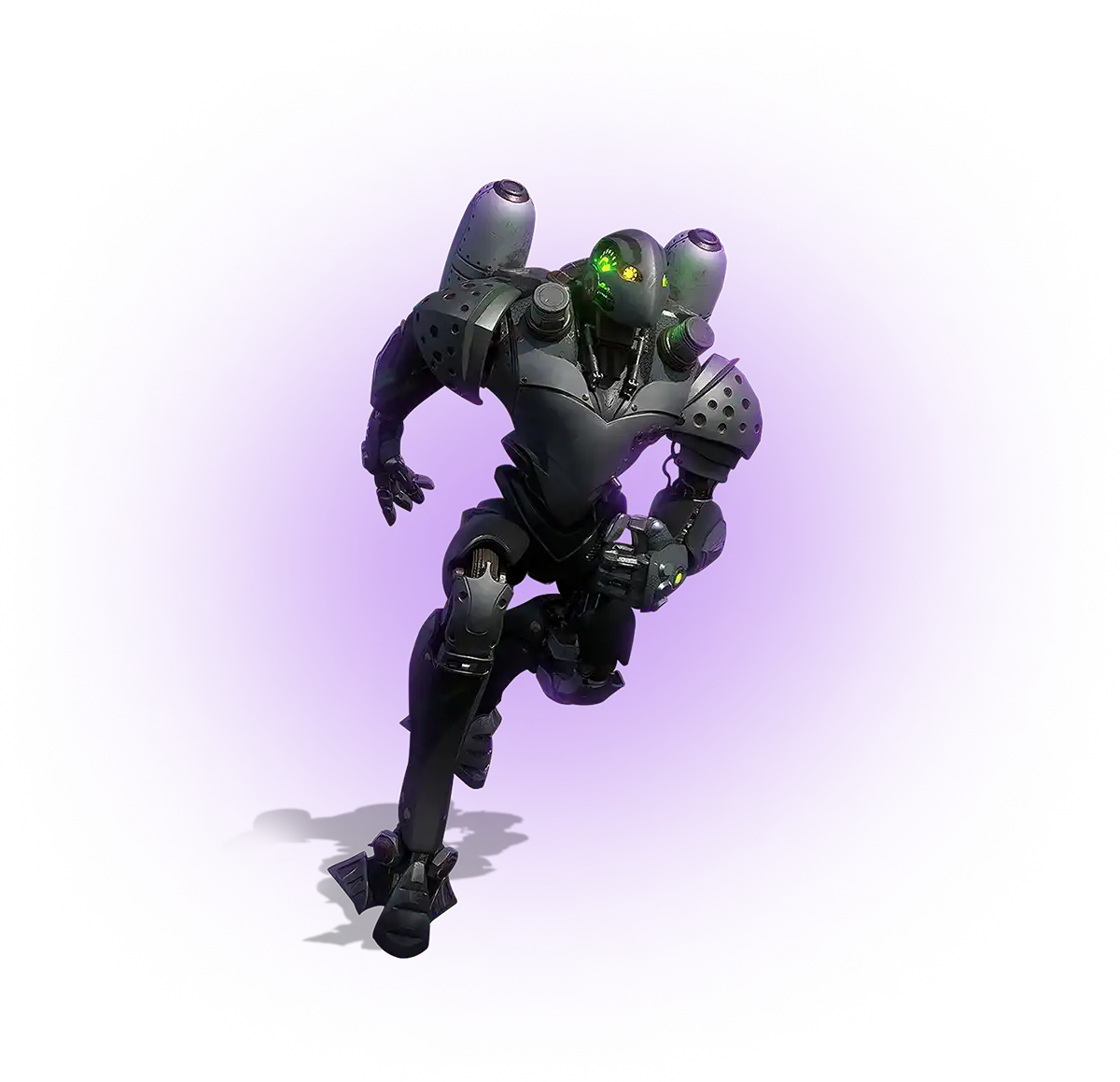
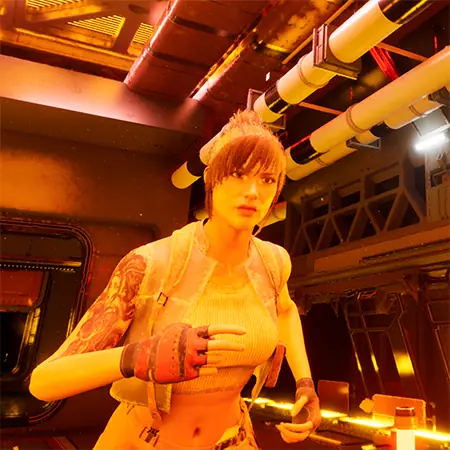
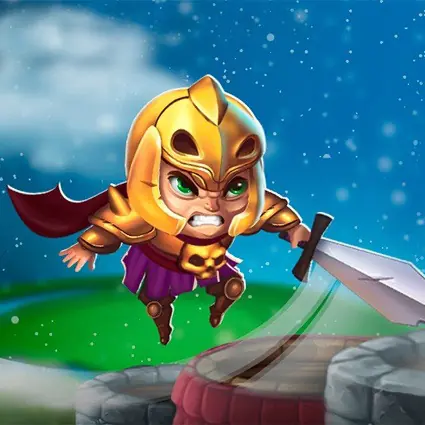
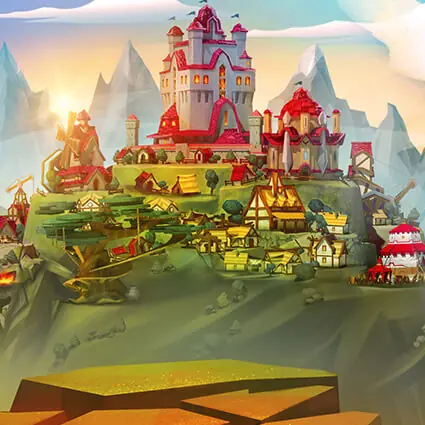
Nomadland is a turn-based tactics and action RPG on Unreal Engine 4 where every weapon, creature, and armor piece is an NFT that players earn in PvE and PvP and trade on a marketplace. Game-Ace kept the play-to-earn layer supplementary to the core loop rather than the reason the game exists.
Related reading and next steps for blockchain game teams
If you are planning a blockchain game project, these related resources cover development, technology choices, vendors, and delivery:
- How to make a blockchain game, a step-by-step production guide.
- What is Web3 gaming, an overview of the broader technology.
- Blockchain gaming companies, a vendor comparison.
- NFT game development, services for NFT-specific project scope.
- Full-cycle game development, support from concept through release.
When to talk to Game-Ace about blockchain games
Game-Ace has delivered 200+ games since 2005 with a 120+ specialist in-house team, including Web3 titles across NFT tactics RPG, crypto slot, and marketplace-integrated formats. If a blockchain game is on the roadmap, Game-Ace's custom game development studio covers full-cycle delivery, co-development, and team extension from a single team.
If a blockchain game project is on the roadmap, browse the blockchain game development portfolio.
 Top blockchain gaming companies you should know
  How to make a blockchain game: a practical guide