
Back to top

How to Turn Idle Game Development into a Scalable, Long-Term Revenue Product

January 22, 2026

Idle games sit at a very specific intersection of player behavior, monetization logic, and long-term product planning. Many teams underestimate that complexity at first. On the surface, progress looks slow, and systems appear simple. In practice, every timer, multiplier, and upgrade curve must work together over months, not hours. That reality explains why casual game development often fails when approached with short-term thinking.

From our experience, idle titles succeed when strategy comes before production. Clear economic rules, predictable growth pacing, and transparent rewards keep players returning without pressure. At the same time, your organization must plan for scale from day one. Server logic, save protection, analytics hooks, and content expansion paths cannot remain afterthoughts. Each decision made early shapes retention, revenue, and operational cost later.

We also see many founders treat idle projects as side experiments. That mindset limits results. Casual game development demands the same discipline as any live digital product, including roadmap control, performance tracking, and post-launch support. When a team truly understands why each idle system exists and how it affects players over weeks and months, the difference becomes obvious. Decisions stop feeling rushed or defensive. Let's dive in and find out more!

Why Idle Game Development Keeps Attracting Serious Investment

Global idle games market

Source

Idle games draw attention because they behave like long-running digital products rather than short-lived releases. Revenue grows through steady engagement instead of launch spikes, which reduces forecasting risk. Teams can test ideas quickly, observe results, and then adjust without disrupting the entire product.

From our work, investors value that control. Predictable performance, manageable production costs, and long content lifecycles create confidence. Another aspect becomes clear once a game moves beyond its initial release. Idle titles usually carry over to new regions and platforms without major rework. Teams avoid rebuilding core systems, which makes planning expansion more practical and keeps ongoing support predictable rather than reactive.

Player Behavior Patterns That Favor Idle Mechanics

Idle games fit naturally into modern usage habits. Players return often but stay briefly, which changes how success looks. Engagement depends less on session length and more on consistency. Well-designed idle systems respect that rhythm.

The main patterns appear repeatedly in successful projects:

  • Consistency. Players return because progress continues even when they are away.
  • Predictability. Rewards arrive on clear schedules, which reduces frustration.
  • Ownership. Players feel responsible for growth decisions, not forced actions.

Another advantage involves early validation. Teams often recognize familiar patterns once they start testing idle mechanics. The same thinking used in how to make a game demo applies here as well. A small, rough build already shows where progress feels slow, rewards confuse players, or growth stalls too early.

Feedback comes quickly because behavior is easy to observe. Players either return on schedule or they do not. Over time, people stick with games that feel consistent and fair rather than surprising.

Market Longevity and Revenue Stability of Idle Titles

Idle games often stay relevant longer than many other genres. Content keeps its value over time, and progression systems let teams grow the experience gradually without asking players to restart their progress. That structure supports multi-year operation with controlled updates.

Revenue stability usually comes from balance, not volume:

  1. Duration. Long lifespans reduce pressure to recover costs immediately.
  2. Adaptability. Systems accept new features without redesigning the core.
  3. Retention. Returning players sustain income more reliably than acquisition bursts.

Narrative game design still matters, even when used with restraint. Simple themes, familiar characters, or settings that change over time help players connect to progress on a level beyond numbers alone.

Story elements stay in the background and never take control away from mechanics, yet they provide meaning and continuity. When pacing, structure, and theme work together, idle titles stay relevant long after release and continue to generate stable revenue.

What Defines Idle Game Development Beyond Simple Gameplay

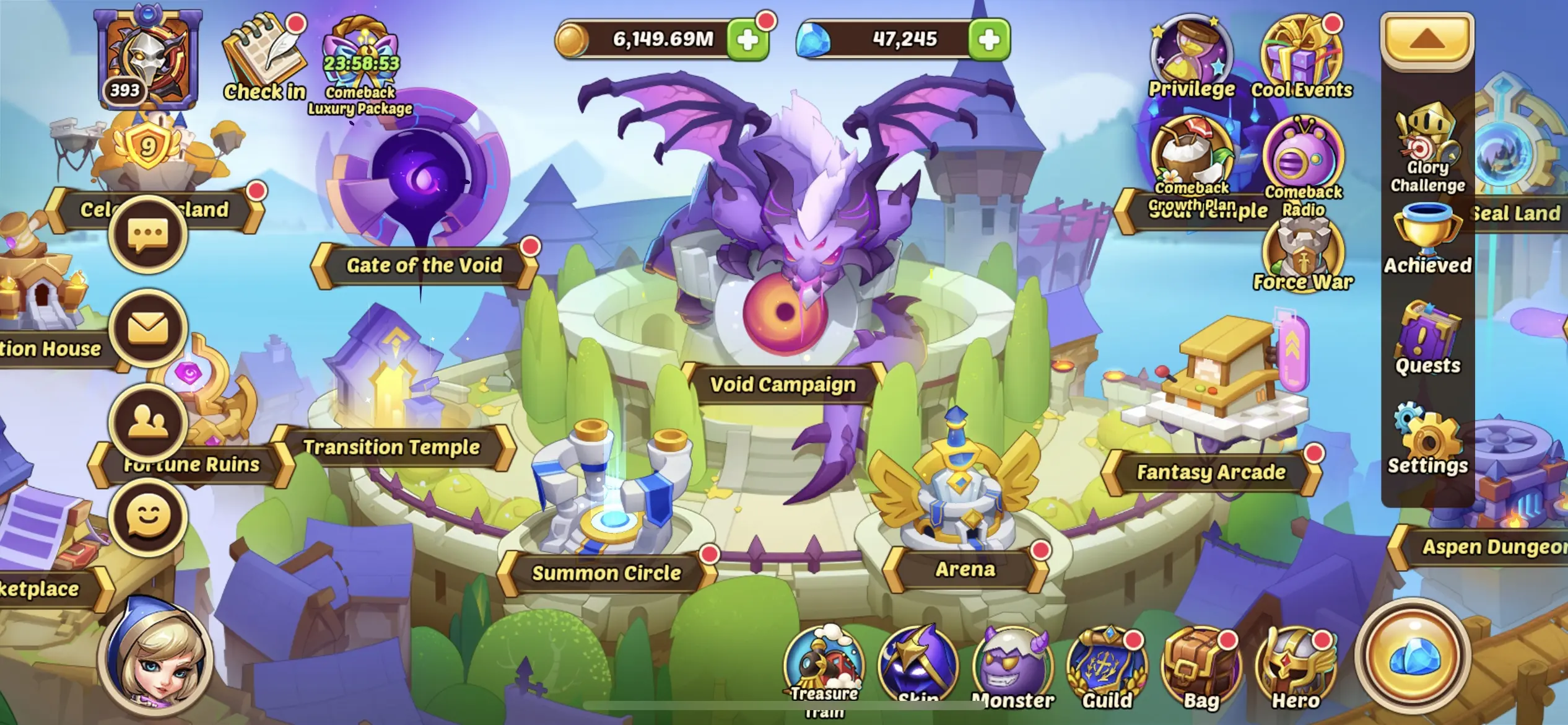
Idle Heroes

Idle Heroes

Idle game development earns its reputation for simplicity only at a glance. Once players interact with the systems, the design quality becomes obvious quickly. Progress either feels coherent or it does not. Logical rewards prevent confusion and keep players grounded.

Well-designed mechanics allow growth to happen naturally without demanding constant focus. Steady progress outweighs flashy gimmicks in any professional setting. Developers who treat these systems as long-term products stay ahead of expectations instead of just reacting to chaos.

Core Progression Loops That Drive Retention

In games for business, progression loops form the backbone of any idle game. A player should always know why progress happens and what affects it. When that clarity disappears, interest follows. A good loop creates momentum without pressure. Action leads to progress, progress unlocks choice, and choice reshapes the next cycle.

Effective loops usually rely on a few grounded principles:

  • Visibility. Progress remains easy to read at a glance.
  • Consistency. Results align with player expectations every time they return.
  • Meaning. Upgrades change outcomes in ways players can anticipate.

Problems tend to surface early. Disconnecting rewards, stalling growth, or useless upgrades ruin the experience. Teams observing real behavior rather than design intent spot these issues quickly. Dependable loops keep players returning because the system feels trustworthy rather than just new.

Automation, Scaling, and Perceived Player Agency

Automation works best when it acts as assistance rather than a substitute for player choice. Systems can take over routine actions, yet decisions should continue to shape outcomes. Setting priorities, deciding when to accelerate progress, or guiding development paths gives players a sense of ownership, even when the game runs on its own.

Scaling then becomes the real stress test. Early values almost never hold once progression deepens. Growth needs space to develop at a controlled pace. Sudden slowdowns break momentum, while unchecked spikes make progress feel empty. Both outcomes feel artificial. Thoughtful adjustment keeps progression credible and preserves motivation without demanding constant involvement.

Agency often comes from limits. A small number of clear choices creates confidence. Too many options cause hesitation; too few remove interest. Smart teams maintain a careful balance to give players a clear sense of direction.

Progress reflects deliberate choices rather than hidden logic. Clear systems build trust and keep people hooked, ensuring every click carries weight even when the world moves forward on its own.

Idle Game Developer vs. General Game Studio: Key Capability Gaps

The difference between a specialized idle game developer and a general studio rarely shows up in the visuals; instead, the gaps reveal themselves in how the systems behave under the weight of long-term use. In this genre, flaws have nowhere to hide because players live inside the same loops for months on end.

While many studios get distracted by flashy art and new features, specialists know that the real magic lies in rock-solid balance and predictable growth. Nailing these fundamentals is what actually keeps players around, stabilizes the checkbook, and prevents support costs from spiraling.

Teams that recognize this reality early save themselves from brutal reworks and find the partners who actually know how to build for the long haul.

System Design Depth Versus Surface-Level Mechanics

Focus area Idle game developer General game studio
Progression logic Designs systems to run reliably for months with predictable growth. Often tunes progression for short-term engagement or campaign length.
Upgrade structure Builds layered upgrades that interact and scale together. Relies on isolated upgrades with limited long-term interaction.
Pacing control Plans pacing across early, mid, and late stages from the start. Adjusts pacing reactively after player drop-off appears.
Failure handling Anticipates stalls, inflation, and edge cases before launch. Fixes balance issues after they impact retention.
System visibility Keeps mechanics readable so players understand cause and effect. Accepts opacity as long as features appear functional.

Live Economy Tuning and Long-Term Balancing Expertise

Idle games place unusual pressure on their economies because players engage with those systems every time they return. What feels balanced during internal testing can shift quickly once real behavior appears across a large player base. A specialized developer builds with that reality in mind from the outset.

Systems are designed to absorb change rather than resist it. Balancing becomes part of the game’s daily operation, guided by how players actually behave, not by assumptions made during development or by a sense that the work is ever truly finished.

Studios often approach economy tuning as something to tidy up near the end. That choice usually surfaces problems later. Inflation creeps in, progress slows without warning, or rewards lose meaning. Trust fades quickly under those conditions.

Specialists watch how players earn, spend, and accumulate over long periods, then adjust with care. Changes stay subtle, intentional, and respectful of progress players already made, which keeps the experience stable and believable.

Maintaining balance over years of play requires a rare kind of discipline: the wisdom to realize that a new feature isn't always the answer to a design flaw. More often than not, a tiny, thoughtful tweak is all it takes to clear a path and let the game’s natural energy take over again.

The best developers have a real feel for this; they know when to get their hands dirty with the math and when to trust the systems they’ve built to find their own way. That steady presence is what keeps the economy from breaking and gives players the quiet confidence that their time is being respected.

When the foundation feels this solid, players stop thinking about the numbers and start believing in the world, turning a simple daily habit into a genuine long-term commitment.

Monetization Structures That Actually Work in Idle Games

In the world of idle games, monetization only truly succeeds when it fuels the player’s journey rather than getting in its way. People are usually happy to invest when the value is obvious, and the timing feels respectful, but the moment a paywall disrupts the rhythm, trust evaporates. The most effective teams don’t treat revenue as an afterthought; they weave it into the very fabric of progression long before the first player ever logs in.

In larger productions that imply staff augmentation, bringing in specialized experts is often the best way to protect that balance. When you bring in specialists who live and breathe economy tuning and monetization, you give your core team the breathing room they need to focus on the soul of the game: the story, the feel, and the creative world. When handled with this level of care, revenue systems don't just fund the project; they respect the world the players have chosen to live in.

Soft Currency, Premium Boosts, and Time Compression

Idle monetization performs best when it accelerates progress without blocking it. Players should feel rewarded for spending, not forced into it. Effective systems share a few common traits:

  1. Currencies. Soft currency flows generously to reinforce progress, while premium currency stays scarce and meaningful.
  2. Boosts. Temporary multipliers offer clear benefits without breaking long-term balance.
  3. Timers. Time compression respects player schedules and removes friction at key moments.
  4. Bundles. Starter packs and progression bundles align with early decision points.
  5. Upgrades. Permanent enhancements deliver lasting value without invalidating core mechanics.
  6. Transparency. Costs and outcomes remain easy to understand at a glance.

Players respond well when spending feels optional yet rewarding. Clear value builds confidence and encourages repeat purchases without pressure.

Ads, IAPs, and Hybrid Models Without Player Fatigue

Ads and purchases can coexist when each serves a clear purpose. Problems arise when either interrupts the flow or feels excessive. Balanced hybrid models usually rely on structure and restraint:

  1. Rewarded ads. Optional viewing is tied to meaningful but limited rewards.
  2. Ad pacing. Strict limits prevent fatigue and protect session flow.
  3. IAP positioning. Purchases appear at natural decision points rather than random moments.
  4. Choice. Players select between time, ads, or spending without penalties.
  5. Consistency. Monetization rules stay stable across updates to preserve trust.
  6. Removal options. One-time purchases allow committed players to opt out of ads entirely.

Building a world that genuinely connects with people starts with the conviction that monetization should serve as a supportive companion rather than an abrupt barrier. Finally, the teams of skilled developers integrate these systems into the very soul of the experience long before the first player ever arrives.

Retention Engineering in Idle Game Development

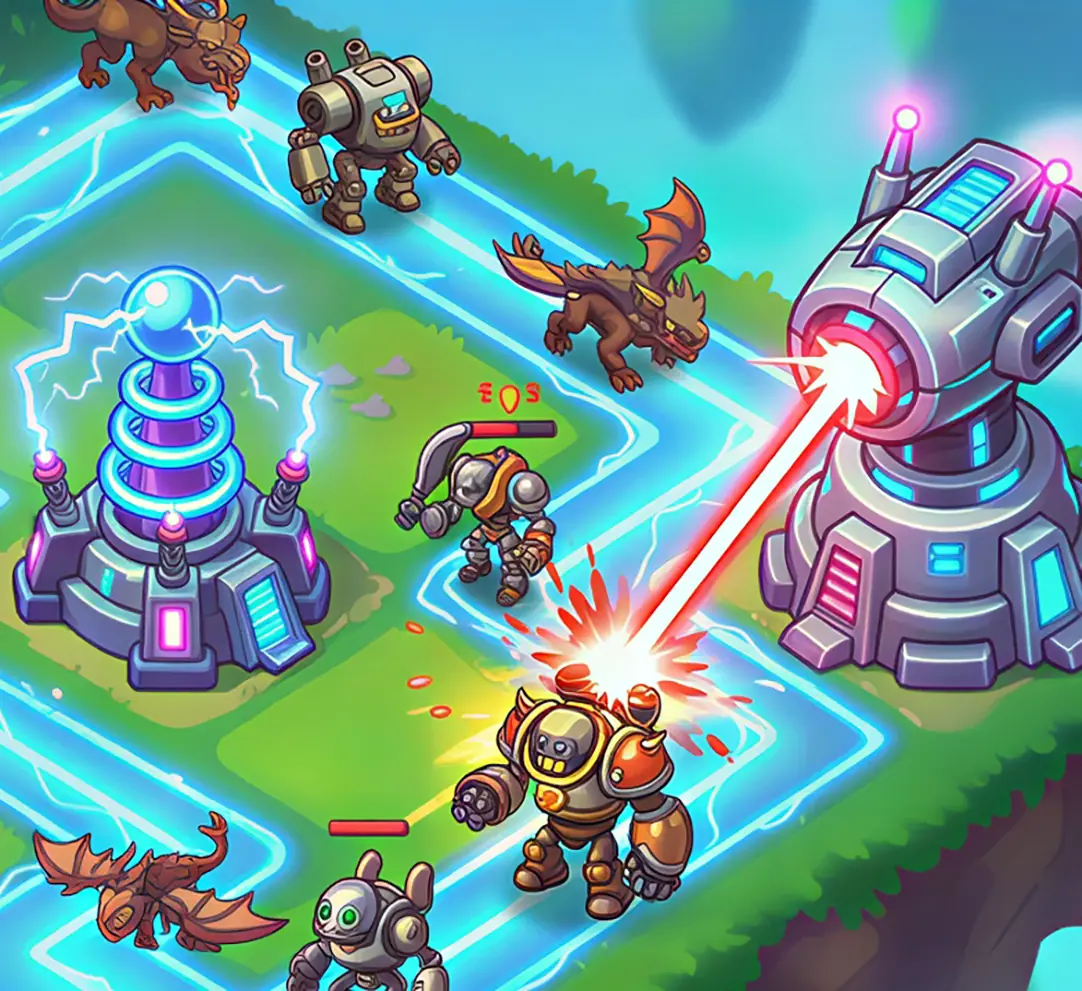
Idle games example

Deeply rooting a world in the human rhythm of the day is where genuine loyalty begins. People reach for these experiences in the fractured, quiet gaps of a busy life, stepping away only to be called back by reality. Systems that ignore these natural ebbs and flows lose players to a silent, invisible exit.

Authentic design breathes through continuity and a soul-deep reverence for a person’s time. Progress must feel like a steady, reassuring pulse, where absence never carries a penalty, and every homecoming feels significant rather than performative. Teams that anchor their work in reliability rather than artificial urgency build a sanctuary, a place where players feel truly invited to return, no matter how much time has slipped away.

Offline Progress Logic and Return Incentives

Offline progress sets expectations the moment a player closes the app. Players form a mental picture of what should happen while they are away. When reality matches that expectation, trust grows. When it does not, interest fades.

Good offline systems stay grounded:

  • Alignment. Offline gains follow the same rules shown during active play.
  • Restraint. Progress caps exist, but feel reasonable and clearly explained.
  • Context. Return screens summarize outcomes without overwhelming detail.

Return incentives work best when they feel like acknowledgment, not compensation. Small bonuses, temporary advantages, or new options signal that coming back matters. Overstated rewards raise doubts and shorten engagement. Teams that tune offline logic with care build routines players rely on, which keeps retention stable.

Psychological Pacing Without Manipulation Risks

Pacing controls how progress feels across days and weeks. Players sense when growth slows for a reason and when it slows to provoke frustration. That distinction matters more than raw speed.

Healthy pacing follows clear logic:

  • Transparency. Changes in speed feel understandable, not hidden.
  • Balance. Waiting feels acceptable rather than engineered.
  • Agency. Acceleration remains optional and never blocks free progress.

Manipulative pacing breaks trust fast. Artificial walls, sudden scarcity, or unclear penalties make systems feel hostile. Teams that avoid those patterns create idle games that players return to willingly. Progress feels honest, engagement feels natural, and retention holds without pressure.

Technical Architecture Behind Scalable Idle Games

Idle games

Creating a world with true integrity means building an architecture that genuinely respects the human being on the other side of the screen. While the complex logic stays hidden, its real worth is found in that small sigh of relief when a milestone is safe, or in the simple, warm comfort of finding a journey exactly as it was left.

True technical excellence is found in a stability that makes growth feel natural, supporting millions of players and years of progress without ever jarring someone out of their experience. Teams that commit early to this foundation of care protect themselves from the stress of future repairs and, more importantly, they protect the calm, consistent environment that every human being deserves.

Backend Logic, Save Integrity, and Anti-Exploit Systems

Backend logic carries the weight of trust. Every calculation, timer, and reward must behave consistently across sessions and devices. Maintaining integrity becomes critical because players frequently leave and return. Lost progress breaks confidence instantly and rarely recovers.

Strong systems follow a few guiding principles. Data writes occur predictably and redundantly. State changes remain traceable and reversible when needed. Anti-exploit measures focus on prevention rather than punishment. Most players never try to cheat, yet unchecked loopholes distort economies and damage fairness for everyone.

Careful validation keeps progression honest. Limits exist quietly in the background. Errors are resolved without player disruption. When backend systems behave reliably, players stop thinking about them entirely. That invisibility signals success.

Performance Optimization for Long-Running Sessions

Idle games spend more time running than actively playing. Sessions can span hours or days, often running in the background. Performance must remain stable under that quiet load. Small inefficiencies accumulate and eventually surface as heat, battery drain, or slowdowns.

Optimization here favors restraint. Calculations happen only when necessary. Visual updates avoid constant refresh. Memory usage stays predictable even as numbers grow large. Smooth performance protects the feeling of calm continuity that idle games rely on.

Players may never comment on good performance, yet they react quickly when it falters. Teams that plan for long-running behavior protect the experience by staying out of the way. Progress continues smoothly, systems remain responsive, and attention stays where it belongs, on growth rather than technical distraction.

Content Expansion for Idle Game Development Without Feature Bloat

Content expansion sounds appealing until it starts working against the game itself. Many idle projects lose clarity not because they lack ideas, but because new additions arrive without a clear role. Players feel that confusion immediately. Progress becomes harder to read, and familiar routines start to feel crowded.

Expansion should feel like a natural continuation of what players already understand. Visual evolution, including shifts in video game art styles, follows the same rule. From our experience, we've noticed that true growth should feel like a quiet unfolding of what matters most, rather than just adding to the noise.

Designing Expandable Systems Instead of Isolated Features

Expandable systems invite growth without demanding constant explanation. Isolated features demand attention, tutorials, and ongoing maintenance. Over time, that difference becomes costly.

Systems that scale well usually share a practical mindset:

  • Continuity. New elements follow the same logic that players already trust.
  • Reusability. Existing mechanics support new content without modification.
  • Interaction. Added systems influence current ones instead of running separately.
  • Longevity. Design choices account for future numbers, not just current balance.
  • Recognition. Players understand new content faster because patterns stay familiar.

When expansion is built upon a unified foundation rather than a collection of separate parts, every update carries a natural sense of lightness. In point of fact, individuals adapt much more readily when changes feel like a logical evolution of a world they already understand.

Seasonal Content, Meta-Progression, and Resets

Seasonal content introduces rhythm, yet rhythm needs restraint. Too much change feels exhausting. Too little feels stagnant. The balance sits in structure, not surprise.

Effective seasonal design tends to respect a few limits:

  • Predictability. Players know when cycles begin and end.
  • Carryover. Long-term progression remains meaningful across seasons.
  • Optionality. Resets offer acceleration, never obligation.
  • Fairness. Previous effort keeps its value after transitions.
  • Clarity. Rules around resets and bonuses stay easy to follow.

Resets work best when framed as opportunities rather than corrections. Seasonal layers should refresh motivation without fragmenting progress. Moreover, teams that respect player investment keep engagement steady while allowing the game to evolve at a sustainable pace.

Have us develop an idle game for you

When to Involve a Specialized Idle Game Developer

Every team reaches a point where internal effort alone becomes inefficient. Idle games tend to expose that moment earlier than expected. Systems grow, numbers escalate, and small design decisions start carrying long-term consequences.

Knowing when to involve a specialized idle game developer often determines whether a project stabilizes or drifts. Many teams arrive at this decision while reviewing feedback through resources like the complete game UX guide, where gaps between intent and player experience become difficult to ignore.

Warning Signs That Internal Teams Are Overextended

Overextension rarely looks dramatic. More often, it appears as slow erosion across multiple areas. Progress feels harder to tune. Updates take longer. Confidence in decisions weakens.

Common signs tend to repeat:

  • Rework. Features require repeated adjustment after release.
  • Uncertainty. Teams struggle to predict how changes affect progression.
  • Backlog. Technical debt grows faster than it can be addressed.
  • Inconsistency. Player feedback highlights uneven pacing or unclear rewards.
  • Fatigue. Core contributors spend more time fixing than building.

At this stage, effort no longer scales with results. Specialists bring pattern recognition shaped by similar problems. That outside perspective often resolves issues faster than internal iteration alone.

Collaboration Models That Reduce Delivery Risk

Involving a specialized partner does not require a full handover. Flexible collaboration models help teams stay in control while reducing pressure.

Several approaches tend to work well:

  • Targeted support. Specialists focus on economy, progression, or scaling.
  • Parallel development. Internal teams build content while experts tune systems.
  • Review cycles. External audits validate decisions before release.
  • Embedded roles. Temporary integration fills specific skill gaps.
  • Knowledge transfer. Teams absorb practices that improve future autonomy.

Clear boundaries and shared goals keep collaboration productive. Risk decreases when responsibilities stay defined, and communication remains direct. Teams that involve specialists at the right moment protect momentum, avoid costly rewrites, and keep delivery on track.

Managing Idle Game Development Lifecycle with Game-Ace

Managing an idle game from idea to long-term operation calls for more than solid engineering. Each stage needs to link naturally with the next, starting from early planning and validation and continuing through iteration and long-term support after launch. At Game-Ace, our team works with idle projects as products that continue to evolve, not as deliverables that stop at release.

Strategy, system design, and live performance stay aligned throughout the process, which helps teams make clear decisions and adapt without losing direction. As a custom game development company, we work closely with your organization to reduce uncertainty and maintain clarity as the scope grows.

Each phase builds on the previous one, which limits rework and protects momentum. If you are evaluating next steps or facing structural challenges, contact us to discuss how our specialists can support your project.

Average rating 4.8 / 5. Votes: 23
Related posts
Related Key Trends Shaping Gamification in Recruitment for 2026 and Beyond Related How to Create Crypto Casino Games the Right Way Related AI Recruitment Games: From Real-Time Assessments to Better Hiring Outcomes Related Games for Business: Proven Strategies for Engagement and Growth Related How to Design Learning Games for Kids That Teach Real-World Skills
Contact us robot
Get in touch
menu
Get in touch
Game-Ace logo loader