The reports of the Tower Defense genre's death have been greatly exaggerated. For over two decades, critics and casual observers have periodically declared the end of the "lane and tower" loop, assuming that once you've built one maze, you've built them all. Yet, as we move closer to 2026, the data tells a radically different story. We are not witnessing the decline of a genre, but rather its sophisticated metamorphosis. The era of placing static turrets on a fixed path and passively watching a health bar deplete is ending.
In its place, a new standard is emerging, defined by hybrid mechanics, deep meta progression, and architectural rigor that rivals complex RTS (Real-Time Strategy) development.

At Game-Ace, we have observed a shift in client demands and player expectations. The modern Tower Defense (TD) project is no longer a casual mobile fling. It is a high-retention ecosystem. Players who grew up on Flash-era classics, such as Desktop Tower Defense or GemCraft, are now adults.
They possess better hardware, disposable income, and a nostalgic hunger for that specific "one more wave" dopamine hit. However, their standards have evolved. They demand the strategic depth of a PC title, the social connectivity of an MMO, and the seamless polish of a console release.
To succeed in this competitive landscape, studios must look beyond the surface-level aesthetics and master the invisible machinery that drives the genre: the intricate balance of economy and attrition, the software architecture that supports hundreds of active entities, and the "cozy" yet punishing loops that keep retention metrics high. This article dissects the engineering and design realities of building a successful Tower Defense title for the 2026 market, synthesizing insights from technical case studies, market forecasts, and live-ops analytics.
The Mechanics of Attrition and Flow in Tower Defense Games
The fundamental allure of Tower Defense lies in the tension between chaos and order. A player is given a problem, a horde of enemies, and a set of tools to solve it. However, a successful game does not simply provide a solution. It forces the player to invent one under pressure.
The Evolution of the "Meta"
In the early days, strategy was often binary: build more towers to deal more damage. Today, the "meta" (the optimal strategy adopted by the community) is far more nuanced, often revolving around specific damage types and resistance counters. High-level play requires a Rock-Paper-Scissors approach to enemy properties, forcing players to diversify their loadouts rather than spamming a single "overpowered" unit.
We see this complexity in the design of modern resistance systems. It is no longer enough to have "fast" or "slow" enemies. The modern enemy roster includes specific attributes like Stealth, Armor, Shields, and the devastating No Cash modifier.
The Support and Economy Layer
Because of mechanics like "No Cash," the dedicated "Economy Tower" (often visualized as a Farm or Mine) has transitioned from a luxury to a necessity. In high-difficulty modes, such as "Elite" or "Expert," the gold dropped by enemies is mathematically insufficient to fund the necessary defense upgrades. Players must perform a delicate balancing act: spending just enough on defense to survive the current wave while pouring every spare credit into Farms to ramp up interest rates.
Furthermore, "Support" towers have become as critical as damage dealers. The modern loadout is rarely just four types of guns. It requires a "Utility" slot, towers that buff range, discount upgrade costs (like the "EDJ" archetype), or heal damaged structures (Medics). In games where enemies can attack and destroy towers, a mechanic that is becoming standard in "Expert" modes, the Medic is not just a healer; it is the sustain engine that prevents the player's board from being wiped clean by a mini boss.
Boss Design: The Trio Archetype
The days of a single, slow-moving "tank" boss are fading. Modern expert modes favor multi-entity boss encounters that test different aspects of the player's defense simultaneously. A compelling example of this is the "Trio" design pattern, appearing in late-game waves (e.g., Wave 30+).
- The Frontliner (The Shield): A boss designed purely for defense (e.g., "Phoebus"). High health, armor, and physical size to block shots meant for the units behind it.
- The Support (The Buffer): A unit that sits in the middle (e.g., "Zeus"), using abilities to stun towers or speed up allies.
- The Glass Cannon (The Destroyer): A rear-guard unit (e.g., "Artemis") that is physically weak but deals percentage-based damage to the player's base or towers.
This configuration forces the player to micro-manage tower targeting. If towers are left on "First" targeting, they will waste shots on the Shield while the Destroyer dismantles the base. Players must manually switch high-DPS towers to "Strongest" or "Last" to snipe the rear threats. This interaction, which involves micro-managing targeting priorities in real time, is a key differentiator between casual and hardcore TD experiences.
Hybridization and the 2026 Landscape
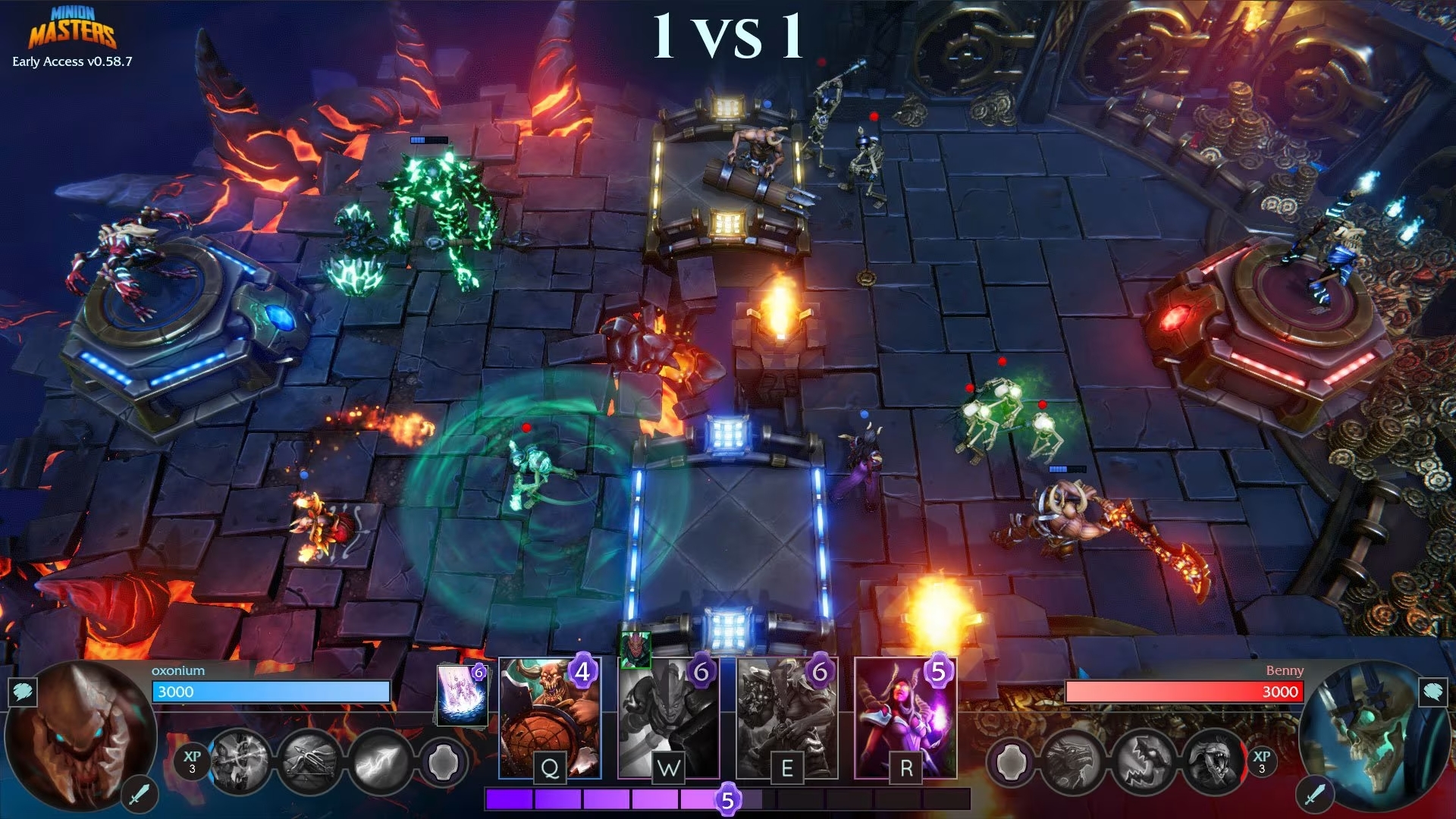
As we look toward 2026, the genre is moving toward hybridization. Players are rarely asking for "more of the same." They want the comfort of the Tower Defense loop mixed with the progression of other video game genres.
The Roguelike Fusion
One of the most promising vectors is the TD + Roguelike combination. Traditional TD games can suffer from "solved meta" syndrome, where a single optimal placement strategy works for every attempt. By introducing roguelike elements such as randomized tower drafts, procedural map generation, and meta-upgrades between runs, developers can break this stagnation. Imagine a loop where the player doesn't know which towers will be available in the shop until the wave starts, forcing them to adapt a "Sniper" strategy into a "Splash" strategy on the fly. This mirrors the success of endless modes in games like Bloons TD 6, but with card-based progression layers similar to Slay the Spire.
The City-Builder Integration
Another trend gaining traction is the TD + Base-Builder. In classic games, a tower is just a stat stick on a grid. In the hybrid model, the tower is part of a living settlement. The "Barracks" doesn't just spawn soldiers; it requires resources from a "Mine" that must be protected. Roads matter not just for enemy pathing, but for the logistical efficiency of the player's economy. This satisfies the cozy demographic, players who want to build a fantasy tavern or a sci-fi colony and defend it. The emotional stakes are higher when the enemy isn't just leaking "lives" but is burning down the village the player spent an hour designing.
The Nostalgia Cycle and "Event" Modes
We are also entering a nostalgia cycle. The generation that played Plants vs. Zombies in high school is now the target market for premium experiences. They want to relive that "desktop tower defense" feeling but with modern cross-platform capabilities. They expect to start a run on their phone during a commute and finish it on a high-end PC with ray-traced graphics.
Moreover, big publishers are treating TD as a "limit-breaking" event mode. We are likely to see massive, persistent online worlds where the community contributes to a global defense effort, similar to raid events in MMOs. This shifts tower defense from a solitary puzzle into a collective war effort.
Planning a Tower Defense game?
The Engineering Backbone of a Tower Defense Game
At Game-Ace, we understand that ambitious design documents die without robust architecture. A Tower Defense game might look simple on the surface, but under the hood, it is a performance pressure cooker. You are managing hundreds of independent agents (enemies), hundreds of state machines (towers), and thousands of projectiles, all while calculating pathfinding and collision detection at 60 frames per second on a mobile device.
Decoupling Logic: The Manager Pattern
A common pitfall in junior development teams is coupling the "Tower" logic directly to the "Map." In a naive implementation, the MapEntity holds an array of towers and handles their logic. This leads to a bloated "God Class" that is impossible to test or maintain.
The superior architectural approach, which we advocate for, is the Manager Pattern. This involves separating concerns into distinct entities:
- Tower Entity: A data container holding stats (Rate of Fire, Range, Damage) and state (Current Cooldown, Target).
- Tower Manager: A dedicated system responsible for the lifecycle of towers. It handles the Add, Remove, and Upgrade logic. It is the only class that knows how to place a tower, checking against the map for valid coordinates.
- Enemy Manager: Similarly, this handles the spawning queues, wave configurations, and the tracking of active enemy units.
By decoupling these systems, we can test the Tower Manager without needing to instantiate the entire graphical Map. We can simply feed it a grid coordinate and assert that a tower was placed. This "separation of concerns" is vital for scalability.
If we want to add a new mechanic, such as a tower that buffs nearby towers, we do not need to rewrite the Map class. We simply adjust the interaction within the Tower Manager.
The Pathfinding Engine for Tower Defense Games: $A^*$ and Optimization
Movement is the heartbeat of TD. Enemies must navigate complex mazes, often dynamic ones created by the player's placement of walls or towers. The industry standard for this is the $A^*$ (A-Star) Pathfinding Algorithm.
In a Unity environment, implementing $A^*$ requires treating the map as a set of quantifiable nodes. The algorithm calculates the cost ($F$) of moving to a node using the formula $F = G + H$:
- G: The cost to move from the starting point to the current node.
- H (Heuristic): The estimated cost from the current node to the end point.
The system continuously evaluates the adjacent nodes, selecting the one with the lowest $F$ value. However, running $A^*$ for 500 enemies every frame is a CPU killer. Experienced developers use Flow Fields or Cached Paths. If the map hasn't changed (i.e., the player hasn't placed a wall), all enemies spawned can share the same calculated path object. We only recalculate the path when the topology of the grid changes.
Furthermore, movement isn't just about coordinates; it's about orientation. To make the game feel polished, entities must rotate to face their target. In Unity, this is often handled by a custom LookAt method. This function takes the object's position and the target's position, converts them to screen coordinates (using Vector2 and WorldToScreenPoint), and calculates the angle using a trigonometric function (like ClockwiseAngleOf3Points). This ensures that the tank turret actually turns to face the goblin it is shooting at instead of snapping instantly, a small detail that radically improves game feel.
The "Attack Loop" Architecture
How does a tower actually shoot? There are two main approaches, and the choice affects performance:
- The Update Loop: Every frame (or every n frames), the tower scans all enemies, checks distance, finds the closest one, and fires if the cooldown is ready. This is simple but computationally expensive ($O(N \times M)$ complexity where $N$ is towers and $M$ is enemies).
- The Event/Queue System: The EnemyManager maintains a spatial partition (e.g., a Quadtree) or a sorted list of enemies based on progress. The tower simply queries the "Head of the Queue."
For high-performance scenarios, we often implement an ActivateTowerAttack class. This handles the specific timing (Rate of Fire). Instead of a constant check, it might use a coroutine or a setTimeout equivalent (in JS/TS architectures) to handle the delay between shots. This allows for asynchronous firing that doesn't block the main game thread.
Handling "Spawns" and Configuration
Hardcoding waves is a recipe for disaster. A robust system uses Data-Driven Design. The Level Entity should not contain the logic for spawning; it should contain the data (the configuration).
For example:
{
  "wave": 5,
  "enemies": [
    {
      "type": "Fast_Zombie",
      "count": 20,
      "interval": 0.5
    },
    {
      "type": "Tank_Boss",
      "count": 1,
      "interval": 0
    }
  ]
}
A separate SpawnEnemies class reads this config. It talks to the LevelEntity to get the list, the MapEntity to get the path, and the EnemyManager to instantiate the prefabs. This strict separation means a game designer can tweak a JSON file to balance the game without ever touching the C# codebase.
Metrics and Monetization in Business Logic
Even the most beautifully engineered game will fail if it cannot retain its players. The metrics for Tower Defense differ significantly from hyper-casual or RPG genres.
Retention and Session Length
Tower Defense is a "lean-forward" genre. Analytics show that the Average Revenue Per Daily Active User (ARPDAU) is significantly higher in TD than in platformers or idle games. Why? Because the session times are massive. Players don't log in for 3 minutes; they log in for hours to crack a difficult "Expert" map or push to Wave 150 in "Endless Mode."
To maximize D7 Retention (the percentage of players returning after a week), the game must offer "time to plan." The best TD games pause or slow down between waves. This downtime is crucial. It reduces player fatigue and allows for the "re-optimization" phase: “If I sell this Sniper and move it here, can I beat the next wave?” This psychological loop of planning, executing, analyzing failure, and re-planning is sticky.
Monetization: The Trap of "Pay-to-Win"
In the current market, aggressive Pay-to-Win (selling strictly better towers for cash) is a retention killer. Players perceive it as invalidating their strategic skill.
Instead, the recommended monetization pillars are:
- Time/Convenience: Selling a new tower unit for a premium price for the first month, then releasing it for free (grindable currency) later. This allows "whales" to pay for early access and novelty without permanently gating content from free players.
- Cosmetics: Skins for towers and emotes. Since players stare at their towers for hours, they grow attached to them. A "Golden Minigun" skin or a "Sci-Fi" effect for a magic tower is highly desirable.
- Visual Variety: The Wiki analysis of top games warns explicitly against buying "consumables" (one-time use power-ups) as they are seen as "bad value" by the community. Players want permanent upgrades.
The "Variety" Metric
Metric analysis suggests that providing a wide variety of choices increases replay value. However, this must be balanced with Limited Resources. If a player can afford every tower, the game becomes a simulation, not a puzzle. By limiting the gold/coin supply, we force the player to make sacrifices. “Do I upgrade my damage now, or do I buy a frost tower to slow them down?” There is no challenge without compromise.
Case Study: Implementing the "Tribal" Prototype
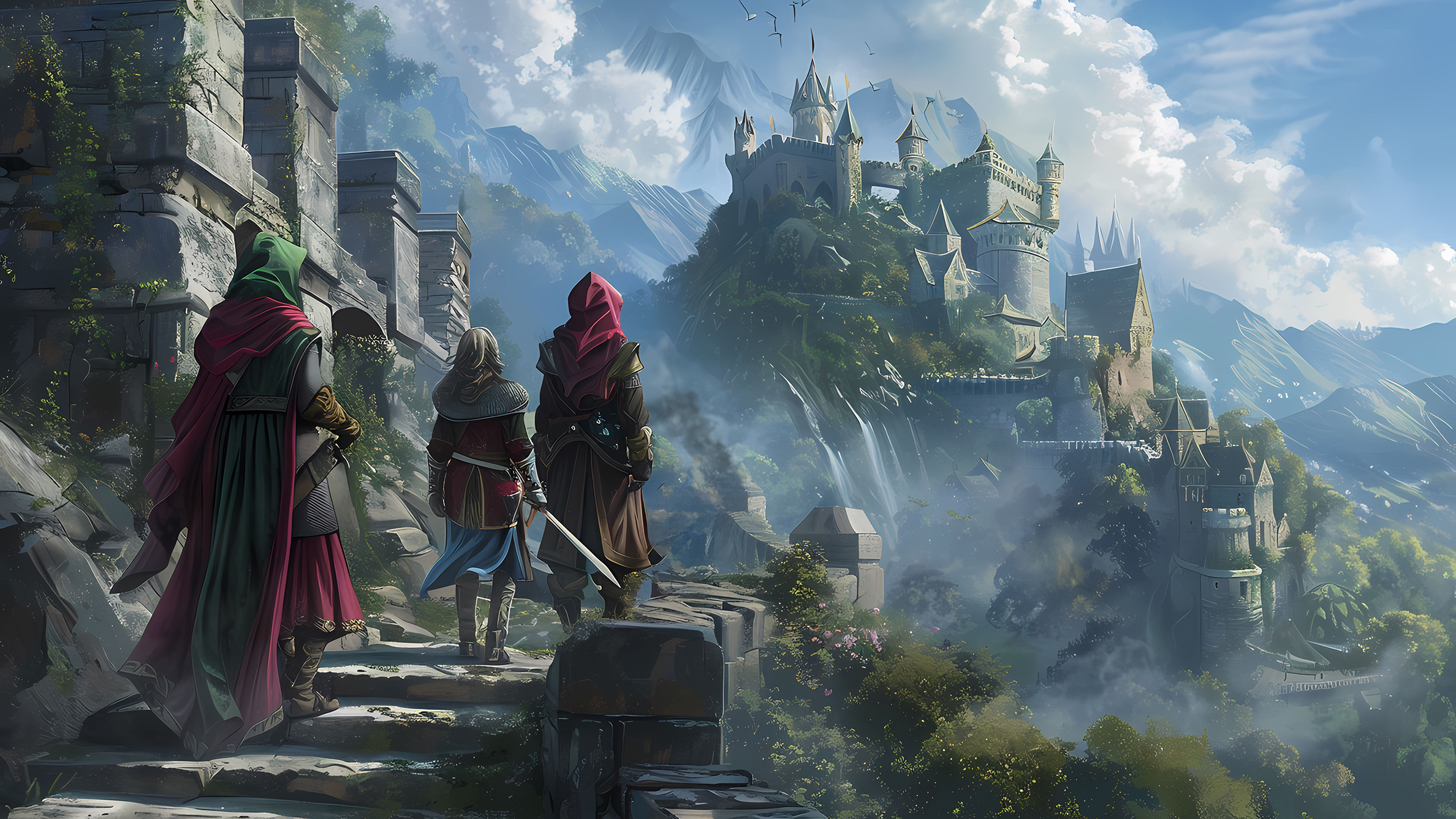
To illustrate these principles, let's look at a practical development scenario based on a Unity prototype often cited in technical circles: "The Rise of The Tribes." This case study highlights the importance of the User Interface (UI) and Input Handling in the development pipeline.
The Build System
In this RTS-hybrid style, building isn't instant. It uses a Builder mechanic (similar to Clash of Clans). The code must check for an "idle architect."
- Step 1: The BaseItem script triggers a GetFreeBuilder() function.
- Step 2: If no builder is null/idle, a UI window pops up: "All builders are busy."
- Step 3: If a builder is found, the BuilderAction() function initiates the construction timer.
This adds a layer of pacing. The player cannot panic-build defenses instantly during an attack; they must plan ahead.
The Drag-and-Drop Logic
Moving a building is a complex interaction of systems.
- Selection: The OnItemDragStart() function checks the game state. Crucially, it must block movement if the game is in "Attack Mode." This state-checking prevents game-breaking bugs where players move towers while projectiles are firing from them.
- Validation: As the player drags the tower, the IsPositionPlacable() function runs every frame. It checks the grid coordinates. If the slot is occupied or is "Cliff" terrain, the UI tint turns Red. If valid, it turns Green.
- Finalization: On OnItemDragStop(), the data is committed, and the pathfinding graph for enemies is updated to reflect the new obstacle.
Resource Flows
The prototype manages three resources: Gold (buildings), Holy Water (soldiers), and Gems (acceleration). The ConsumeResource() function is the gatekeeper. It performs an atomic check: if (current_storage >= cost) { deduct; return true; } else { return false; }. This simple logic underpins the entire economy.
Professional Tower Defense Game Development Services
The modern Tower Defense game is a paradox: it must be simple enough to play on a touchscreen but complex enough to support hundreds of hours of theory-crafting. It must evoke the nostalgia of 2008 while utilizing the architectural patterns of 2026.
For a studio, the challenge is not just in designing cool towers. It is in building a scalable Tower Manager that separates logic from rendering. It is in balancing the Armor Penetration math so that "Elite" bosses feel tough but fair. It is in designing a Hybrid Loop that lets players build a city worth defending.
At Game-Ace, as a custom game development company, we specialize in navigating these complexities. We understand that a great Tower Defense game is built on a foundation of solid engineering, respectful monetization, and a deep understanding of the player's desire to bring order to chaos. Whether it's implementing $A^*$ pathfinding for a thousand zerglings or designing a balanced economy for a competitive multiplayer mode, the difference between a flop and a hit lies in the details of the architecture. The genre is evolving. Is your codebase ready? Contact us to discuss your Tower Defense project and explore how our team can help you build a scalable, competitive, and market-ready game.
 Game Development for Startups: How to Build a Game with a Small Budget in 2026
  How to Turn Idle Game Development into a Scalable, Long-Term Revenue Product
  Key Trends Shaping Gamification in Recruitment for 2026 and Beyond
  How to Create Crypto Casino Games the Right Way
  AI Recruitment Games: From Real-Time Assessments to Better Hiring Outcomes